Color Drenching a Small Bathroom: Colors, Paint Finish and What to Paint
Color drenching a small bathroom: which colors work without a window, the paint finish that copes with steam, what to do with tile, the ceiling and the door, and ten drenched bathrooms in burgundy, green, terracotta and blue.

In this guide · 10 sections
Color drenching a small bathroom means painting the walls, ceiling, trim, door and sometimes the vanity in one color, so the edges of the room disappear and it reads as one enveloping space instead of a cramped box. It suits small bathrooms better than almost any other room: there is little wall to paint, the time spent there is short, and a deep color hides the awkward angles a white bathroom shows off. Use a moisture-resistant paint in a satin or eggshell finish, and choose a color with some warmth if there is no window.
This guide covers the color choice for your light, what to include and leave out, the paint and prep that survive steam, and what to do about tile and fixtures you cannot change. If you are deciding whether to drench another room, our guides to color drenching a bedroom and a living room explain the idea from the start.
Why Color Drenching a Small Bathroom Works
A small white bathroom shows every line: the ceiling meeting the wall, the door frame, the pipe boxing, the edge of the tile. Each line is a reminder of how close the walls are. When everything is the same color, those lines soften and the eye stops measuring the room. The space can feel more intentional, sometimes even larger, because you cannot easily tell where it ends.
It is also the cheapest big change a bathroom can get. A small bathroom often needs only a gallon or two of paint for walls, ceiling and trim together, and no new fixtures.
Choosing a Color for Your Bathroom's Light
The light decides more than the color card does.
| Bathroom | Colors that tend to work | Colors to be careful with |
|---|---|---|
| No window, artificial light only | Burgundy, terracotta, ochre, warm olive, chocolate, warm plaster pink | Cool grey, icy blue: they go flat and grey under bulbs |
| Small north-facing window | Deep green, warm navy, clay, mushroom | Pale cool colors, which look dull rather than airy |
| South or west-facing window | Almost anything; sage, dusty blue and soft pink stay light and fresh | Very saturated warm colors can feel hot in summer |
| Powder room (no shower) | The boldest and darkest colors: oxblood, ink, forest green | Nothing to avoid; moisture is not an issue |
A windowless bathroom is the best candidate for a dark drench. A pale color there cannot look bright anyway, so a deep, warm color that looks deliberate under warm bulbs makes better sense than a white that looks grey.
Test with large painted samples on two walls, and look at them with the bathroom lights on at night as well as in daylight. Test them next to the tile and the sink, which will not change.
Color Ideas for a Drenched Small Bathroom
Burgundy, oxblood and plum
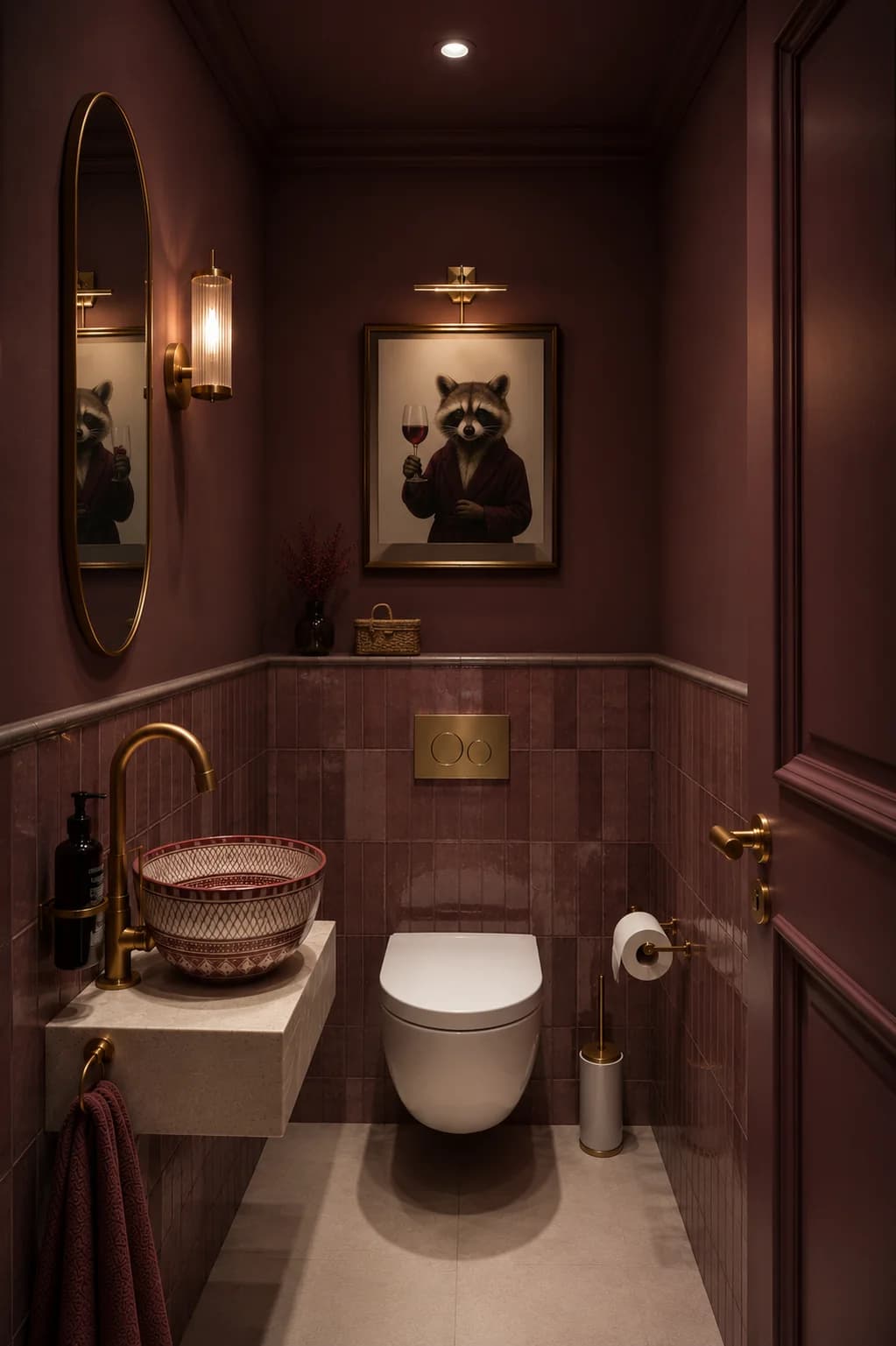
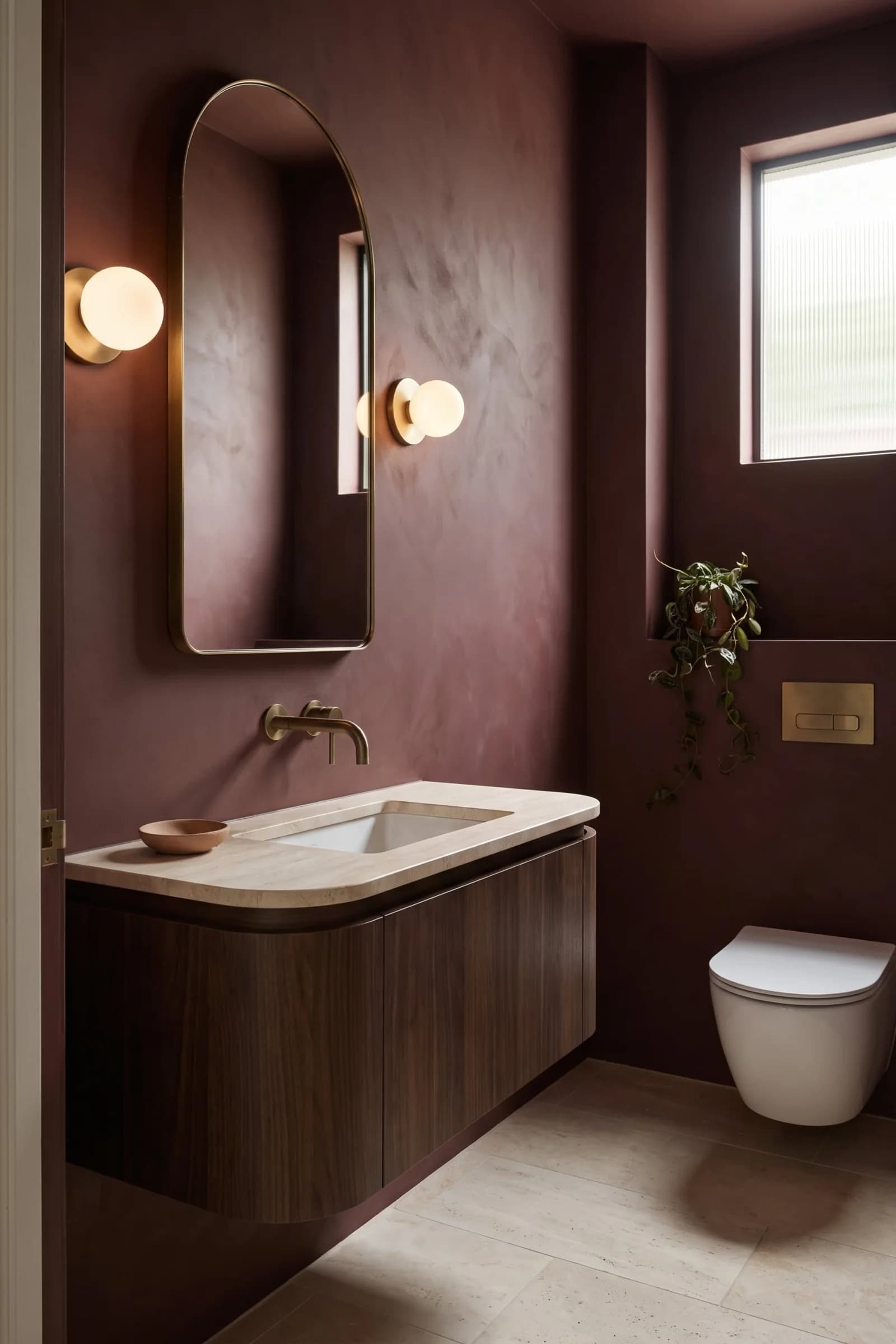
Burgundy and maroon come up again and again in drenched-bathroom pins on Pinterest, and they are among the easiest colors to live with in a powder room. Burgundy flatters skin, warms cold white sanitaryware and makes brass look rich. A plum with grey in it is quieter.
Brick red and terracotta
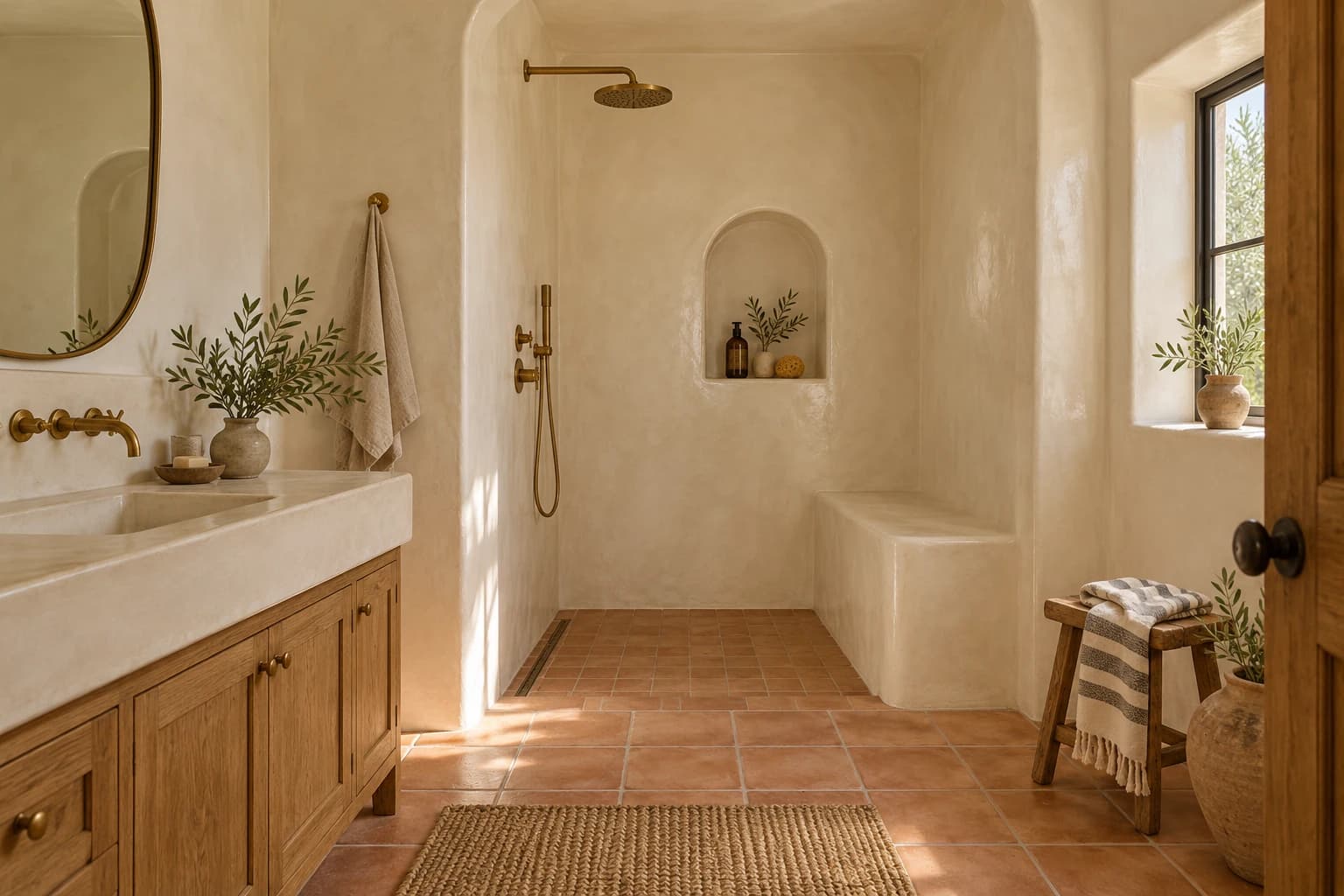
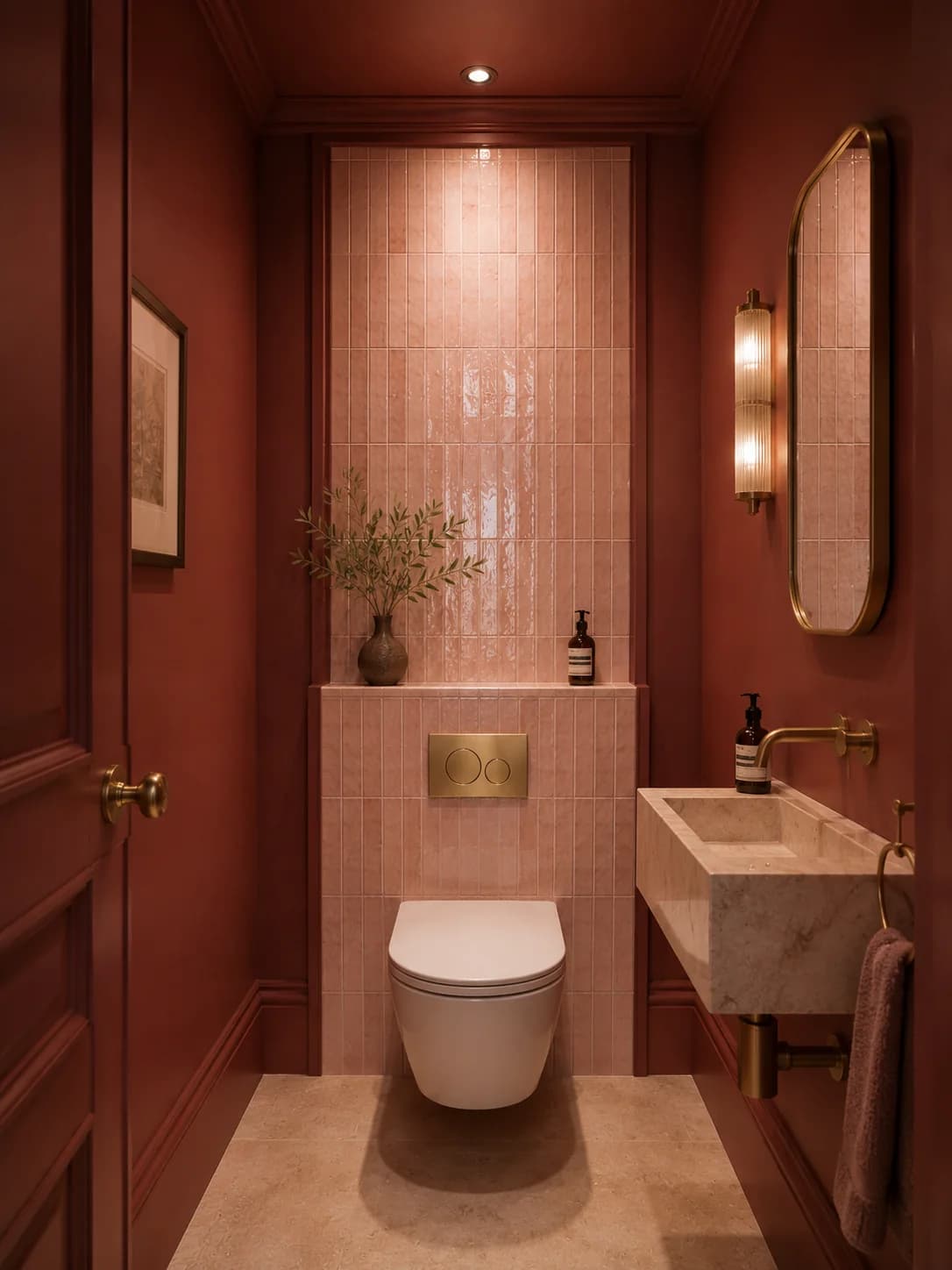
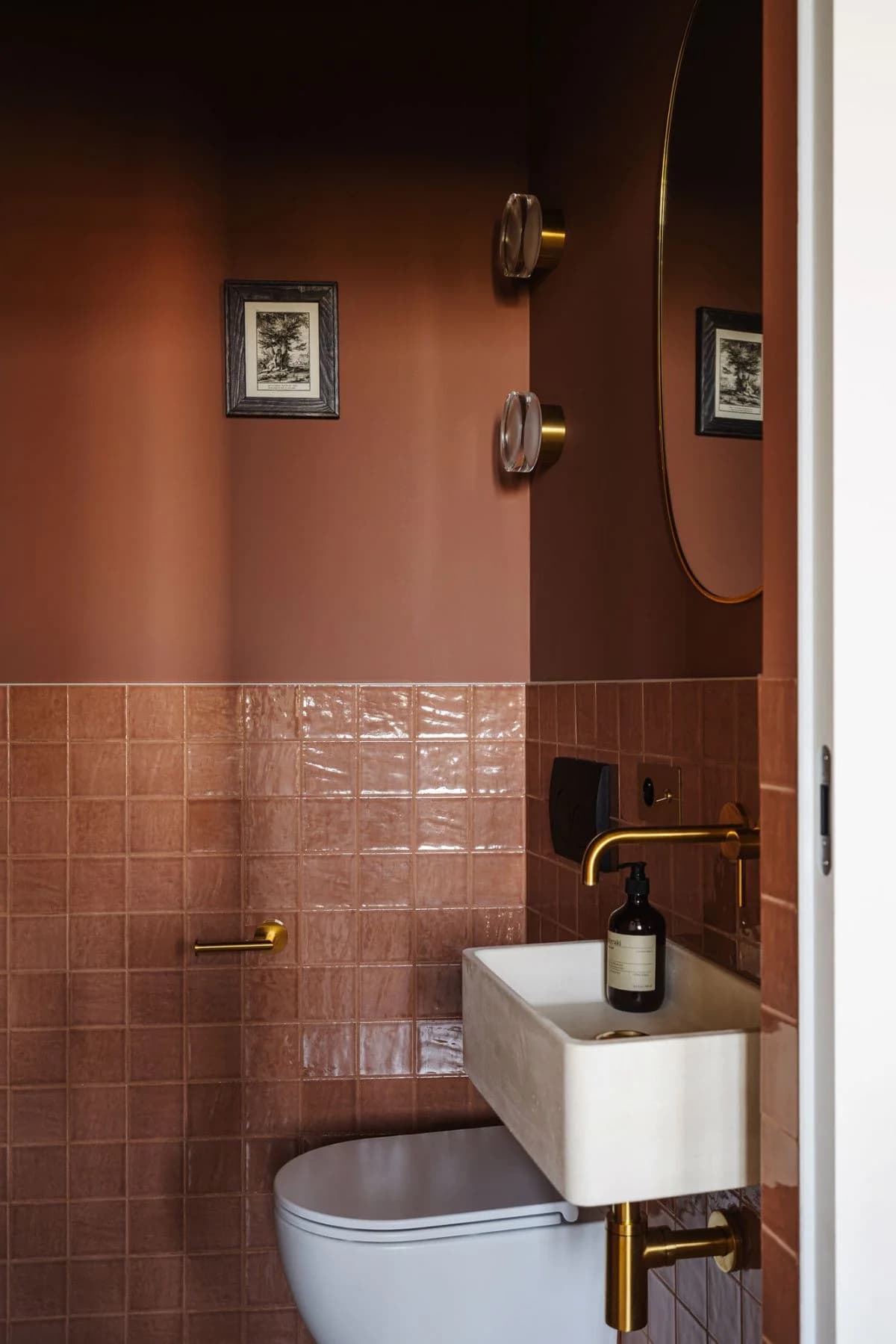
Warm, earthy and forgiving of mess. Terracotta pairs naturally with terrazzo, cream sinks and green plants; a brick red with matching glazed tile reads as one block of color.
Greens: forest, olive and sage
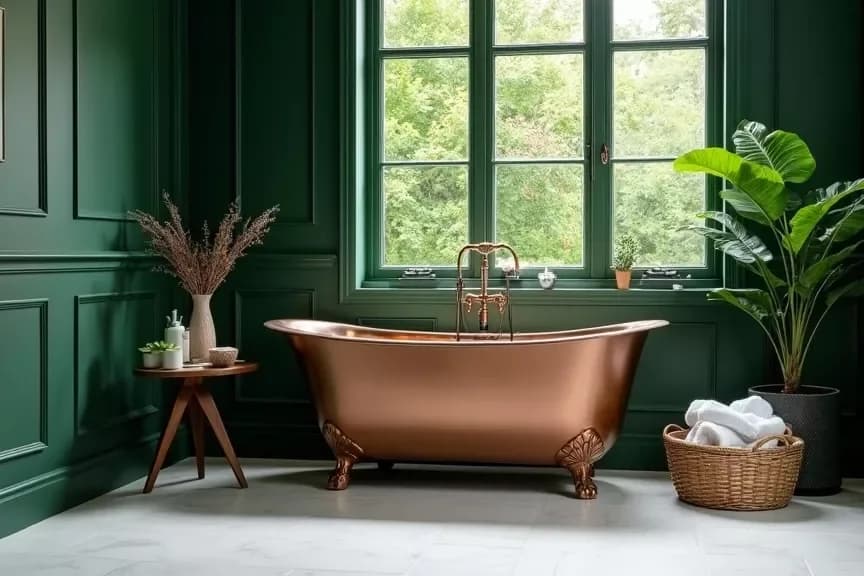
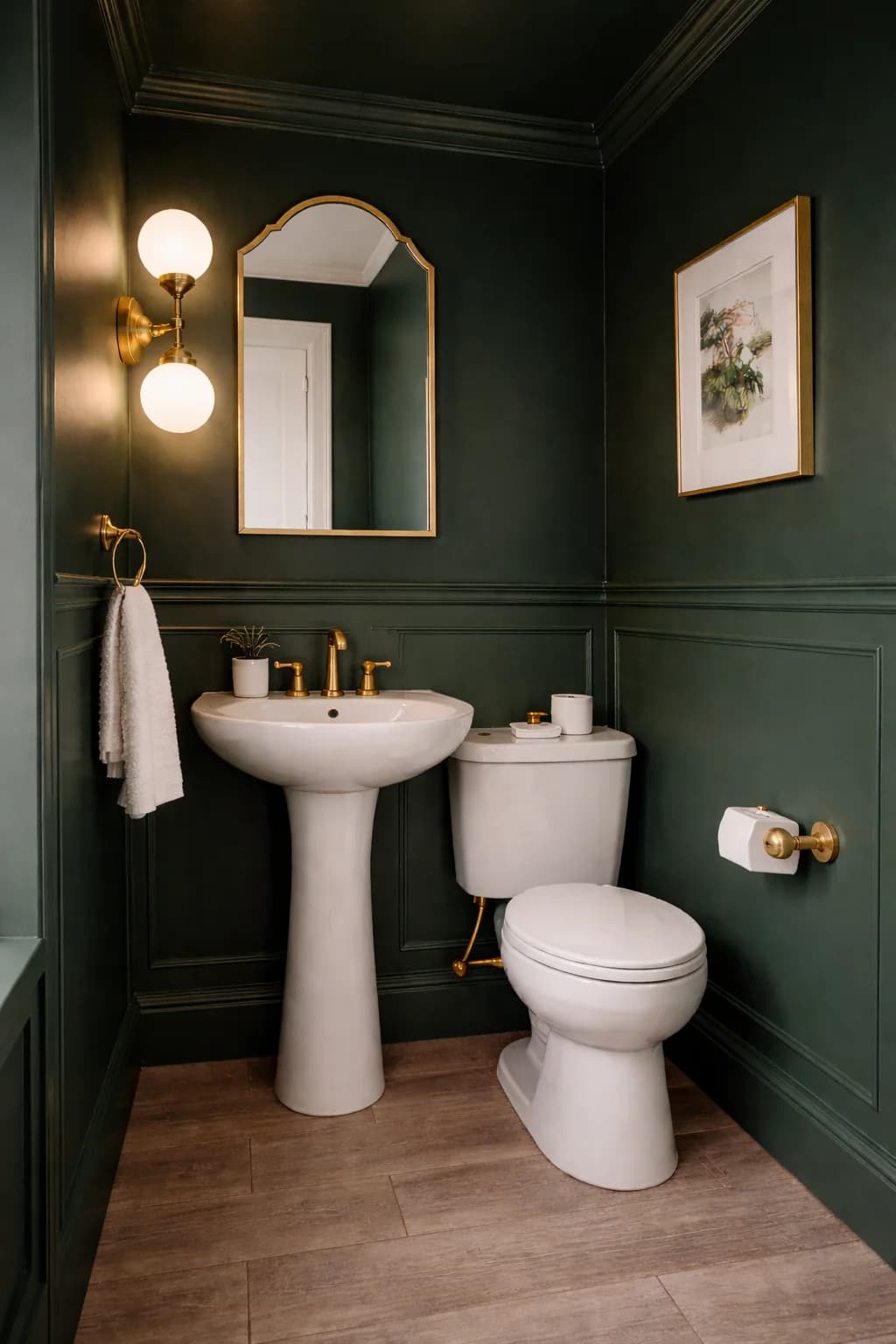
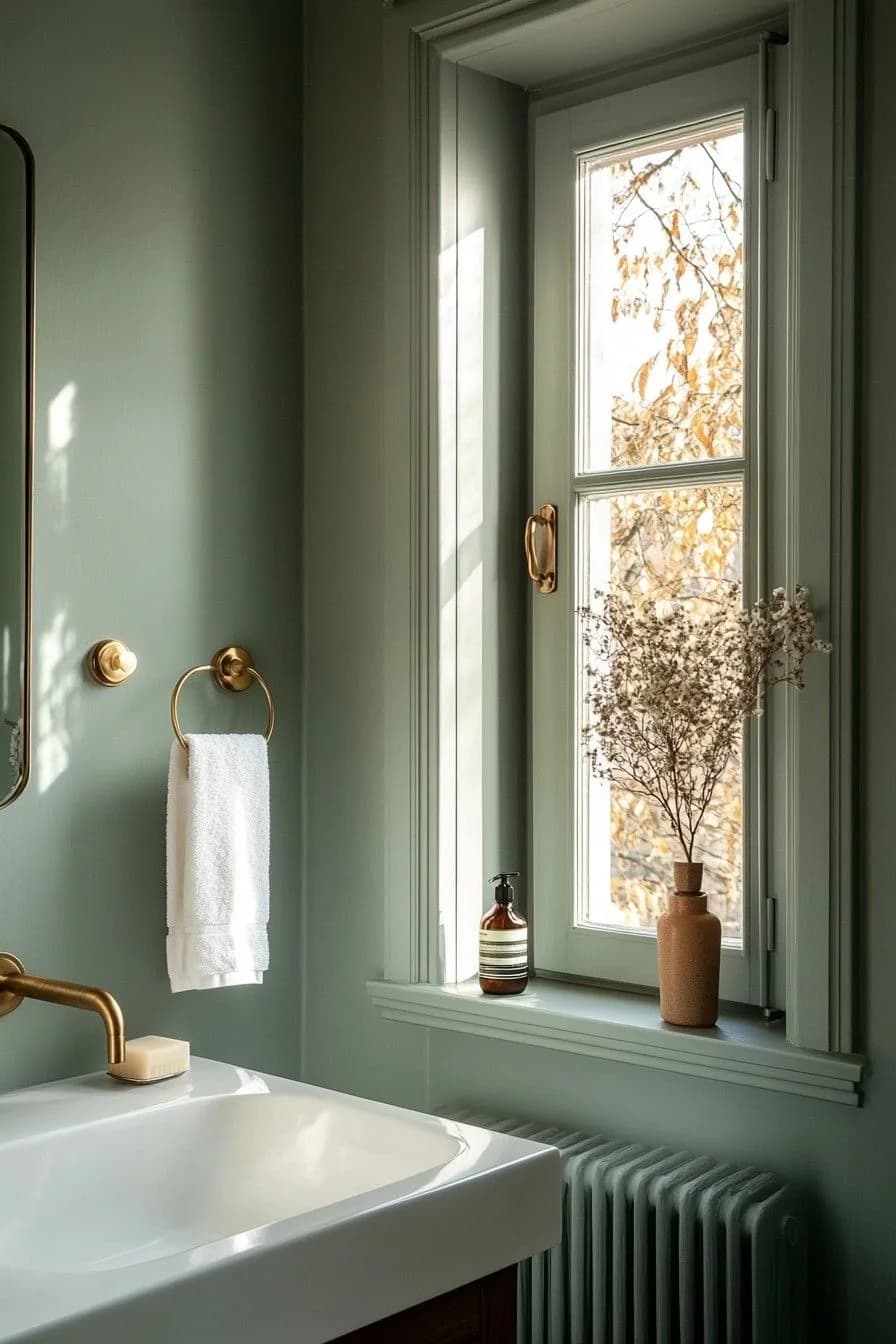
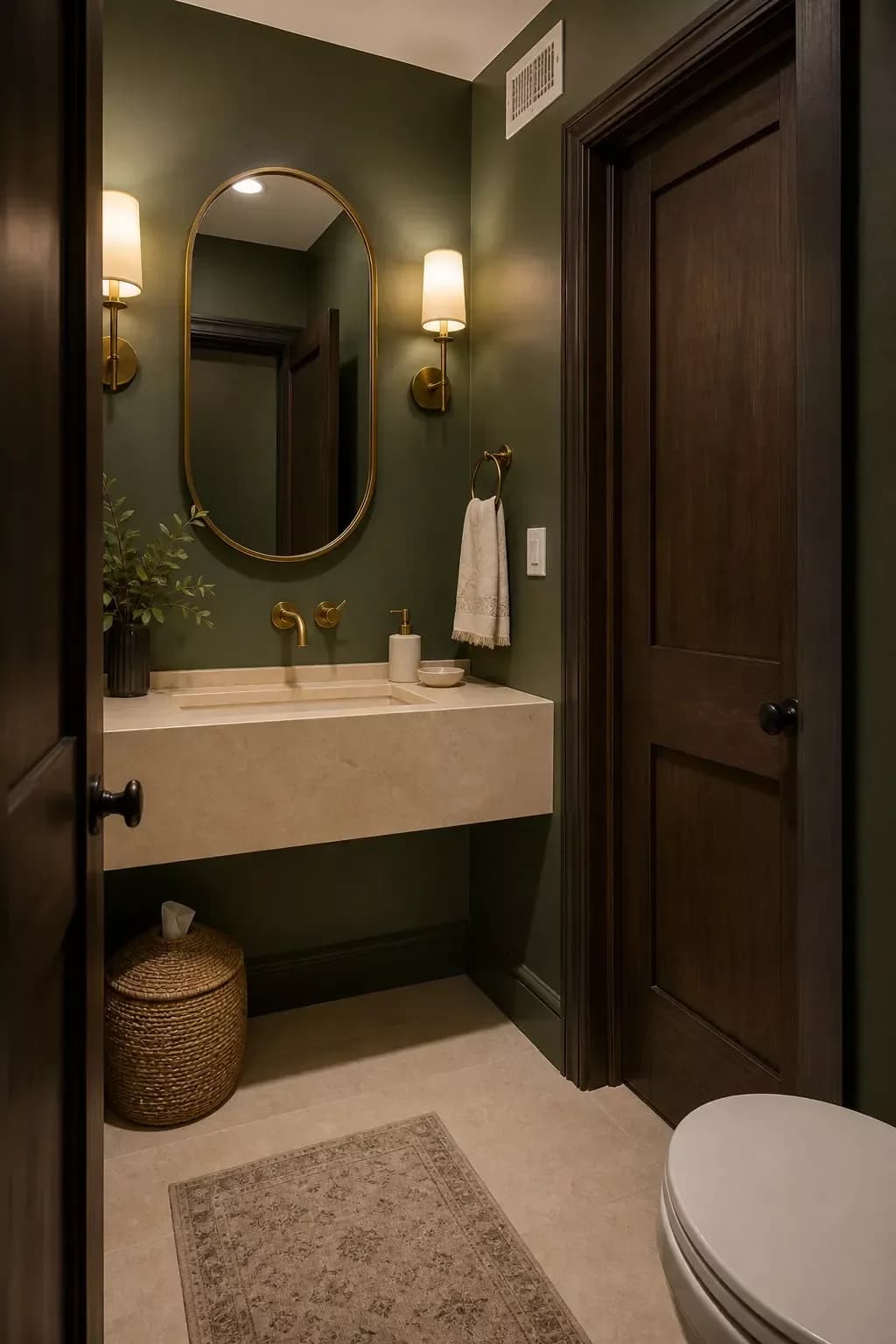
Green is the safest choice for a first drench. Forest green with panelling looks classic; olive with dark wood looks warm and slightly vintage; sage with a window looks calm and light. Green also works with every metal finish.
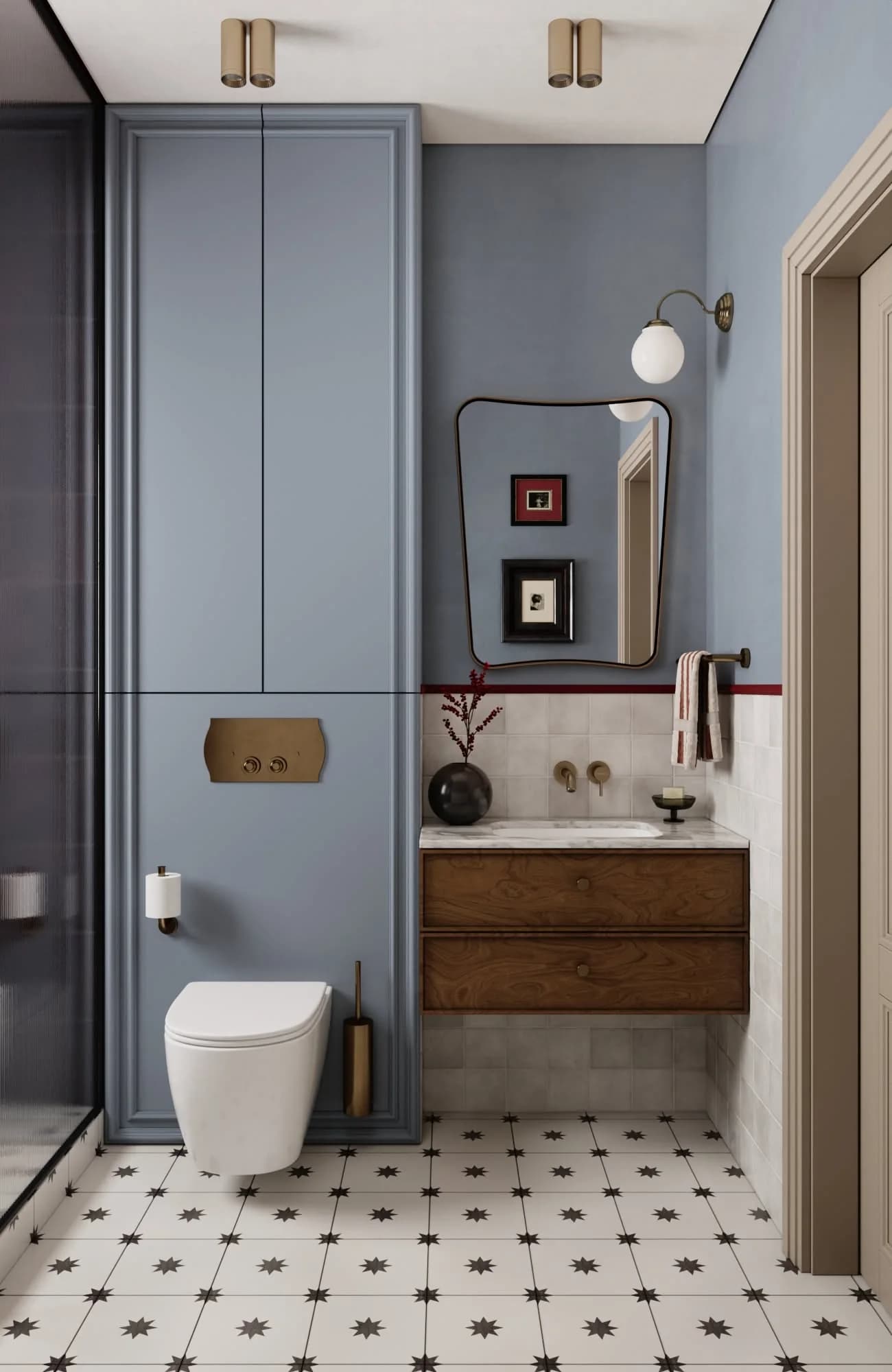
Dusty blue
A grey-blue drench is the cool choice and works best with some daylight. Warm it with wood (a walnut vanity, a wooden shelf) and patterned floor tile, or it can feel clinical.
What to Paint, Surface by Surface
| Surface | Paint it? | Notes |
|---|---|---|
| Walls | Yes | Satin or eggshell in a bathroom-rated paint |
| Ceiling | Yes, usually | The ceiling is what makes it a drench; same color or one shade lighter |
| Trim and skirting | Yes | Same color, often in a higher sheen for wipeability |
| Door (bathroom side) | Yes | Or leave a wood door natural as a deliberate contrast |
| Radiator, pipes, boxing | Yes | Use a heat-resistant or radiator paint on radiators |
| Vanity | Optional | Painting it the wall color makes a small room calmer; a wood vanity adds warmth |
| Tile | Usually no | See below |
The ceiling is the step people skip, and it is the one that makes the effect. A white ceiling over dark walls draws a hard line around the top of the room and makes it feel like a box with a lid. If full depth on the ceiling feels too much, go one shade lighter in the same color.
Paint and Prep for a Room Full of Steam
- Use a paint made for bathrooms or high humidity, usually labelled mildew-resistant or for kitchens and bathrooms. Check the manufacturer's data sheet for the finish it recommends.
- Satin or eggshell on the walls cope better with condensation and wiping than flat matte. Some brands make durable matte bathroom paints; follow their own guidance.
- Clean and degrease first. Bathroom walls carry soap film and hairspray that stop paint bonding. Wash, rinse, let dry.
- Treat any mold before painting, and fix the cause (usually ventilation). Paint over mold comes back through.
- Let it cure before the first hot shower. Many manufacturers suggest waiting at least a day or two; read the can.
- Run the fan. A drenched bathroom shows water marks on dark paint more than a white one. Ventilation is what keeps the finish clean.
Tile, Fixtures and Things You Cannot Change
Most small bathrooms have tile that stays. There are three ways to make it work:
- Match it. Pick a paint color sampled from the tile, so tile and paint read as one block. This is the most drenched look.
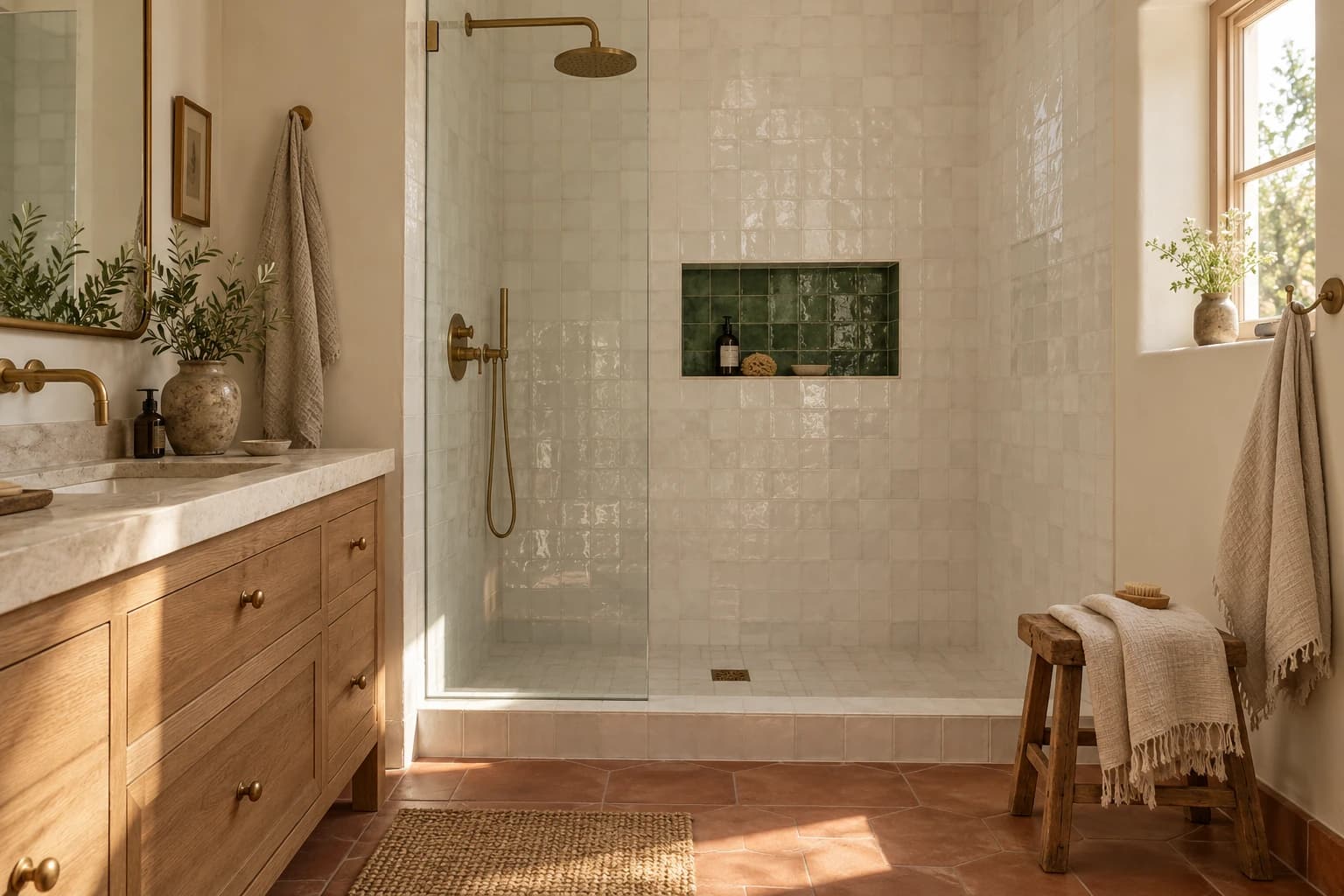
- Frame it. Paint above the tile in a deeper color that contains the tile's undertone, as in the terracotta room with the green tile panel below.
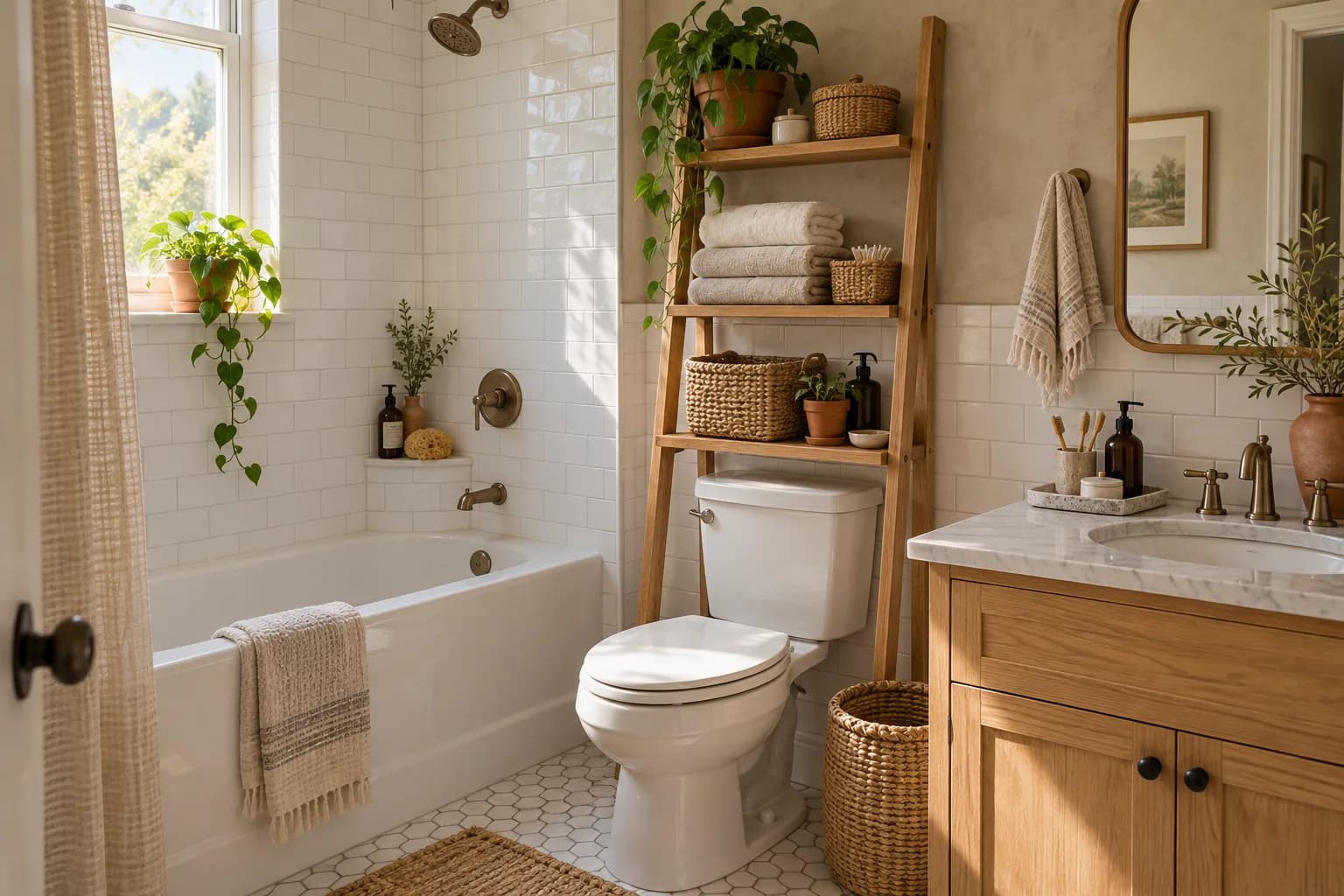
- Ignore it. White subway tile under a dark drench reads like wainscoting, which is a perfectly good look.
Painting tile itself is possible with specialist tile paint and careful prep, but it wears in wet zones (shower walls, behind the sink). Many renters and owners limit it to dry areas, if they do it at all.
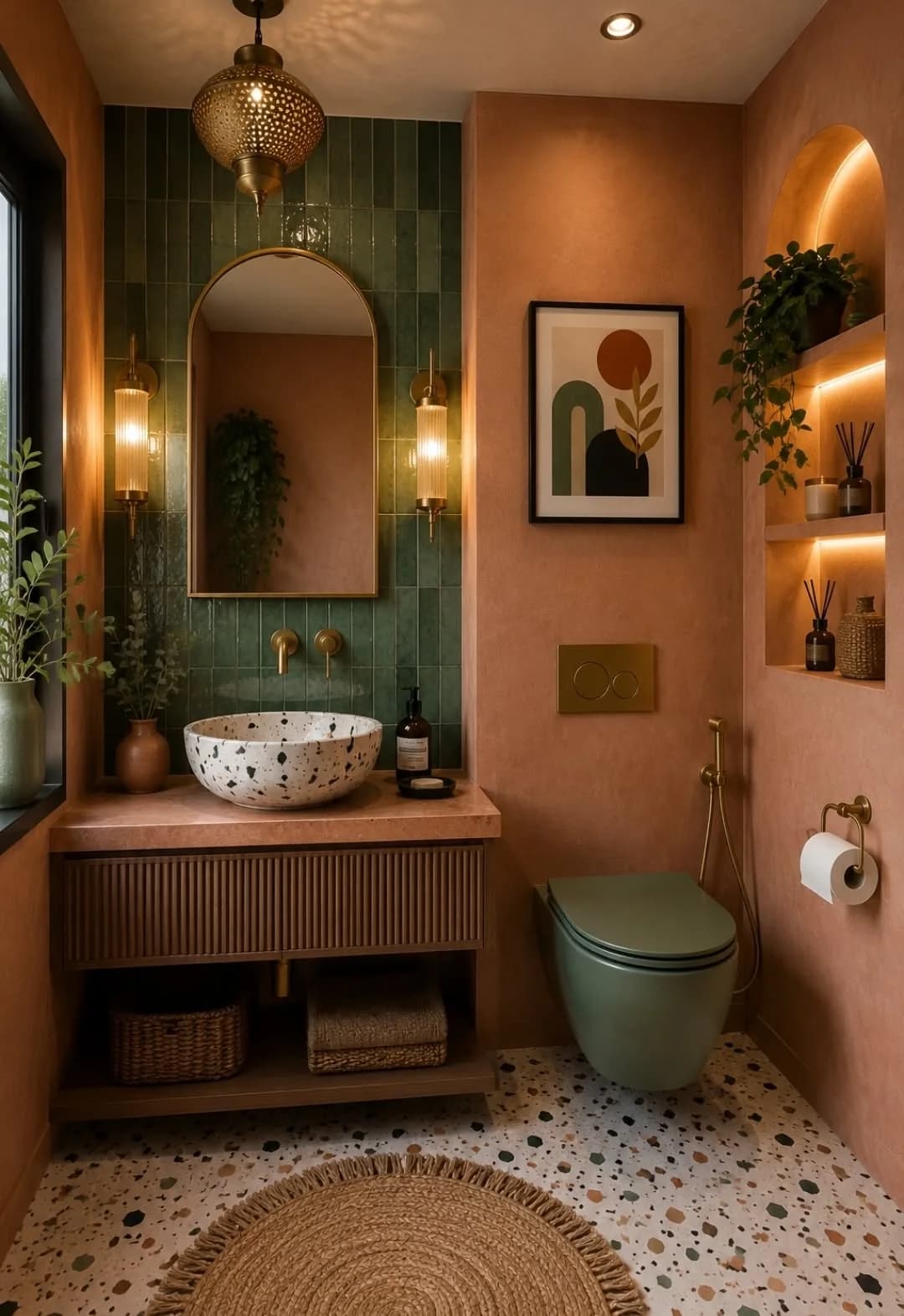
White fixtures (toilet, sink, tub) look whiter against a dark drench, which reads as clean. Brass, brushed gold and aged bronze look best on deep warm colors; black and nickel suit greens and blues.
Lighting a Drenched Small Bathroom
Dark walls absorb light, so a drenched bathroom needs more of it, not less:
- Two light sources at face height, such as sconces either side of the mirror or one above it, so the face is lit evenly.
- Warm bulbs (2700K to 3000K) if the color is warm; cooler bulbs turn burgundy brown and terracotta muddy.
- A ceiling light or recessed lights for cleaning and general use.
- Mirrors as large as the wall allows, which bounce the light around.
Check that any light near the shower or bath is rated for that zone, and use an electrician for new wiring.
Renter-Friendly Color Drenching
Painting is the cheapest way to drench, and many landlords allow it if you repaint before you leave. Ask first, keep the color code, and budget for a coat of primer at move-out. If paint is off the table, you can get part of the effect with a dark shower curtain, matching towels, bath mat and a peel-and-stick wall covering in the dry areas; our notes on renter-friendly peel and stick wallpaper say which ones cope with humidity. For storage that keeps the surfaces clear, see renter-friendly bathroom storage.
Reader Poll
Which drench would you try first?
Mistakes to Avoid
- Stopping at the walls. Without the ceiling and trim it is a dark bathroom, not a drenched one.
- Choosing from a small chip. Colors look stronger on four walls and a ceiling. Test big.
- A cool color in a windowless room. It turns grey and gloomy under bulbs.
- Flat matte in a shower room unless the paint is specifically made for it.
- Too many accent colors. Let the drench color, one metal and white fixtures do the work.
For other ideas in the same spirit, our painted accent wall ideas show how far one can of paint goes.
FAQ
Is color drenching good for a small bathroom?
Yes. A small bathroom has little surface to paint, and one color on walls, ceiling and trim hides the corners and lines that make a small room feel tight.
Should I paint the ceiling when color drenching a bathroom?
Yes, in most cases. The painted ceiling is what turns a dark bathroom into a drenched one. If the full color feels too heavy, use the same color one shade lighter.
What paint finish is best for a color drenched bathroom?
A bathroom-rated paint in satin or eggshell for the walls, and satin or semi-gloss for trim and the door. Some brands make durable matte bathroom paints; follow the manufacturer's guidance.
What color is best for color drenching a bathroom with no window?
A deep warm color: burgundy, terracotta, ochre, warm olive or chocolate. Cool greys and icy blues tend to look flat under artificial light.
Does color drenching make a small bathroom look smaller?
It usually does the opposite. Without contrast at the corners and ceiling, the edges of the room blur and the space feels enclosed in a cozy way rather than cramped.
Can you color drench a bathroom with white tile?
Yes. Either paint above the tile in your drench color and treat the tile as wainscoting, or pick a color that sits well with the tile's undertone. Painting the tile itself wears quickly in wet zones.