Color Drenching a Bedroom: How to Do It and Which Colors Work
Color drenching a bedroom, step by step: which colors suit a room you see mostly at night and from the pillow, what to do with sloped ceilings, fitted wardrobes and bedding, and how to try it before buying paint.

In this guide · 10 sections
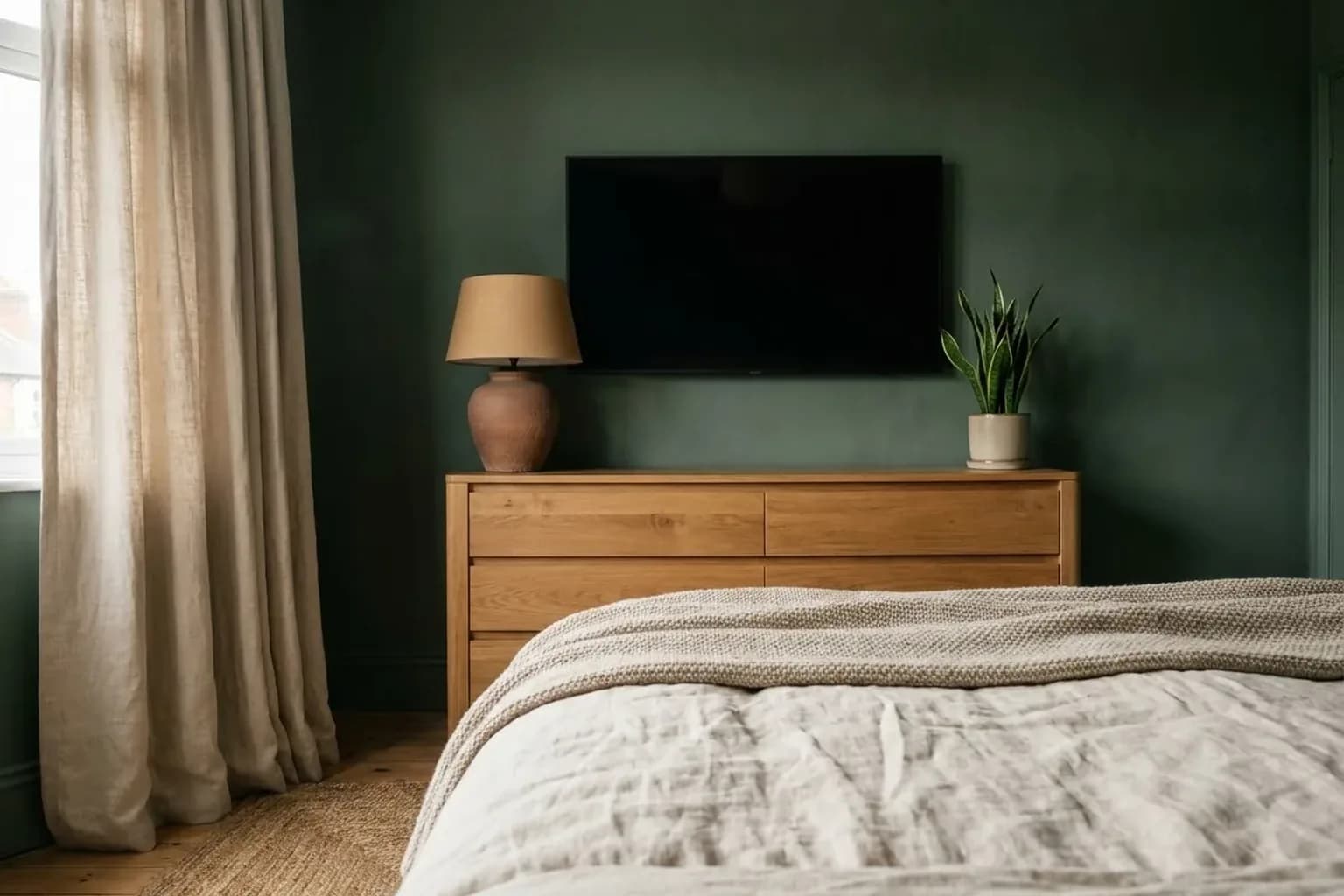
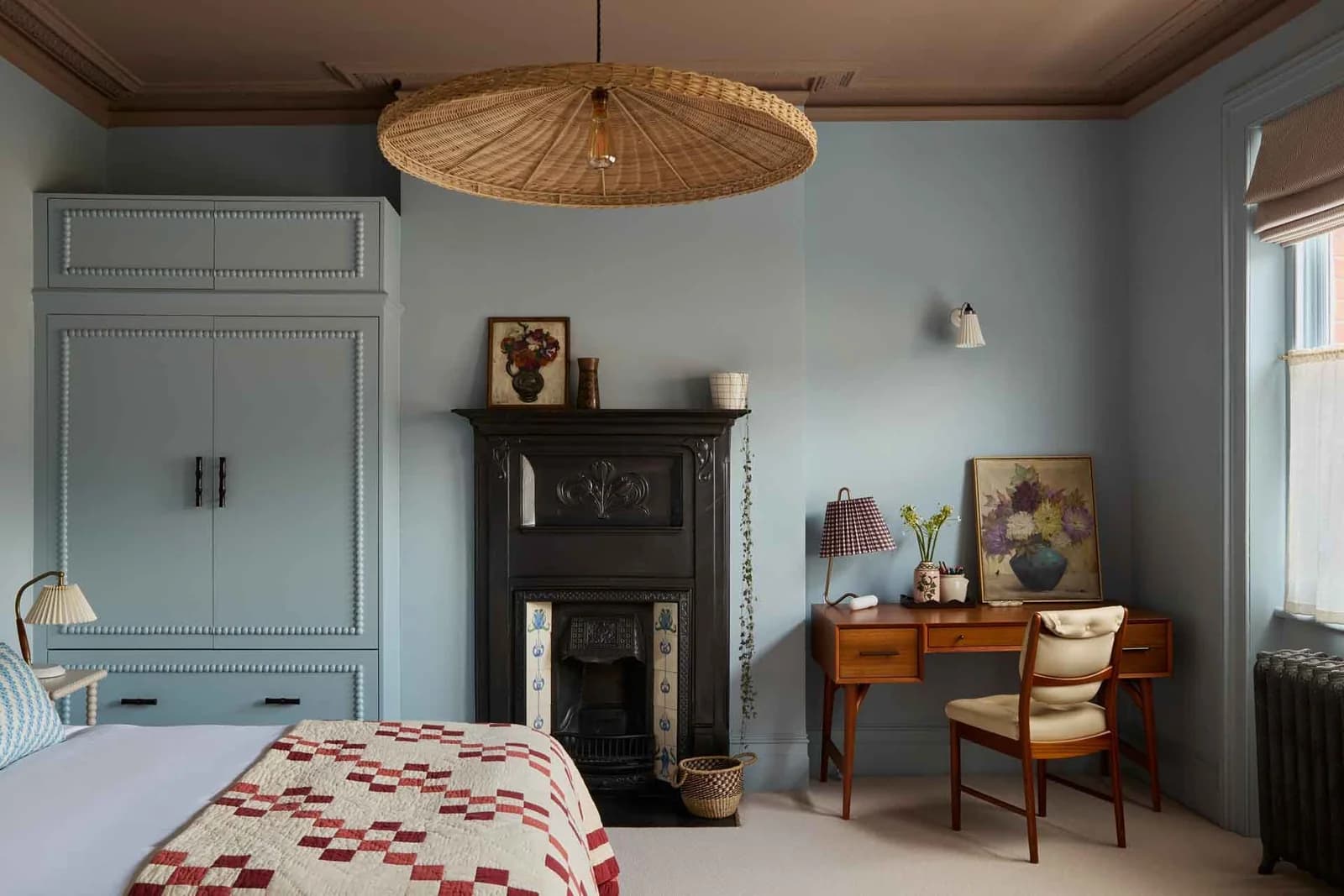
Color drenching a bedroom means one color on the walls, the ceiling, the skirting, the door and its frame, the window frames and any fitted wardrobes, so the room has no white outlines. A bedroom is the easiest room in the house to drench: it is small, it has little woodwork, it is used mostly in lamplight, and it is the one room where you spend time looking at the ceiling. The colors that work best are muted and mid to deep: clay, sage, olive, grey-blue, mauve and warm beige.
This guide is about the bedroom in particular: choosing a color for a room seen at night and at waking, dealing with sloped ceilings and wardrobes, and carrying the color into bedding and curtains. The surface-by-surface basics and the question of finishes are covered in our guide to color drenching a living room.
Why the Bedroom Suits a Drench
- You see the ceiling. From the pillow, a white ceiling above colored walls is a bright rectangle with a hard edge. In the wall color, it recedes.
- The room is used in low light. Lamps on a single color give soft, even shadows. Contrast that looks crisp at noon looks busy at eleven at night.
- There is less to paint. One door, one window, perhaps a wardrobe. The woodwork that makes a living room slow is a small job here.
- Awkward shapes disappear. Sloped ceilings, dormers, boxed-in pipes and chimney breasts stop being outlined.
Which Colors Work in a Bedroom
Think about when you are in the room. A color has to look good at night under warm bulbs and again in the first light of morning.
| Color | At night, by lamplight | In the morning | Suits |
|---|---|---|---|
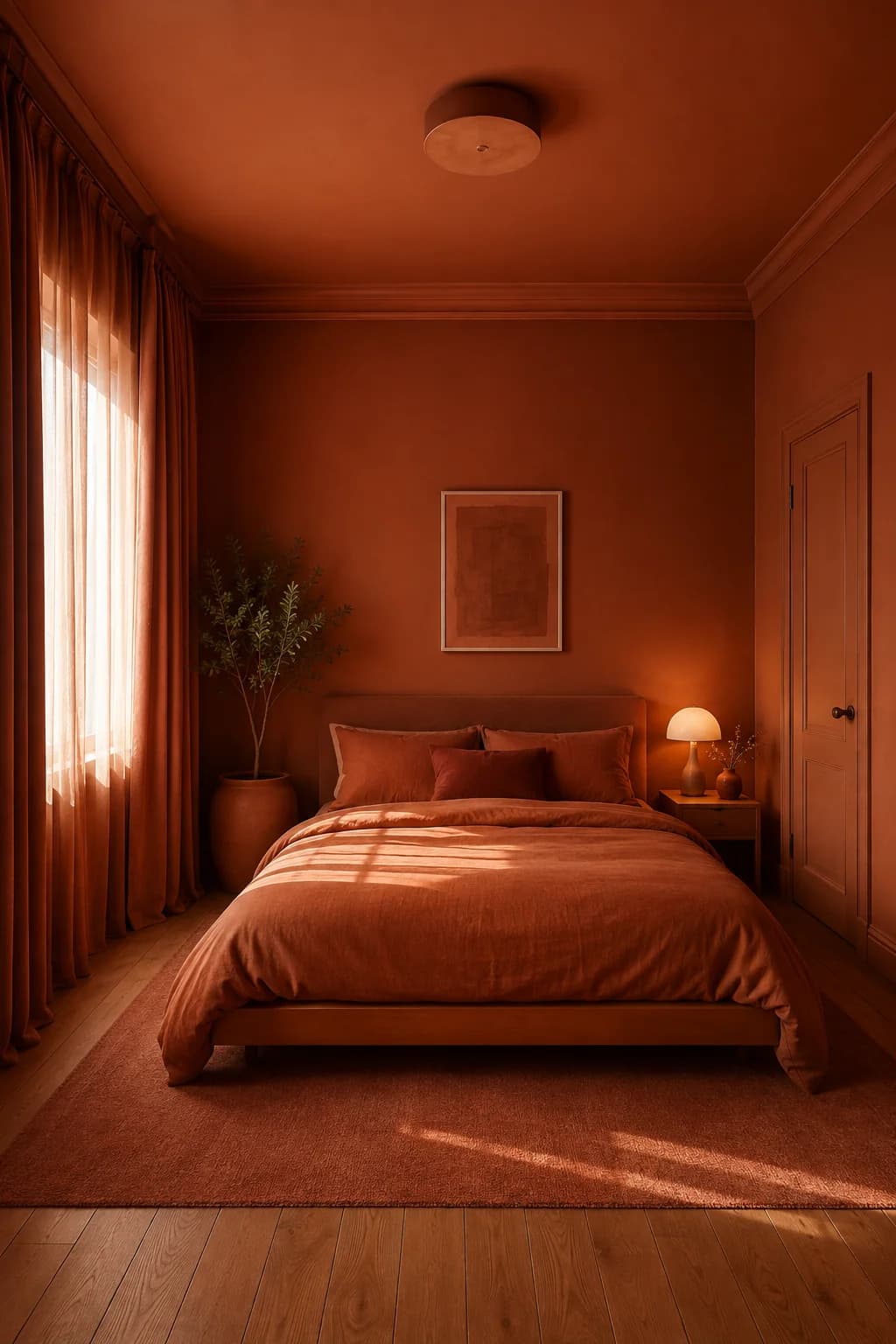
| Clay, terracotta, cinnamon | Glows; very warm and close | Cheerful in east light, strong in full sun | Cool north rooms, people who like warmth |
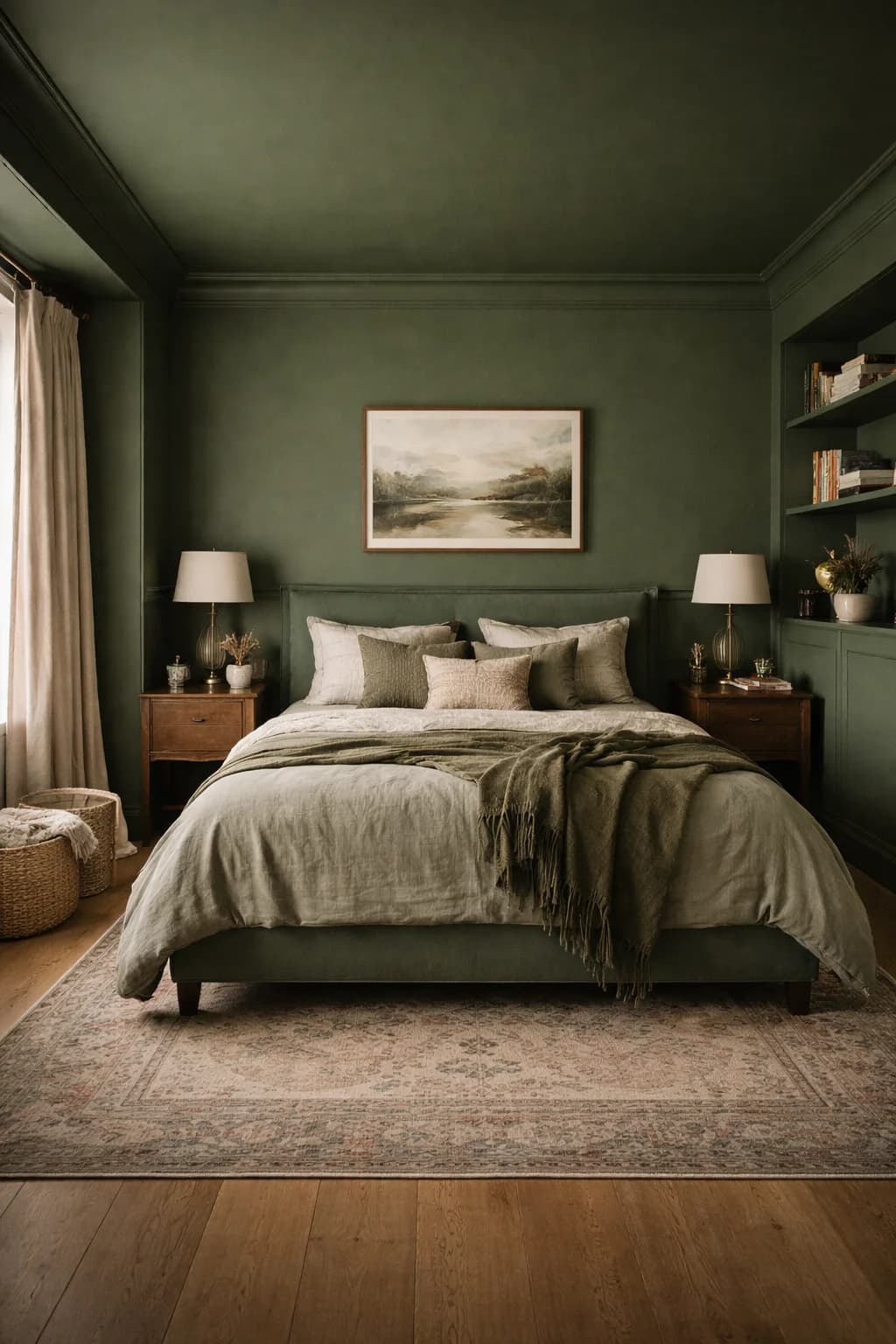
| Sage and soft green | Soft, slightly grey | Fresh | Almost any room; the safest green |
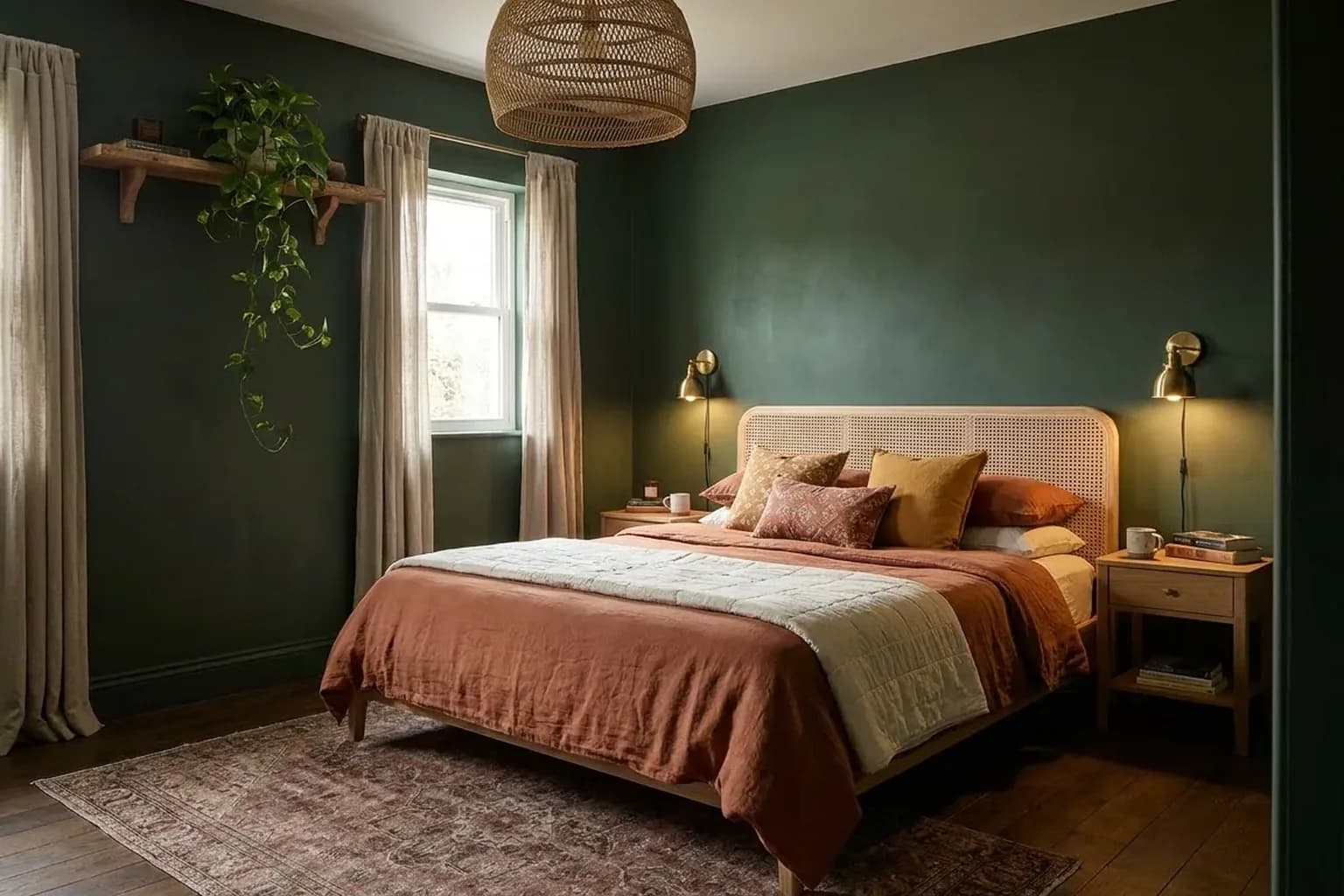
| Olive and deep green | Dark and enclosing | Rich where there is real daylight | Rooms with a good window, wood furniture |
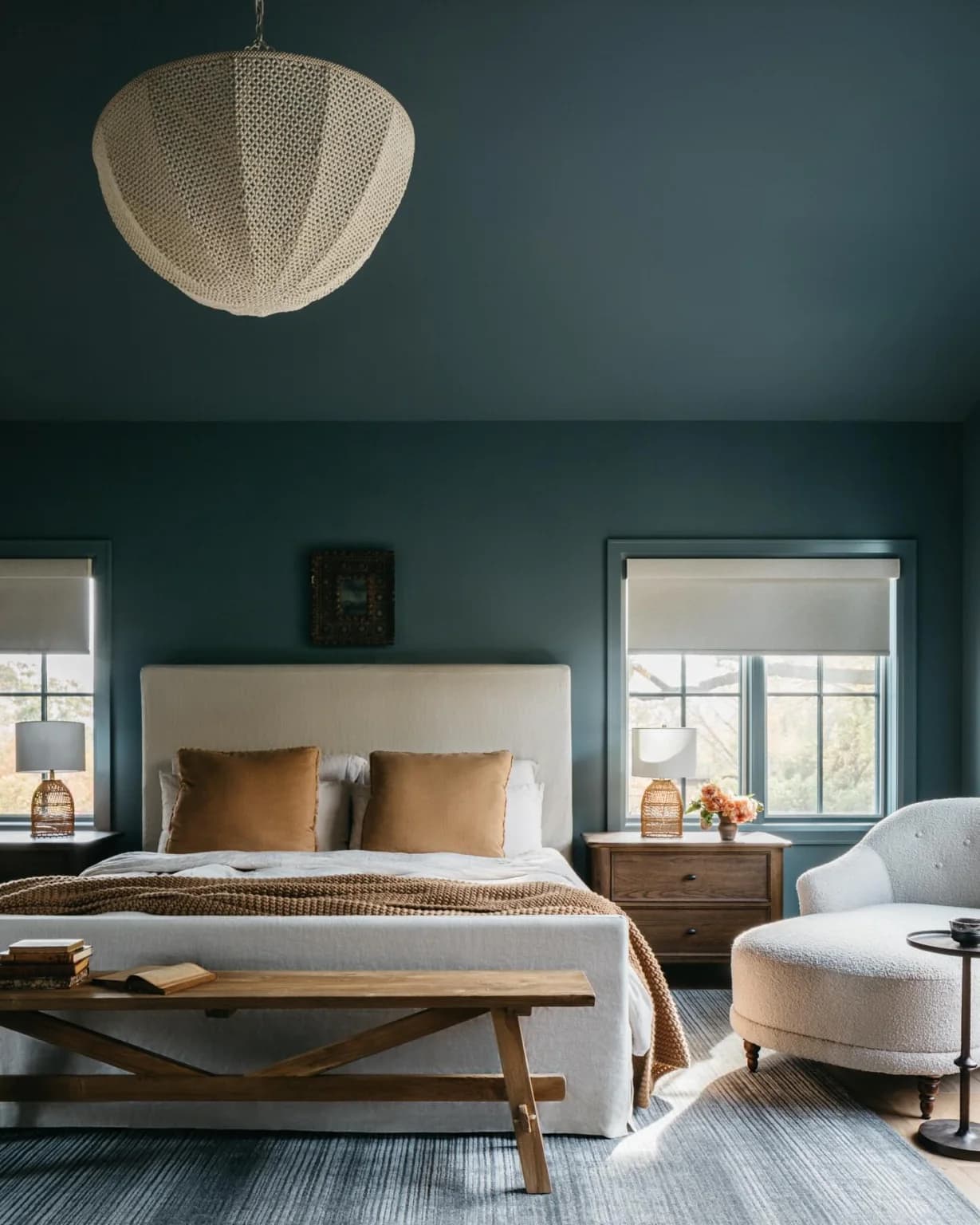
| Grey-blue, slate, deep teal | Calm, cool, tailored | Clear and airy | Warm south or west rooms; add warm textiles |
| Navy, ink, near-black | Like a night sky; walls vanish | Dark until the curtains open | Rooms used only for sleep; needs good lamps |
| Mauve, dusty pink, plaster | Flattering and gentle | Warm and light | Small rooms, north and east light |
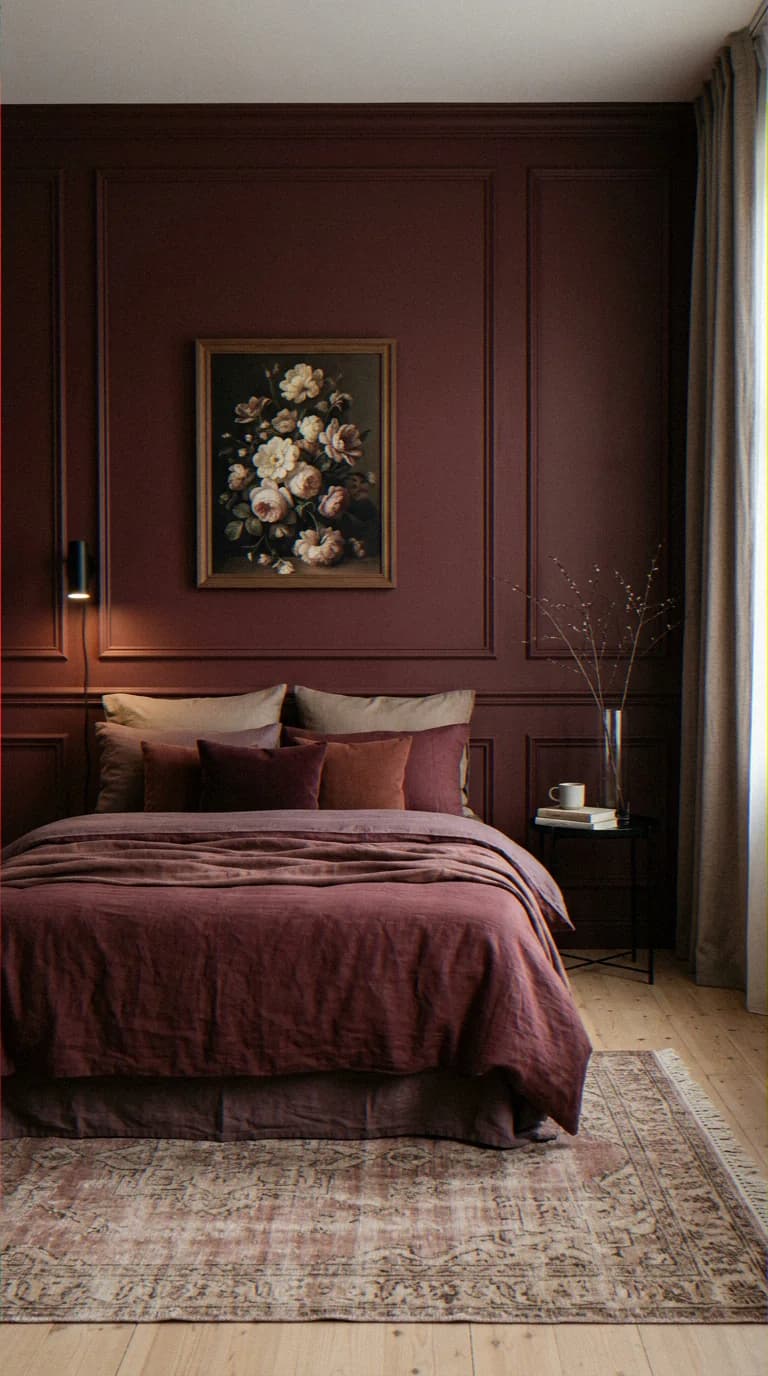
| Burgundy and aubergine | Dramatic, wine-dark | Heavy without daylight | Large rooms, period panelling |
| Beige, stone, warm white | Quiet and even | Bright | First-timers, rentals, very small rooms |
Two general points hold across the table. A drenched color looks stronger than the same color on one wall, because every surface reflects it onto the others, so pick a greyer, quieter version than your first instinct. And pale blues and cool greys, which seem like obvious bedroom colors, can feel chilly over a whole room; they need warm wood, wool and warm bulbs to balance them.
Color Drenching a Bedroom, Step by Step
1. Test the color large, and on the ceiling. Paint two big sheets of lining paper or card. Tape one to the wall beside the bed and one to the ceiling above the pillow. Look at them at night with your lamps on and again when you wake.
2. List what gets painted. Ceiling, walls, skirting, door and frame, window frame and sill, radiator, fitted wardrobe doors, any shelves or boxed pipes. If something on the list must stay as it is, such as a varnished door, decide now whether the room still works with it left out.
3. Pick the finish for each surface. Commonly a flat or matt finish for ceiling and walls and a tougher eggshell or satin in the same color for woodwork, wardrobe doors and the radiator.
4. Empty and protect. Move the bed to the middle and cover it; cover the floor. Remove handles and curtain fittings where you can.
5. Prepare. Fill and sand, wash greasy areas around switches and the headboard, and lightly sand and prime glossy woodwork so the new paint grips.
6. Paint from the top down. Ceiling first, then walls, then woodwork and radiator. Two coats on everything; deep colors over white often need a third or a tinted primer.
7. Put the room back slowly. Hang curtains and art only once the paint has hardened, and decide then what the room still needs. It is usually less than before.
Sloped Ceilings, Attic Rooms and Dormers
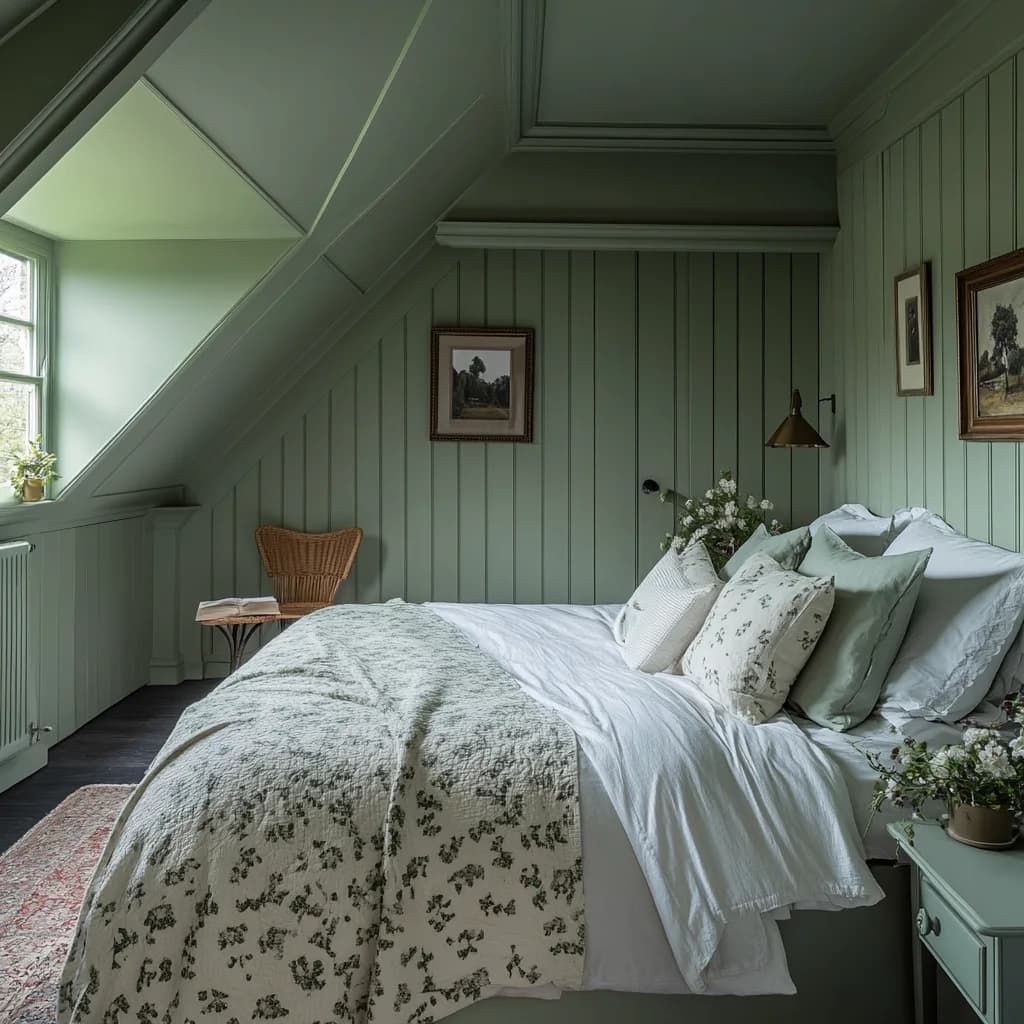
Rooms under the roof are where drenching helps most. With white ceilings and colored walls you have to decide where "wall" stops on a slope, and every choice draws a line at an odd height. One color removes the question. The planes of the roof show as soft changes in tone, lighter where they face the window and darker where they turn away.
In a low attic, a pale or mid color keeps the room from pressing down: sage, plaster pink, stone. Paint boards, beams, cupboard fronts and the radiator in the same color so the shape of the room stays simple.
Wardrobes, Headboard and Bedding
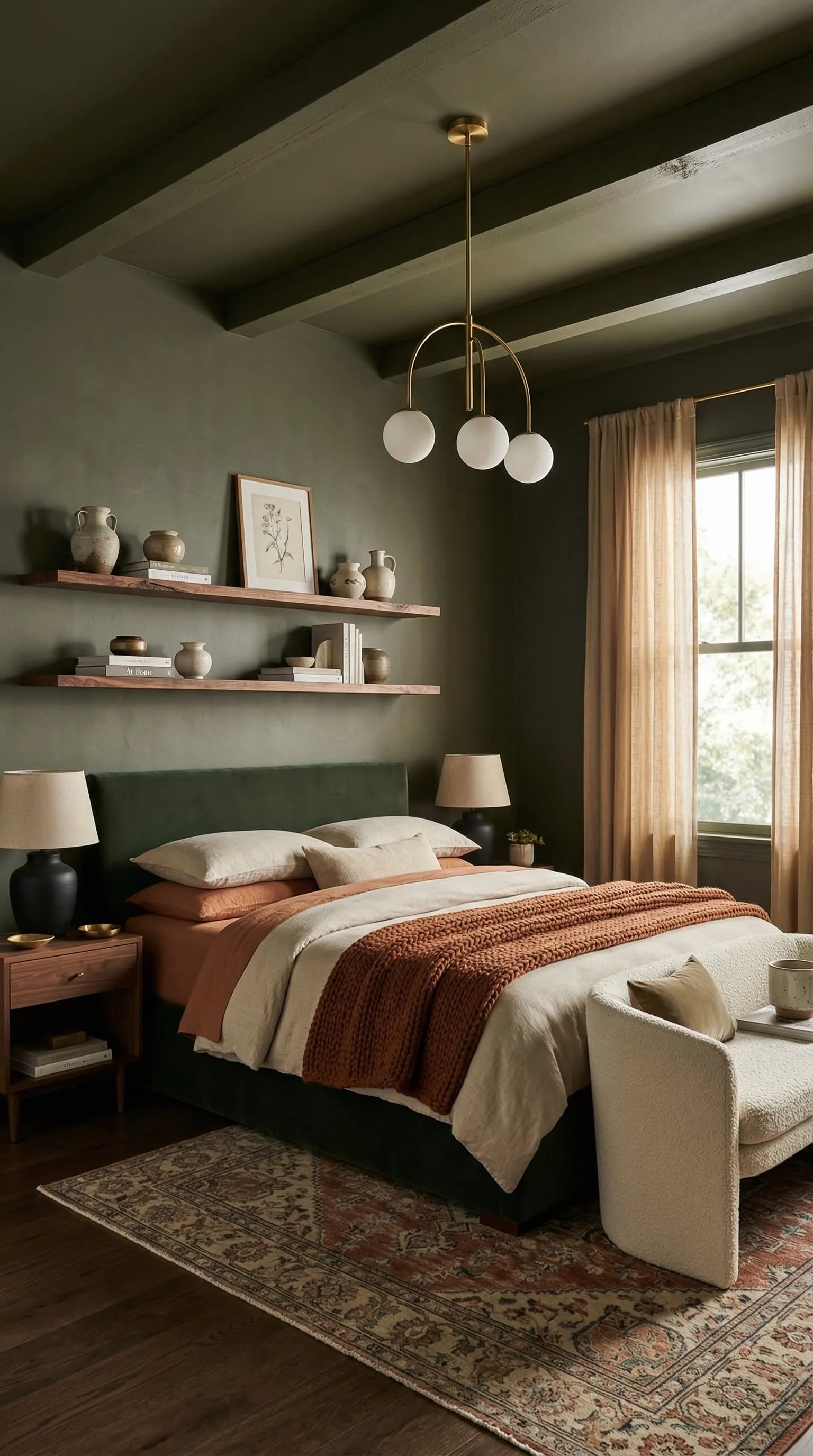
Fitted wardrobes. Paint the doors in the wall color and a wall of wardrobes becomes a wall. Use paint suited to the door material, key the surface first, and change the handles to something small. Freestanding wardrobes can be painted too, or left in wood as a contrast.
Headboard. An upholstered headboard close to the wall color extends the drench into fabric. A wooden or cane one gives the eye one warm break.
Bedding. The bed is the biggest object in the room, so it decides how far the drench goes:
- Same color as the walls: the full version. Striking, and very calm once you are used to it.
- Pale linen or white: the relief version. The bed becomes the light spot in a dark room. This is the easiest to live with.
- One accent: cream bedding with a single throw or pair of pillows in a contrast, such as ochre on teal or terracotta on olive.
Curtains. Close to the wall color, floor length, so the window wall stays whole. If the walls are green, the tonal options are in what color curtains go with green walls.
Lighting a Drenched Bedroom
A dark drench soaks up light, so plan lamps along with paint.
- Two bedside lights at least, wall-mounted or on tables, with warm white bulbs.
- One more low light across the room: a lamp on a dresser or a floor lamp in a corner.
- A pale shade on the ceiling fitting, or none at all. A large paper or woven shade against a colored ceiling looks like a moon; a bright bare bulb glares.
- A mirror opposite the window to push daylight further in.
If the room has no ceiling fitting, plug-in wall lights and pendants are covered in our guide to lighting without ceiling lights.
Small Bedrooms
A small bedroom is a good candidate. With little wall visible between bed, wardrobe and window, white trim makes many short lines; one color makes one room. For a room that should feel airy, use a pale or mid tone. For a room that should feel like a nest, go deep, and keep the bedding light.
What matters more than the color is that the floor stays clear and the surfaces are few. Our sage green bedroom ideas include a walls-and-trim version in a color that suits small rooms, and our Japandi bedroom ideas show how little furniture a calm bedroom needs.
Try It Without Paint
In a rental, or before committing, borrow the effect with fabric. Choose one color and use it for the curtains, the duvet cover and a large throw, against whatever the walls are. A fabric canopy or a wide textile hung behind the bed takes it further. The warm single-color rooms in our Moroccan bedroom ideas work this way, with textiles doing what paint does here.
Mistakes to Avoid
- Leaving the ceiling white "to be safe". In a bedroom it is the surface you look at most.
- Choosing by daylight only. Judge the sample at night.
- A cool pale color everywhere with nothing warm. Add wood, wool and warm bulbs.
- Forgetting the wardrobe doors or the radiator. They become bright patches.
- Too many accent colors. One, or none.
FAQ
Is color drenching a good idea for a bedroom?
Yes. Bedrooms are small, used in low light and seen from the bed, so removing the contrast between walls, ceiling and trim makes them feel calmer and more enclosed.
What colors are best for color drenching a bedroom?
Muted mid to deep tones: sage and olive green, clay and terracotta, grey-blue and teal, mauve and warm beige. Very dark colors such as navy suit rooms used only for sleeping.
Should the bedroom ceiling be the same color when drenching?
Yes. If the ceiling is low and the color dark, use a lighter mix of the same color on the ceiling.
Can you color drench a bedroom with a sloped or vaulted ceiling?
Yes, and it is one of the best uses. One color over walls and slopes removes the awkward line where they meet.
Does a moody color-drenched bedroom feel too dark?
It will be darker by day. With pale bedding, at least three warm lamps and a mirror opposite the window it feels snug, not gloomy. Test a large sample first.
Do I have to match the bedding to the walls?
No. Matching bedding gives the fullest effect; white or natural linen gives relief and is easier to live with.