What Color Curtains Go With Green Walls? Answers by Shade of Green
What color curtains go with green walls depends on the green: cream and natural linen suit every shade, while dark, olive, emerald and mint walls each have their own best partners. A table by shade, with reasons.

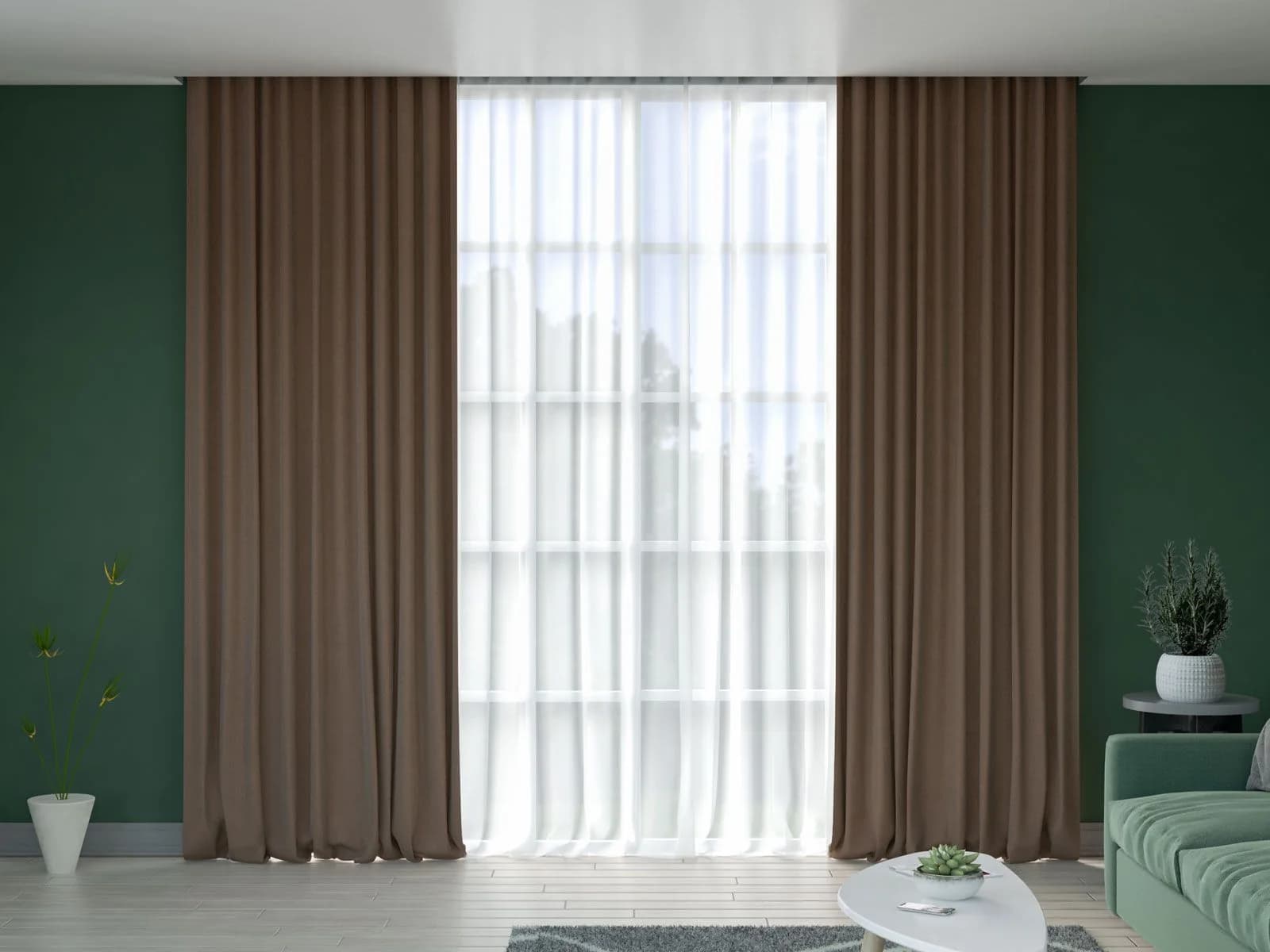
In this guide · 10 sections
What color curtains go with green walls? Cream, ivory and natural linen go with every green, from mint to forest, because green is the color of leaves and those are the colors of stone, sand and bark beside them. Beyond that safe answer, the best curtain depends on how dark and how yellow your green is: dark greens take warm browns, rust and ochre well, olive wants beige and tobacco, and light greens want white.
Find your wall in the table, then read the section for that shade. Sage has enough quirks to need its own article: see what color curtains go with sage green walls.
What Color Curtains Go With Green Walls, by Shade
| Wall color | Safest curtain | For more character | For a calm, tonal room | Usually avoid |
|---|---|---|---|---|
| Dark green: forest, hunter, bottle | Cream or ivory | Rust, cognac brown, ochre | Dark green velvet, one shade off the wall | Cool grey, stark white in a dim room |
| Olive and moss | Natural linen, beige | Tobacco or chocolate brown, terracotta | Deeper olive | Blue-greens, cold white |
| Emerald and other bright greens | Clean white | Black-and-white stripe, navy, blush | White on white sheers | Other saturated colors |
| Mint and pale green | White, soft off-white | Pale blush, warm grey, natural rattan blinds | A slightly deeper green | Heavy dark curtains |
| Blue-green and teal-leaning green | Warm white | Ochre, tan, olive velvet | Deeper teal | Yellow-greens |
| Sage | Warm white, cream | Terracotta, dusty pink | Deeper sage or olive | Mid-grey, bright colors |
Dark Green Walls
Dark green absorbs light, so the first question is whether the room needs the curtains to give light back.
If the room is dim, hang cream or ivory. Pale curtains against a dark wall become the brightest thing in the room and frame the view. Choose a warm off-white: brilliant white against forest green makes a hard, high-contrast stripe at each side of the window.
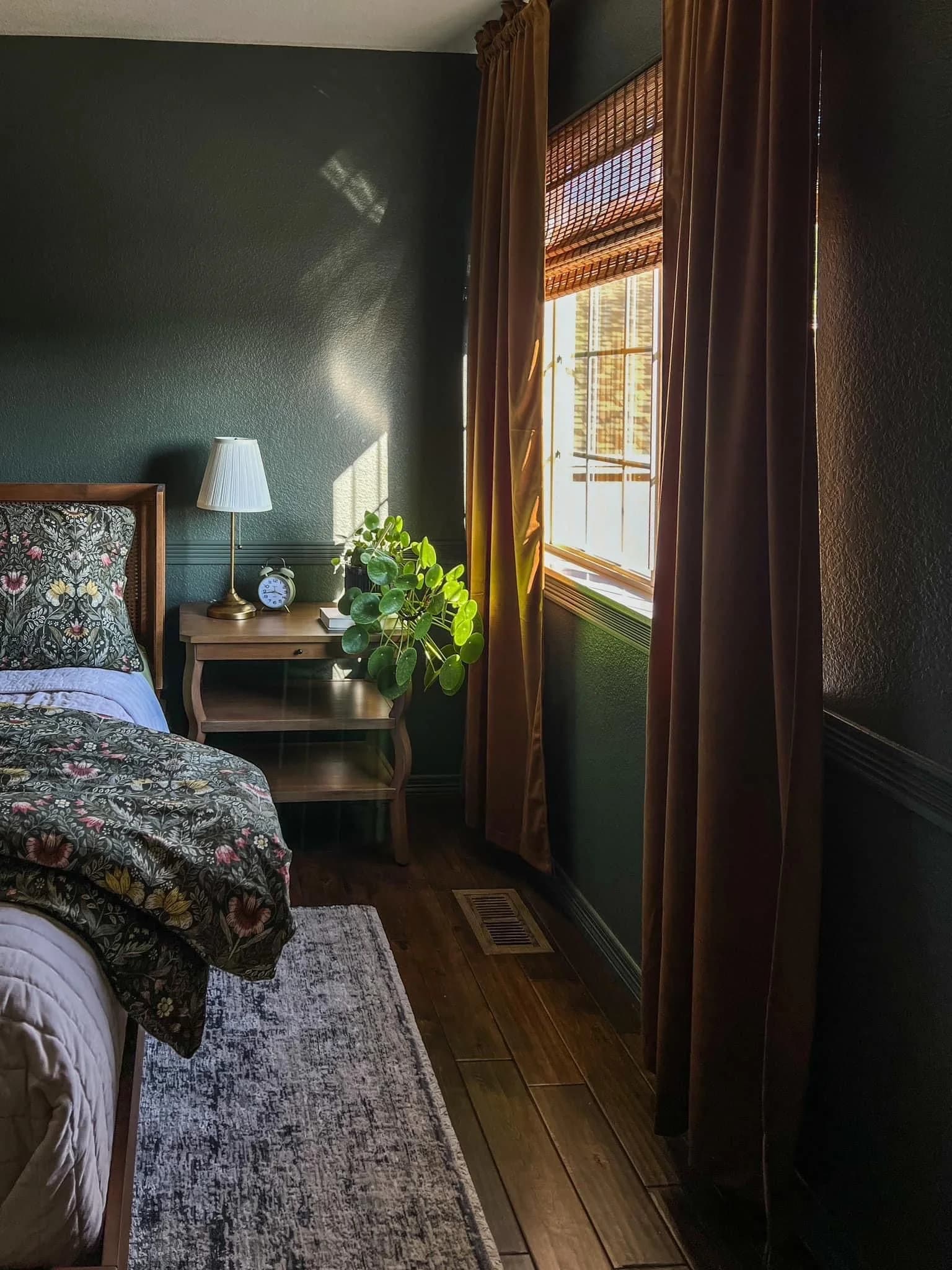
If the room has good light, warm browns are the richest choice. Rust, cognac and tobacco are on the red-orange side of the color wheel, opposite green, and in their deep versions they glow against it without shouting. Ochre and mustard do the same job in a lighter key.
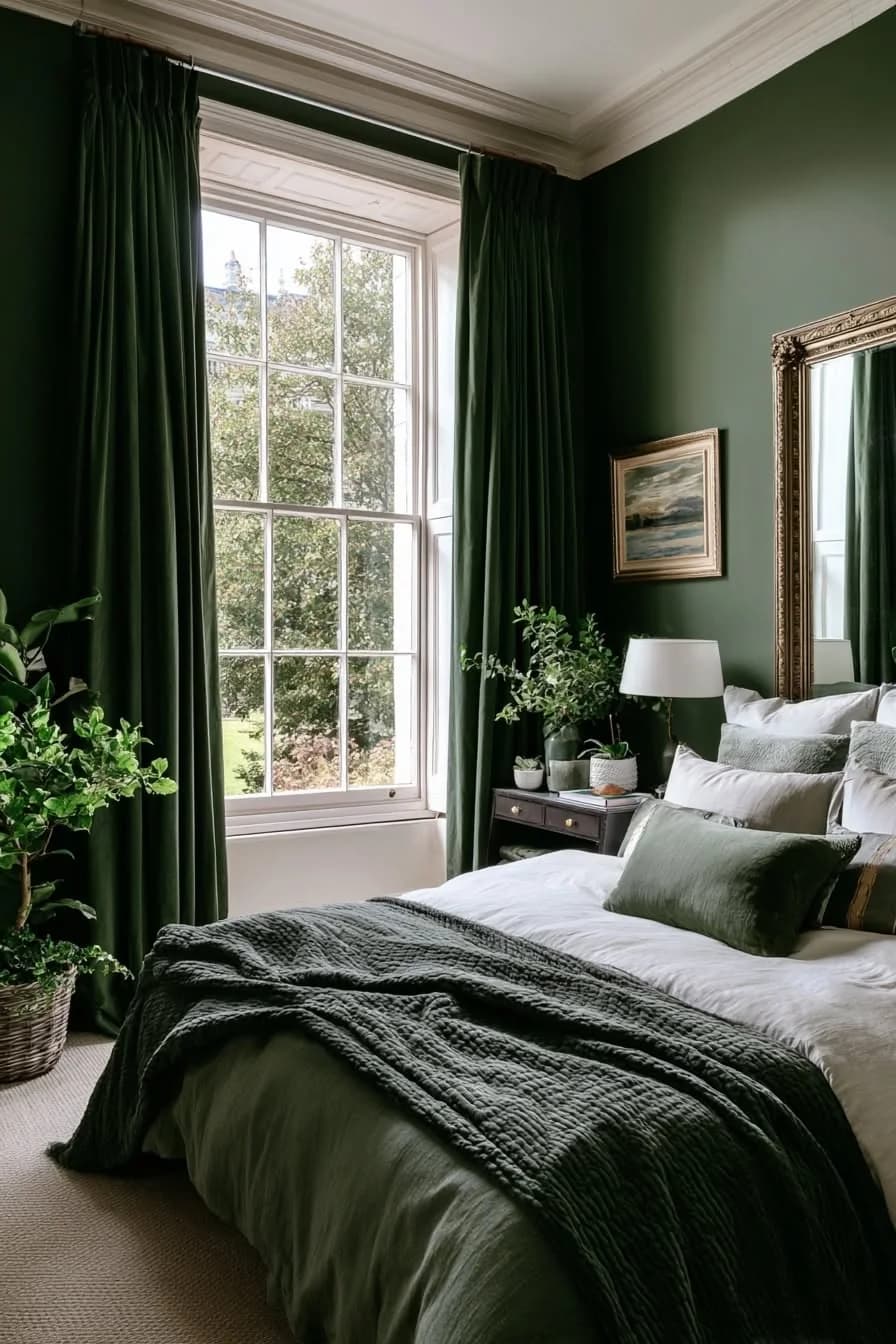
If you want a room that feels enclosed and quiet, such as a bedroom or a study, hang curtains in dark green too. Velvet or heavy wool in a green one step lighter or darker than the wall keeps the window from breaking up the color. Add cream bedding or a pale rug so the room does not go flat.
Olive and Moss Green Walls
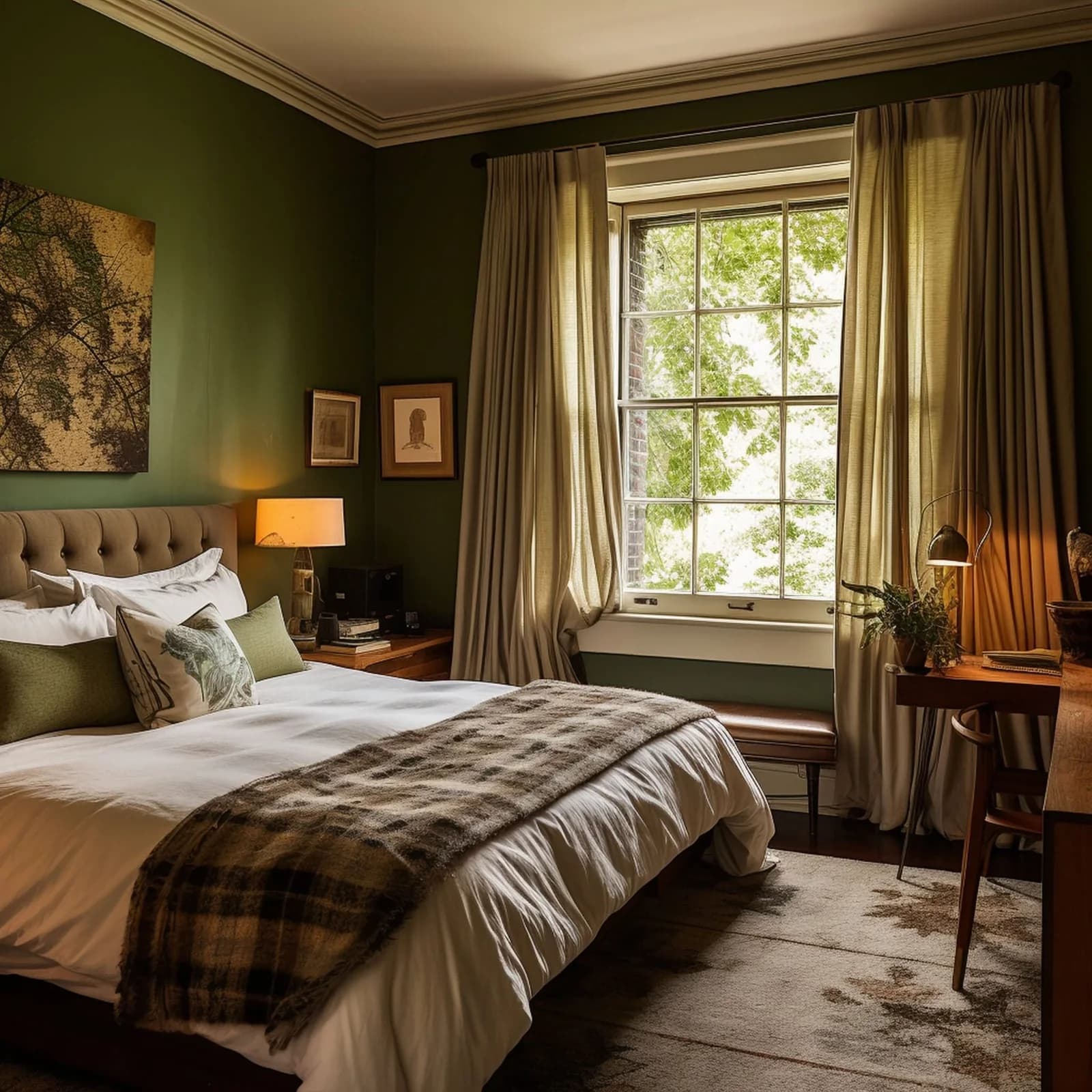
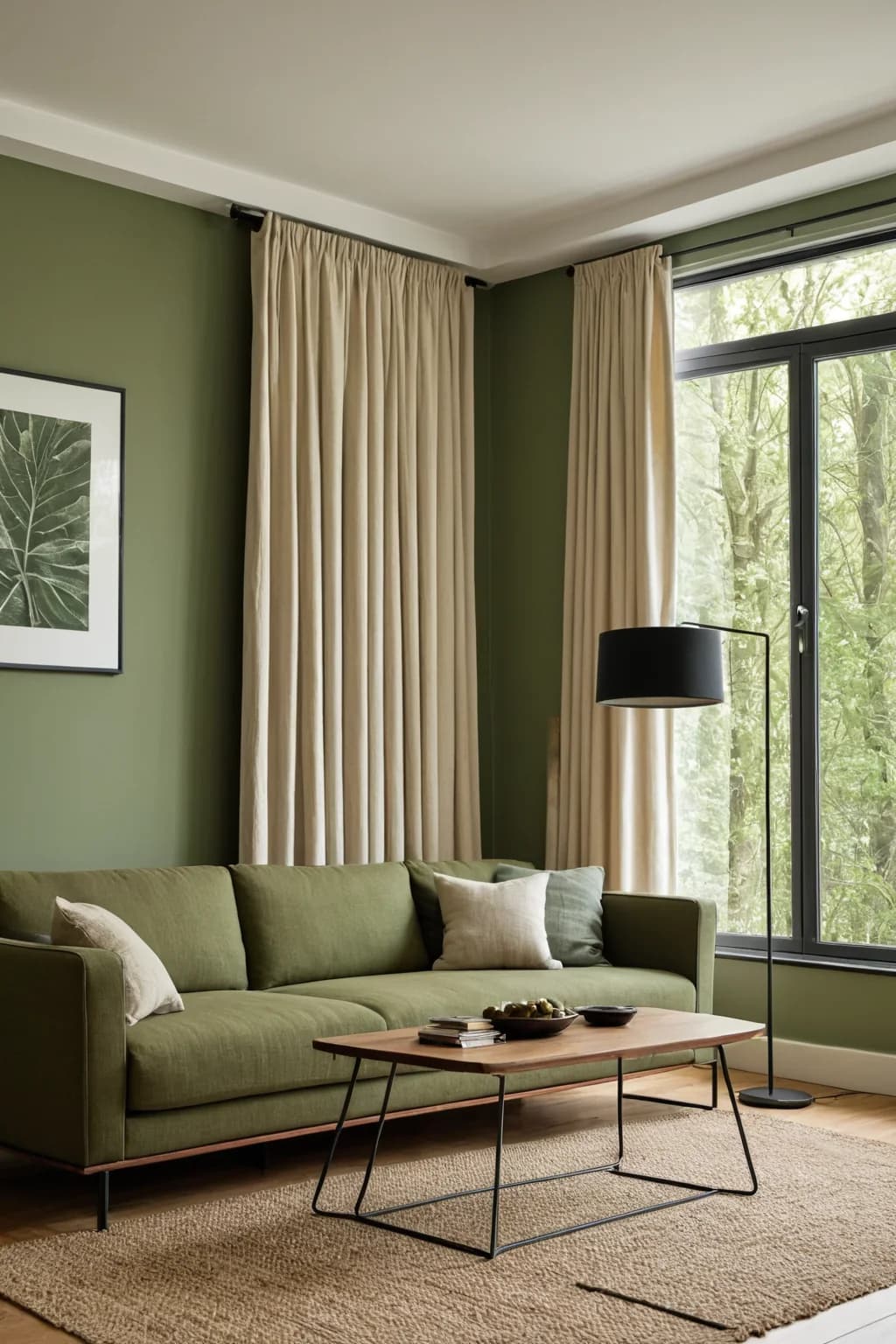
Olive is green with yellow and a little brown in it, which makes it one of the warmest greens. It likes materials more than colors: undyed linen, hessian weaves, wool, wood.
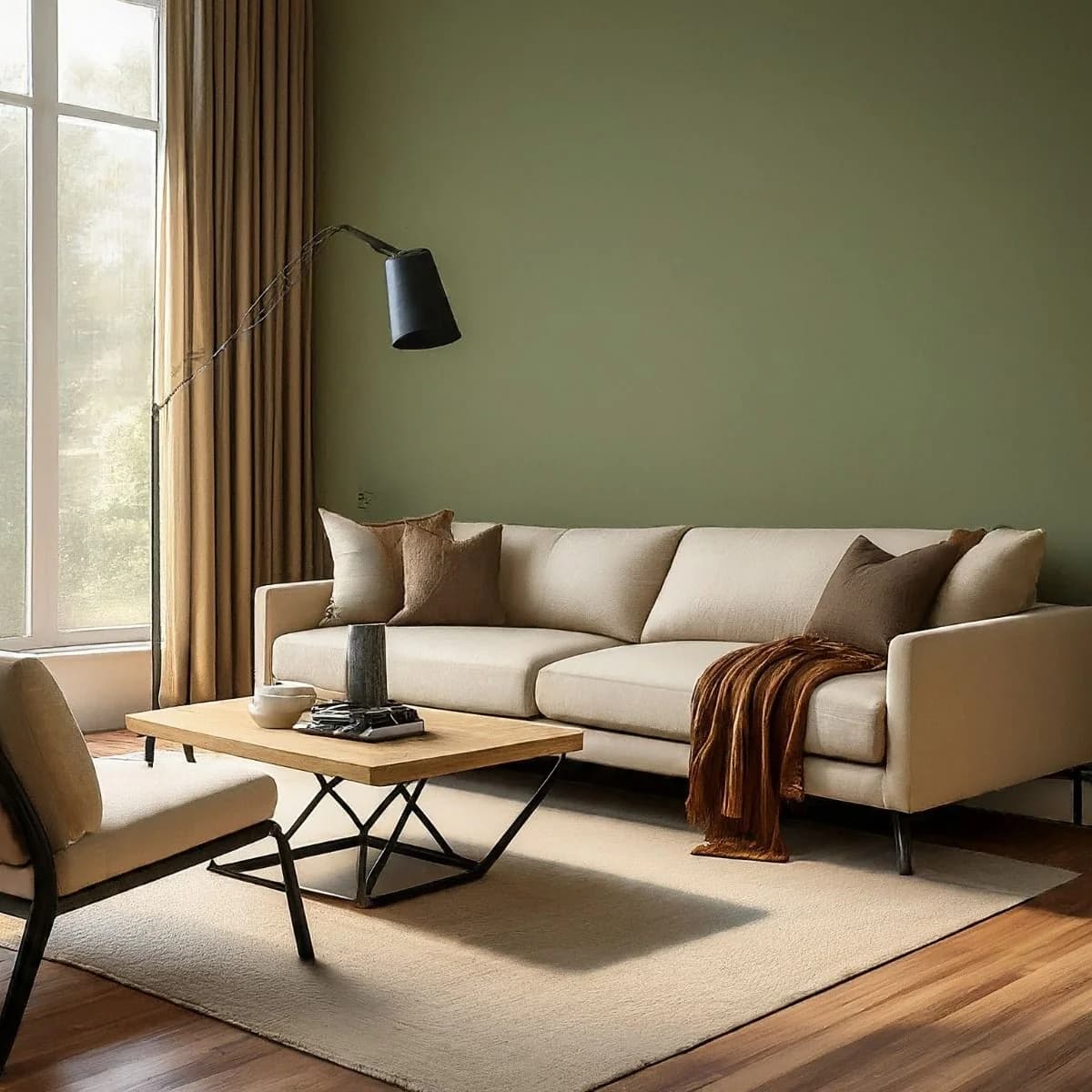
- Natural linen or beige is the easy answer. It reads as slightly lighter than the wall and belongs to the same earthy family.
- Brown, from tobacco to chocolate, is the richer one. Olive walls with brown curtains, a cream sofa and a rust throw make a complete palette from four colors.
- Terracotta works for the same reason as on dark green, and suits olive especially because both are muted.
- Cream keeps an olive bedroom light; choose a heavy weave so it does not look thin against a strong wall.
Avoid blue-greens and cold whites beside olive. They make it look muddy.
Emerald and Bright Green Walls
A saturated green is the main event, and the curtains should step back. Clean white is the classic partner: it makes emerald look fresher and sharper. For more pattern, a black-and-white stripe or a white curtain with a dark border holds its own without adding a second color. Navy is the deep option; blush is the soft one.
Avoid curtains in another strong color. Bright green with bright yellow, orange or purple curtains turns the window into a contest.
Mint and Pale Green Walls
Pale greens are mostly white already, so white curtains simply extend them. A soft off-white avoids a clinical look. Warm grey, pale blush and natural textures such as rattan or bamboo blinds add interest without weight.
Heavy dark curtains overwhelm a pale wall. If you need blackout, line a pale curtain, or put a blackout blind behind a sheer.
Blue-Greens
Greens that lean toward teal are cool, and they need warmth from the curtains: a creamy white, tan, ochre, or an olive velvet, which looks surprisingly good against a blue-green because it is the warmer neighbor of the same family. Keep yellow-greens such as lime away.
Three Rules That Hold for Every Green
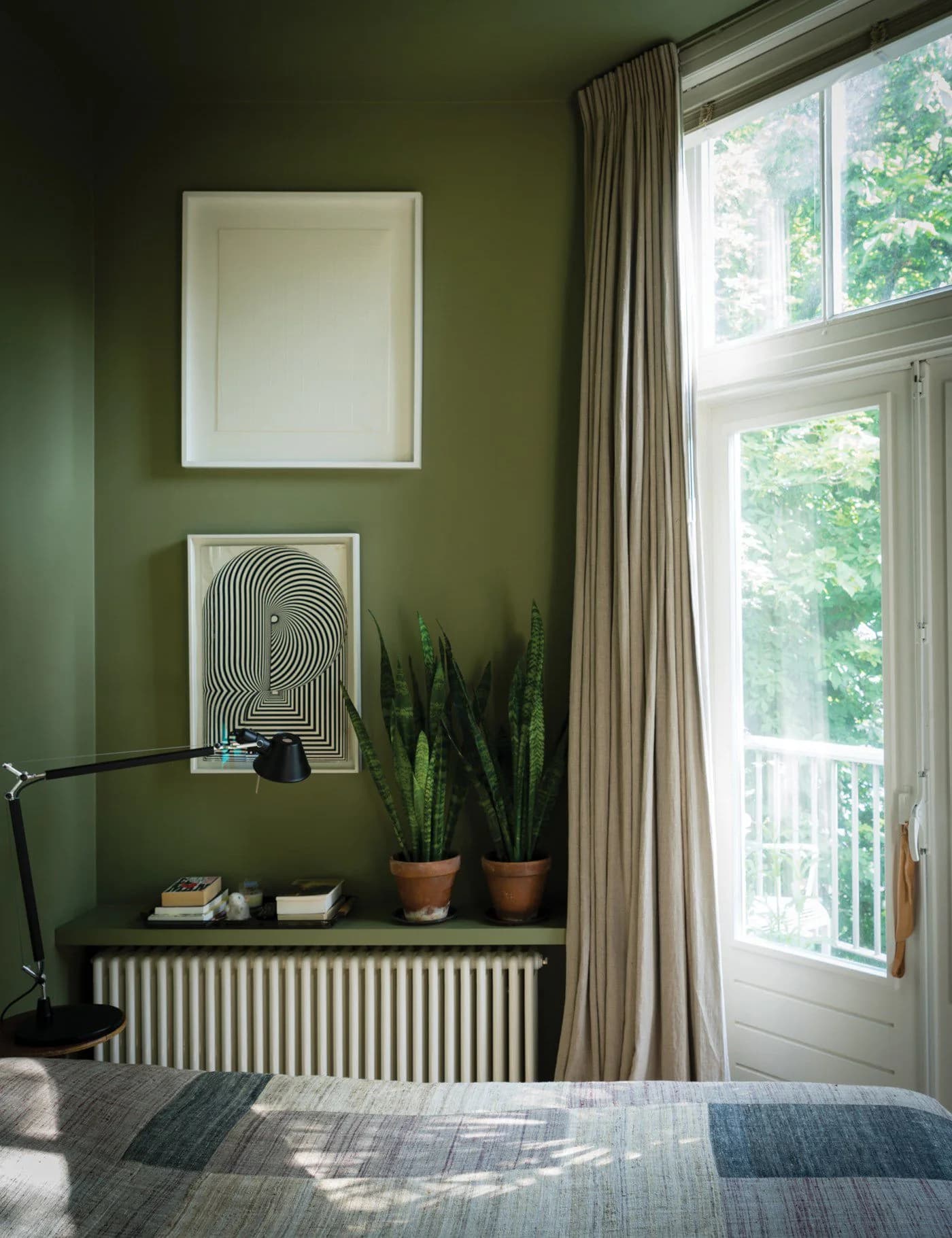
1. Match the warmth, contrast the depth. A warm green (olive, moss) wants warm curtains; a cool green (teal-leaning, mint) can take cooler whites and greys, though a little warmth still helps. Within that, choose curtains clearly lighter or clearly darker than the wall. Nearly-the-same looks like a mistake.
2. Repeat the curtain color once. Whatever you hang, put the same color somewhere else in the room: a cushion, a lampshade, a stripe in the rug. One repeat makes it look planned.
3. Let the green decide the metal. Brass and aged gold rods suit almost every green. Black rods suit dark and bright greens. Chrome and cool silver rarely help.
Fabric and Weight
- Linen and cotton-linen: the natural partner for green walls. Slightly rumpled, matte, and it filters light softly.
- Velvet: best in dark and olive schemes; it deepens any color and helps with warmth and sound in winter.
- Sheers: good under heavier curtains, or alone on mint and pale greens.
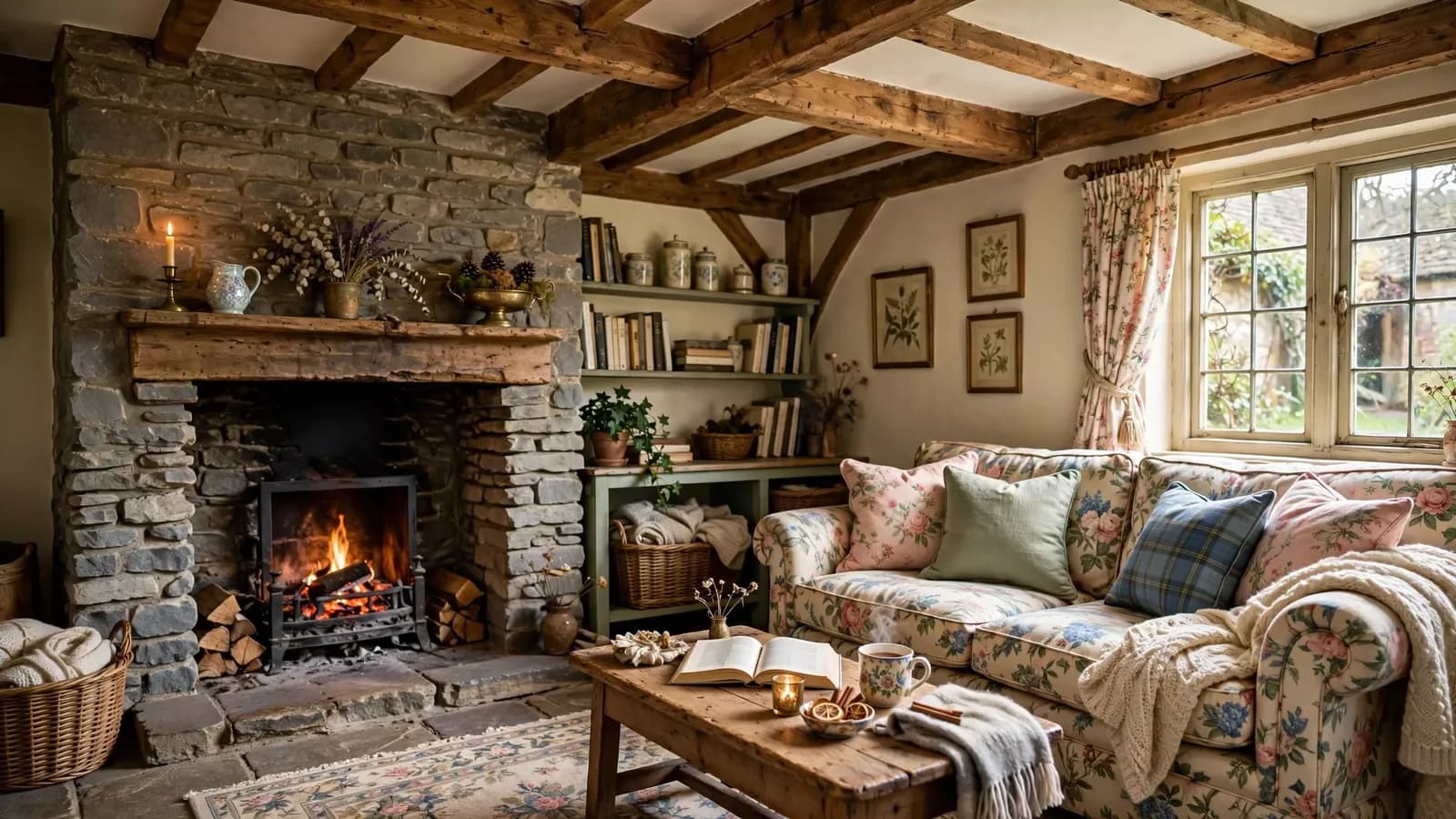
- Patterned fabric: choose a print with a cream ground and some of the wall green in it. Florals and leaf prints are the obvious choice; stripes and checks are the calmer one.
If you sew or do not mind hems that are not perfect, heavy cotton canvas makes convincing natural curtains for very little money; see our drop cloth curtains.
When the Green Is More Than the Walls
In a room where the ceiling and woodwork are green as well, curtains usually stay within a shade or two of the wall so the window does not interrupt it; our guide to color drenching a living room explains why. In a bedroom, where the bedding is as large as the curtains, decide the two together: our sage green bedroom ideas show several combinations. And if green walls are part of an earthier, warmer scheme, the pairings in our Moroccan color palette, with terracotta, ochre and brass, all apply.
FAQ
What color curtains go with dark green walls?
Cream or ivory to lighten the room, rust, cognac or ochre for warmth, or dark green velvet for a tonal, enclosed feel. Avoid cool grey.
What color curtains go with olive green walls?
Natural linen, beige and cream are the easiest. Tobacco or chocolate brown and terracotta are richer choices that suit olive's warmth.
What color curtains go with light green or mint green walls?
White or soft off-white. Pale blush, warm grey and natural woven blinds also work. Avoid heavy dark curtains.
Do grey curtains go with green walls?
Warm greys can work with pale and blue-leaning greens. With olive, dark green and sage they often look cold or mismatched; beige or cream is safer.
Can I use green curtains with green walls?
Yes, if the two are clearly different in depth: one or two shades lighter or darker, in the same family. Add white or cream elsewhere so the room has relief.
Should curtains be lighter or darker than green walls?
Lighter curtains brighten the room and frame the window. Darker ones make it calmer and more enclosed. Either works as long as the difference is obvious.