What Color Curtains Go With Sage Green Walls? 8 Options and When to Use Each
What color curtains go with sage green walls: warm white and cream are the safe answers, a deeper green is the calm one, and terracotta or blush the warm one. Eight options compared by light, mood and room.

In this guide · 7 sections
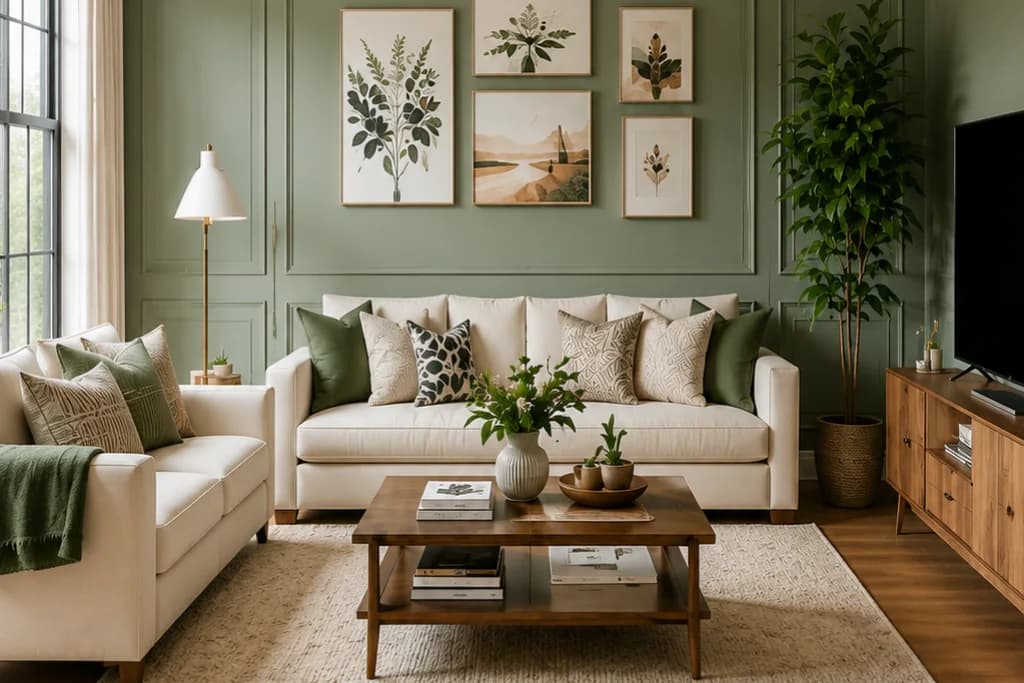
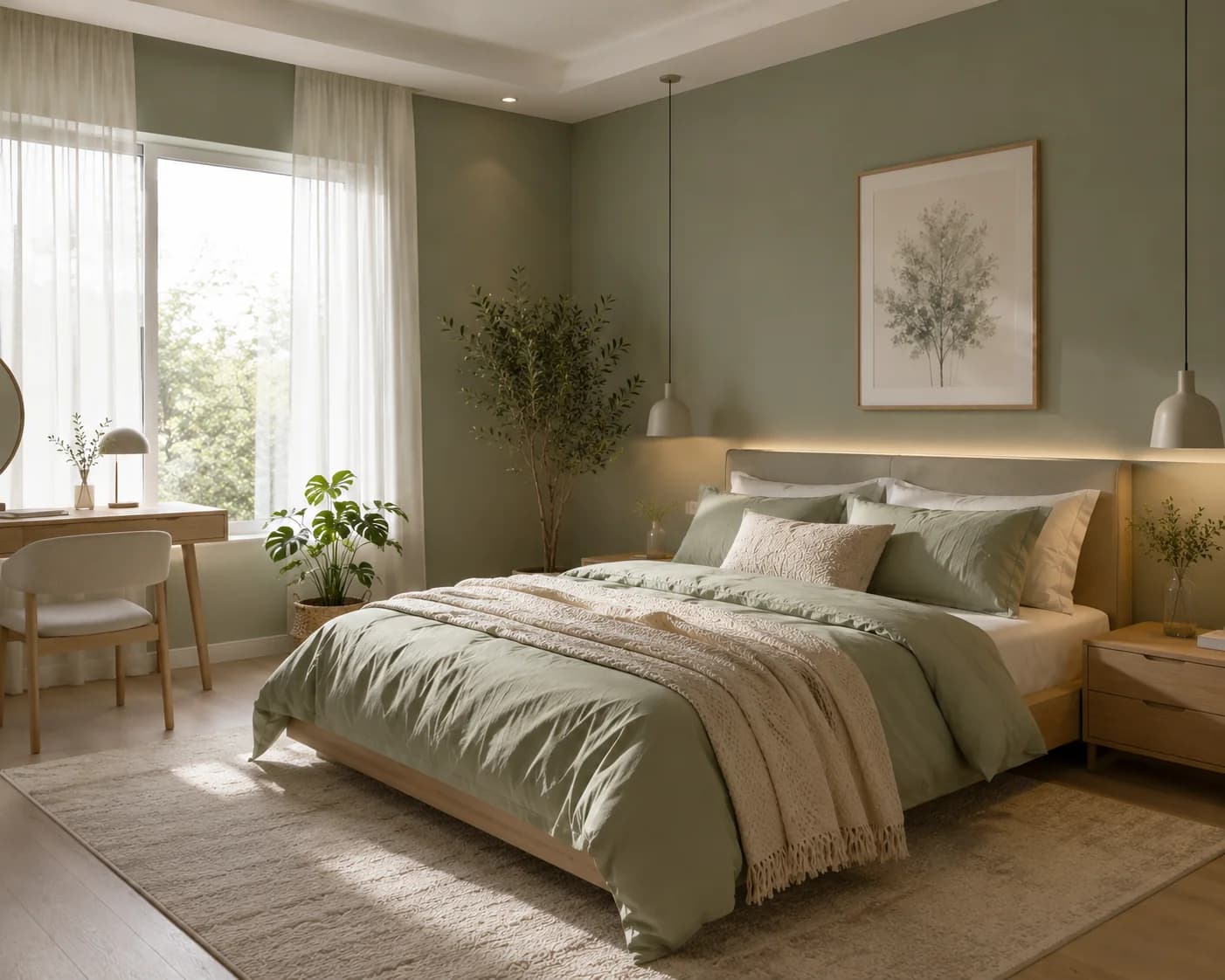
If you are asking what color curtains go with sage green walls, the short answer is warm white or cream: sage is a soft grey-green, and an off-white linen next to it looks clean without looking cold. If you want more depth, hang curtains in a darker green from the same family, or in an earthy warm color such as terracotta, blush or ochre.
Which of those is right depends on three things: how much daylight the room gets, whether your sage leans warm or cool, and whether the curtains should disappear or be noticed. The table below compares the options; the sections after it explain each one.
What Color Curtains Go With Sage Green Walls: 8 Options Compared
| Curtain color | Effect next to sage | Best in | Think twice if |
|---|---|---|---|
| Warm white, ivory | Fresh and light; the wall stays the main color | Small or north-facing rooms, any style | The trim is a much cooler white |
| Cream, oatmeal, natural linen | Soft and warm; very low contrast | Living rooms and bedrooms with wood and jute | The room already feels beige all over |
| Beige, greige, stone | Calm, slightly more solid than cream | Rooms with a beige sofa or carpet | The sage is very grey: it can look flat |
| Deeper green (olive, moss, forest) | Tone on tone; walls and window read as one | Bedrooms, rooms with a pale sofa | The room is dark and small |
| Same sage as the wall | Quietest of all; the window almost disappears | Bedrooms, a wall of full-height curtains | You want the window to be a feature |
| Terracotta, rust, clay | Warm contrast; green and red-orange are opposites | South-facing rooms, boho and Mediterranean styles | The room has many other colors |
| Blush, dusty pink | Gentle contrast, softer than terracotta | Bedrooms, rooms with brass and pale wood | You dislike any pink at all |
| Ochre, mustard | Sunny and a little retro | Rooms with little direct sun | The sage is yellowish already |
First, Check Which Sage You Have
Sage is not one color. Hold a sheet of plain white printer paper against the wall in daylight.
- If the wall looks greyer or bluer beside the paper, it is a cool sage. Whites with a hint of grey, stone, blush and cooler deep greens suit it.
- If the wall looks yellower or more olive, it is a warm sage. Cream, oatmeal, olive and terracotta suit it.
Then look at the trim. Curtains hang right beside the window frame and the skirting, so they need to agree with that white as well as with the wall. A curtain two shades creamier than the trim looks intended; one that is nearly the same but slightly off looks dirty.
The Options, With Reasons
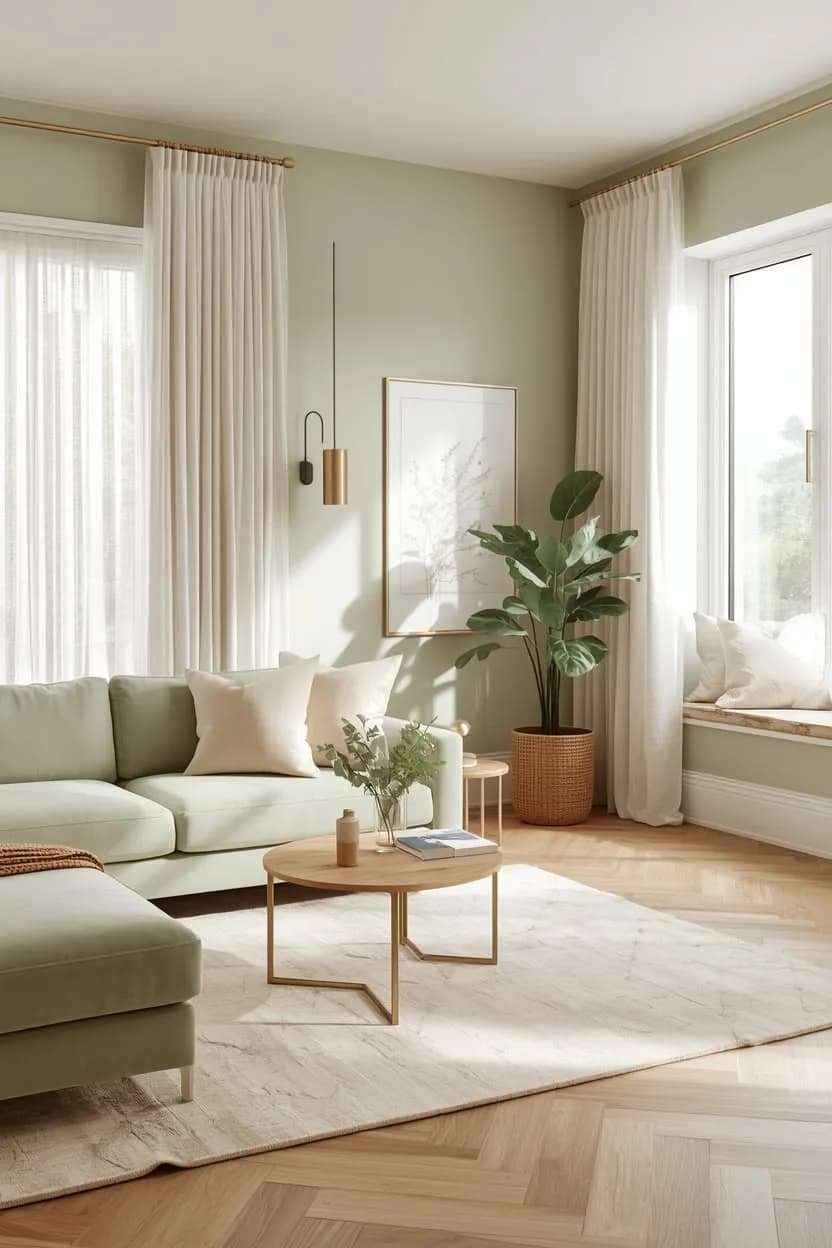
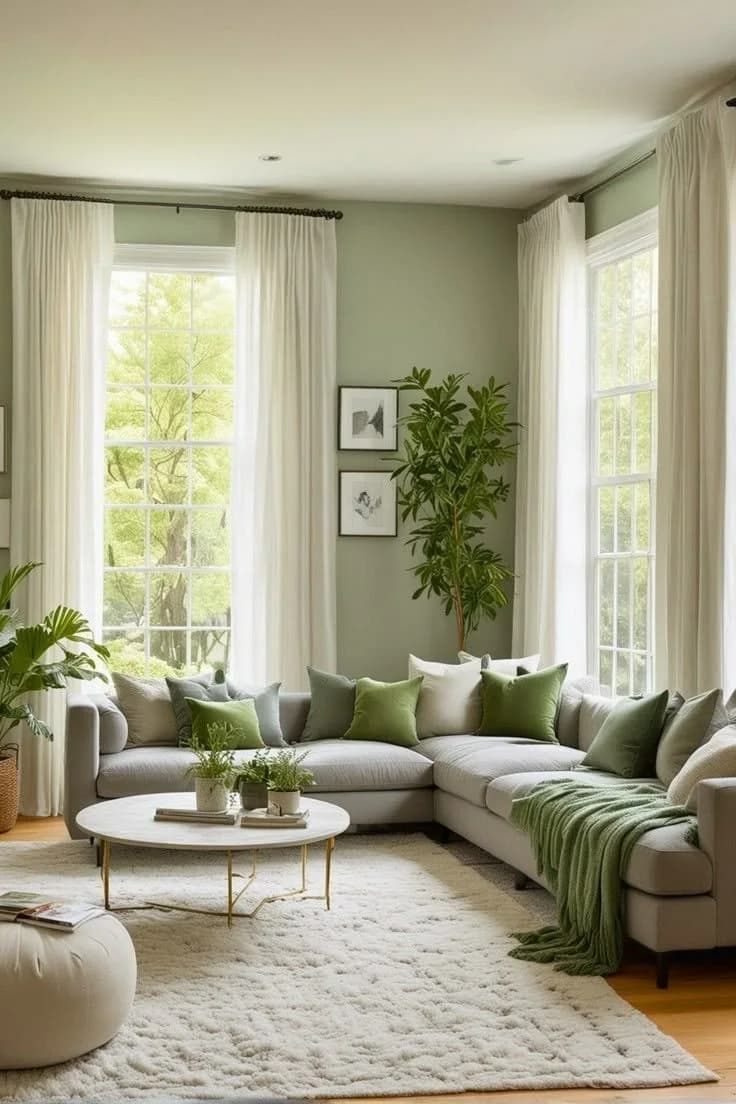
Warm white and ivory
White curtains are the safest choice with sage because sage already contains grey: it behaves like a neutral, and white simply lightens it. Choose a white with a little warmth, in linen or a cotton-linen mix with visible texture. A flat, bluish, optical white against a muted green can look harsh, like a sheet.
Unlined white linen lets daylight through and glows, which is what a small or north-facing room needs. If you need darkness for sleeping, add a blackout lining or a separate blind behind.
Cream, oatmeal and natural linen
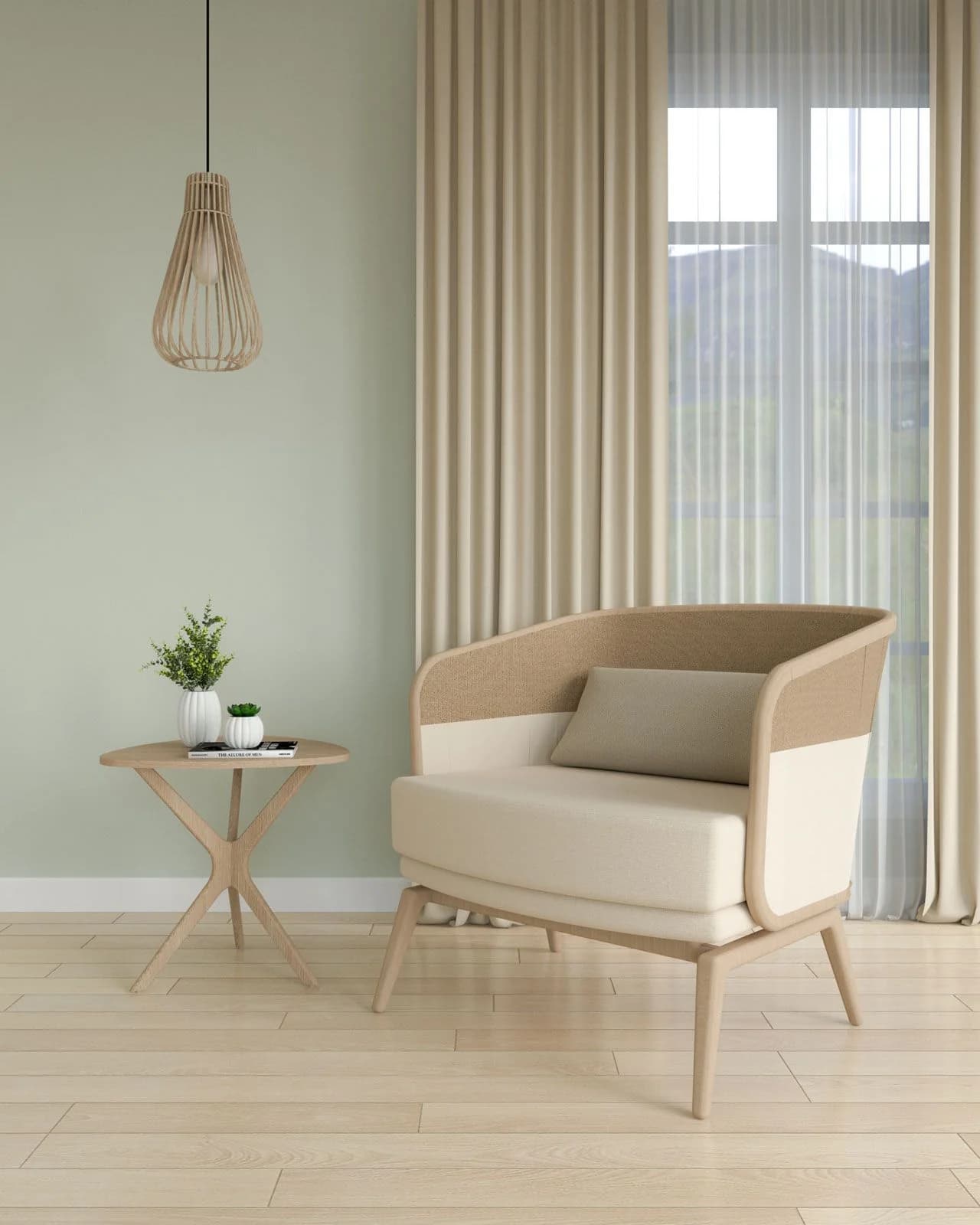
One step warmer than white. Undyed linen, oatmeal and cream sit so close to sage in softness that nothing jumps out, and they tie the wall to wood floors, rattan and jute. This is the choice for a relaxed, natural room. Heavier weaves hang better; our drop cloth curtain hack gets that look from cheap cotton canvas.
Beige, greige and stone
Use these when a large beige or stone piece is already in the room, such as the sofa or the carpet, so the curtains repeat it. On their own against a very grey sage they can look dull; add a darker rod or a patterned cushion to give the eye an edge.
A deeper green: olive, moss, forest
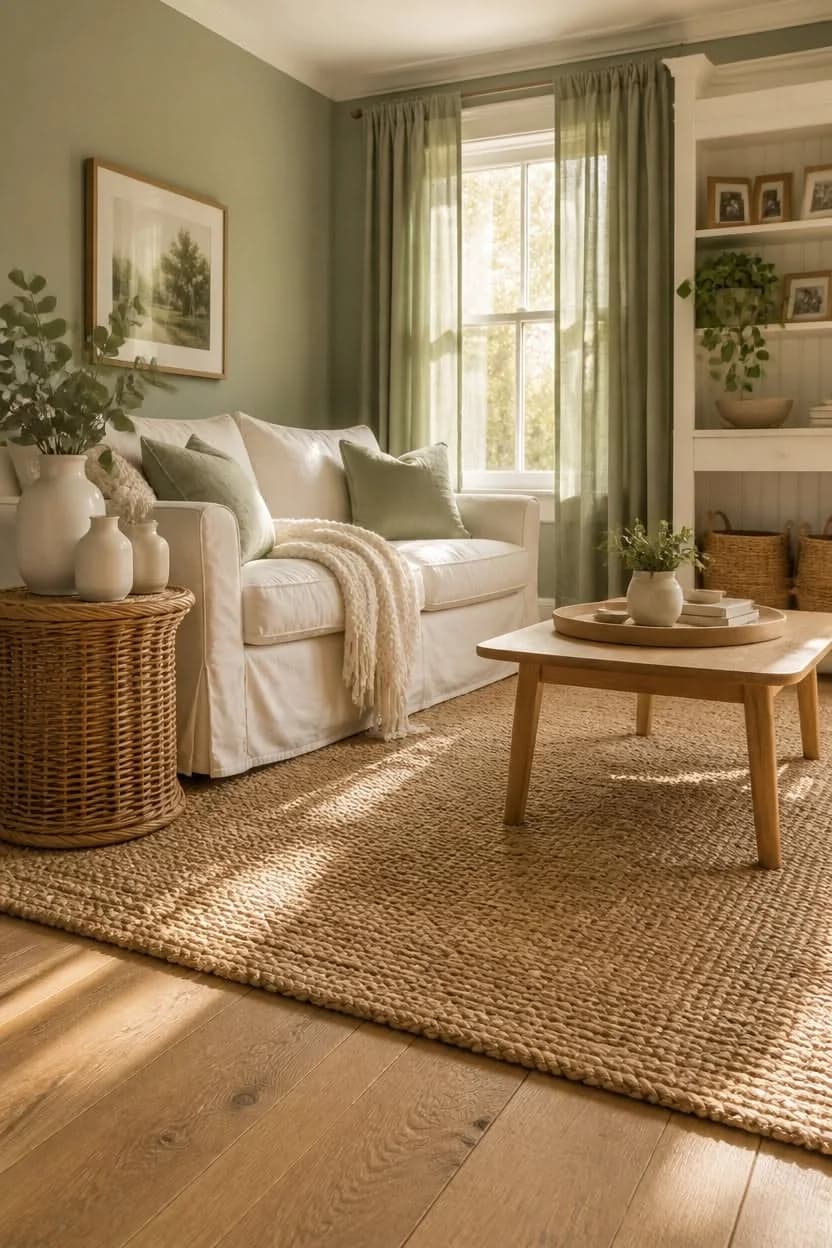
Tone on tone is the calmest scheme with any colored wall. Curtains two or three shades darker than the wall, in the same family, frame the window without adding a new color. Sheer olive voile softens it for a living room; heavy forest green velvet or wool makes a bedroom darker and quieter at night.
Keep the rest of the room pale if you go this way: a cream sofa, light wood, a natural rug.
The same sage as the wall
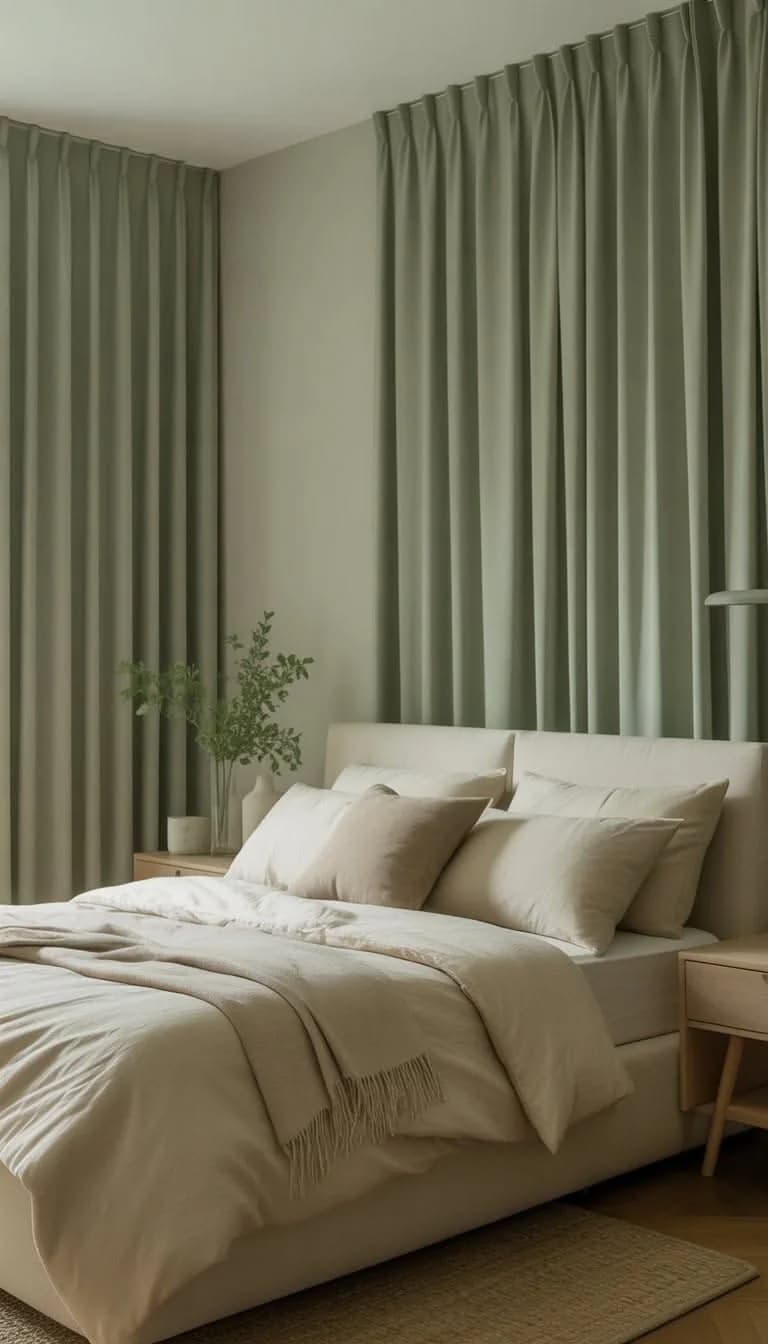
Curtains matched to the wall color make the window disappear into the wall. It works best when the curtains run wall to wall and floor to ceiling, like a soft panelled wall, and it is a good trick behind a bed. The fabric will never match the paint exactly, so aim for slightly darker, not slightly lighter.
Terracotta, rust and clay
Green and red-orange sit opposite each other on the color wheel, so each makes the other look richer. Muted versions of both, sage and terracotta, are an old and reliable pairing. Rust or clay linen curtains warm a room that gets cool light, and they pick up terracotta pots, leather and warm wood. Limit other strong colors: let the curtains be the one contrast. Our piece on cinnamon brown decor uses the same earthy range.
Blush and dusty pink
Pink is a lighter relative of that same contrast. A greyed, dusty blush beside sage is soft, not sweet, and it flatters brass and pale wood. It suits bedrooms especially. Avoid bright or bubblegum pinks, which fight the grey in the sage.
Ochre and mustard
Yellow-golds bring sunshine into a room with little direct light. They work best with a cool, greyish sage, where the yellow is clearly a second color. With a warm, yellowish sage the two blur together.
Patterned Curtains
A pattern works if it contains the wall color. Look for a botanical, stripe or small check on a cream ground where one of the colors is close to your sage. The cream ground links to the trim, the green links to the wall, and a third color in the print, perhaps rust or blue, can then be repeated in cushions.
Keep patterned curtains for rooms where the sofa and rug are plain.
Colors to Be Careful With
- Cool mid-grey. Grey beside a grey-green often looks like a near miss. Charcoal, which is clearly darker, is safer than mid-grey.
- Bright, saturated colors. Lime, turquoise and bright red overpower a muted wall.
- Stark blue-white. It makes sage look dingy. Go one step warmer.
- Black. Heavy black curtains can work in a large bright room as a graphic frame, but they are hard on a soft color in a small one. A black rod with pale curtains gives the same accent with less weight.
Sheer, Lined or Blackout?
Color is half the decision. Weight changes how the color looks:
- Sheers show the wall color through them and look lighter than the swatch.
- Unlined linen glows in daylight and looks a shade warmer.
- Lined or blackout curtains show their true color, and darker at night. Choose a shade lighter than you think.
As common guidance, hang the rod well above the window frame and wider than it, so the curtains clear the glass when open and reach the floor. A sage wall shows more, and the window looks larger. In a rental, tension rods or adhesive hooks avoid drilling, and the same curtains can later divide a room, as in our curtain room divider guide.
If you are thinking of taking the sage across the ceiling and woodwork as well, the curtain rule changes: see color drenching a living room, where fabric usually stays close to the wall color.
Reader Poll
How much daylight does your sage green room get?
FAQ
What color curtains go best with sage green walls?
Warm white or cream linen suits almost every sage room. For more depth choose a darker green from the same family; for warmth choose terracotta, rust or dusty pink.
Do white curtains go with sage green walls?
Yes. Pick a soft, slightly warm white with some texture. A bluish optical white can look harsh next to a muted green.
Do grey curtains go with sage green walls?
They can, but mid-grey often looks like a mismatch because sage already contains grey. Charcoal, or a warm greige, is easier to get right.
Should curtains be lighter or darker than sage green walls?
Either works. Lighter curtains make the room feel bigger and brighter; darker ones in the same green family feel calmer and more enclosed. Avoid a curtain that is almost exactly the wall color but slightly lighter.
What color curtains go with sage green walls in a bedroom?
Cream or oatmeal for a light room, or a deeper sage or olive with blackout lining for sleep. Dusty pink is a good soft accent.
What colors should I avoid with sage green walls?
Bright saturated colors such as lime, turquoise and bright red, and stark blue-white. They overpower or dull a muted green.