What Color Curtains Go With Blue Walls? Answers by Shade of Blue
What color curtains go with blue walls? White and warm cream suit every blue; navy takes ochre, rust and tan; pale blue wants white, sand and soft grey. A table by shade, with reasons and what to avoid.

In this guide · 11 sections
What color curtains go with blue walls? White and warm cream go with every blue, from the palest sky to navy, which is why blue and white is one of the oldest pairings in decorating. After that, the answer depends on how dark and how grey your blue is: navy carries ochre, rust and tan beautifully, pale blue is happiest with white, sand and soft grey, and grey-blues want warmth from linen and oatmeal.
Blue is a cool color, so the main decision is whether to lean into the coolness with whites and greys, for a fresh, airy room, or to balance it with warm colors, for a cozier one. Find your wall in the table, then read the section for your shade.
What Color Curtains Go With Blue Walls, by Shade
| Wall color | Safest curtain | For warmth and character | For a calm, tonal room | Usually avoid |
|---|---|---|---|---|
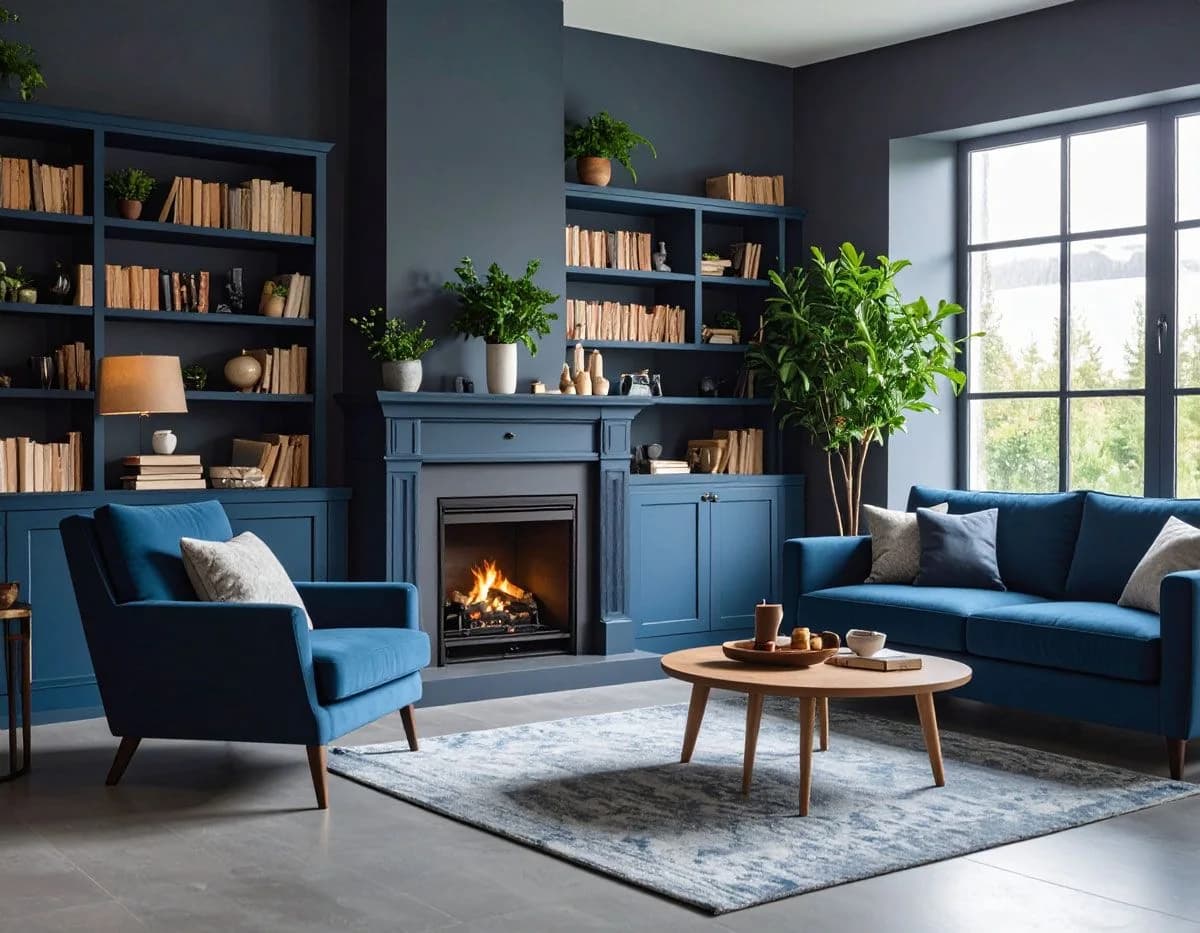
| Navy and midnight blue | Warm white or cream | Ochre, mustard, rust, tan, camel | Navy velvet, a shade off the wall | Black, cold grey in a dim room |
| Royal, cobalt and other bright blues | Clean white | White with a blue stripe, pale sand | White sheers only | Other strong colors, such as red or bright green |
| Mid blue: denim, cornflower, French blue | White or ivory | Natural linen, tan, soft terracotta | A deeper blue | Purple, cool pinks |
| Pale blue: sky, powder, baby blue | White | Sand, oatmeal, pale blush | White on white, or a slightly deeper blue | Heavy dark curtains, yellow-cream that looks dingy |
| Grey-blue and slate blue | Warm white, oatmeal | Linen, camel, warm grey, muted mustard | Charcoal or deeper slate | Cool bright white, which turns the wall greyer |
| Teal and blue-green | Warm white | Ochre, tan, rust | Deeper teal | Lime and other yellow-greens |
Navy and Dark Blue Walls
Dark blue absorbs light, so start by asking whether the curtains need to give some back.
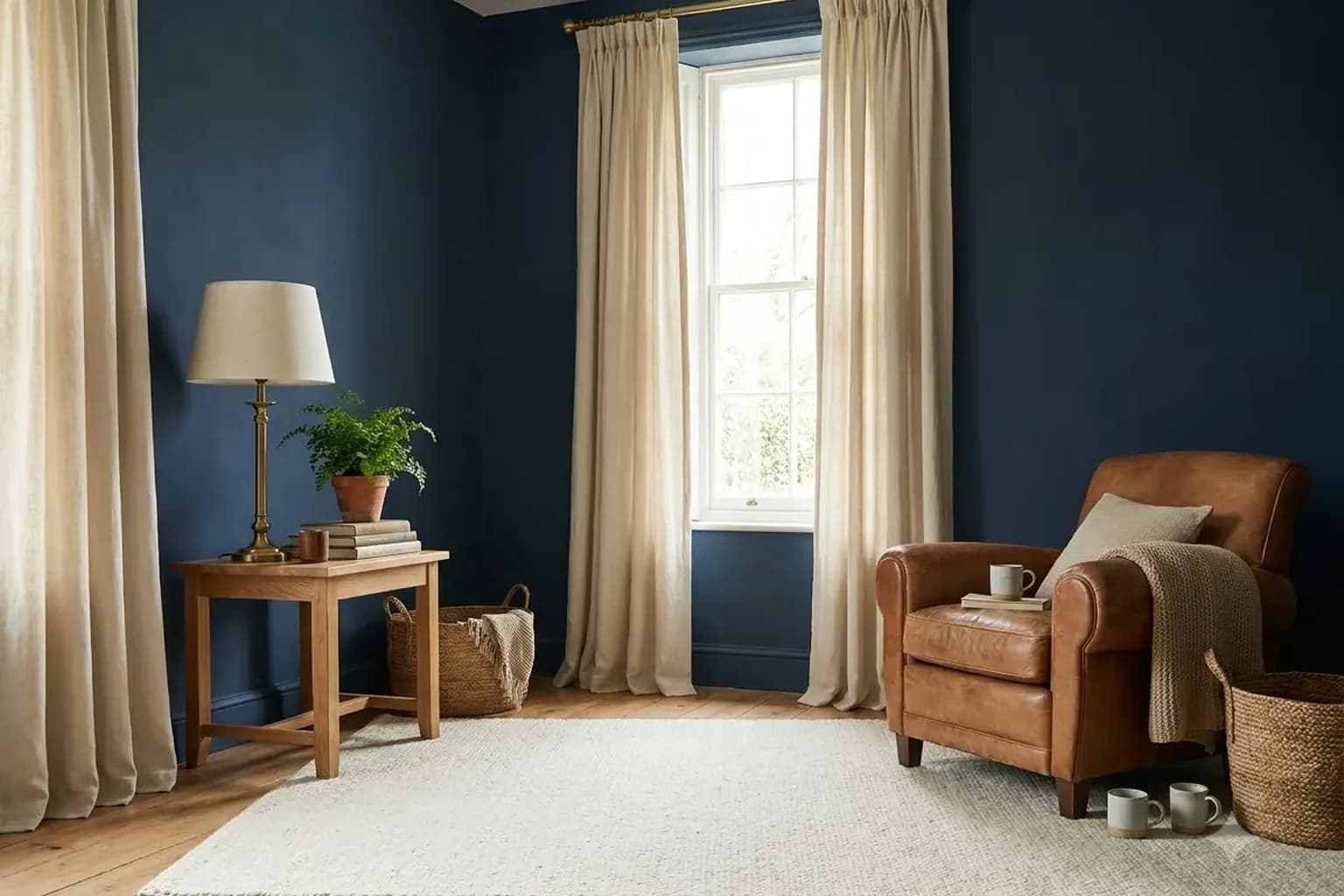
In a dim room, hang warm white or cream. The curtains become the lightest surface and frame the window, which makes it look bigger. Choose a white with a little warmth: against navy, a blue-white looks cold and slightly grey.
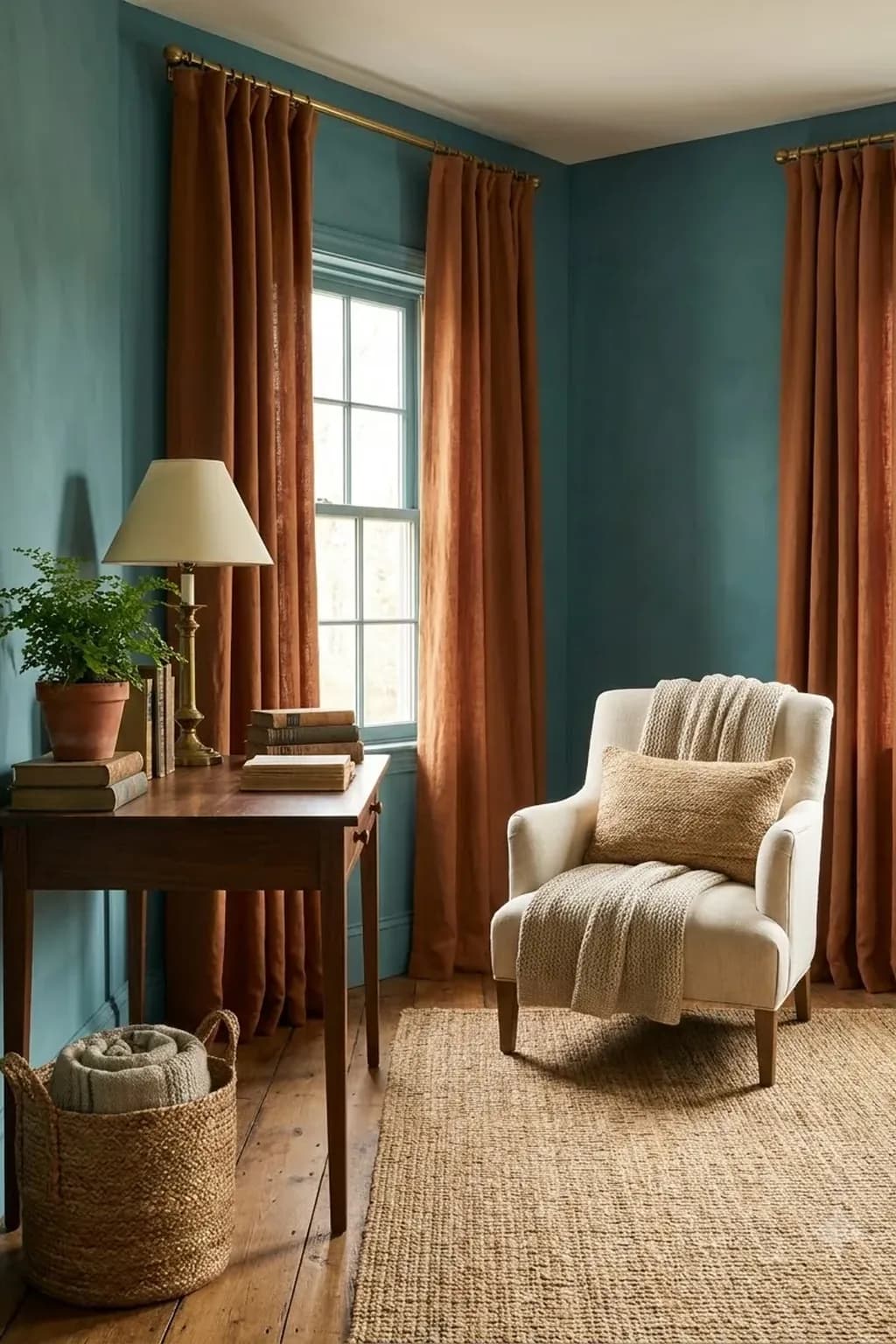
In a bright room, go warm. Ochre, mustard, rust and camel sit on the orange side of the color wheel, opposite blue, so each makes the other look richer. Mustard velvet against navy is the bold version; a tan or camel linen is the quiet one. Either makes a navy room feel warm instead of formal.
For a cocooning room, such as a bedroom, a snug or a study, hang navy curtains on navy walls. Velvet or heavy wool, a shade lighter or darker than the paint. Bring in cream, tan leather or brass elsewhere so the room has relief.
Avoid black curtains: against navy they read as a mismatch, not a contrast.
Bright Blue Walls
Royal blue and cobalt are the main event, and the curtains should step back. Clean white is the classic answer and gives a crisp, coastal look. A white curtain with a narrow blue stripe or a blue border ties the window to the wall without adding a new color. Pale sand softens the contrast slightly.
A second strong color at the window, such as red, emerald or orange, competes with the wall. If you want a contrast, put it in a cushion.
Mid Blue Walls
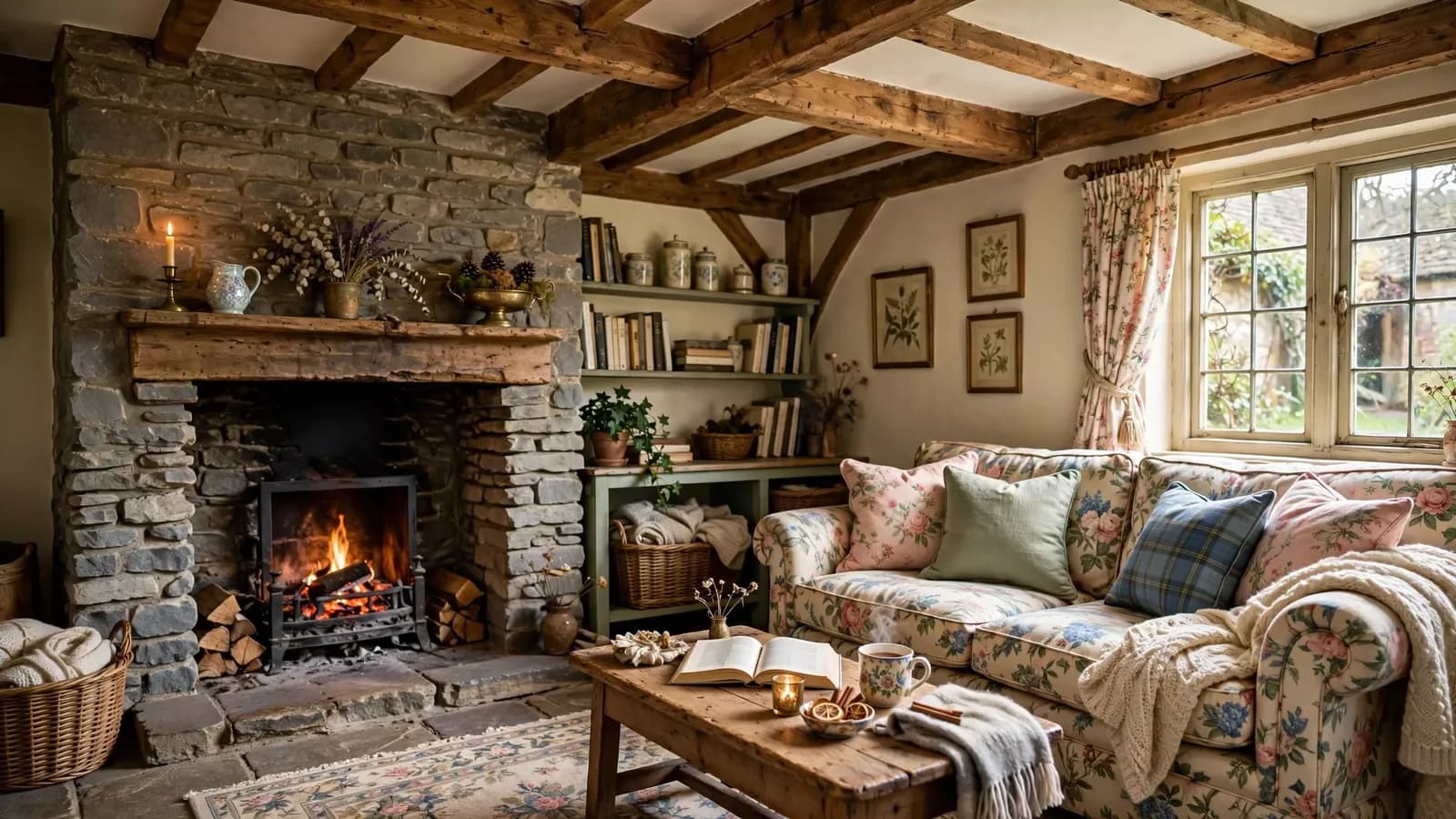
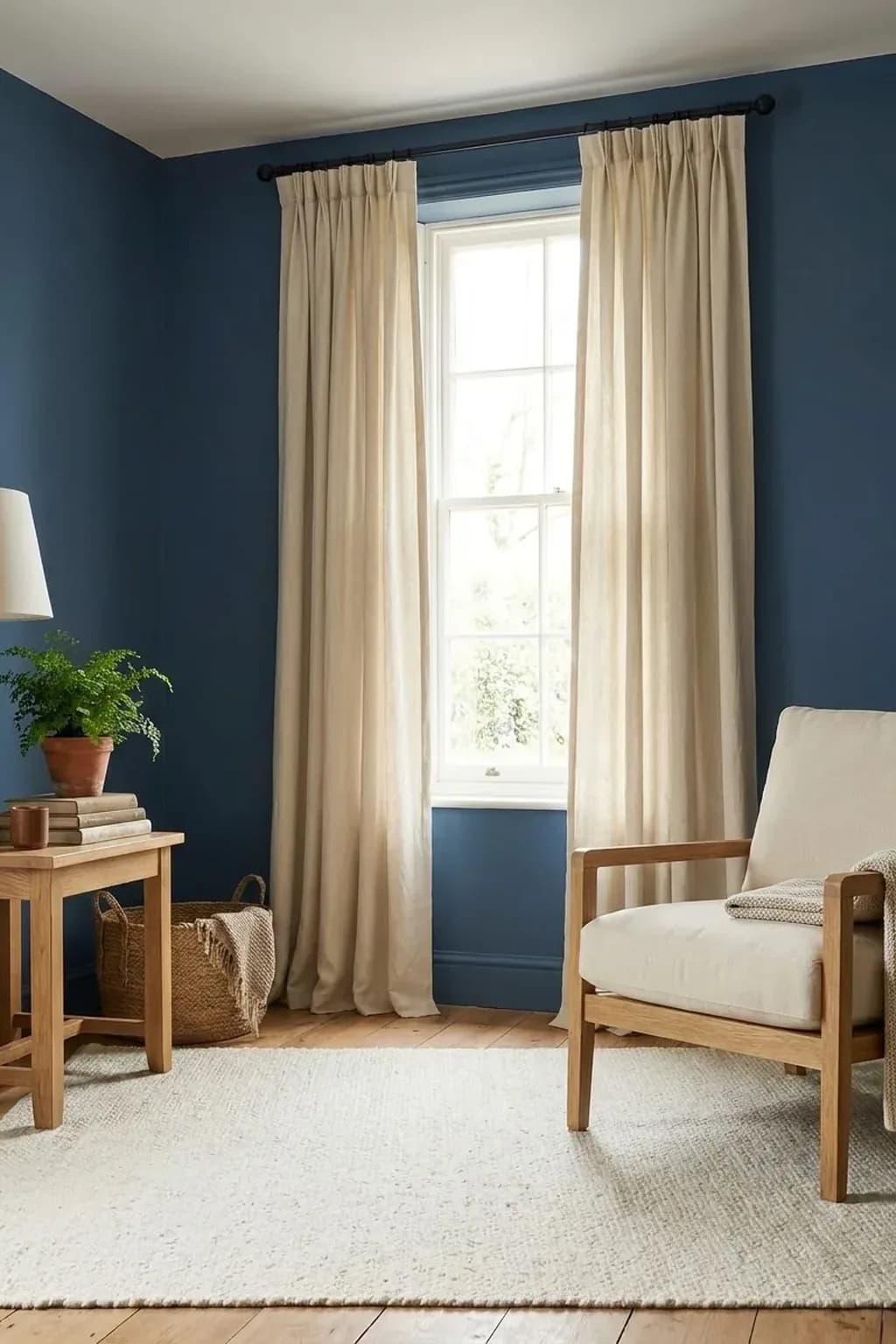
Denim, cornflower and French blue are the easiest blues to live with, and they suit natural materials. White and ivory keep the room fresh. Undyed linen, tan and soft terracotta warm it up, and all three look good with wood furniture. A blue-and-white print, such as a ticking stripe, a small floral or a block print on a cream ground, is the traditional choice for a cottage-style room; see our cottagecore living room for that look.
Pale Blue Walls
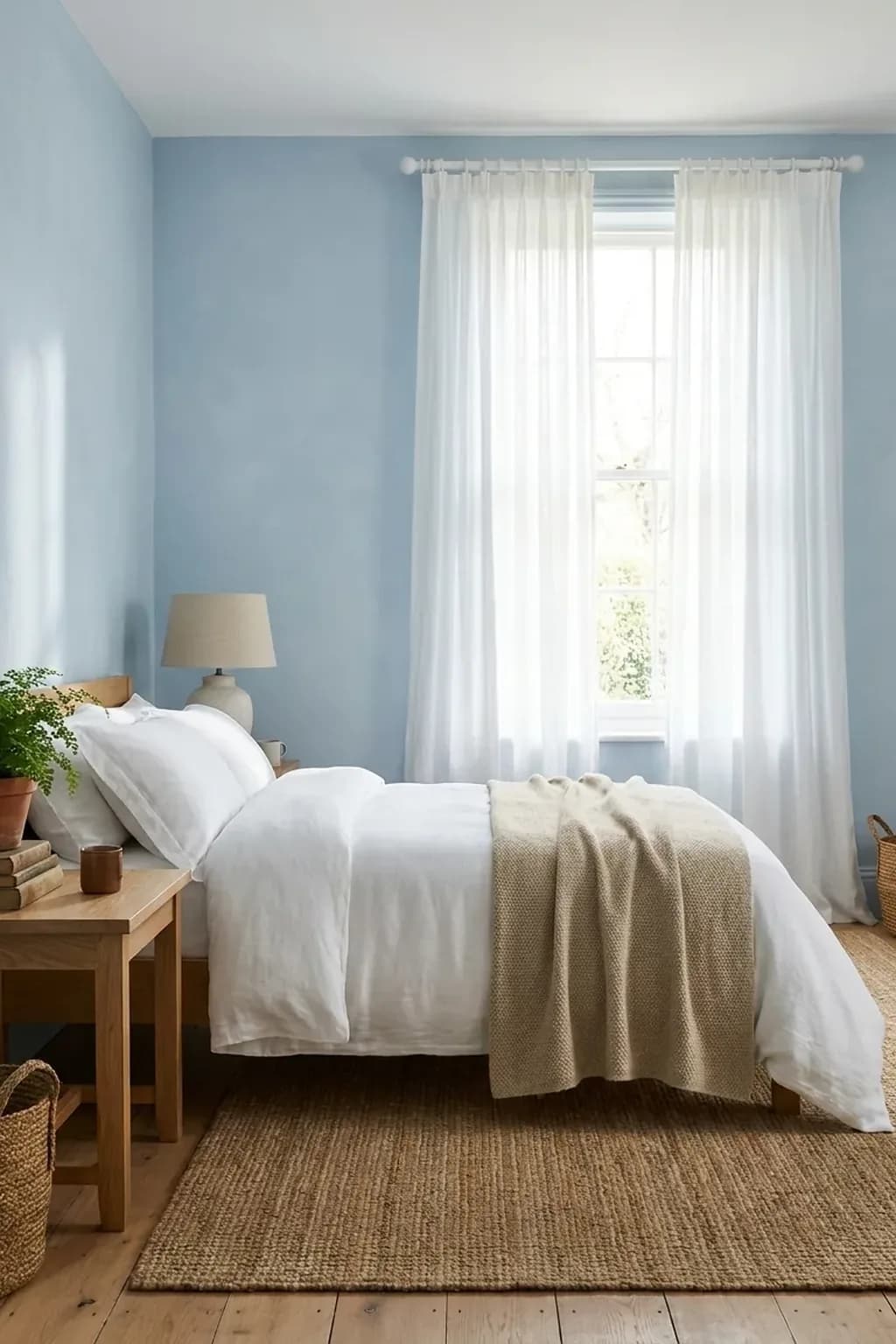
Sky and powder blue are mostly white already, so white curtains simply extend them and make the room feel larger. Use sheers alone where privacy allows. For a little more depth, sand, oatmeal and pale blush all sit gently beside pale blue.
Two things to avoid. Heavy dark curtains chop a pale wall into panels. And a yellowish cream can look dirty next to a clean pale blue: if you want cream, choose one that leans toward oatmeal, not butter.
Grey-Blue and Slate Walls
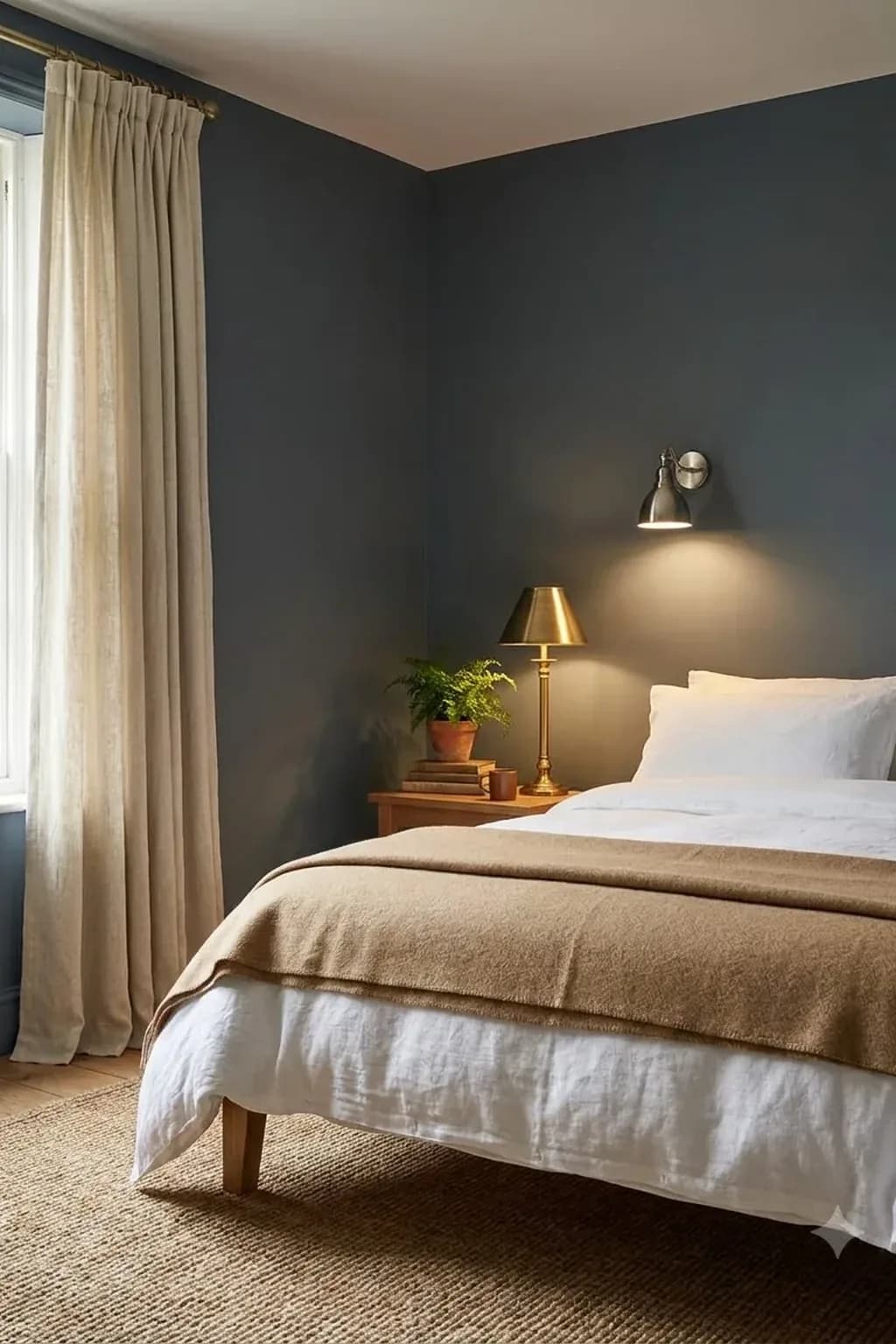
These are the blues most likely to feel cold, especially in north-facing rooms, so the curtains should bring warmth. Oatmeal, natural linen, camel and warm white all help. A brilliant cool white does the opposite and pulls the wall toward grey.
For a tonal scheme, charcoal or a deeper slate works well in a bedroom. If your walls are closer to grey than blue, our guide to what color curtains go with grey walls is the better match.
Teal and Blue-Green Walls
Teal has green in it, which makes it warmer than true blue, and it takes earthy colors well: ochre, tan and rust. Warm white is the safe choice. Keep yellow-greens away. If your walls are more green than blue, see what color curtains go with green walls.
Three Rules That Hold for Every Blue
1. Decide: cool and fresh, or warm and cozy. White, grey and blue curtains keep a blue room cool and airy. Cream, sand, tan, rust and ochre warm it. Both are right; mixing a cold white with warm tan in the same room is what looks unsettled.
2. Make the difference in depth obvious. Curtains should be clearly lighter or clearly darker than the wall. A blue curtain nearly the same as a blue wall looks like a failed match.
3. Repeat the curtain color once. A cushion, a lampshade or a stripe in the rug in the same color makes the choice look planned.
Rods, Fabric and Length
- Rods. Brass and aged gold warm up any blue. Black suits navy and bright blues. White rods disappear on pale blue walls. Brushed nickel suits grey-blues.
- Linen and cotton-linen give the relaxed, coastal or cottage look and filter light softly.
- Velvet suits navy and teal, adds depth and helps with warmth and sound.
- Sheers work alone on pale blues and under heavier curtains elsewhere.
- Length. To the floor, hung well above the window frame. Short curtains make a strong wall color look patchy.
For a simple, inexpensive natural curtain, heavy cotton canvas works well against blue; see our drop cloth curtains.
When the Blue Goes Beyond the Walls
If the woodwork and ceiling are blue too, curtains usually stay within a shade or two of the wall so the window does not interrupt the color; our guide to color drenching a living room explains the approach. And if a blue room has white walls elsewhere in view, what color curtains go with white walls helps you keep the rooms consistent.
FAQ
What color curtains go with navy blue walls?
Warm white or cream to lighten the room; ochre, mustard, rust or tan for warmth; or navy velvet for a tonal, enclosed feel. Avoid black.
What color curtains go with light blue walls?
White is the safest. Sand, oatmeal and pale blush add softness. Avoid heavy dark curtains and yellowish creams.
Do grey curtains go with blue walls?
Yes, with care. Warm or soft greys suit pale and grey-blue walls. Cold greys can make a blue room feel chilly, especially in north light.
Do beige curtains go with blue walls?
Yes. Beige, sand and oatmeal warm up blue and suit nearly every shade. Choose one that is clearly lighter than a dark wall, or with enough depth to show against a pale one.
Can I use blue curtains with blue walls?
Yes, if the two differ clearly in depth and belong to the same family. Add white or cream elsewhere for relief.
What color curtains make a blue room look warmer?
Cream, sand, tan, camel, ochre and rust. Add a brass rod and warm bulbs for the same reason.