Color Drenching a Living Room: What to Paint, Which Colors Work and Where to Stop
Color drenching a living room means one color on walls, ceiling, trim and built-ins. How to choose the color for your light, what to do with the ceiling, radiators, shelves and an open-plan kitchen, and the mistakes to avoid.

In this guide · 11 sections
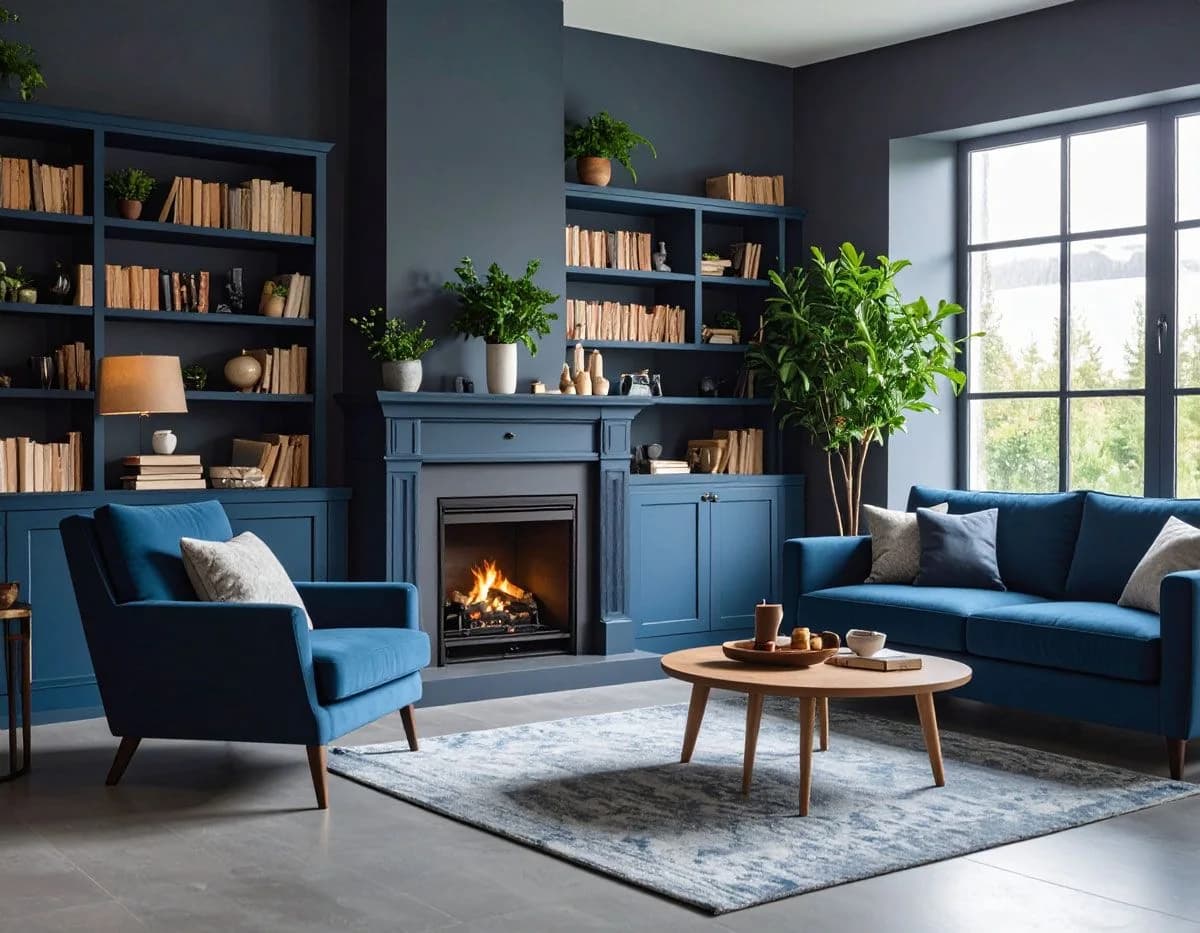
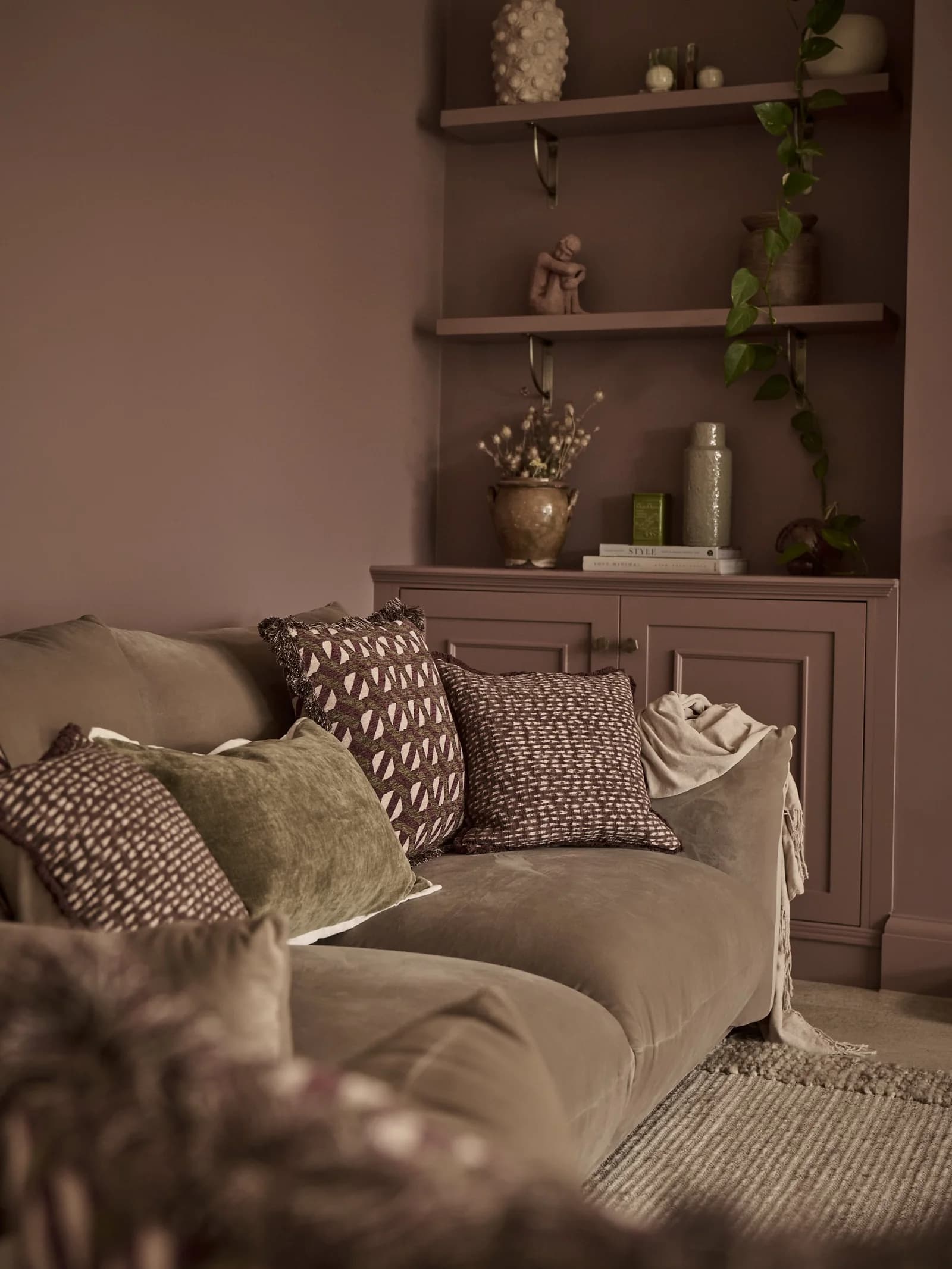
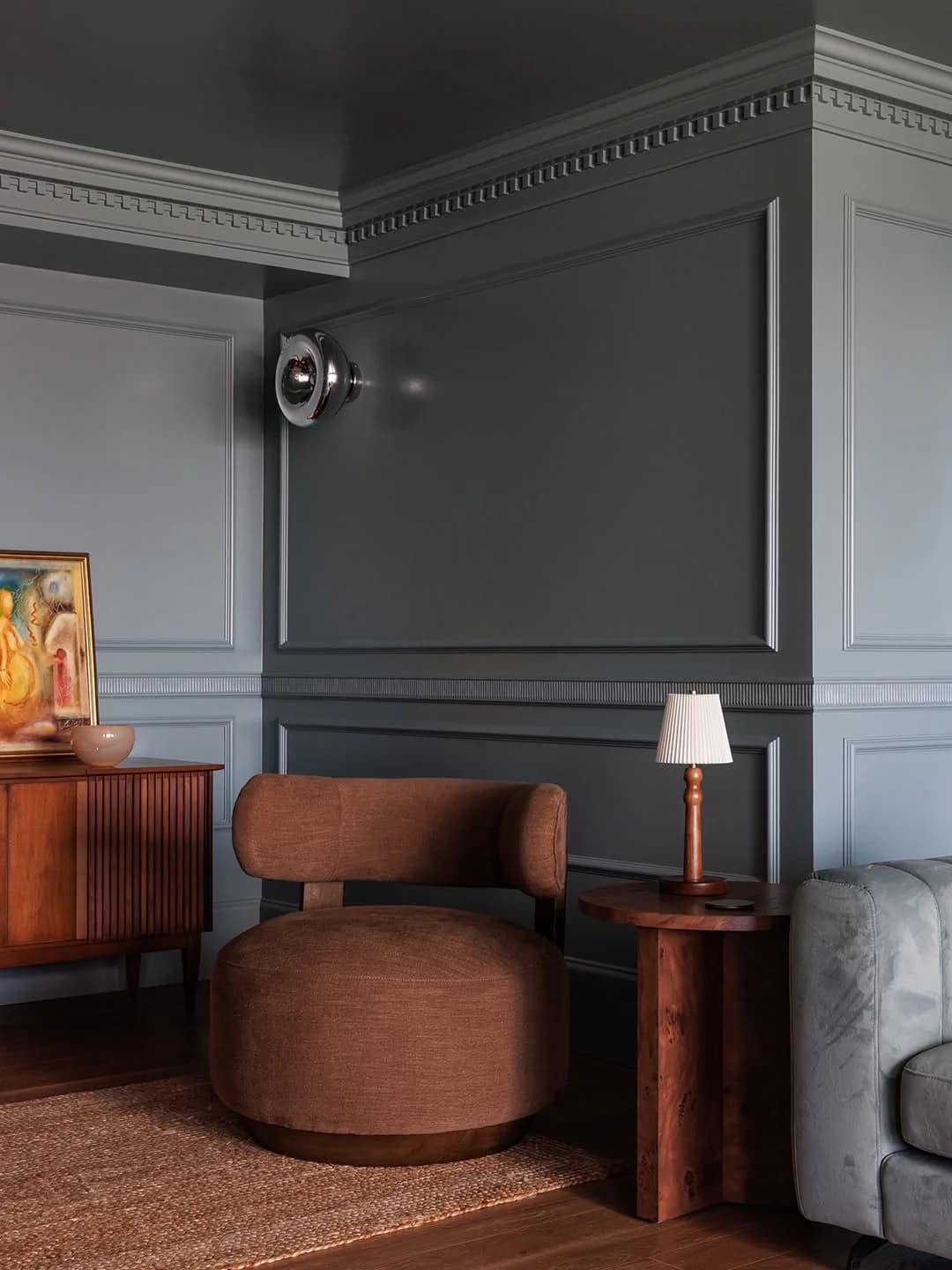
Color drenching a living room means painting the walls, the ceiling and all the woodwork, including skirting boards, door and window frames, doors, radiators and built-in shelves, in one color. With no white lines cutting the room into pieces, the edges soften and the furniture, art and light become what you notice. It works in pale neutrals as well as in dark greens and blues, and it needs no special paint, only more of it and more patience with the woodwork.
This guide covers what to include, how to choose the color for your light, what to do in an open-plan room, and the points where a drenched living room goes wrong.
What Counts as Color Drenching
A room is drenched when the same color runs over every painted surface. In practice there are three versions:
| Version | What is painted | Result | Good for |
|---|---|---|---|
| Full drench | Walls, ceiling, all woodwork, radiators, built-ins: one color | Seamless; the room reads as one shape | Rooms with awkward angles, low or sloped ceilings, many doors |
| Tonal drench | Same color family; ceiling a step lighter or woodwork a step darker | Softer, with a little definition left | Nervous first-timers, rooms with fine cornices |
| Walls and woodwork only | Walls and all trim in one color, ceiling left white | Cleaner than white trim, but the ceiling line stays | Rentals where the ceiling must stay, very low budgets |
The third is not a true drench, but it is a fair test: if you like the walls and trim in one color, the ceiling is the next step.
Why Color Drenching a Living Room Works
A living room has more interruptions than any other room: a door or two, windows, radiators, a fireplace or a television, shelves, sockets. In a room with colored walls and white trim, each of those is outlined. Painted in the wall color, they recede.
- A television on a dark drenched wall is far less visible when it is off.
- Radiators and pipes disappear.
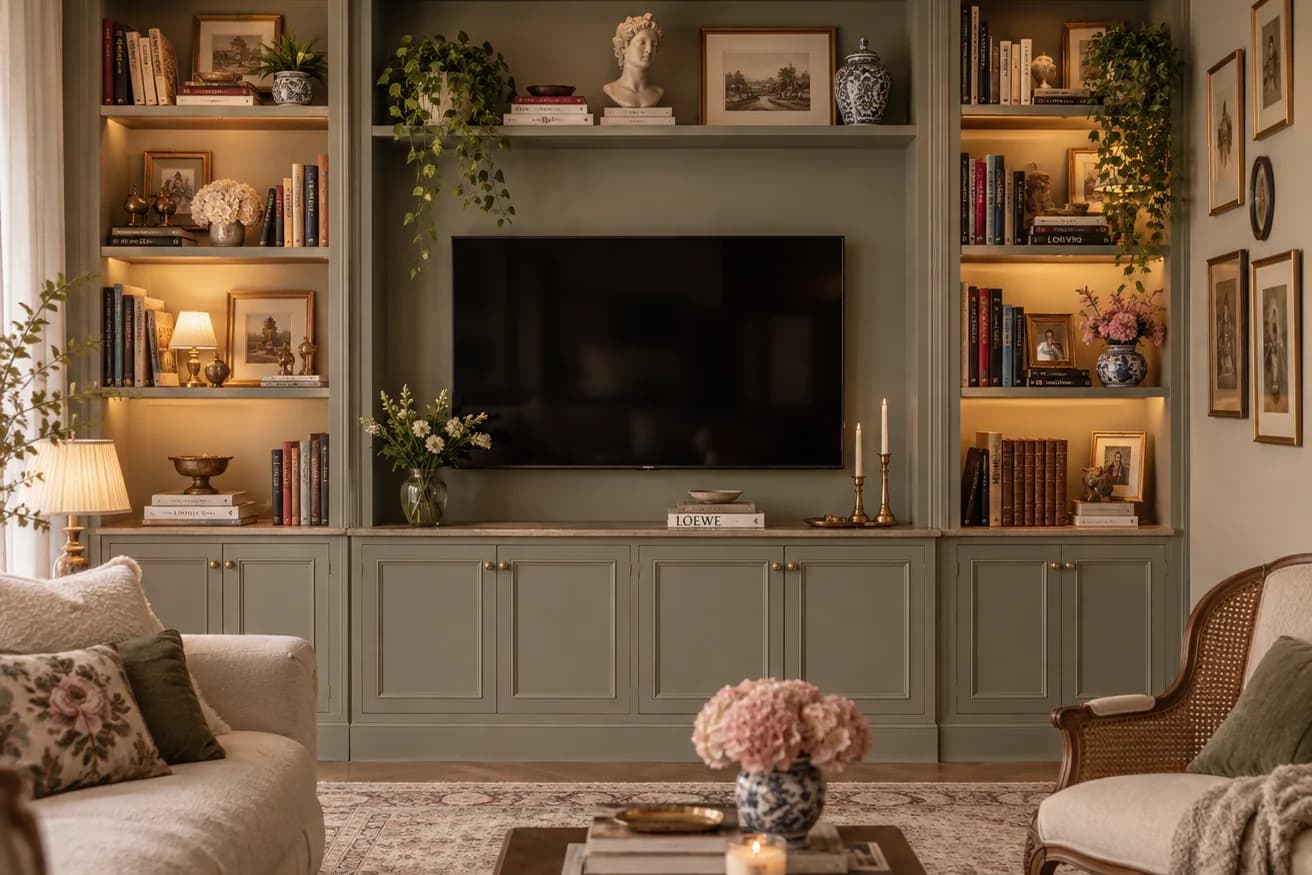
- Built-in shelves become a background for what is on them, and mismatched or cheap shelving looks deliberate.
- A low ceiling feels less low to many people, because there is no line showing where the wall ends. This is an impression, not a measurement, so judge it with a large sample first.
Choosing the Color for Your Light
A drench multiplies a color: light bounces from one colored surface to the next, so the room looks deeper and more saturated than a single painted wall would. Two consequences follow. Choose a more muted version of the color than you would for one wall, and test bigger: paint a large piece of card or lining paper and tape it to the wall and then to the ceiling at different times of day.
| Color family | Effect when drenched | Light it suits | Pairs well with |
|---|---|---|---|
| Warm neutrals: beige, cream, taupe, stone | Soft and enveloping; the quietest way to try it | Any, especially north light | Natural linen, pale wood, black accents |
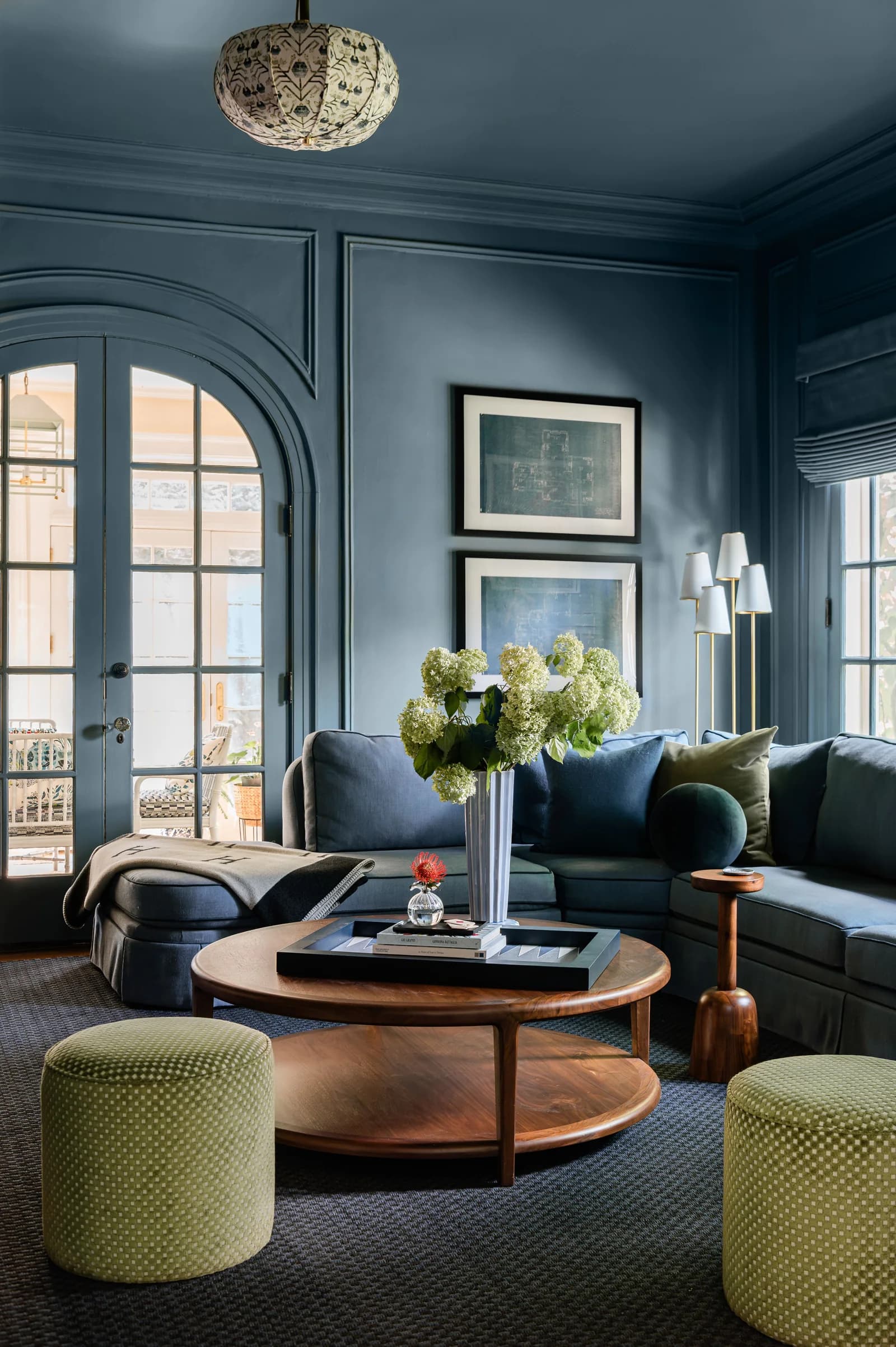
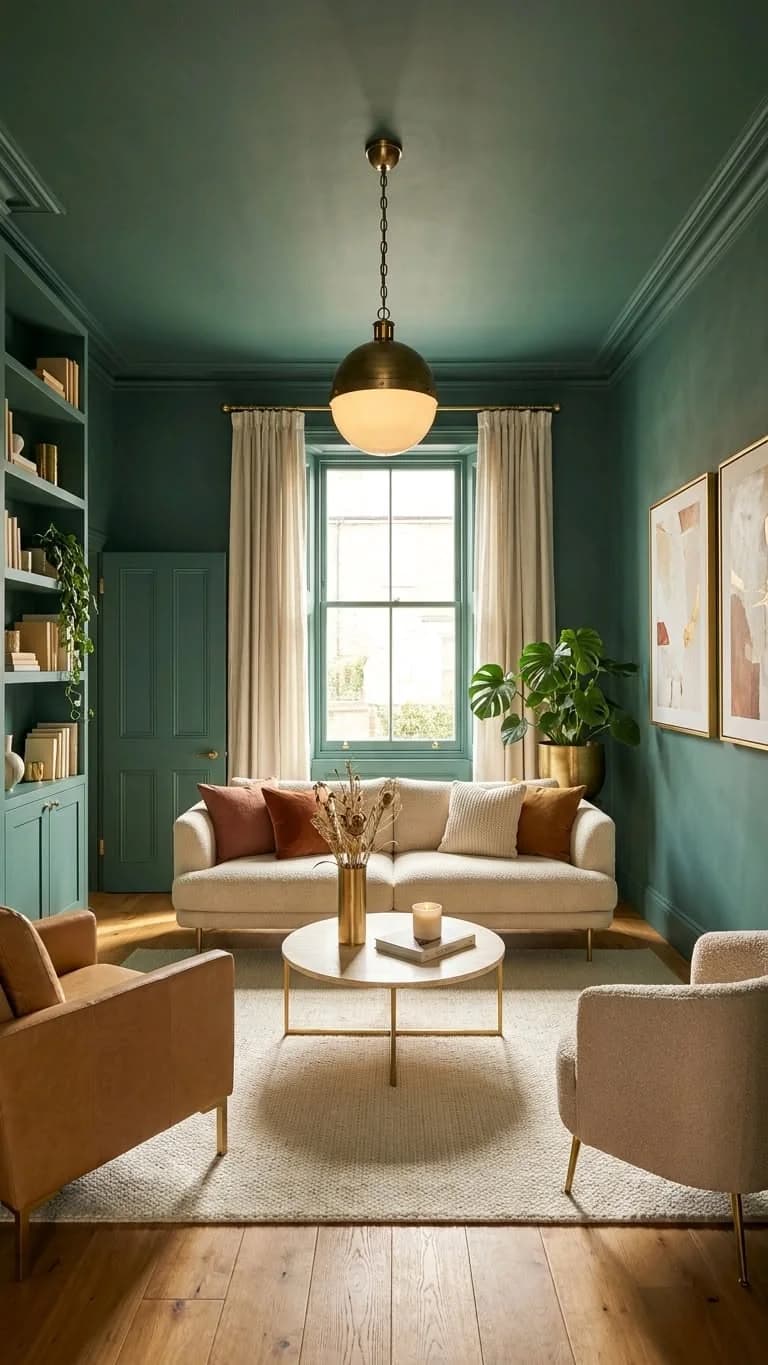
| Greens: sage, olive, deep forest | Restful; feels connected to plants and garden views | Good daylight for dark greens; sage works anywhere | Cream, rust, brass, mid-brown wood |
| Blues: grey-blue, slate, navy | Calm and tailored; can feel cool | South or west light | Warm wood, tan leather, ochre |
| Browns and earthy reds: clay, cinnamon, chocolate | Warm and close at night | Evening rooms, rooms with lamps | Cream, olive, aged brass |
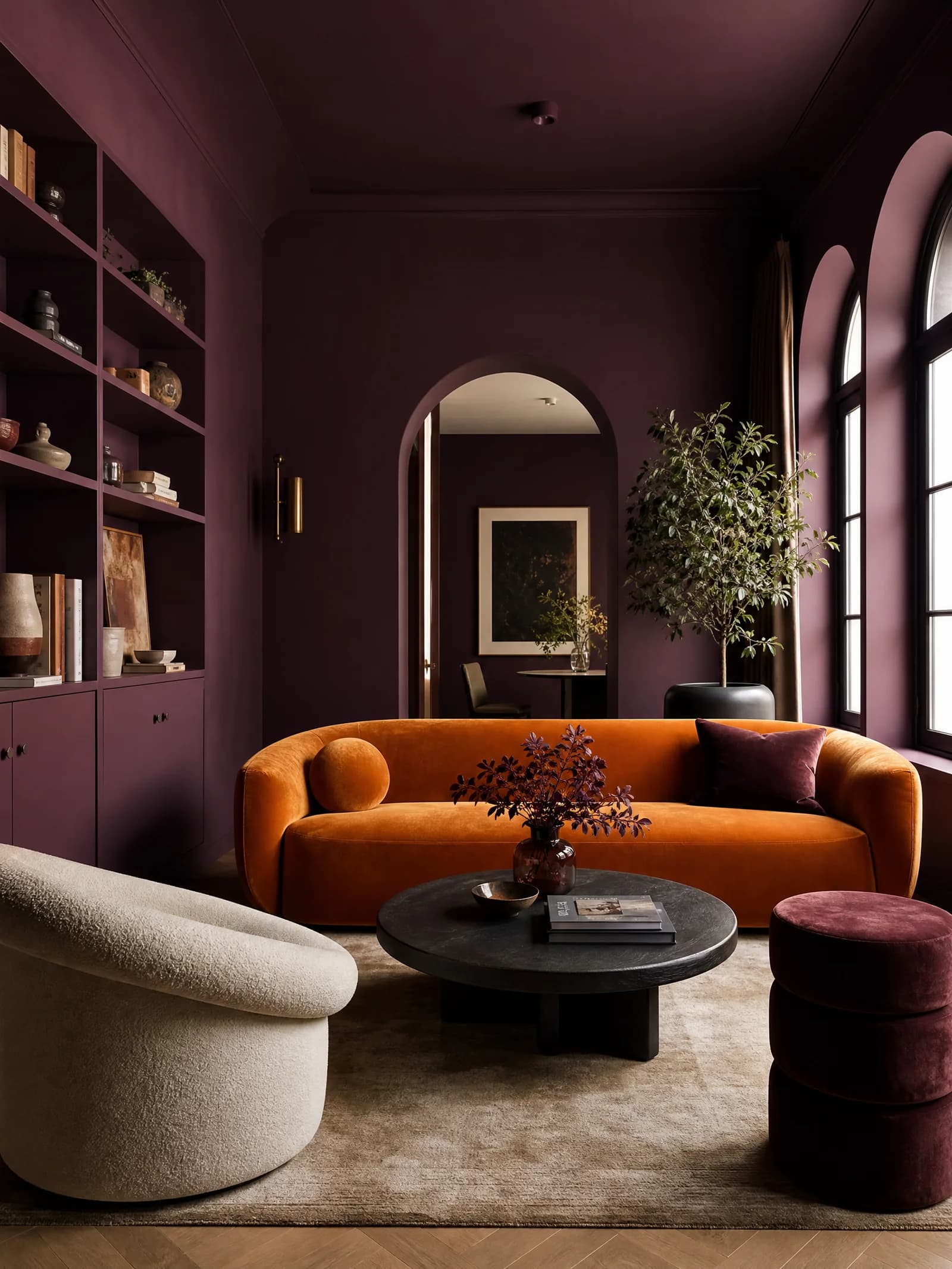
| Deep moody colors: aubergine, charcoal, ink | Dramatic, cocooning | Rooms used mostly after dark, or very bright rooms | One bright piece: an orange or mustard sofa |
| Dusty pinks and mauves | Gentle warmth without looking sweet | North and east light | Taupe, olive, dark wood |
| Whites and off-whites | Bright, gallery-like; hides nothing | Sunny rooms | Texture: wool, wood, stone |
A north-facing room with cool light usually looks better drenched in a warm color than in a bright white, which tends to turn grey there.
What to Include, Surface by Surface
Ceiling. This is the step that makes it a drench, and the one people hesitate over. In a room of ordinary height, the same color on the ceiling removes the lid-like white rectangle. If the ceiling is very low and the color very dark, a tonal version, the same color mixed lighter, is a safe compromise.
Cornices and ceiling roses. Paint them in. Plasterwork keeps its shadow lines, so the detail still shows.
Skirting, architraves, doors and window frames. All in the wall color. Woodwork takes knocks, so it is normally painted in a harder-wearing finish than the walls (see the next section).
Radiators. Yes, with a paint suitable for radiators, applied when the radiator is cold.
Built-in shelves and cupboards. Yes. Shelves painted in the wall color are one of the best reasons to drench a living room.
Fireplace. A painted wooden surround joins in. Stone, marble and brick usually look better left as they are, as the one contrast in the room.
Sockets and switches. Leave them, or change the plates to a finish close to the wall color. Do not paint over them.
One Color, Different Finishes
The color is the same everywhere; the sheen need not be. A common approach is a flat or matt finish on walls and ceiling, which hides uneven plaster, and an eggshell or satin finish in the same color on woodwork and radiators, which wipes clean. The slight change in sheen gives the woodwork a quiet outline in raking light without bringing back contrast.
Two cautions. The same color in a shinier finish can look a touch darker or richer, so look at both samples together. And gloss on a ceiling shows every flaw; keep ceilings flat unless the plaster is perfect.
Open-Plan Living Rooms and Kitchens
A drench needs a place to stop. In an open-plan living room and kitchen, look for a real break:
- A change in the ceiling: a beam, a dropped section, a change of height.
- A doorway, arch or nib of wall, even a shallow one.
- An inside corner. Stop a color at an inside corner, never on an outside one or in the middle of a flat wall.
If there is no break, either drench the whole space, in which case choose a lighter, more neutral color because there is a lot of it, or drench only a contained part, such as an alcove with shelves or a snug at one end. Kitchen cabinets do not have to match; they need to be on good terms with the color, which is easier with wood, cream or a darker tone of the same family.
Furniture, Curtains and Art in a Drenched Room
- Sofa. Either close to the wall color, for a room that feels like one soft block, or one clear contrast, such as rust against blue or orange against plum. Avoid several unrelated colors.
- Curtains. Close to the wall color, a little lighter or darker, so the window does not chop the wall. If your walls are a soft green, our guide to curtains for sage green walls covers the tone-on-tone options.
- Art and frames. Art stands out strongly on a drenched wall. Wood and brass frames suit dark colors; white mounts give a clean break.
- Lighting. Dark drenched rooms need more lamps, placed low. With no bright ceiling to reflect light, one overhead fitting leaves the corners dull. Our guide to lighting without ceiling lights shows how to build it from plug-in lamps.
- Wood and texture. With one color everywhere, texture does the work: wool, linen, cane, a jute rug. An earthy palette such as the one in our Moroccan color palette translates well to a drenched room.
Before You Paint
Expect to buy noticeably more paint than for walls alone, and to spend most of the time on preparation of the woodwork: cleaning, light sanding and priming where the old finish is glossy. In terms of cost, a drench is more paint and more hours, not a more expensive kind of paint.
Common Mistakes
- Stopping at the skirting. White skirting under a drenched wall is the most common half-measure, and it puts the line back at floor level.
- A color that is too bright. Saturated colors become intense when they reflect onto themselves. Go greyer or browner.
- Leaving the radiator white. It becomes the brightest object in the room.
- Judging from a small swatch. A drench has to be judged large and on the ceiling.
- Forgetting the inside of open shelves and the edges of doors.
- A single ceiling light in a dark room.
Is It a Good Idea in a Small Living Room?
Often, yes. A small room has a high ratio of edges to surface, and white trim draws every one. One color calms that. Pale and mid tones keep it light; a dark drench makes a small room feel deliberately snug, which suits a room used in the evening. What makes a small drenched room feel cramped is usually clutter and poor lighting, not the color. For furniture placement, see our small living room layouts.
In a rental, a full drench is rarely allowed. Ask first, and consider the walls-and-woodwork version in a pale neutral, which is the easiest to paint back. In rooms where no paint is possible, the same idea can be borrowed with fabric: curtains, a rug and a sofa cover in one color family, as in our Japandi living room ideas.
FAQ
What is color drenching in a living room?
Painting the walls, ceiling, woodwork, radiators and built-in shelves in a single color, so there are no contrasting white lines and the room reads as one continuous shape.
Does color drenching make a living room look smaller?
Not necessarily. Removing the contrast between walls, trim and ceiling blurs the room's edges, which many people find makes it feel calmer and less boxy. Dark colors feel more enclosed; pale ones feel airy.
Do you paint the ceiling the same color when color drenching?
Yes, in a full drench. If the ceiling is very low or the color very dark, a lighter mix of the same color on the ceiling is a common compromise.
What finish should I use for color drenching?
Commonly a flat or matt finish on walls and ceiling and an eggshell or satin in the same color on woodwork and radiators, for durability.
What colors are best for color drenching a living room?
Muted ones: warm neutrals such as beige and taupe, sage and olive greens, grey-blues, earthy browns and dusty pinks. Deep colors such as navy, forest green and aubergine suit rooms used mostly in the evening.
Can you color drench an open-plan living room and kitchen?
Yes, if the color has a natural stopping point such as a beam, an arch or an inside corner. With no break, drench the whole space in a lighter color or only a contained part of it.