Moroccan Color Palette: 6 Combinations and How to Use Them at Home
A Moroccan color palette explained: the core colors, where they come from, six ready combinations for bedrooms, living rooms and bathrooms, and how much to use.

In this guide · 12 sections
A Moroccan color palette starts with warm plaster neutrals (white, sand, terracotta pink) and adds one or two saturated colors taken from tile, textiles and gardens: cobalt blue, deep green, saffron yellow, red. The neutrals cover most of the room; the strong colors appear in small amounts.
Below are the core colors and where they come from, six combinations you can copy, and a simple rule for how much of each to use.
What Are Moroccan Colors?
The colors people associate with Moroccan interiors come from building materials and places:
- Warm white and sand. Lime plaster walls.
- Terracotta and pink ochre. Clay, and the earth-colored walls of Marrakech, often called the red city.
- Cobalt blue. The intense blue of the Majorelle Garden in Marrakech, known as Majorelle blue.
- Soft blue. The blue-washed streets of Chefchaouen.
- Deep green. Glazed zellige tile and the green tiled roofs of Fez.
- Saffron and ochre yellow. Dyed textiles and spice.
- Deep red. Wool rugs.
- Brass and dark wood. Lanterns, trays and carved cedar; not paint colors, but they are part of the palette.
The Rule: Mostly Plaster, a Little Jewel
Rooms in photographs of riads look colorful, but most of the surface is neutral. A proportion that works at home:
- Most of the room: warm white or sand on walls, the largest rug and the big furniture.
- A supporting share: an earthy mid-tone such as terracotta, ochre or olive in textiles, a painted wall or pots.
- A small accent: one saturated color in cushions, a tile, a vase or a single painted piece.
Pick one accent per room. Two saturated colors at once is where a room starts to look like a souvenir shop.
6 Moroccan Color Palettes
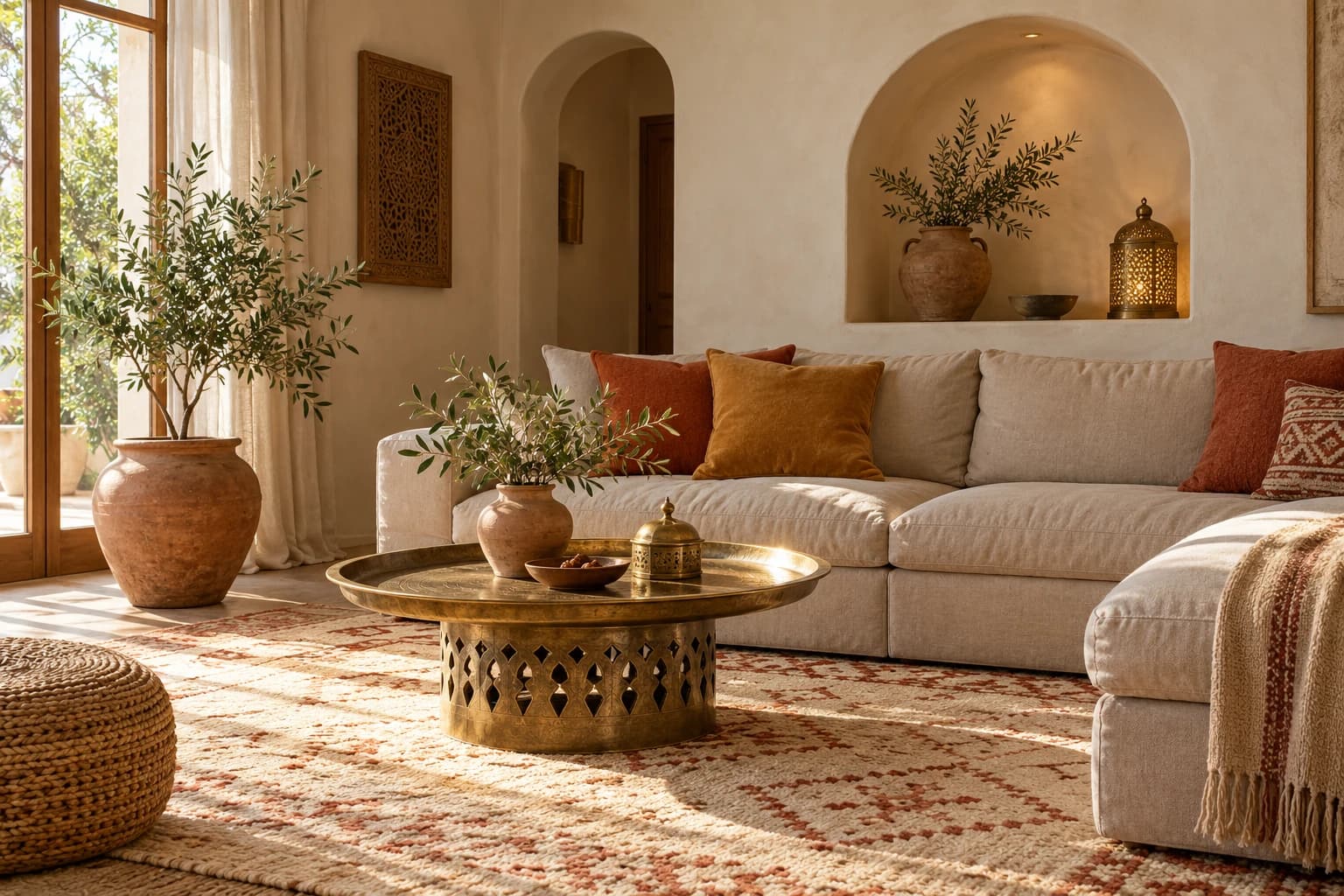
1Riad neutral: warm white, sand, terracotta, brass
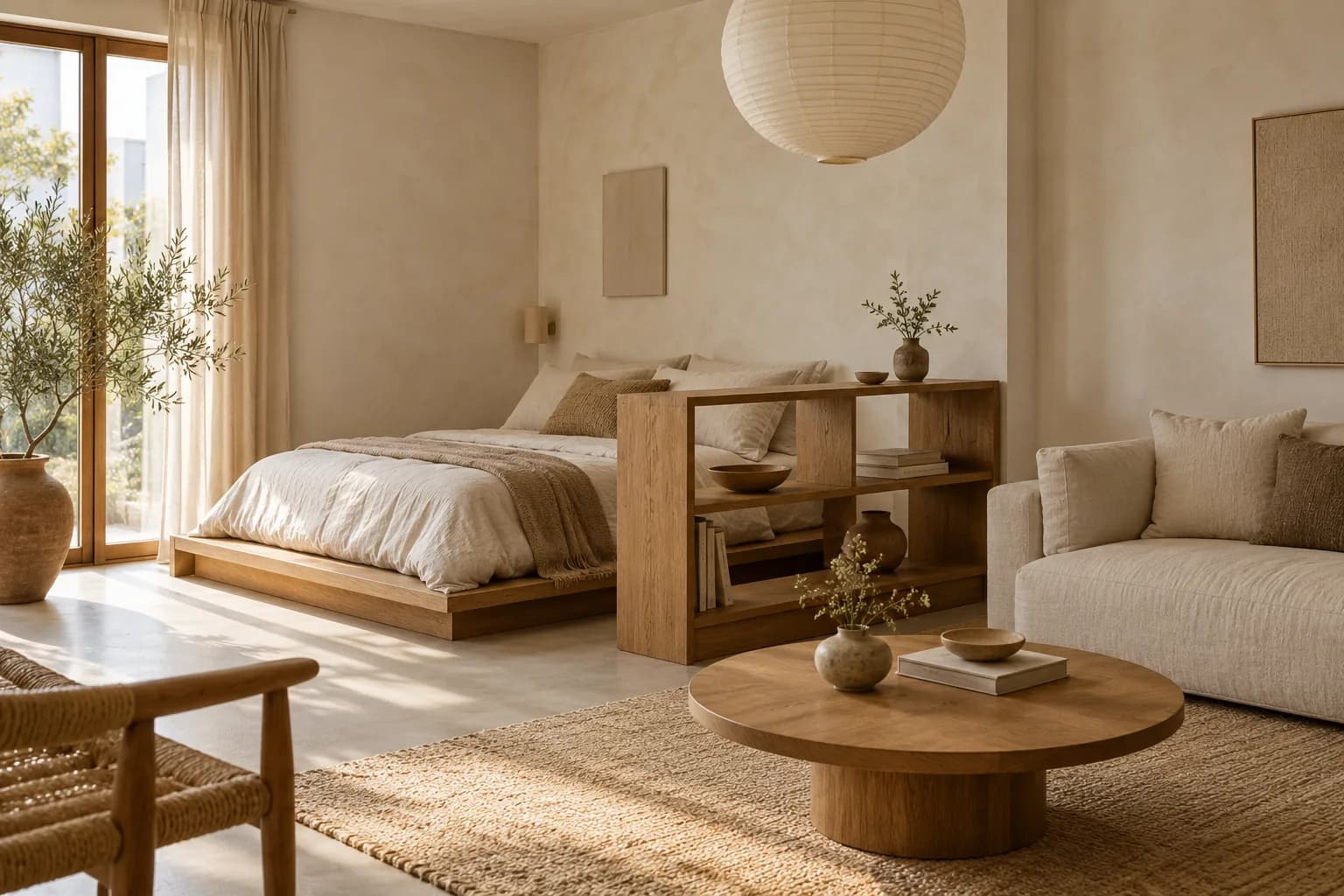
The calmest palette and the easiest to add to a home you already have. White or sand walls, terracotta in pots and cushions, brass in lanterns and trays, green only from plants. It suits every room and never dates.
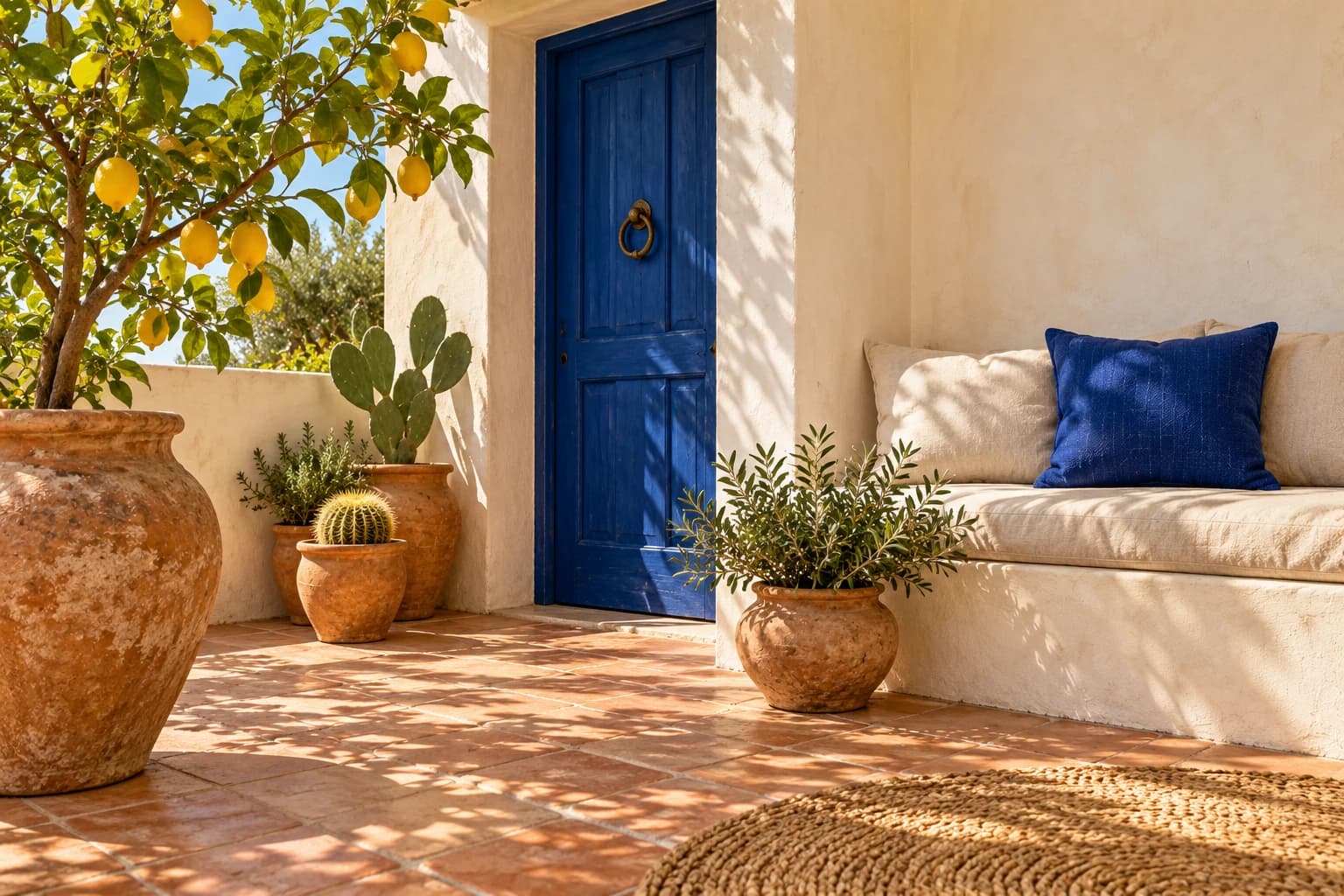
2Majorelle: warm white, cobalt blue, terracotta
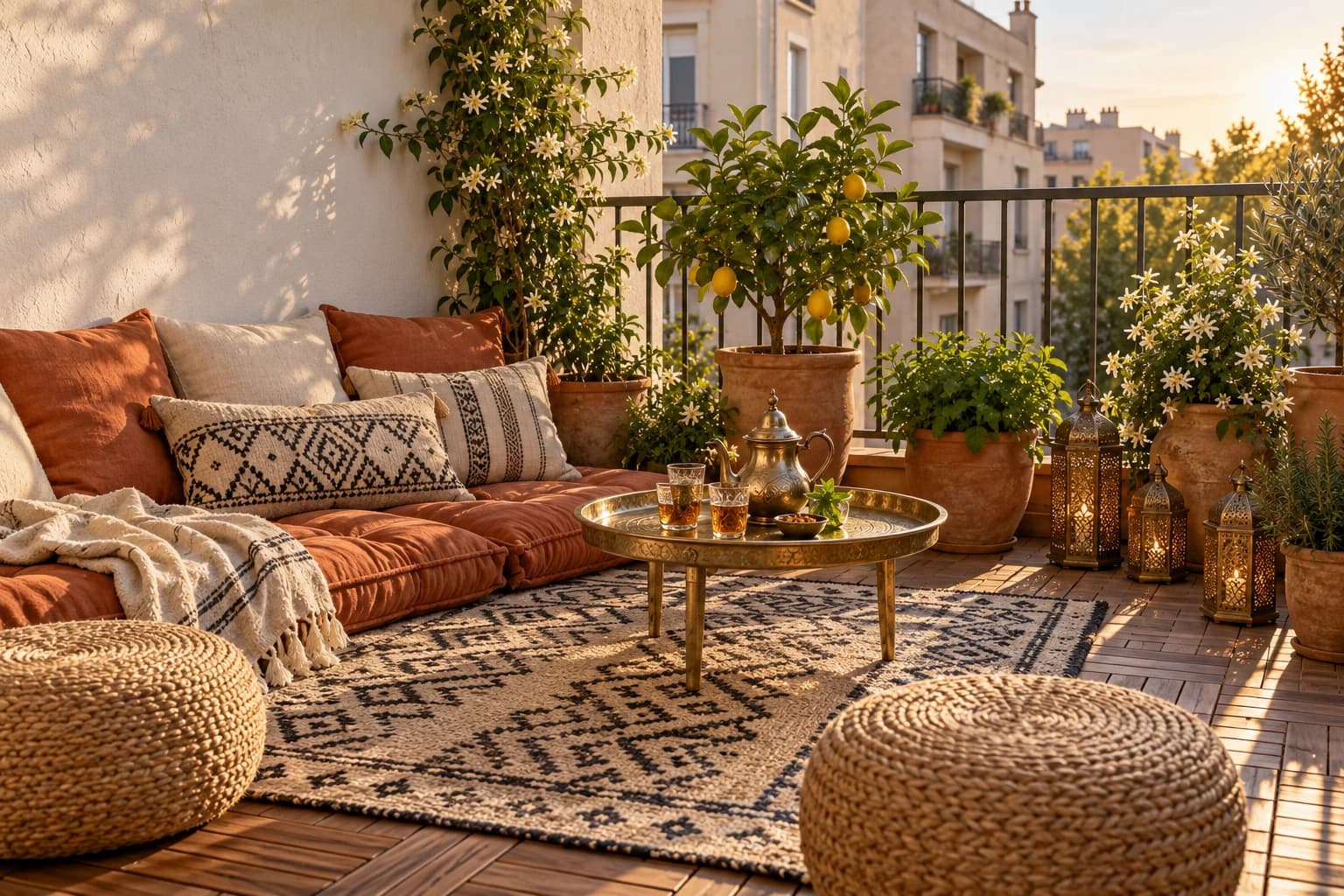
White walls with cobalt blue in one or two pieces (a painted pot, a cushion, a door) and terracotta to warm it up. It is strongest outdoors and in rooms with a lot of sun; our Moroccan balcony ideas use it.
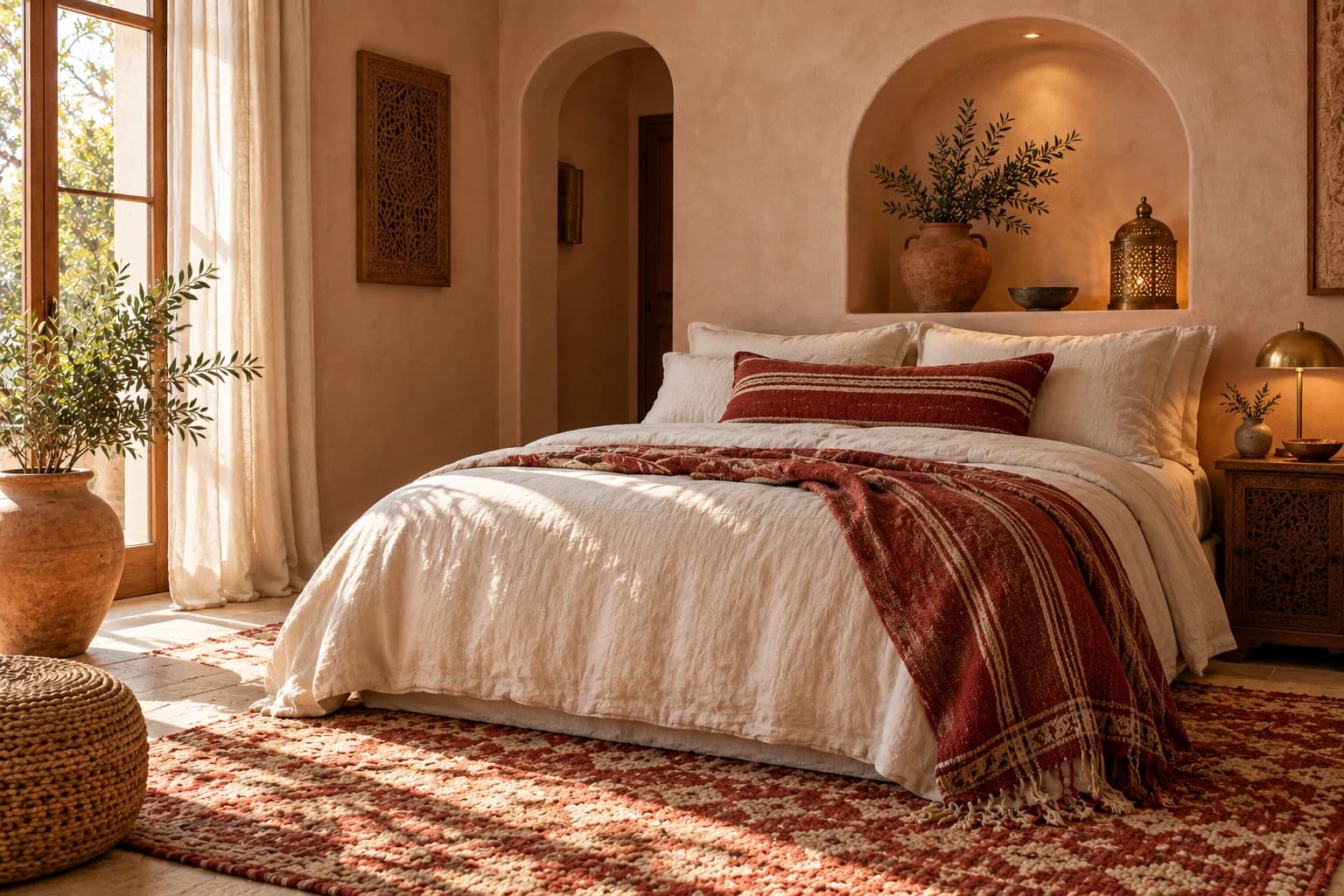
3Marrakech pink: pink ochre, cream, deep red
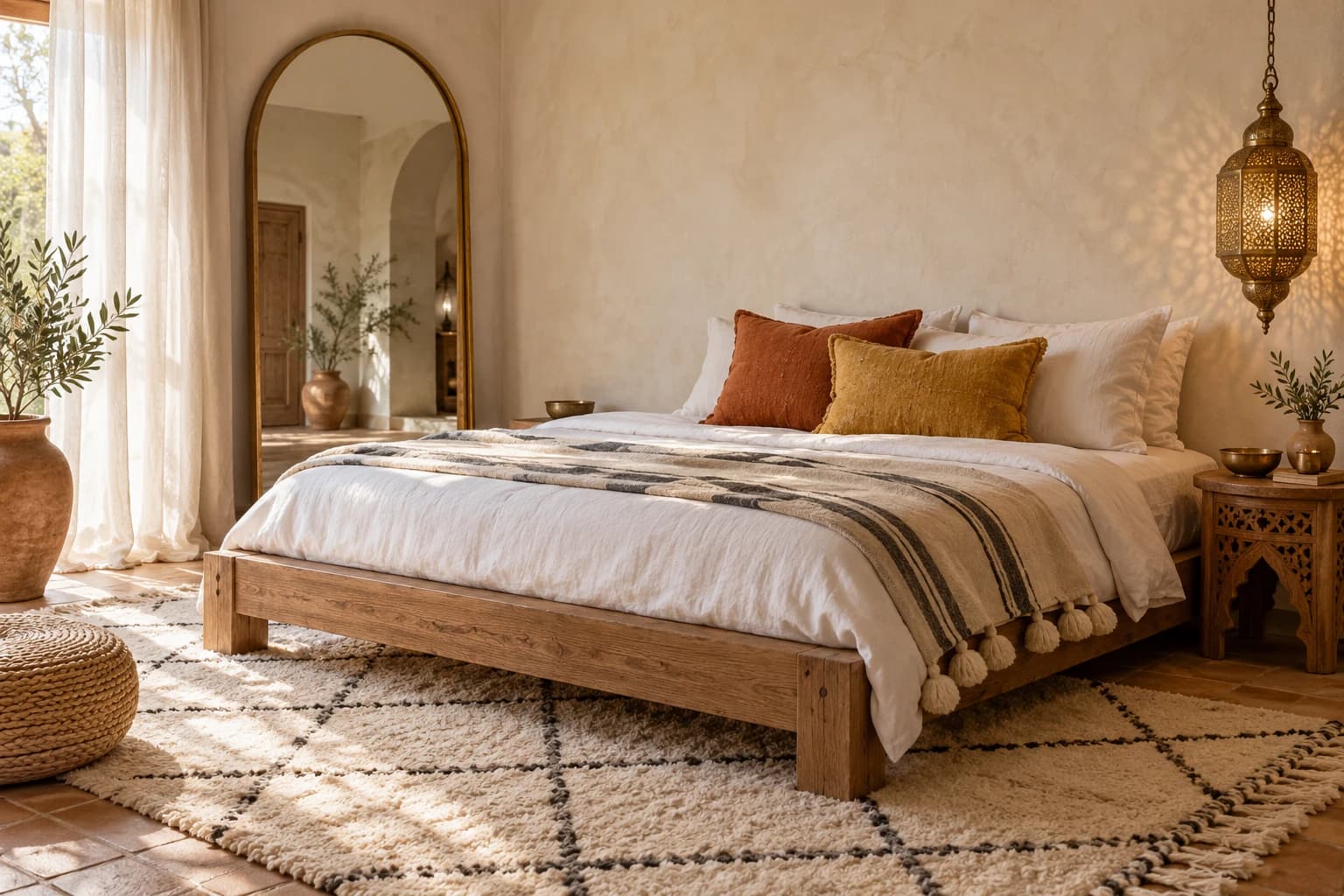
Plaster-pink walls with cream textiles and a red-toned wool rug. Warm and enclosing, it works best in a bedroom or a small sitting room. See it applied in our Moroccan bedroom ideas.
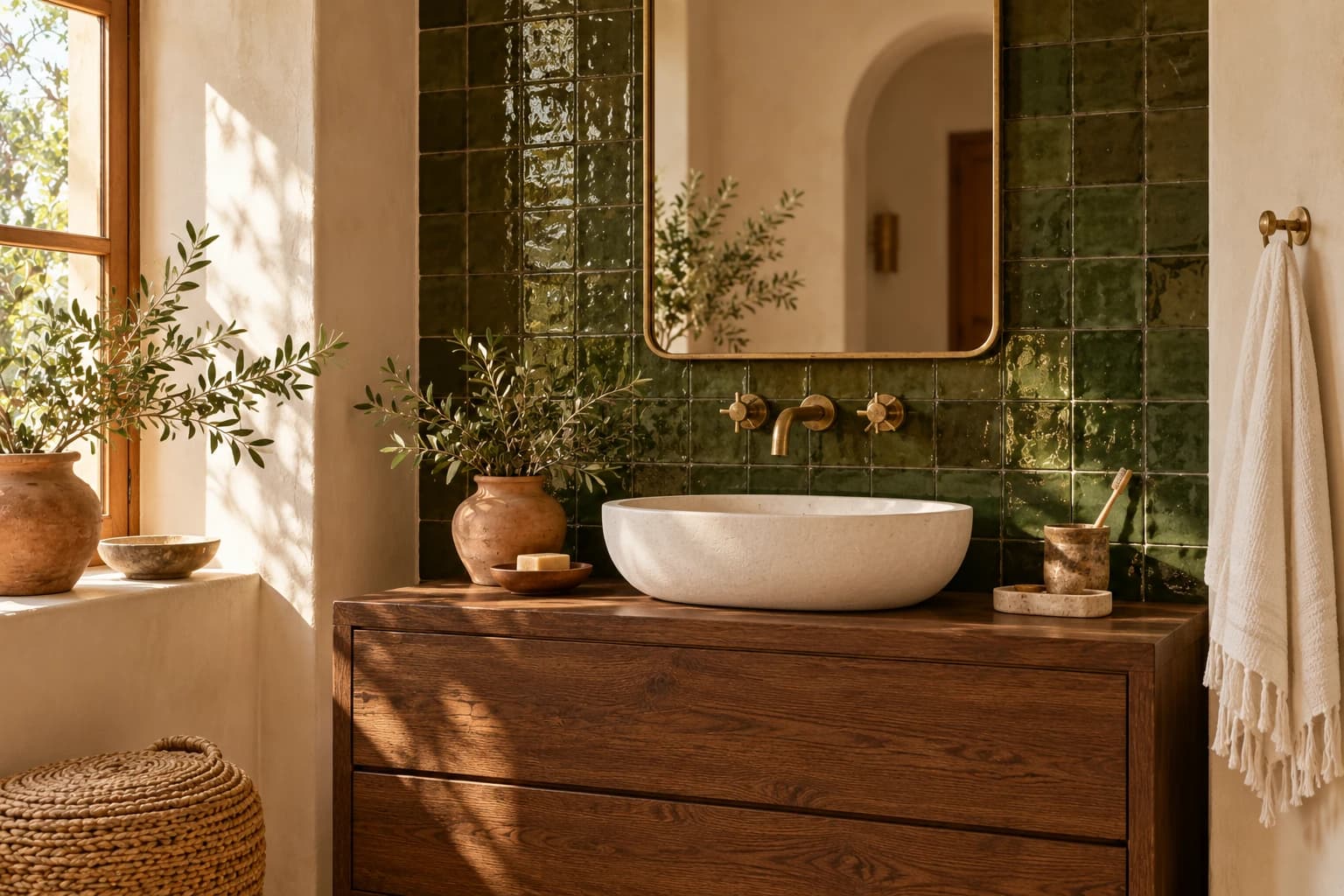
4Fez green: deep green, warm white, brass
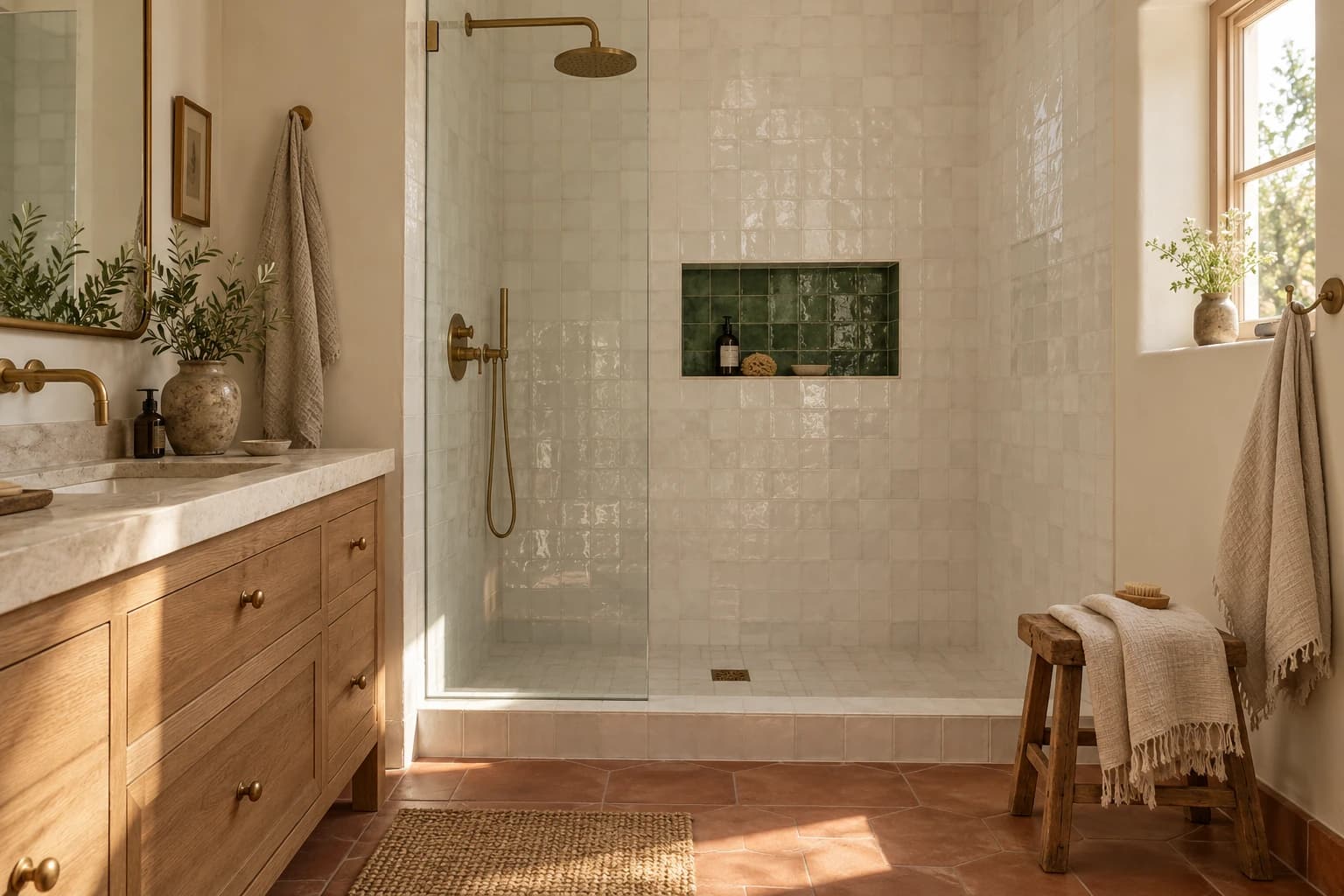
Deep green in tile or on one painted wall, white everywhere else, brass taps or lanterns. This is the classic bathroom and kitchen palette; our zellige tile bathroom ideas show how green tile carries a room.
5Saffron: sand, saffron yellow, dark wood
Sand walls, saffron or ochre cushions and throws, dark wood furniture. A sunny palette for north-facing living rooms that need warming up.
6Chefchaouen: soft blue, white, natural wood
Pale blue-washed walls or textiles with white and light wood. The quietest of the blue palettes and a good fit for a small bedroom or bathroom.
Moroccan Color Palette by Room
- Living room: riad neutral or saffron. Put the accent in cushions and one rug. More in our Moroccan living room ideas.
- Bedroom: Marrakech pink or Chefchaouen. Keep bedding plain and use the color on the wall behind the bed or in a throw.
- Bathroom: Fez green, or riad neutral with plaster-look walls as in our tadelakt bathroom ideas.
- Patio or balcony: Majorelle. Strong sun flatters strong blue. Our Moroccan patio ideas start from this palette.
How to Try a Palette Without Painting
For renters, or before committing to paint:
- Choose the palette and its single accent color.
- Buy two cushion covers and a throw in the supporting and accent colors.
- Add one object in the accent: a vase, a pot or a tray.
- Live with it for two weeks. If it still looks right, repeat the accent once more elsewhere in the room, and only then consider paint.
When you do paint, test a sample on the wall and look at it in daylight and in lamplight; plaster pinks and terracottas shift a lot between the two.
Practical Takeaway
A Moroccan color palette is mostly warm white, sand and terracotta, with one saturated accent: cobalt blue, deep green, saffron or red. Choose one of the six combinations, keep the accent small, and test it in textiles before painting.
FAQ
What colors are in a Moroccan color palette?
Warm white, sand, terracotta and pink ochre as the base, with cobalt blue, soft blue, deep green, saffron yellow and deep red as accents, plus brass and dark wood.
What is Majorelle blue?
An intense cobalt blue named after the Majorelle Garden in Marrakech, where it covers the garden's buildings and pots.
What is a good Moroccan color palette for a bedroom?
Plaster pink with cream and a red-toned rug for a warm room, or soft blue with white and light wood for a calmer one.
Which neutral goes with Moroccan colors?
Warm white or sand. Cool grays and bright blue-whites fight with terracotta and brass.
How many colors should I use in one room?
A neutral base, one earthy mid-tone and one saturated accent. Brass and wood count as extras, not as colors.