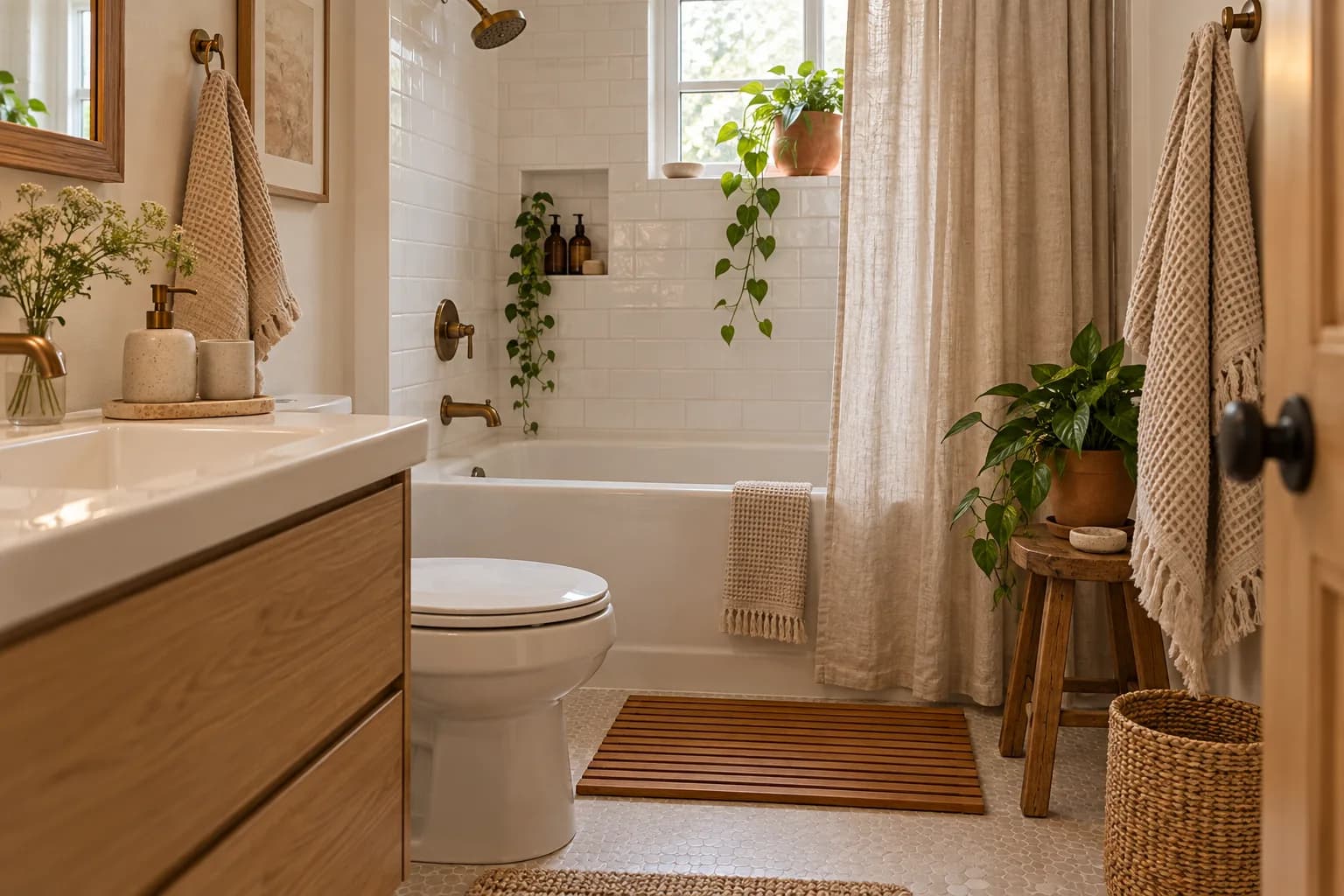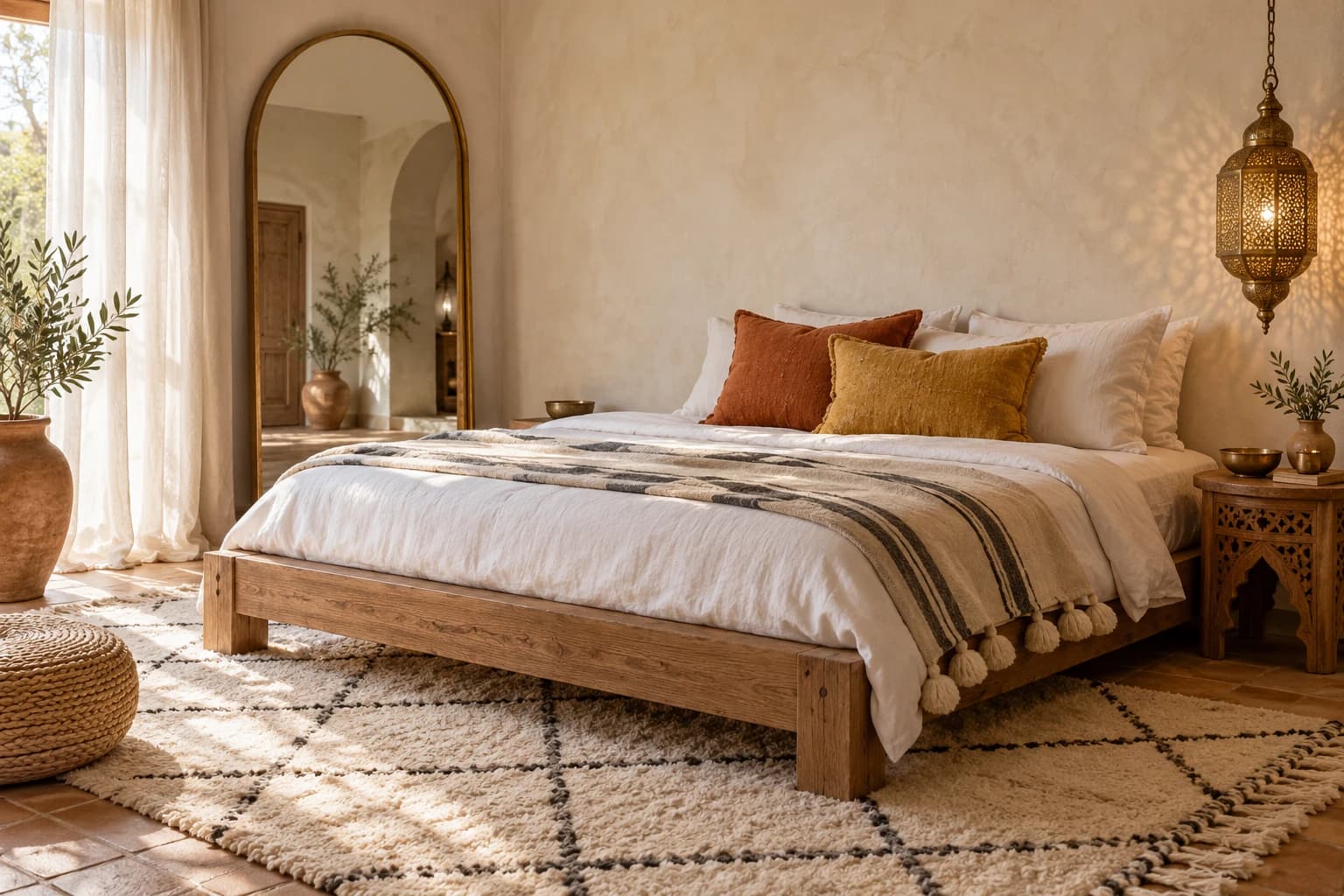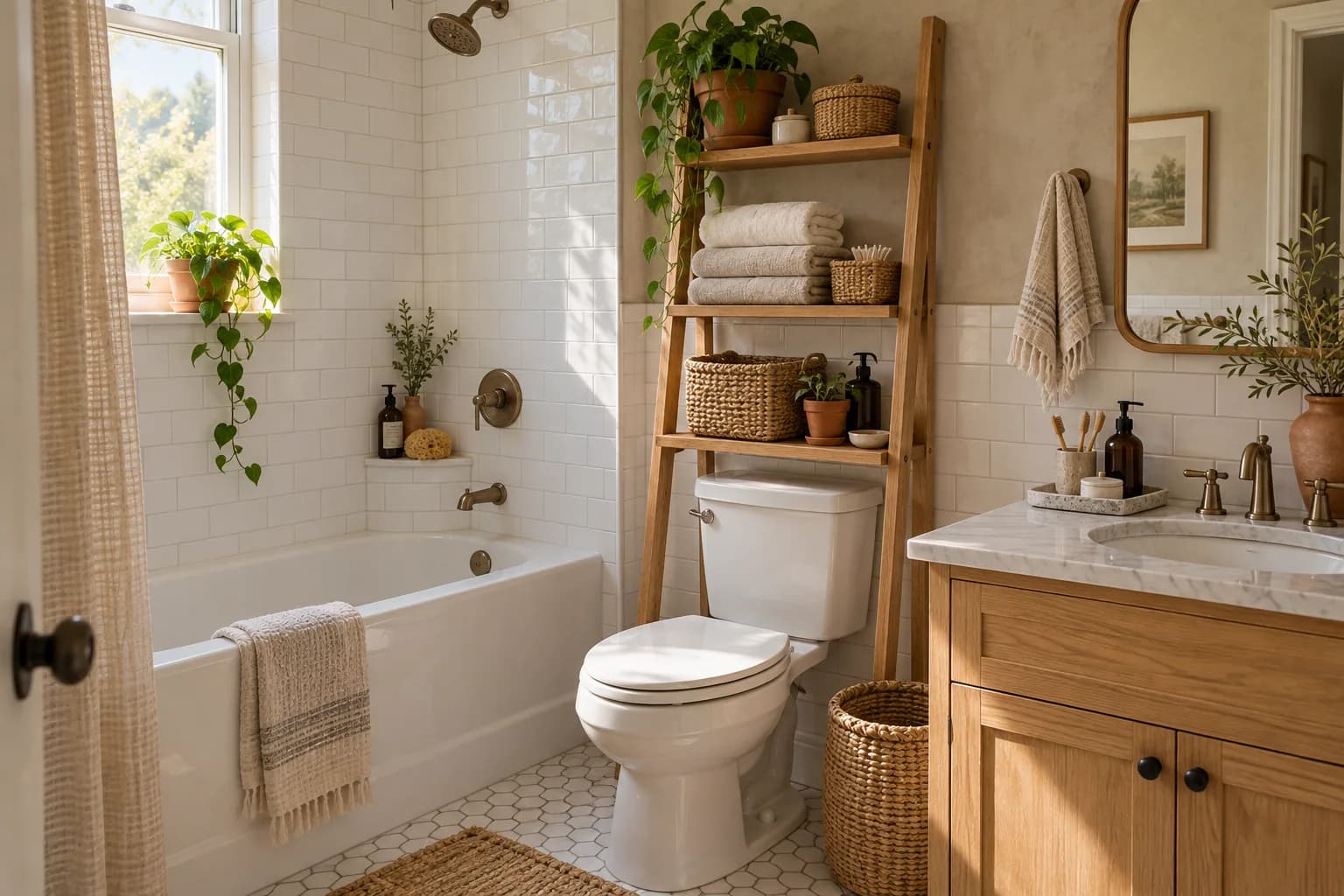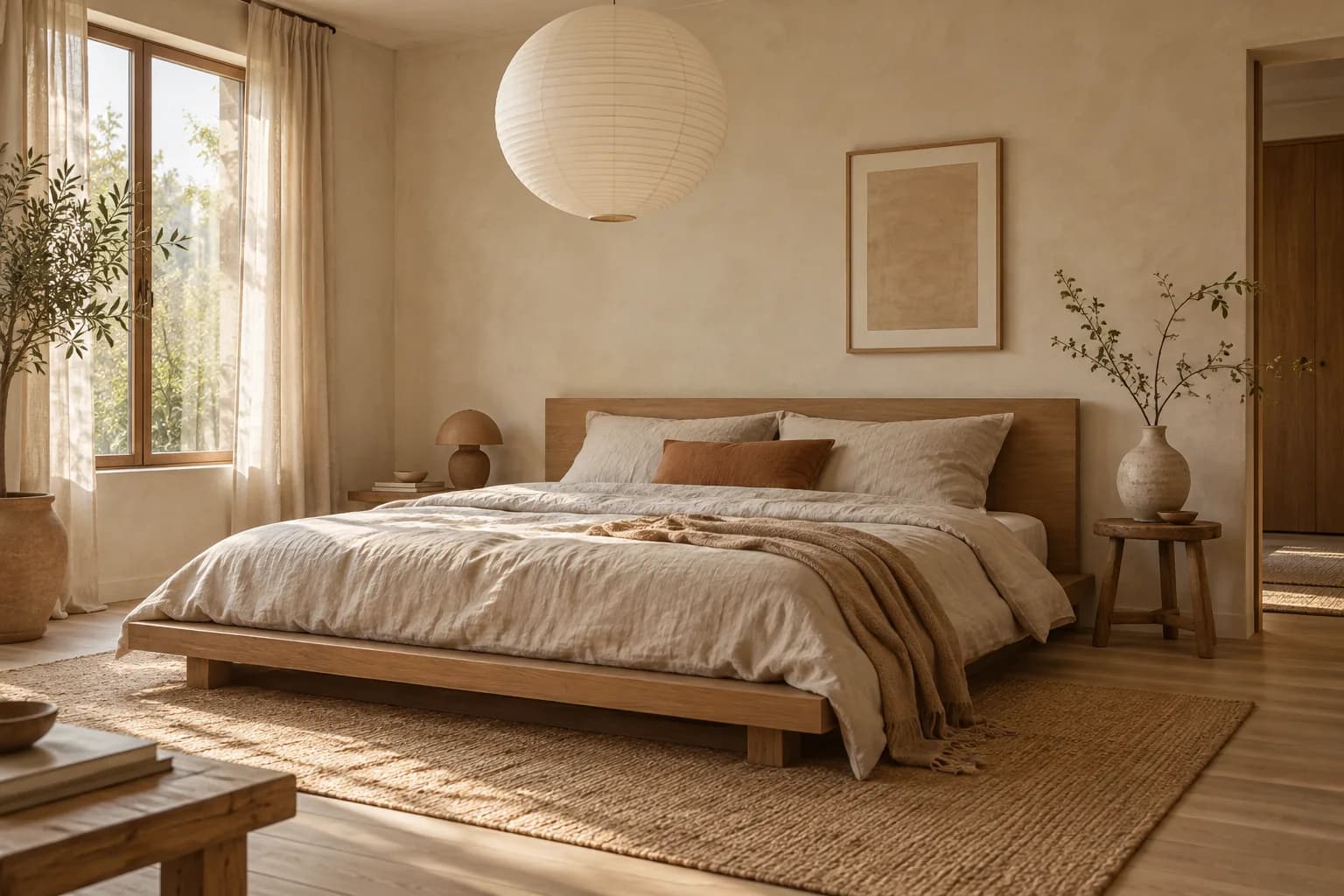
Tadelakt Bathroom Ideas: 11 Looks, What It Costs and Budget Alternatives
Tadelakt bathroom ideas for showers, sinks and walls, with what the Moroccan lime plaster costs, its pros and cons, how to care for it and budget alternatives.

In this guide · 19 sections
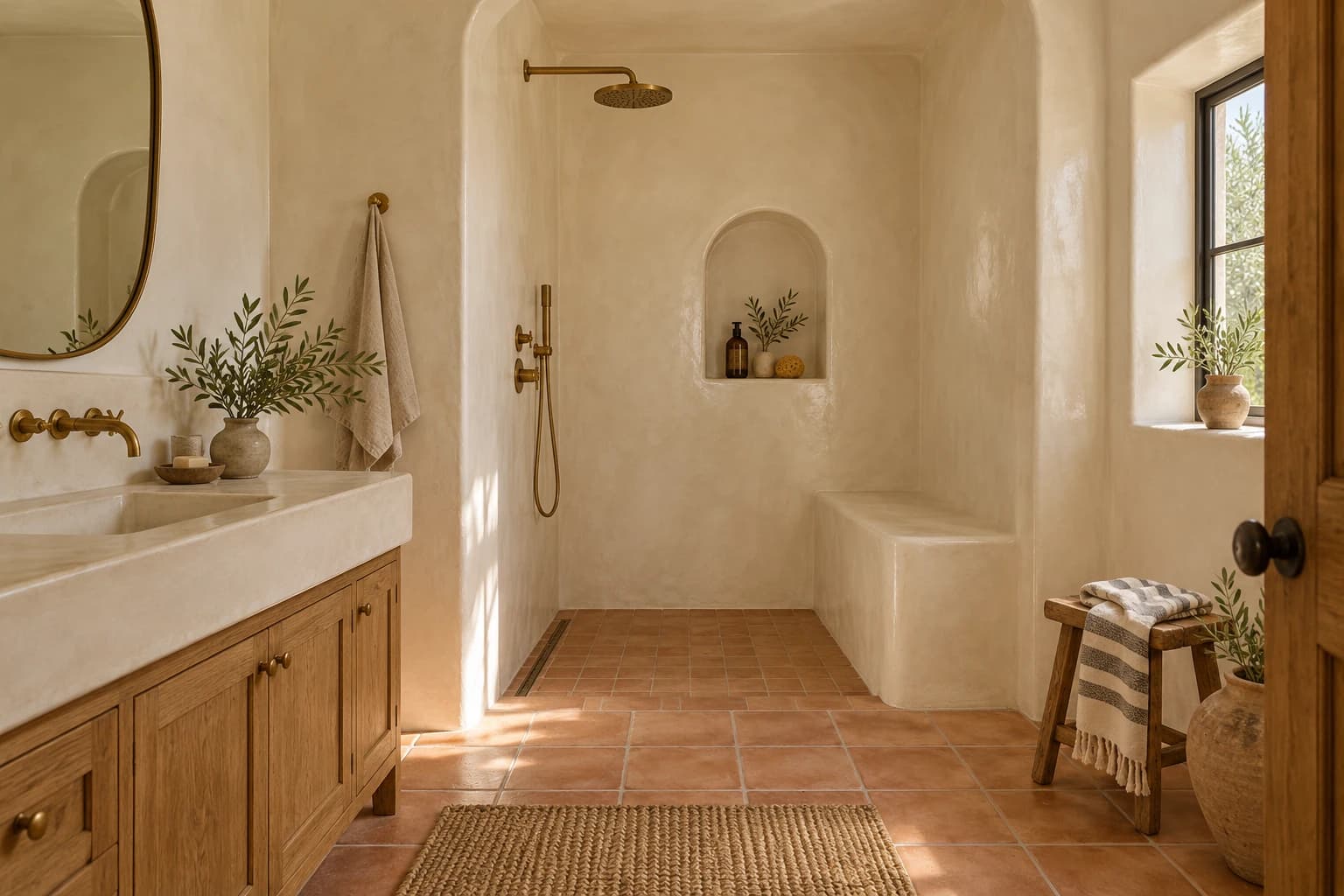
The best tadelakt bathroom ideas use what this Moroccan plaster does that tile can't: seamless shower walls with no grout lines, rounded corners, niches and benches shaped from the same surface, and a soft sheen in warm, earthy colors. It is also a specialist finish with a price to match, so this guide covers both sides.
Below are 11 ideas, what tadelakt costs, its pros and cons, how to look after it, and what to use instead if you rent or the budget is small.
What Is Tadelakt?
Tadelakt is a traditional Moroccan lime plaster. It is applied in several coats, polished with a smooth stone and sealed with olive oil soap, which makes the surface water-repellent and gives it a silky, slightly glossy finish. It has long been used in Moroccan bathhouses (hammams) and riads.
Because it is applied by hand as one continuous surface, there are no joints or grout, and it can follow curves. That is the reason designers use it for showers, sinks and baths.
11 Tadelakt Bathroom Ideas
1A seamless walk-in shower
The classic use: shower walls in one unbroken surface, with no grout to scrub. With a simple glass panel or no screen at all, the shower reads as part of the room.
2An arched niche for soap and bottles
Tadelakt can be shaped, so a shower niche can have a soft arch instead of square tiled edges. It's a small detail that ties the bathroom to Moroccan architecture.
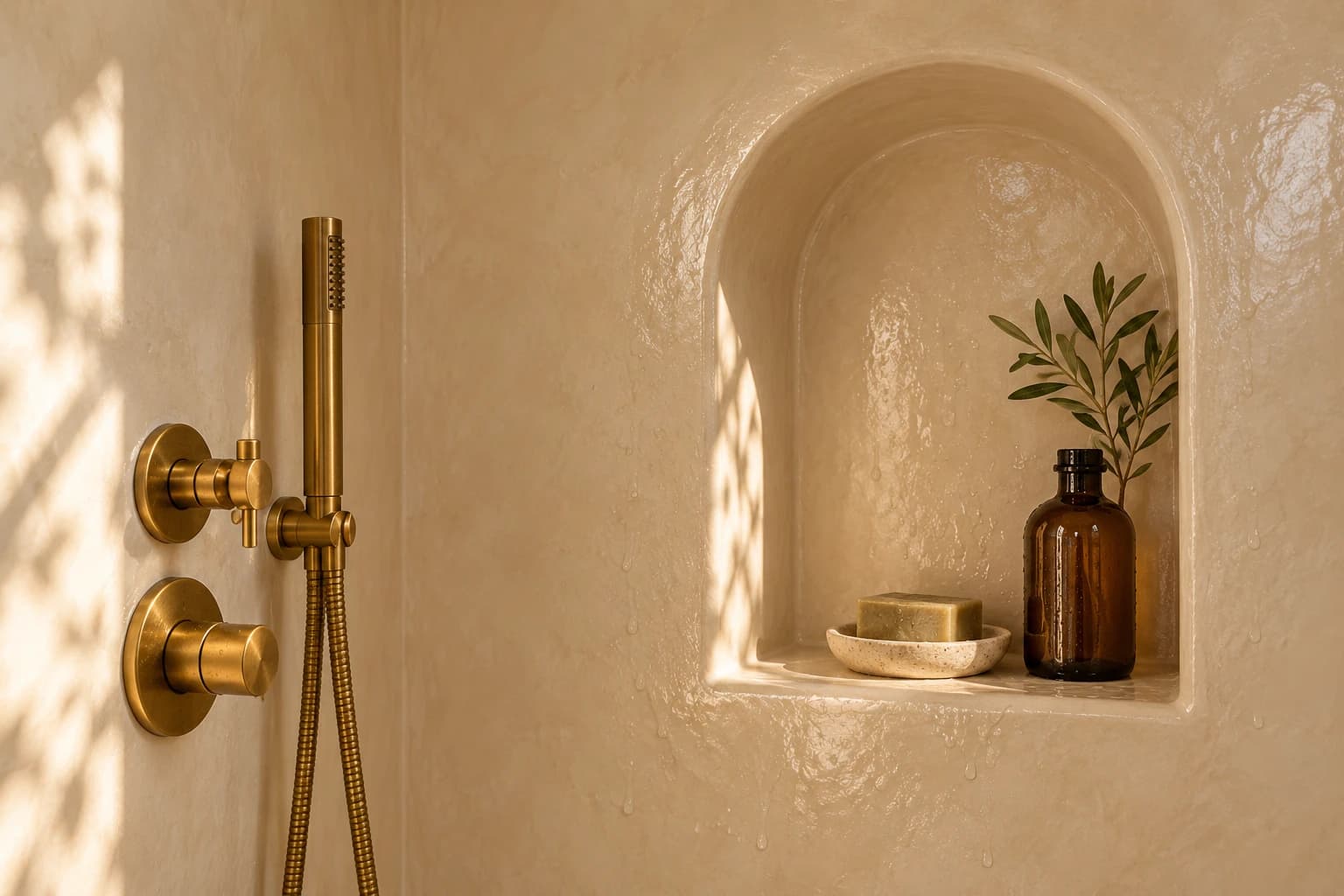
3A built-in bench in the same finish
A bench formed from the wall and finished in the same plaster looks carved from one block, like the seating in a hammam. It also gives you somewhere to sit and to put a towel.
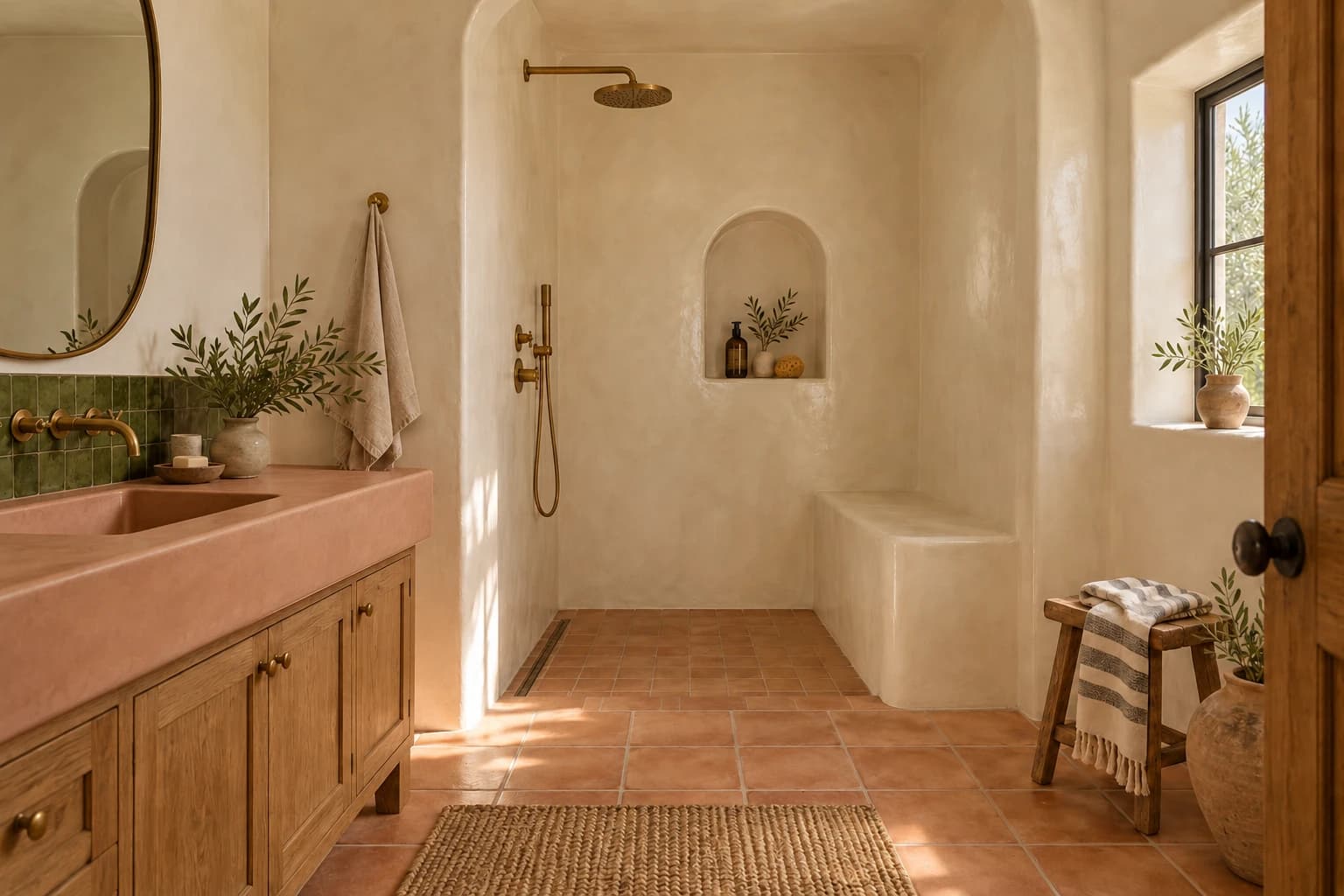
4A moulded tadelakt sink
A basin and counter shaped as one piece in tadelakt is the most sculptural use. It suits a powder room well, where a small surface makes a big effect.
5Warm white walls
Warm white or ivory tadelakt is the calmest option and makes a small bathroom feel lighter. The polished surface reflects more light than matte paint.
6Terracotta or blush
Earthy pinks and terracotta are the colors most associated with Marrakech. In a bathroom they give a warm glow, especially with brass.
7Sage or olive green
Muted green tadelakt is a cooler, more modern take that pairs well with wood and black fixtures.
8Tadelakt with a band of zellige tile
Tadelakt and zellige, the glazed handmade Moroccan tile, are traditional partners. A single band of tile around the room, a tiled floor or a tiled splashback over the sink adds pattern while the plaster keeps the room calm.
9Unlacquered brass fixtures
Brass taps and shower fittings suit the warmth of lime plaster. If you like the look but not the cost of new fittings, see how to update brass fixtures without replacing them.
10Tadelakt in the wet zone only
To control cost, use tadelakt only where water hits (the shower, or the wall behind the sink) and a matching limewash or matte paint on the rest. The price is per square foot, so less area means a smaller bill.
11A bath surround
A built-in bath with a tadelakt surround, with rounded edges and a ledge for candles and soap, is the most hammam-like idea on the list.
Tadelakt Bathroom Cost
Tadelakt costs more than most tile because of labor: it takes several coats and hand polishing, and few plasterers are trained in it.
According to HomeLight's guide to tadelakt plaster, professional installation runs about $30 to $50 per square foot in wet areas such as showers, and about $15 to $20 per square foot in dry areas. The same guide puts do-it-yourself material cost at about $5 per square foot.
Treat those as a starting range, not a quote. What moves the price:
- Area. Shower-only costs far less than a whole room.
- Shapes. Niches, benches, curves and moulded sinks add labor.
- Preparation. The surface underneath has to be sound and suitable, which can mean extra work.
- Where you live. Few specialists means higher rates and travel costs.
Ask for at least two quotes from plasterers who can show finished tadelakt showers, not just dry walls.
Tadelakt Bathroom Pros and Cons
Pros
- Seamless: no grout lines to clean or stain.
- Highly water-repellent when applied and sealed correctly.
- Can be shaped into curves, niches, benches and sinks.
- Soft sheen and depth of color that paint doesn't give.
- Made from lime, a natural material.
Cons
- Expensive, mainly because of skilled labor.
- Few trained installers in many areas.
- Poor application in wet areas can crack or fail.
- Needs gentle cleaning and occasional re-soaping or waxing.
- Acidic cleaners damage the surface.
How to Care for Tadelakt
Can You DIY a Tadelakt Bathroom?
On a dry wall, such as a hallway or the upper part of a bathroom away from water, a careful beginner can try tadelakt. In a shower or around a bath, hire a specialist. The water resistance depends on how well each coat is applied, polished and sealed, and a failed shower wall has to be removed and redone.
Tadelakt Alternatives on a Budget
If you own your home but want to spend less:
- Microcement. A thin, cement-based coating that is also seamless. It has a flatter, more matte look than tadelakt, and its water resistance depends on the sealer and the waterproofing behind it. More installers offer it.
- Limewash paint. Gives a soft, cloudy, plaster-like wall for the price of paint. Paint makers such as Bauwerk Colour advise using it on bathroom walls and ceilings but not inside the shower or right beside the bath.
- Plaster-effect paint on the upper walls, with your existing tile kept in the wet areas.
If you rent and can't paint:
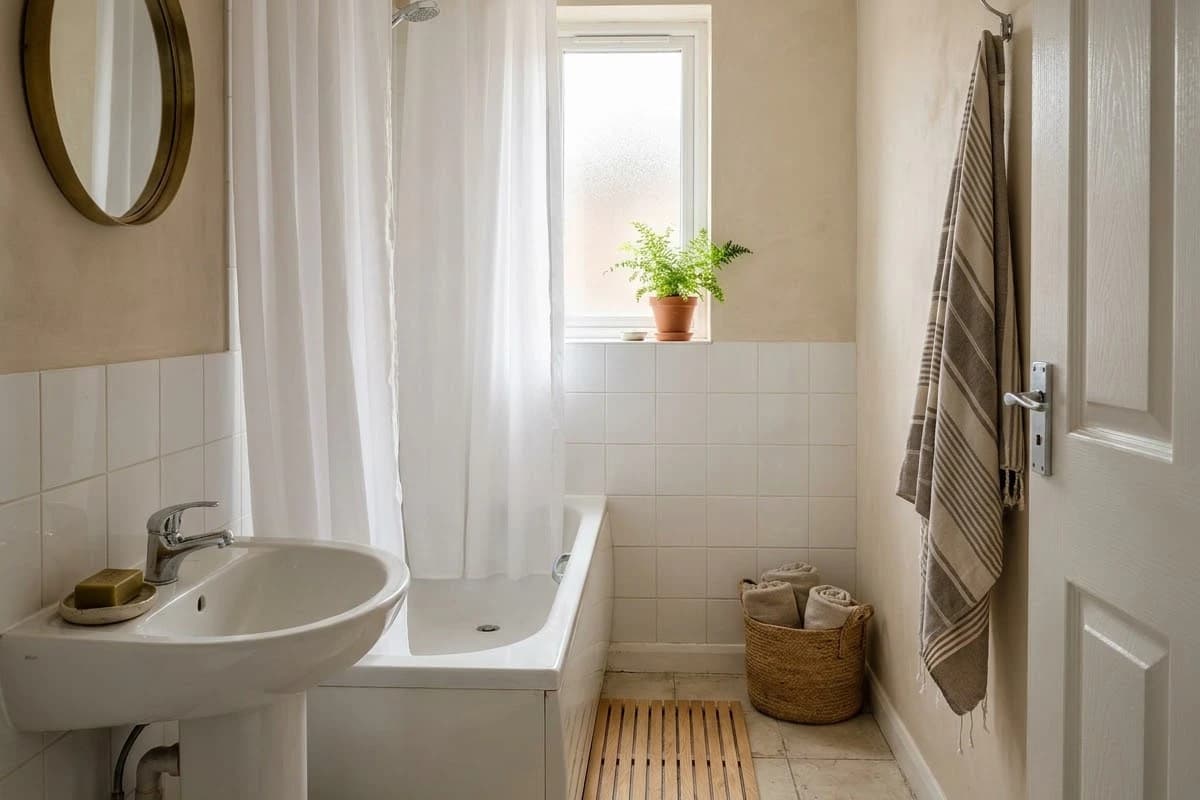
- Hammam-style striped cotton towels and a wooden or woven bath mat.
- Brass-toned accessories: a mirror frame, hooks, a soap dish.
- Terracotta: a plant pot, a small stool, a tray.
- Olive oil soap on a ceramic dish, which looks right and smells good.
- A warm-white bulb instead of a cool one.
Our small apartment decorating guide has more changes that don't need a landlord's permission. To continue the style in other rooms, see our Moroccan bedroom ideas and Moroccan living room ideas, or try tile on a small scale with a DIY tiled coffee table.
Practical Takeaway
Tadelakt gives a bathroom seamless, softly polished walls that can curve into niches, benches and sinks. It is costly because it needs a specialist, so use it where it matters most (the shower) and get quotes from plasterers with wet-area experience. On a budget, limewash paint on dry walls with brass and terracotta accessories gives a similar warmth.
FAQ
Is tadelakt waterproof?
Correctly applied and sealed tadelakt is highly water-repellent, which is why it is used in showers and hammams. It is not a fix for poor preparation: in wet areas the result depends on a skilled installer.
How much does a tadelakt bathroom cost?
HomeLight's guide gives about $30 to $50 per square foot for professional installation in wet areas and $15 to $20 in dry areas. The total depends on area, shapes such as niches and benches, preparation and local labor rates.
Can tadelakt be used in a shower?
Yes, showers are its best-known use. Have it applied by a plasterer with tadelakt shower experience.
How do you clean a tadelakt bathroom?
Use a mild, non-acidic soap, water and a soft cloth, and squeegee shower walls after use. Avoid acidic products such as vinegar and limescale removers, and abrasive pads.
What is the difference between tadelakt and microcement?
Tadelakt is lime-based, hand-polished and sealed with soap, with a soft sheen. Microcement is cement-based, more matte and relies on a sealer and waterproofing behind it. Microcement usually costs less and is easier to find an installer for.
Can I get the tadelakt look in a rental?
Not the plaster itself, but you can get close to the mood: limewash-effect paint on dry walls if your landlord allows it, plus brass accessories, terracotta and striped hammam towels.