TV Wall Ideas for a Bedroom: 13 Ways to Fit a Screen Without It Taking Over
TV wall ideas for a bedroom: mounted above a dresser, on a slat panel, in a painted block, inside a wardrobe or on a stand. Thirteen ideas, how high to mount the screen for watching from bed, and how to hide the cables.

In this guide · 21 sections
Good TV wall ideas for a bedroom do two jobs: they put the screen where you can watch it comfortably from bed, and they stop a black rectangle from becoming the first thing you see in a room meant for rest. The simplest answer is to mount the television on the wall opposite the bed, above a low dresser, on a background dark enough that the screen blends in when it is off.
From there you can go further: a wood slat panel, a painted block, a frame of shelves, or a cabinet that hides the screen completely. The 13 ideas below cover each approach, followed by mounting height, cable management and options for renters.
How High to Mount a TV in a Bedroom
A bedroom television usually sits higher than a living room one, because you watch it reclined. Wayfair's guide to TV mounting height suggests a center height of about 50 inches from the floor as a starting point, to be adjusted for the height of your bed and whether you watch sitting up or lying down. The mount maker Sanus, in its notes on bedroom viewing angles, recommends a tilting mount when the screen is above your natural sightline, so it can angle down toward the pillows.
| Situation | Starting point for the screen center | Mount |
|---|---|---|
| Watching propped up on pillows, standard bed | About 45 to 50 inches (115 to 127 cm) from the floor | Fixed or tilting |
| Watching lying nearly flat | Higher, with a downward tilt | Tilting |
| High bed or tall mattress | Add the extra bed height | Tilting |
| TV above a tall dresser | Leave 4 to 8 inches above the dresser top | Tilting |
| TV not directly opposite the bed | As above | Full-motion arm |
The reliable method is to test it. Sit or lie in bed the way you actually watch, have someone hold a piece of cardboard the size of the screen against the wall, and mark the height where your neck is relaxed.
Mounted Above Furniture
1Above a low dresser
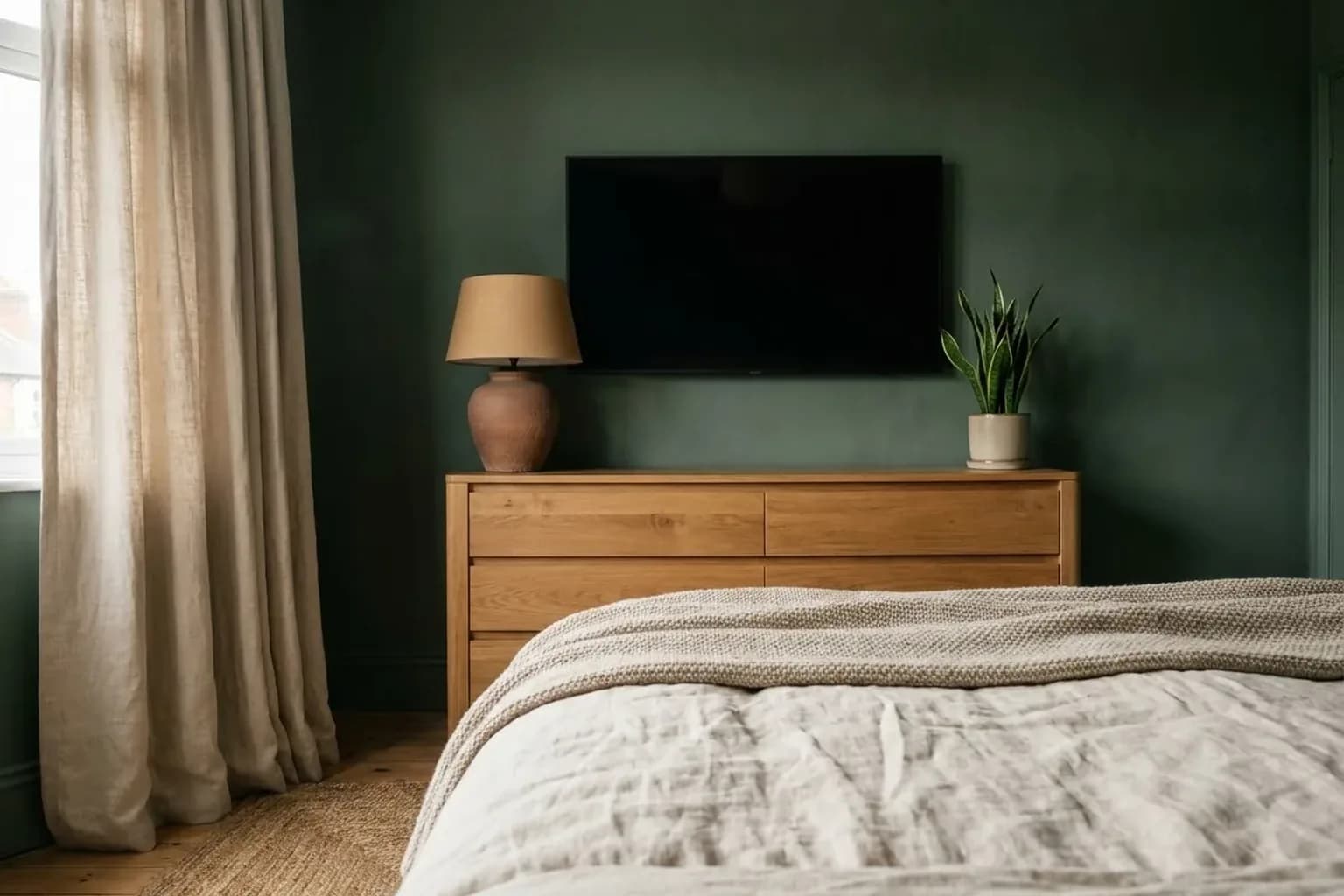
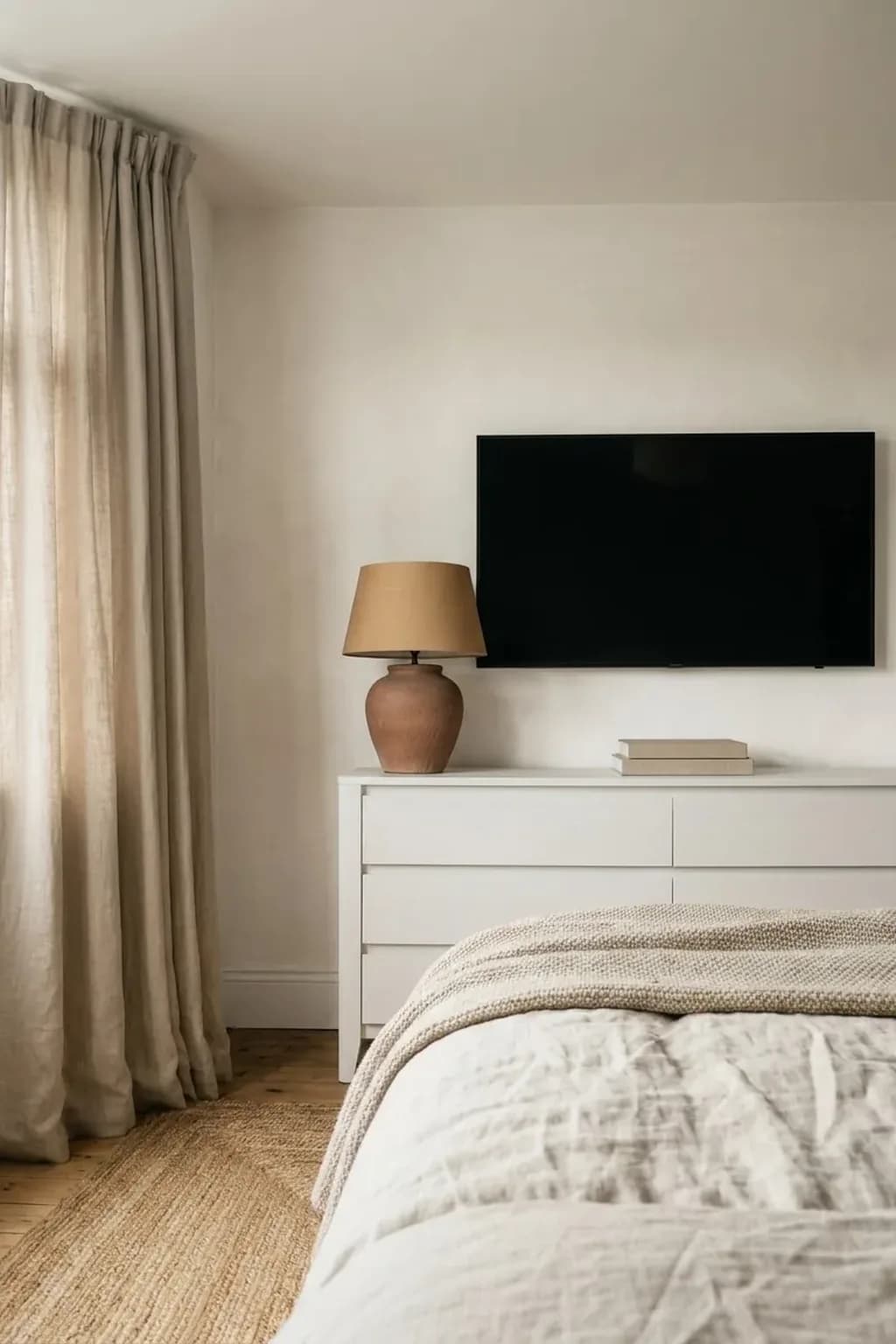
The standard arrangement, and the most practical. The dresser grounds the screen, holds a streaming box and hides the lower part of the cables. Choose a dresser wider than the television by at least a few inches each side, and leave a hand's width of wall between the two. Style the top with a lamp at one end and a low plant or tray at the other, nothing tall in front of the screen.
2Above a floating console
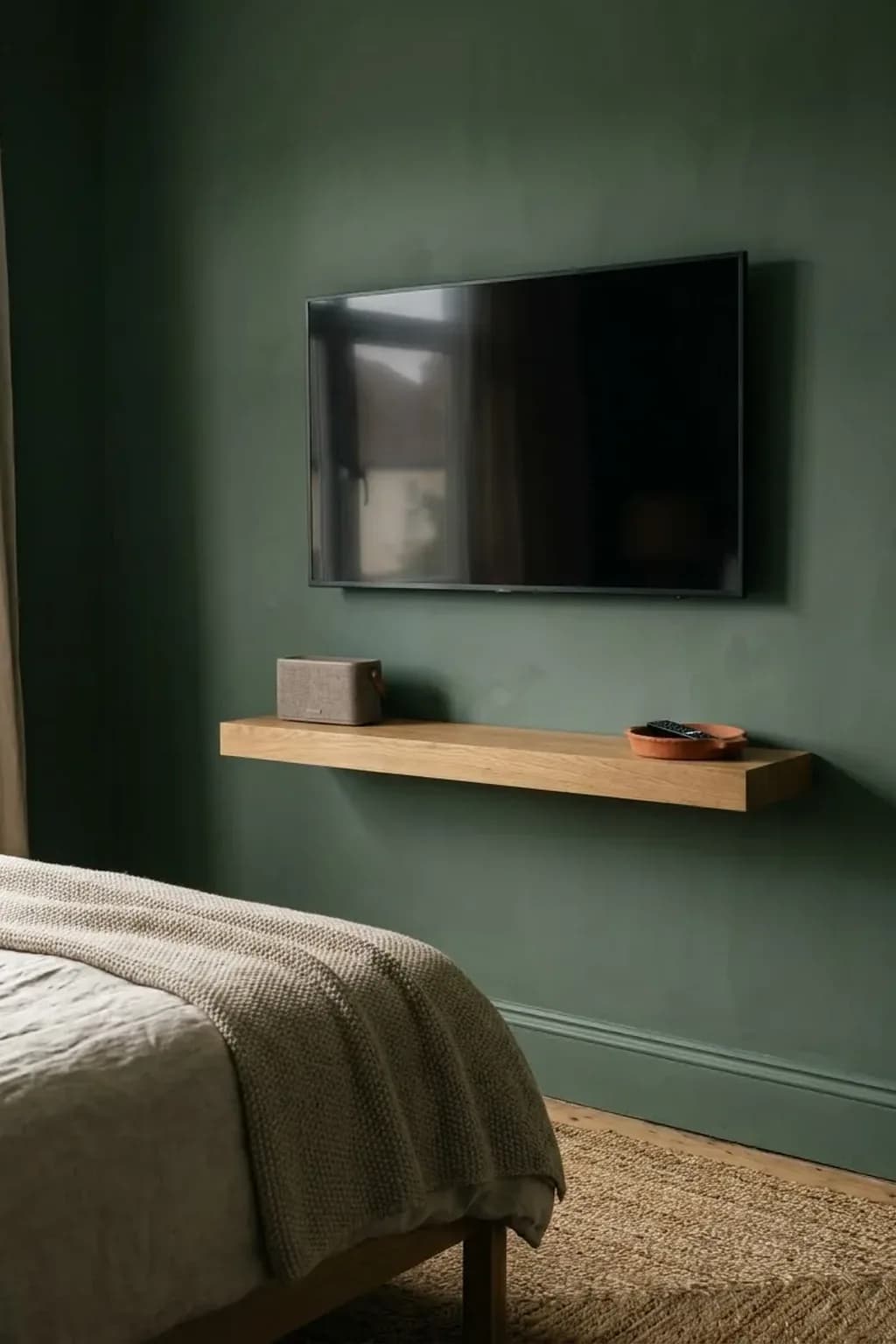
A slim wall-hung shelf or cabinet under the screen takes less floor than a dresser, which suits a narrow room where the bed leaves little walkway. It keeps the floor visible, which makes a small bedroom feel larger, and gives a ledge for a remote and a speaker.
3Above a desk or vanity
In a bedroom that also holds a desk or dressing table, mount the screen above it and let one piece of furniture do two jobs. Use a full-motion arm so the screen can angle toward the bed. Our home office in a bedroom layouts show where the desk fits.
Making the Screen Blend In
4A dark painted wall or block
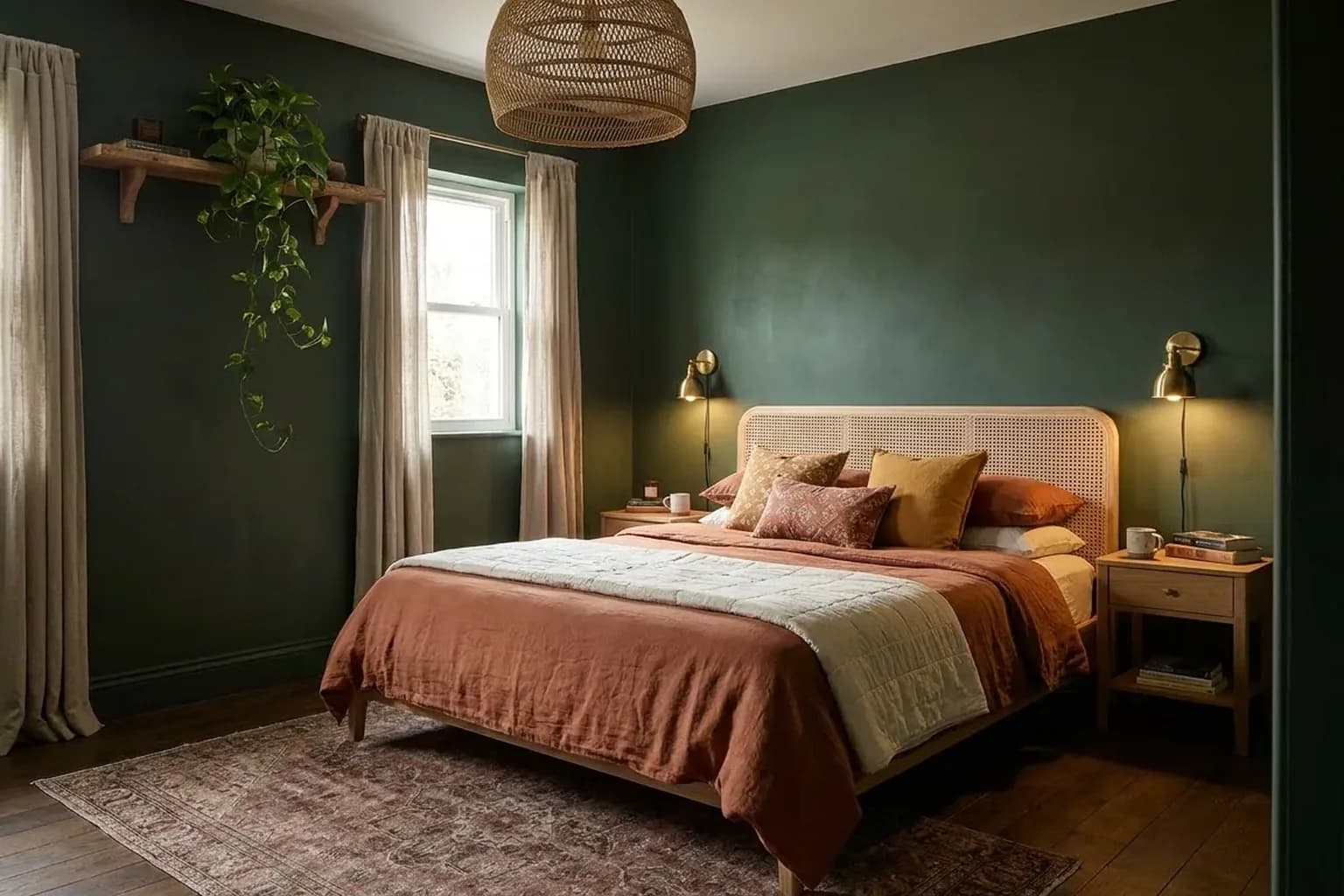
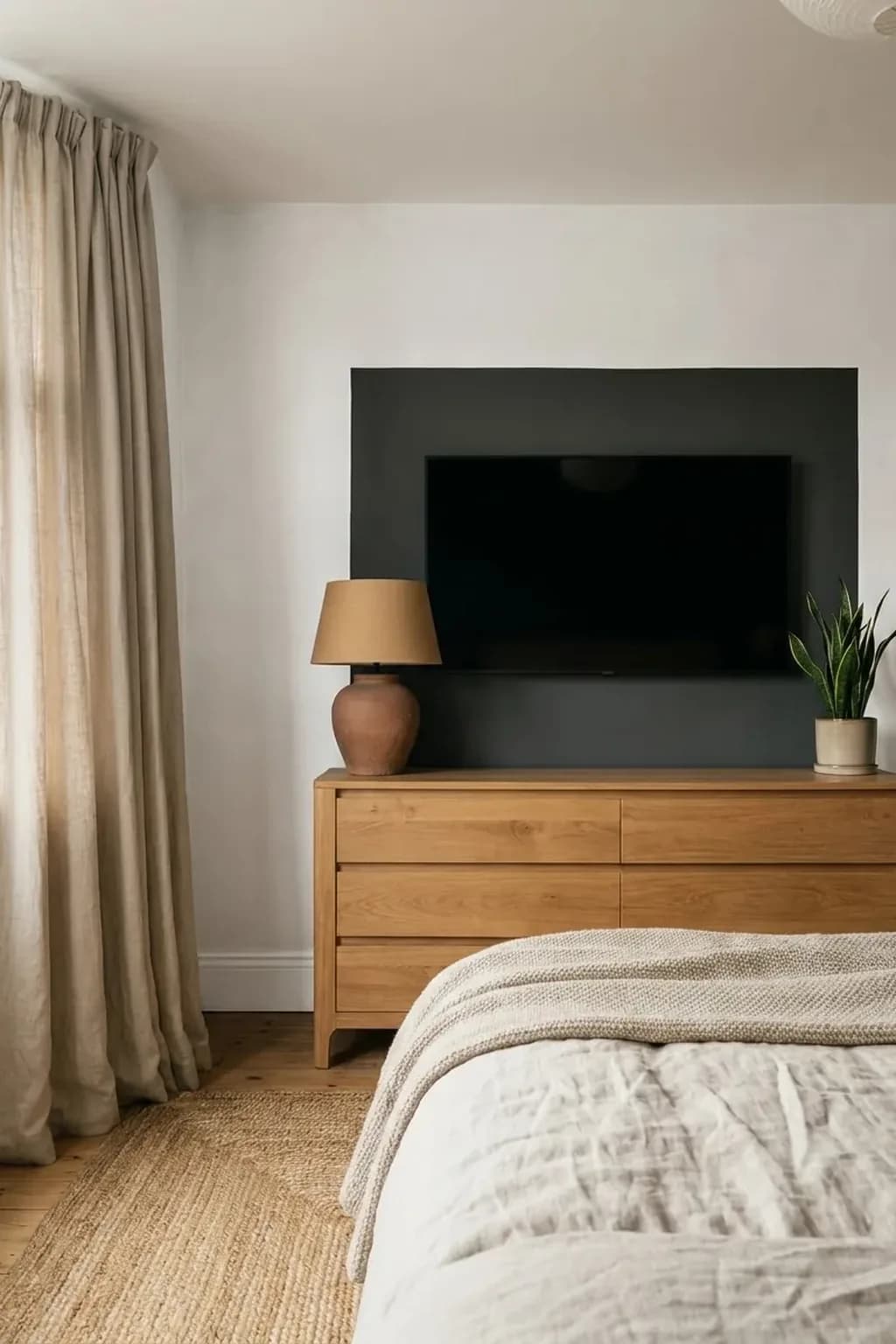
A black screen disappears against a dark background. Paint the whole wall opposite the bed in charcoal, deep green or navy, or just a rectangle a foot or so larger than the television on each side. When the screen is off, it reads as part of the wall. The block is a sample-pot job; see our painted accent wall ideas for getting clean edges.
5A wood slat panel
Vertical wood slats behind the screen add warmth, absorb a little sound and give a channel to hide cables in. A panel the width of the dresser, from its top to the ceiling, looks built in. Slat panels are sold in ready-made sections that fix to the wall with screws or adhesive; darker slats hide the screen better.
6A gallery wall around it
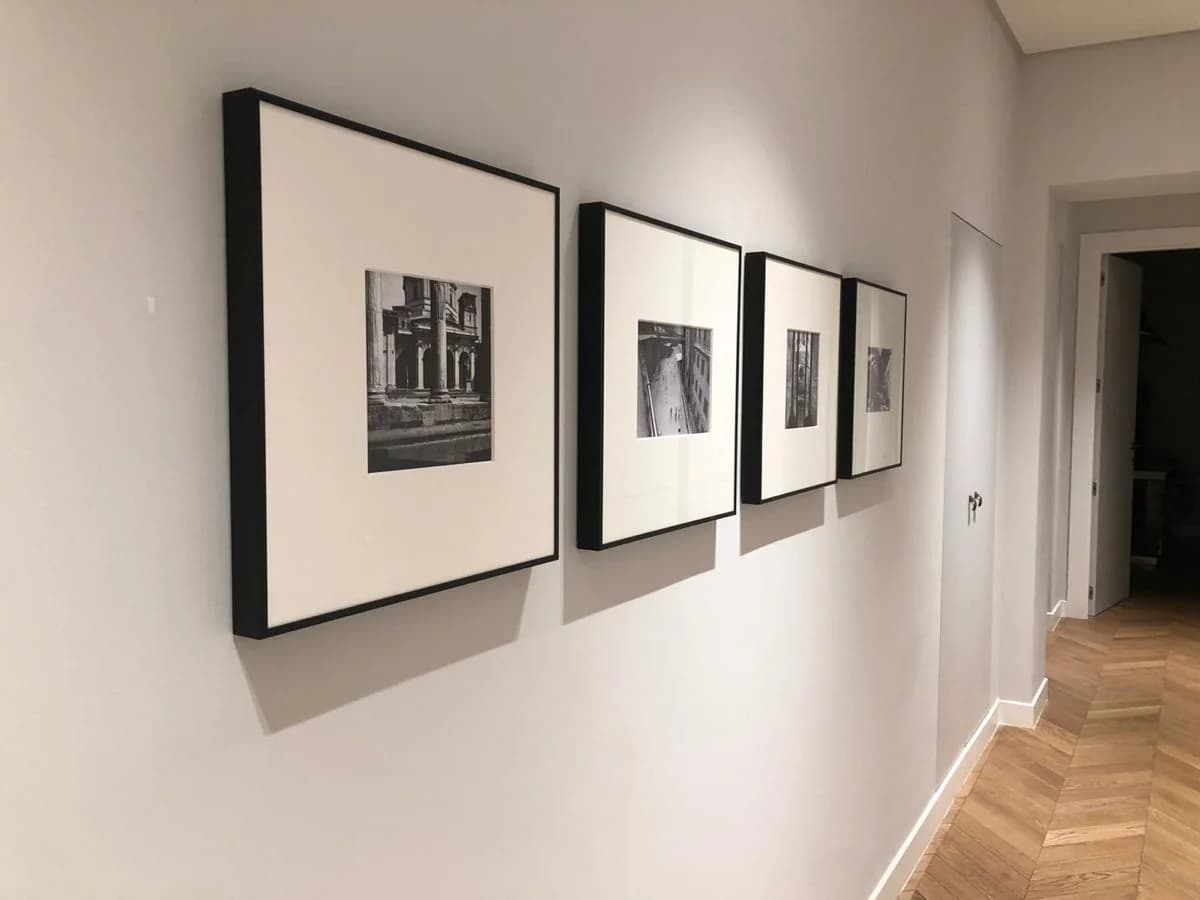
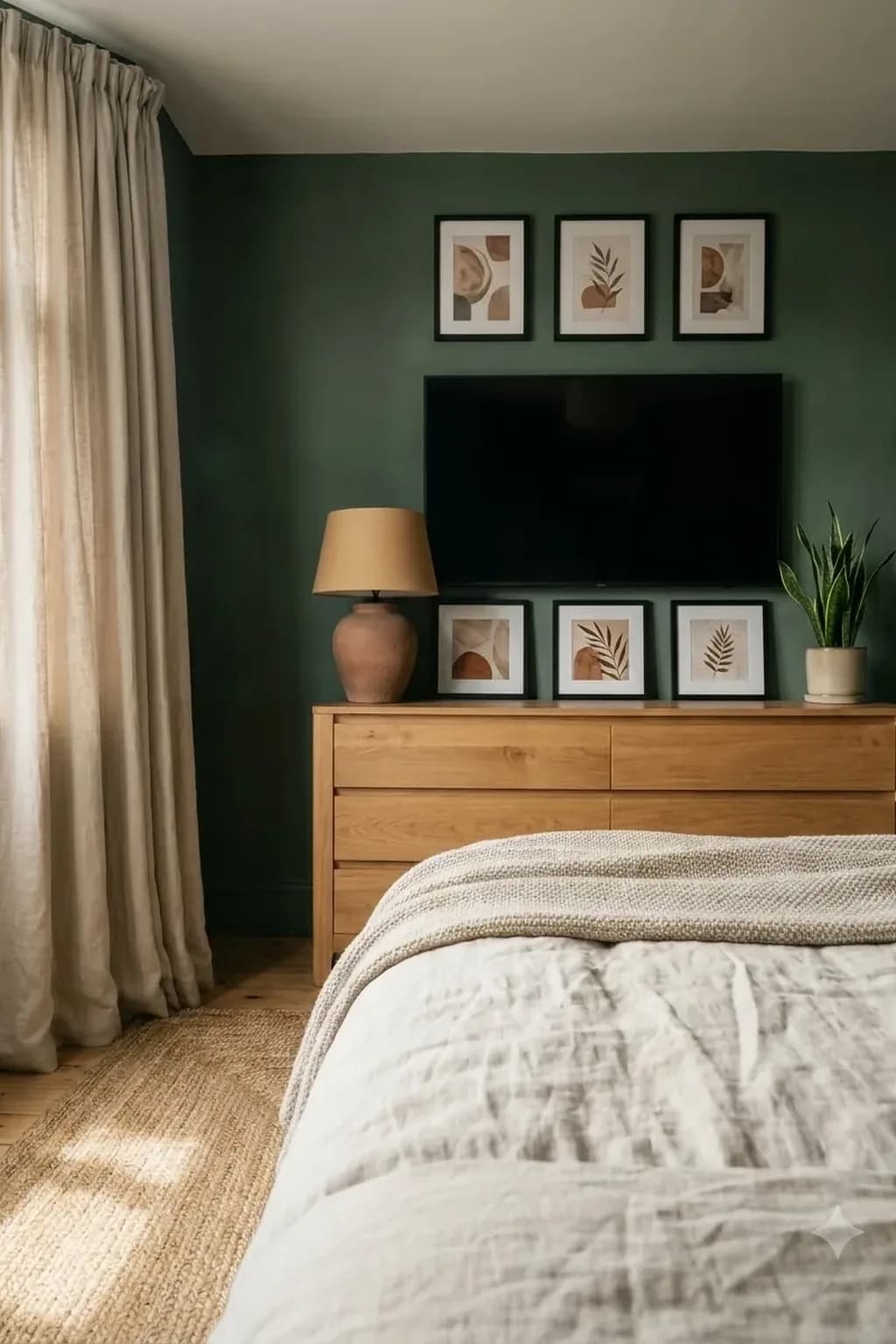
Surround the television with frames in black or dark wood, at the same spacing from the screen as from each other. The screen becomes one rectangle in a group. Keep the art quiet, so it does not compete when the screen is on. Layout rules are in our gallery wall ideas for small spaces.
7An art-mode screen
Some televisions can display artwork or photographs when idle, with a matt screen and a frame-like bezel, so the screen passes for a picture. It costs more than a standard set of the same size. A cheaper version of the idea: set a still, dark image as a screensaver at low brightness in the evening.
Hiding It Completely
8Inside a wardrobe or cabinet
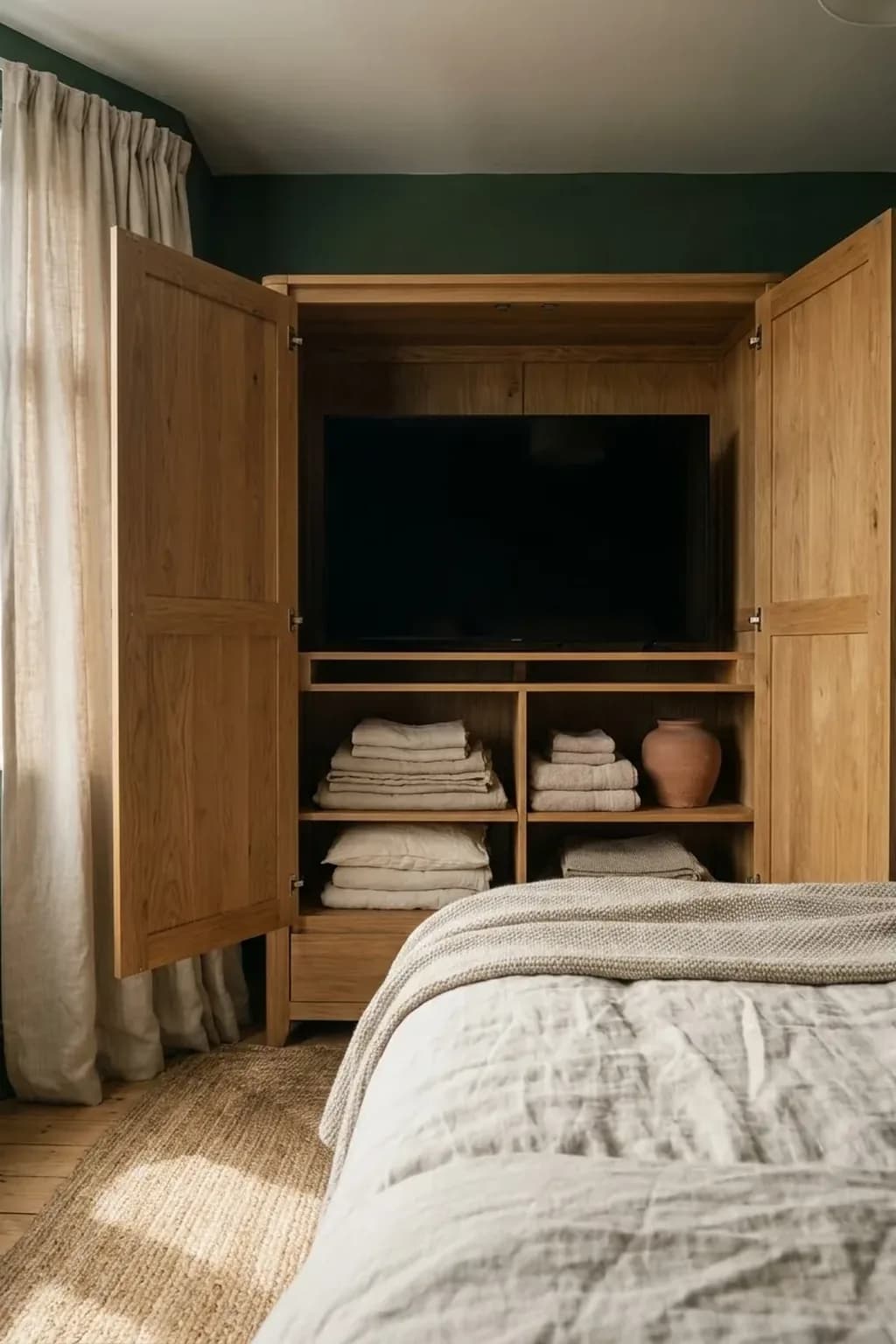
If you watch only occasionally, put the screen behind doors: on a shelf inside a wardrobe, or in an armoire opposite the bed. Doors closed, the room has no television. Leave ventilation space around the set and a gap at the back for cables.
9Behind a sliding panel or curtain
A sliding panel, a pair of small shutter doors or a short curtain on a rail in front of a recessed screen is a simple cover. A linen curtain on a tension wire is the renter's version, and looks like a small window treatment when closed.
10A projector instead
A small projector aimed at a pale, plain wall or a pull-down screen leaves no black rectangle at all. It suits a room that can be made dark, and people who watch mostly at night. The wall stays free for art during the day.
Without Drilling
11On the dresser, on its stand
The simplest setup needs no mount. Stand the television on a dresser of the right height and push it toward the back. Add a low riser if the screen needs to be higher. Fix the set with an anti-tip strap, especially with children in the home.
12An easel or tripod stand
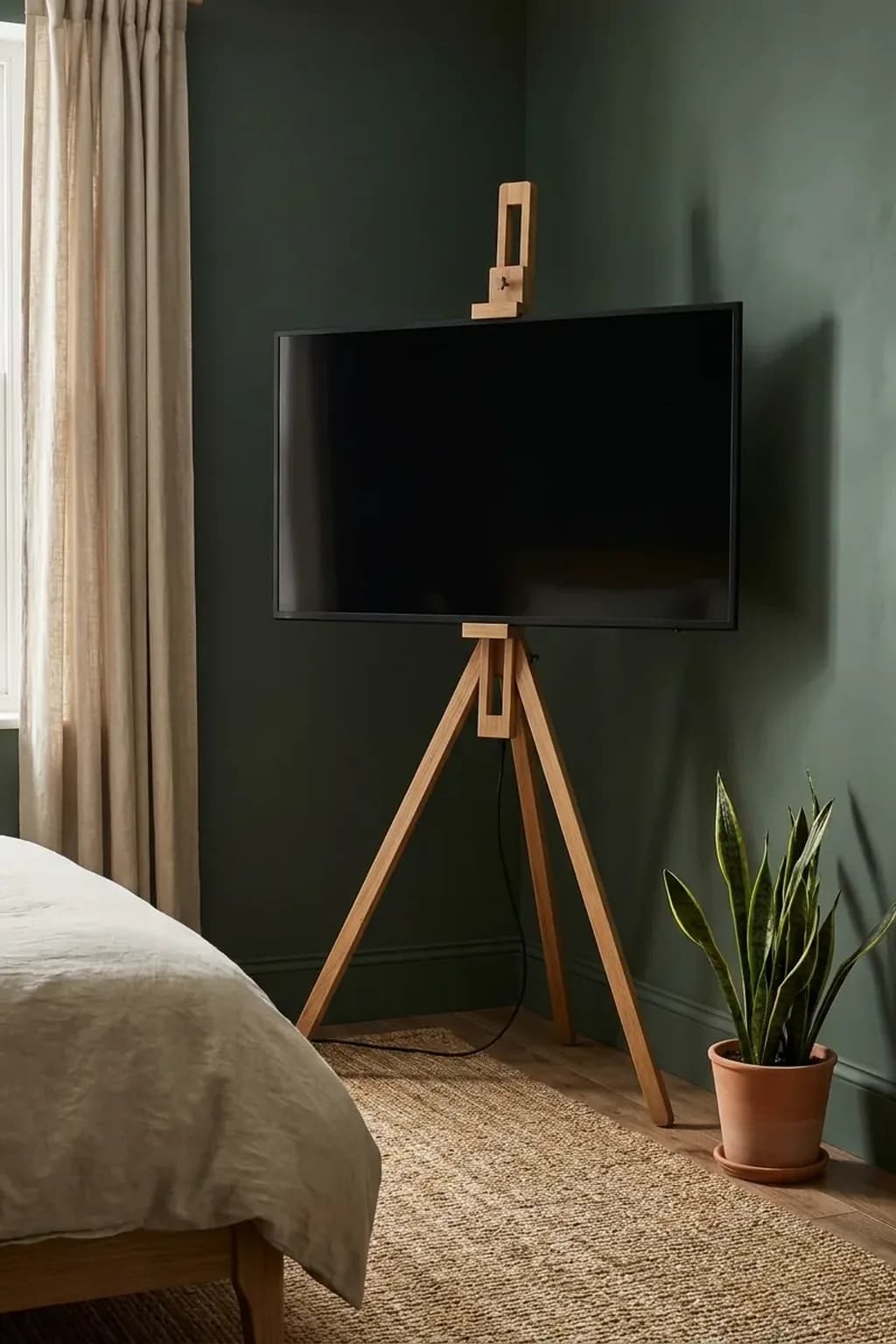
A floor stand in the style of an artist's easel holds the screen at mounted height with no holes in the wall, and it can sit across a corner, which is often the only free spot in a small bedroom. Cables run down the back leg.
13At the foot of the bed
Where no wall faces the bed, put the screen on a low bench or chest at the foot of it, or on a narrow console behind a footboard. It works in long, narrow rooms and in studios where the bed faces the living area. Our studio apartment layout ideas show how one television can serve both the bed and the sofa.
Hiding the Cables
| Method | Suits | Notes |
|---|---|---|
| Paintable cord cover on the wall | Renters, any wall | Stick-on channel; paint it the wall color so it disappears |
| In-wall cable kit | Owners | A recessed power and cable kit made for this purpose; do not run an ordinary power cord inside a wall |
| Behind a slat panel | Slat walls | Cables run in the gap behind the panel |
| Furniture directly below | Any | A dresser or console hides the drop; tie the slack with cable ties |
| Fewer cables | Any | A streaming stick behind the screen and a soundbar on one cable reduce the bundle |
Light Around the Screen
A screen in a dark room is hard on the eyes. A low, warm light behind or beside the television, such as an LED strip on the back of the set or a small lamp on the dresser, softens the contrast. Keep it dim and warm in the evening. For lamps that need no wiring, see our lighting ideas for apartments without ceiling lights.
Reader Poll
What bothers you most about a TV in the bedroom?
FAQ
Where should a TV go in a bedroom?
On the wall directly opposite the bed is best for comfort. If that wall has a window or a door, use an adjacent wall with a full-motion arm, or a stand across a corner.
How high should a TV be mounted in a bedroom?
Higher than in a living room. A screen center about 45 to 50 inches from the floor is a common starting point for watching propped up in bed; go higher with a tilting mount if you watch lying down. Test the height from your own bed before drilling.
What size TV is best for a bedroom?
It depends on the distance from the pillows to the wall. Where that distance is 7 to 10 feet, a screen of roughly 43 to 55 inches is a sensible range to start from. A larger screen needs more wall and is harder to disguise.
How do I decorate around a TV in a bedroom?
Ground it with a dresser or console below, keep objects on top low, and either darken the wall behind it or surround it with frames. A lamp at one end of the dresser balances the screen.
How can I hide a TV in a bedroom?
Put it inside a wardrobe or armoire, behind a sliding panel or curtain, use a screen with an art mode, or replace it with a projector.
Can I have a TV wall in a small bedroom?
Yes. Wall-mount the screen to free the dresser top, use a floating console instead of a deep cabinet, and paint a dark block behind it so it recedes.