Gallery Wall Ideas for Small Spaces: 14 Layouts That Do Not Crowd the Room
Gallery wall ideas for small spaces: tight grids, picture ledges, corner wraps and narrow columns that add art without making a small room feel busy. Fourteen layouts, a spacing table and no-nail hanging options.

In this guide · 22 sections
The best gallery wall ideas for small spaces have one thing in common: the whole arrangement reads as a single shape. A tight grid of six frames, a row of three above a sofa, or one picture ledge with overlapping art looks like one calm object on the wall. Twenty frames scattered with wide gaps look like twenty objects, and that is what makes a small room feel crowded.
So keep the gaps narrow, limit the frame colors to one or two, and choose the wall before you choose the art. The 14 layouts below are sorted by the kind of wall you have, with a spacing table and renter-friendly ways to hang everything.
The Rules That Keep a Small Gallery Wall Calm
| Decision | Guideline for a small room | Why |
|---|---|---|
| Gap between frames | 2 to 3 inches (5 to 8 cm), the same everywhere | Narrow, even gaps make the frames read as one block |
| Overall width above furniture | About two-thirds of the sofa, bed or console | Wider than the furniture looks top-heavy |
| Height | Center of the group near eye level, about 57 inches (145 cm) from the floor | The common gallery convention; lower above seating |
| Gap above a sofa or console | 6 to 10 inches (15 to 25 cm) | Close enough that art and furniture read together |
| Frame colors | One, or two that repeat | Fewer finishes means less visual noise |
| Mats | White or cream, generous | Mats give small prints presence and the eye a rest |
These are conventions, not laws. The one that matters most in a small space is the first: consistent, narrow spacing.
Walls Above Furniture
1A tight grid of six
Six identical frames in two rows of three is the most reliable small-space gallery wall. Use the same frame, the same mat and a matched set of prints: botanical drawings, black and white photographs, pages from one old book. Because everything matches, the grid reads as one large artwork, and it suits the wall above a two-seater sofa or a desk.
2A row of three above the sofa
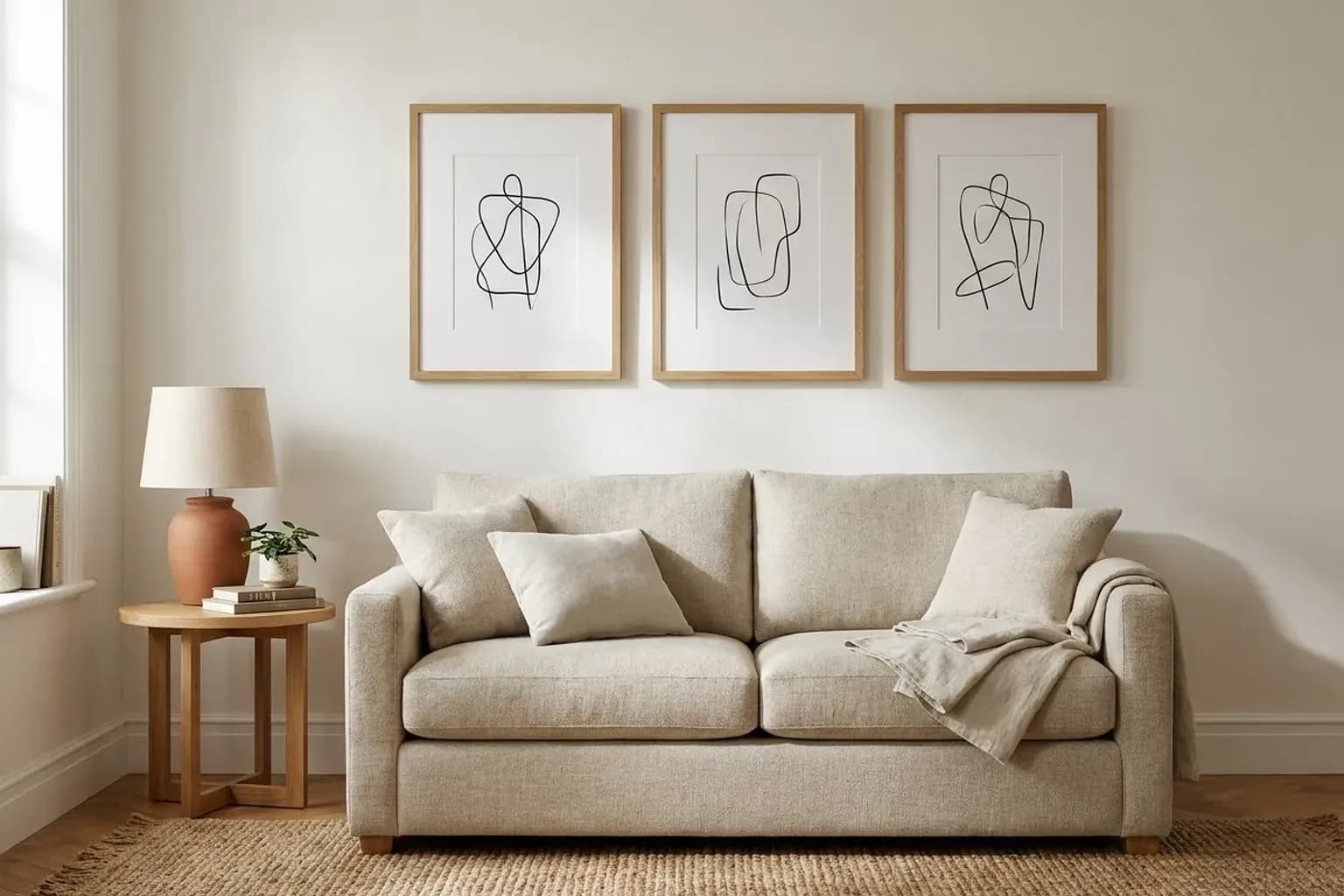
Three medium frames in a level row is the quietest option and takes ten minutes to plan. Choose frames about 16 by 20 inches for a standard sofa, hang them with the same narrow gap, and keep the row to two-thirds of the sofa's width. A triptych of one image split across three frames works especially well in a narrow living room.
3One large piece and two small
If a grid feels too formal, anchor the arrangement with one large frame placed off-center and stack two smaller frames beside it, so the three together form a rectangle. You get the collected look of a gallery wall with only three nails, and the large piece stops the group from looking bitty.
4A picture ledge instead of nails
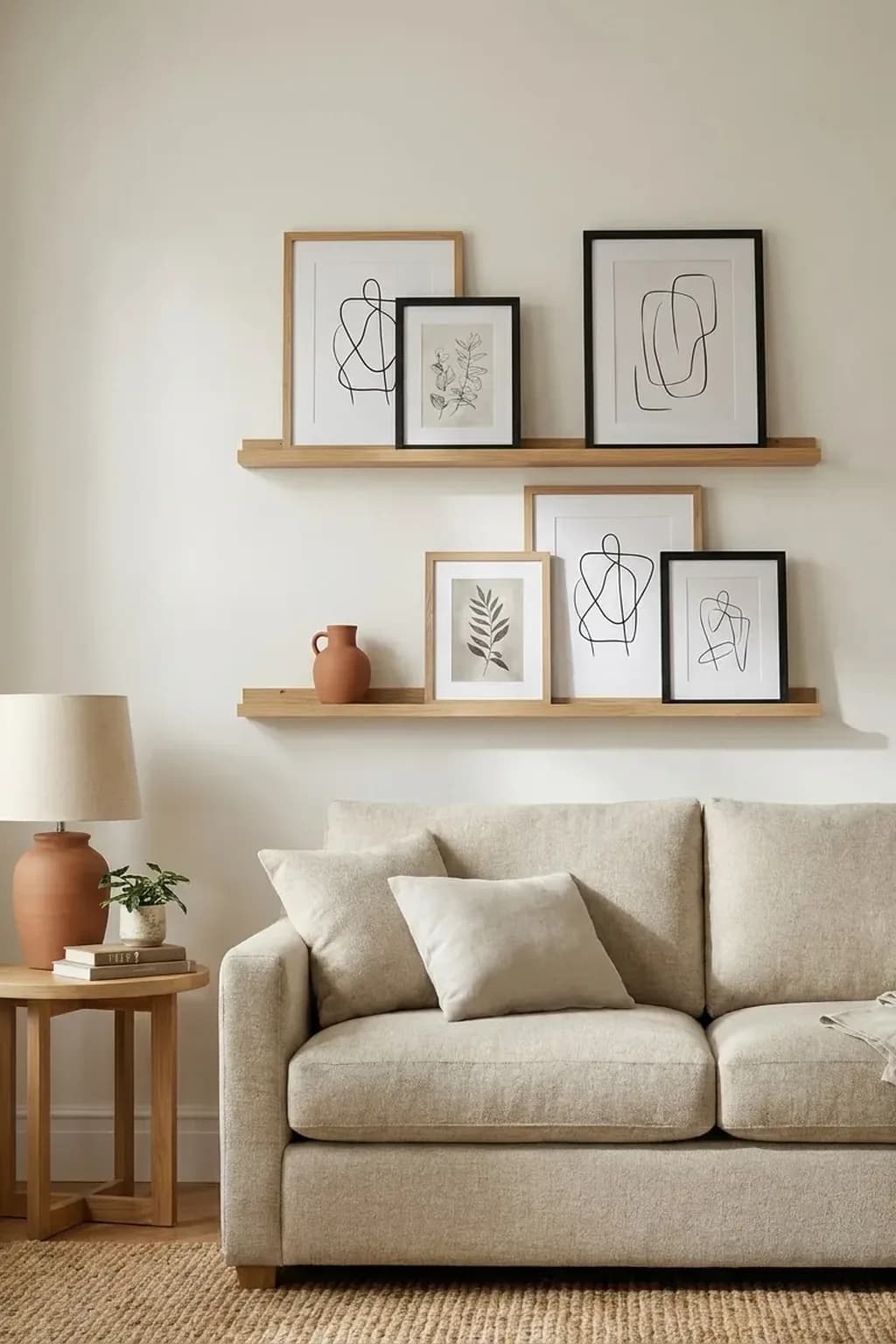
One or two shallow picture ledges let you lean frames and overlap them, so you can fit more art into less width and change it without new holes. Layer a tall frame at the back, a small one in front, and add one object such as a small vase. Ledges are only 3 to 4 inches deep, so they work above a sofa or along a narrow hallway. For styling what goes on them, the same odd-number grouping from how to style a bookshelf applies.
Narrow and Awkward Walls
5A vertical column
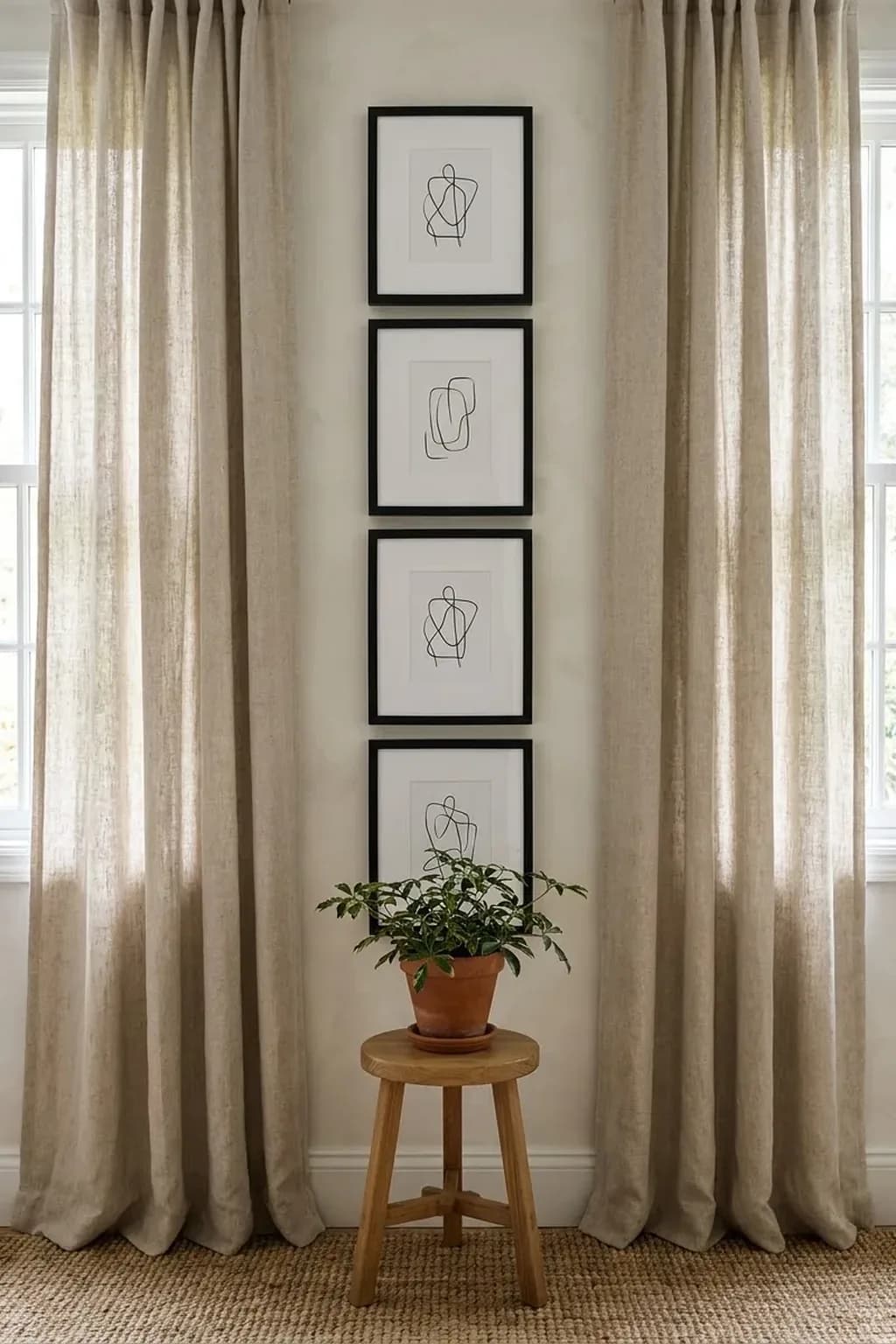
The strip of wall between two windows, or beside a door, is often too narrow for furniture and perfect for art. Stack three or four frames of the same width in a column. A vertical line draws the eye up and makes a low ceiling feel higher, which a wide arrangement cannot do.
6Wrap a corner
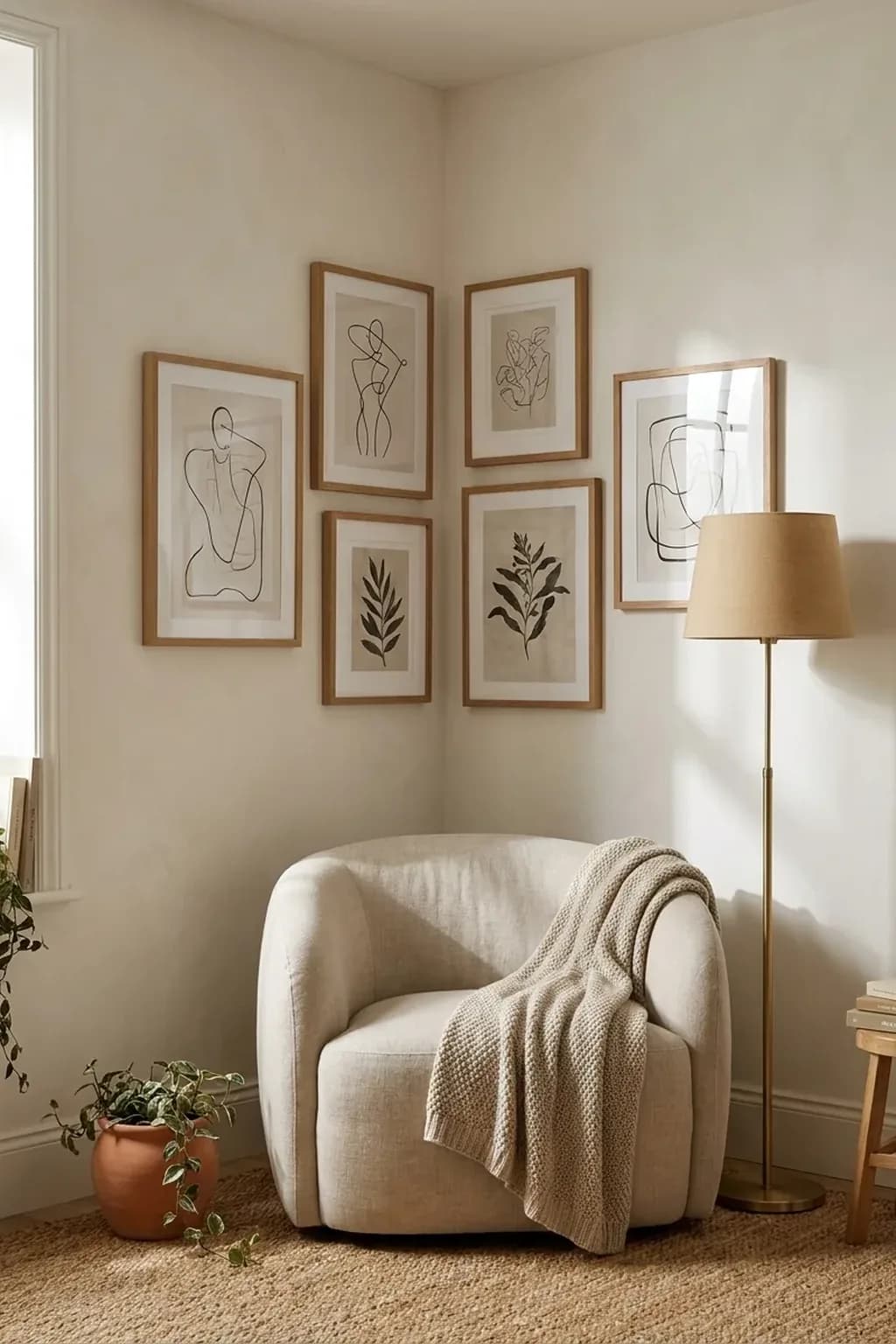
Run a gallery wall around an inside corner, with two or three frames on each side kept at the same heights. It turns a dead corner into a feature and suits a reading chair or a small desk. Keep each frame at least 3 inches away from the corner itself so nothing looks jammed. Our living room corner ideas show what to put underneath.
7Floor to ceiling on one narrow wall
It sounds wrong for a small room, but filling one narrow wall completely, from the baseboard to near the ceiling, can make the room feel larger, because the wall becomes a single textured surface. It works on a wall no wider than about 4 feet. Keep the frames in one color and the gaps tight.
8Above a door or a low bookcase
The space above a doorway usually sits empty. A row of three small frames there uses wall that nothing else can, and leaves the main walls clear. The same goes for the wall above a low bookcase: hang a small cluster so the shelf top and the art read as one composition.
Around What Is Already There
9Around the television
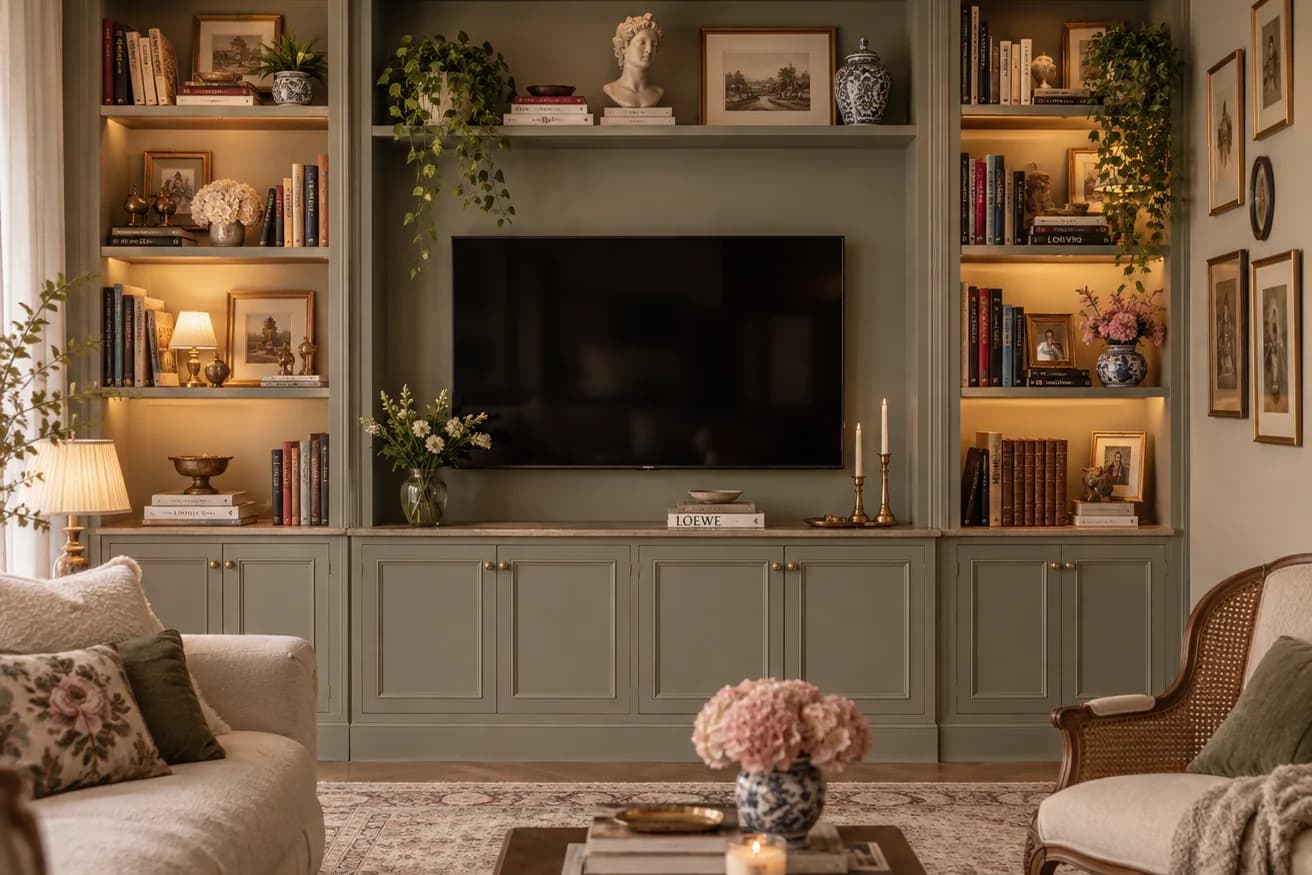
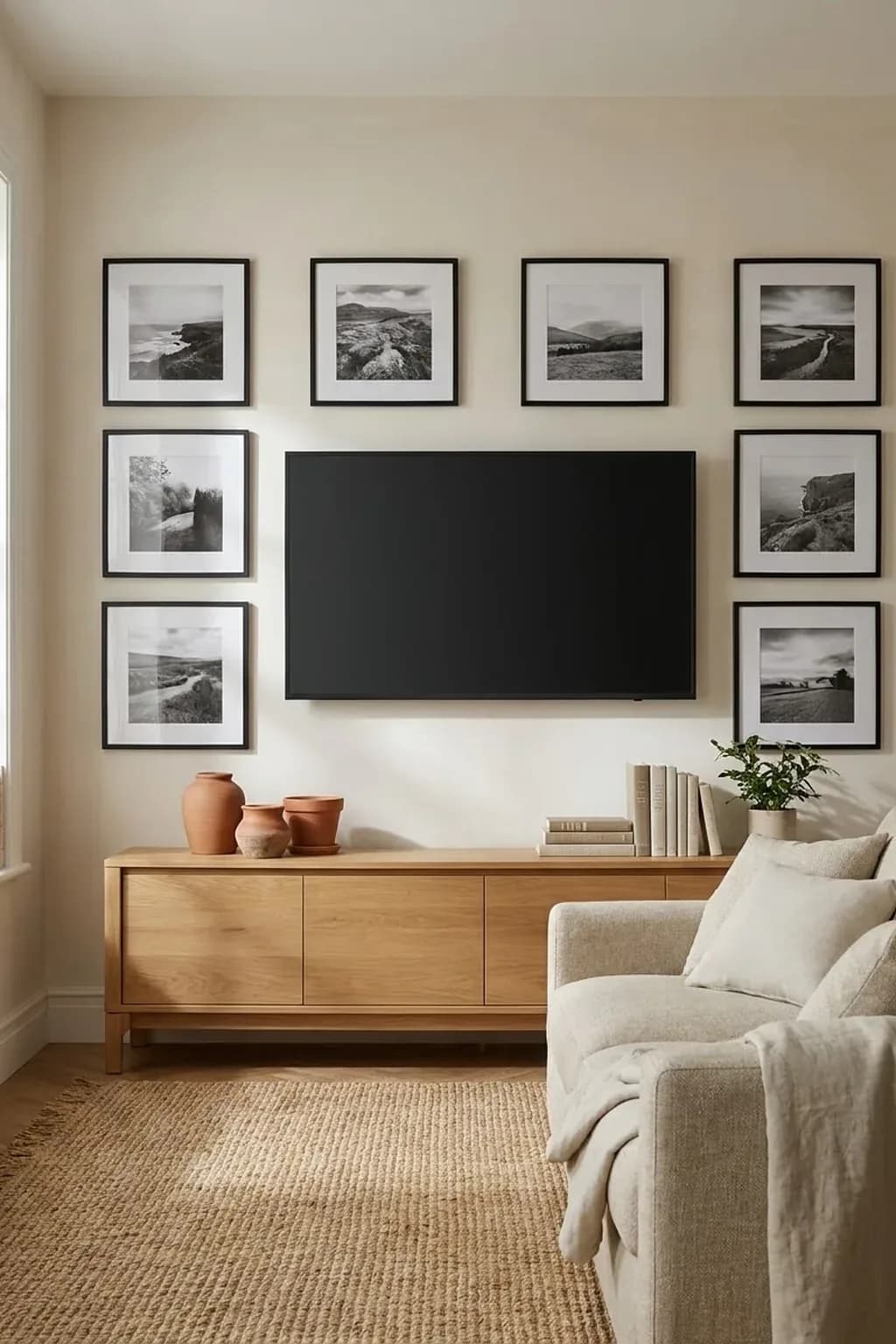
A black screen on a blank wall dominates a small living room. Surround it with frames in black or dark wood, spaced the same distance from the screen as from each other, and the television becomes one rectangle among several. Keep the art simple, such as line drawings or photographs, so it does not compete with the picture when the screen is on.
10Climbing the stairs or a hallway
A hallway is the classic place for a gallery wall in a small home, because you see it at close range and it takes nothing from the rooms. Keep frames slim so they do not catch shoulders. We cover spacing and heights for long walls in gallery wall ideas for a hallway.
11Mix in a mirror
Replace one or two frames with small mirrors. They bounce light around and break up a wall of rectangles, which helps most in a dim room or a windowless hallway. A round mirror among square frames also softens the arrangement.
Small Budgets and Rented Walls
12Matching frames, mixed art
A set of plain matching frames is the cheapest way to make mismatched art look deliberate. Postcards, pressed leaves, children's drawings, fabric offcuts and pages from a calendar all look considered behind a wide white mat. Charity shops are a good source of frames; a single can of spray paint makes them match.
13A grid of clips or washi tape
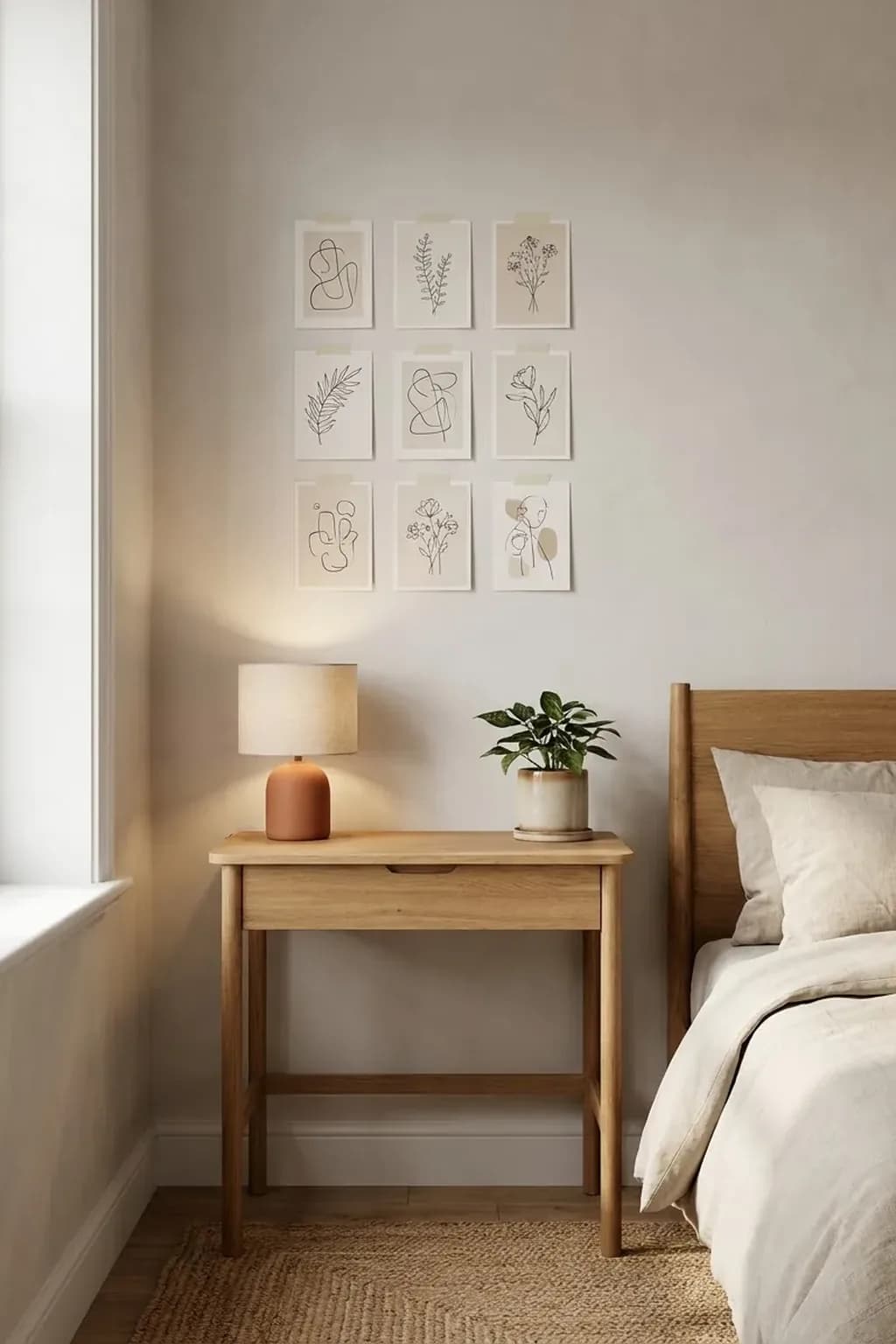
For walls you cannot mark at all, skip frames. Hang prints from small bulldog clips on removable hooks, or tape postcards in a strict grid with washi tape. The strict spacing matters more here than anywhere: a ruler-straight grid looks intentional, a loose one looks like a student room.
14Lean it
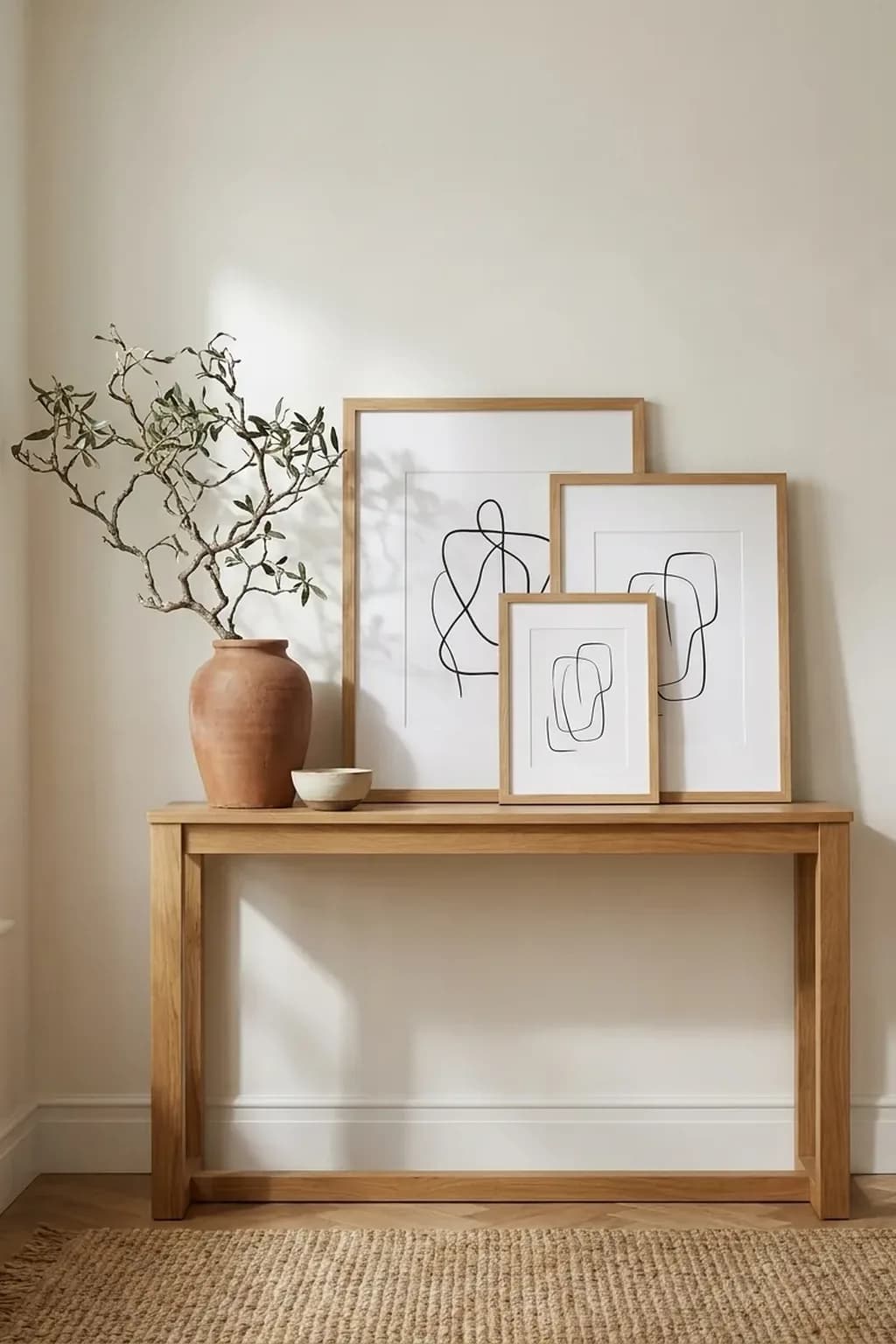
A gallery does not have to hang. Lean two or three overlapping frames on a console, a mantel, a deep windowsill or the floor against the wall. It uses no fixings, can be rearranged in a minute and suits renters completely.
How to Plan the Layout Before You Make a Hole
Start from the middle and work outward. If the group sits above furniture, set the bottom row first, at 6 to 10 inches above the sofa back, and build up.
Hanging Without Nails
| Method | Holds | Good for | Watch out for |
|---|---|---|---|
| Adhesive picture strips | Light to medium frames, by the rated weight on the pack | Painted, smooth walls | Textured walls, fresh paint, humidity; follow the weight rating |
| Removable adhesive hooks | Lightweight frames and clips | Small prints, clip grids | Heavy glass frames |
| Picture ledge | Many frames on two screws | Changing art often | Still needs two fixings per ledge |
| Leaning | Any size | Consoles, mantels, floors | Homes with small children or pets |
| Picture rail hooks | Heavy frames, if the room has a rail | Older buildings | Only where a rail exists |
Press adhesive strips firmly for the time the pack states, and choose lightweight frames with acrylic instead of glass. Many of the fixings in our guide to hanging Christmas decorations without nails work for frames too.
A gallery wall also changes how a room's furniture reads, so decide where the sofa goes first: our small living room layouts can help. For the rest of the room, the small apartment decorating guide covers color, light and storage.
FAQ
Do gallery walls make a small room look smaller?
A loose, scattered one can. A compact arrangement with narrow, even gaps and one or two frame colors reads as a single piece of art and does not shrink the room. Filling one narrow wall completely can even make a room feel larger.
How many pictures should a small gallery wall have?
Three to nine is a comfortable range. Three in a row or six in a grid suit most walls above a sofa or desk. More than nine usually works only on a hallway or a wall you fill from floor to ceiling.
How far apart should frames be on a gallery wall?
Two to three inches, the same between every frame. In a small space keep to the lower end, so the group stays tight.
What size frames work best in a small space?
Medium frames, roughly 11 by 14 to 16 by 20 inches, with generous mats. Many very small frames look cluttered; one or two larger pieces mixed in give the eye somewhere to settle.
How do I hang a gallery wall in a rental?
Use adhesive picture strips within their weight rating, a picture ledge on two screws, clips on removable hooks, or lean frames on furniture. Check your lease first; many allow a small number of nail holes.
Should a gallery wall be symmetrical?
It does not have to be. A grid is the calmest choice for a small room. An asymmetrical group works when its outer edge still forms a clear rectangle and the gaps are consistent.