Painted Accent Wall Ideas: 15 Designs With Paint Only, No Carpentry
Painted accent wall ideas you can do with paint and tape alone: arches, half walls, color blocks, stripes, a painted headboard and more. Fifteen designs with difficulty, tools and the steps for crisp lines.

In this guide · 22 sections
These painted accent wall ideas need paint, tape and a level, and nothing else: no wood trim, no panels, no saw. A painted arch behind a bed, a half wall in a hallway, or one block of color behind a desk can be finished in an afternoon with a sample pot or a single quart, and painted over just as easily when you change your mind.
The 15 designs below are grouped by difficulty. A table up front shows what each one needs, and a section near the end explains how to get crisp lines, which is the difference between a wall that looks designed and one that looks like a mistake.
Accent Wall Ideas With Paint Only, Compared
| Design | Difficulty | Paint needed | Tools beyond a roller |
|---|---|---|---|
| Solid accent wall | Easy | 1 quart for most walls | Tape |
| Half wall | Easy | 1 quart | Level, tape |
| Painted headboard block | Easy | Sample pot or 1 quart | Level, tape |
| Color block behind furniture | Easy | Sample pot | Level, tape |
| Arch | Medium | Sample pot or 1 quart | String, pencil, small brush |
| Wide stripes | Medium | 1 quart | Level, lots of tape |
| Corner wrap or ceiling band | Medium | 1 quart | Tape, angled brush |
| Circle or sun shape | Medium | Sample pot | String, pencil, small brush |
| Diagonal split | Medium | 1 quart | Long straightedge or chalk line |
| Painted frame or faux panel lines | Medium | Sample pot | Level, narrow tape |
| Overlapping shapes | Harder | 2 or 3 sample pots | Level, string, patience |
| Ombre fade | Harder | 2 colors | Wide dry brush, water mister |
| Hand-painted pattern or stencil | Harder | Sample pot | Stencil or steady hand |
Paint quantities are rough guides for one wall of an ordinary room; check the coverage on the can.
Easy: One Afternoon
1A single wall in a deep color
The original accent wall still works when you choose the right wall: the one your eye lands on when you walk in, usually behind the bed or the sofa, with no doors or windows cutting it up. Choose a color clearly darker than the others. A slight difference looks accidental.
2A half wall
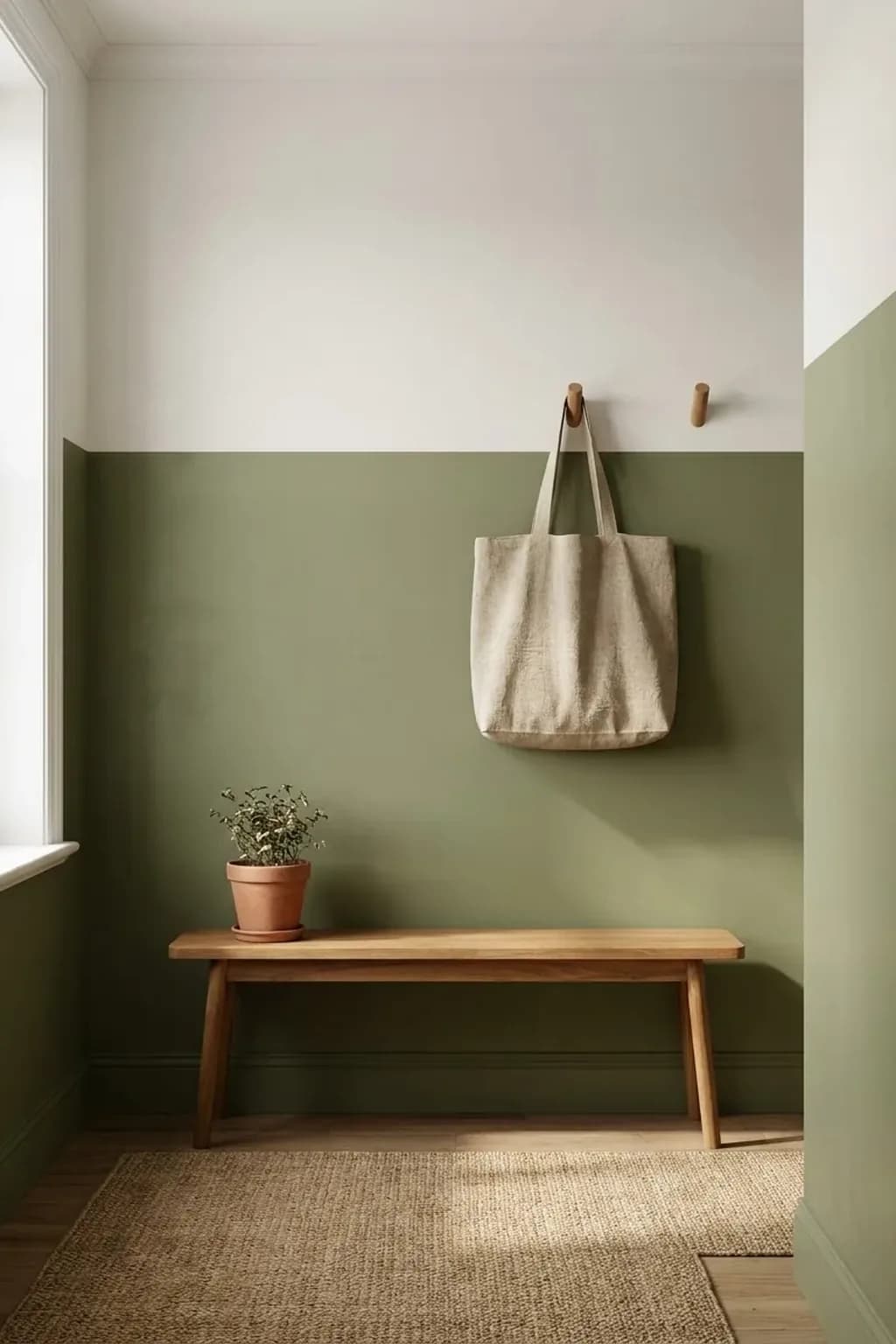
Paint the lower part of the wall in a color and leave the top white, or the reverse. A line at about one-third or two-thirds of the wall height looks more deliberate than one at exactly half. It protects the part of a hallway wall that gets scuffed, and in a small room a darker lower half grounds the furniture while the pale top keeps the ceiling feeling high.
3A painted headboard
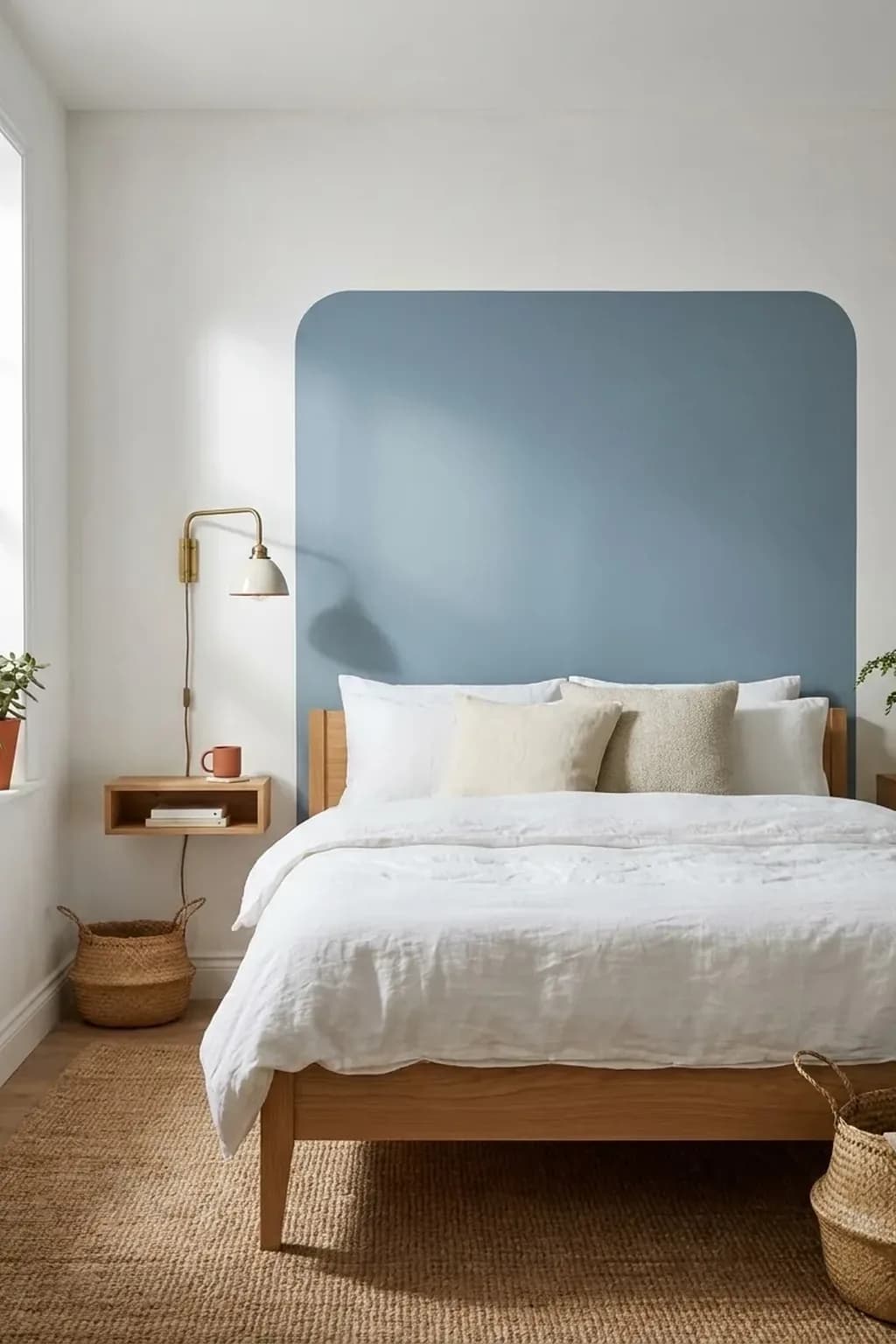
Paint a rectangle directly behind the bed, a little wider than the mattress and about 4 feet tall from the floor. It gives the effect of a headboard for the price of a sample pot and takes up no floor space, which helps in a small bedroom. Round the top corners, or make it an arch, for a softer look.
4A color block behind a desk or shelf
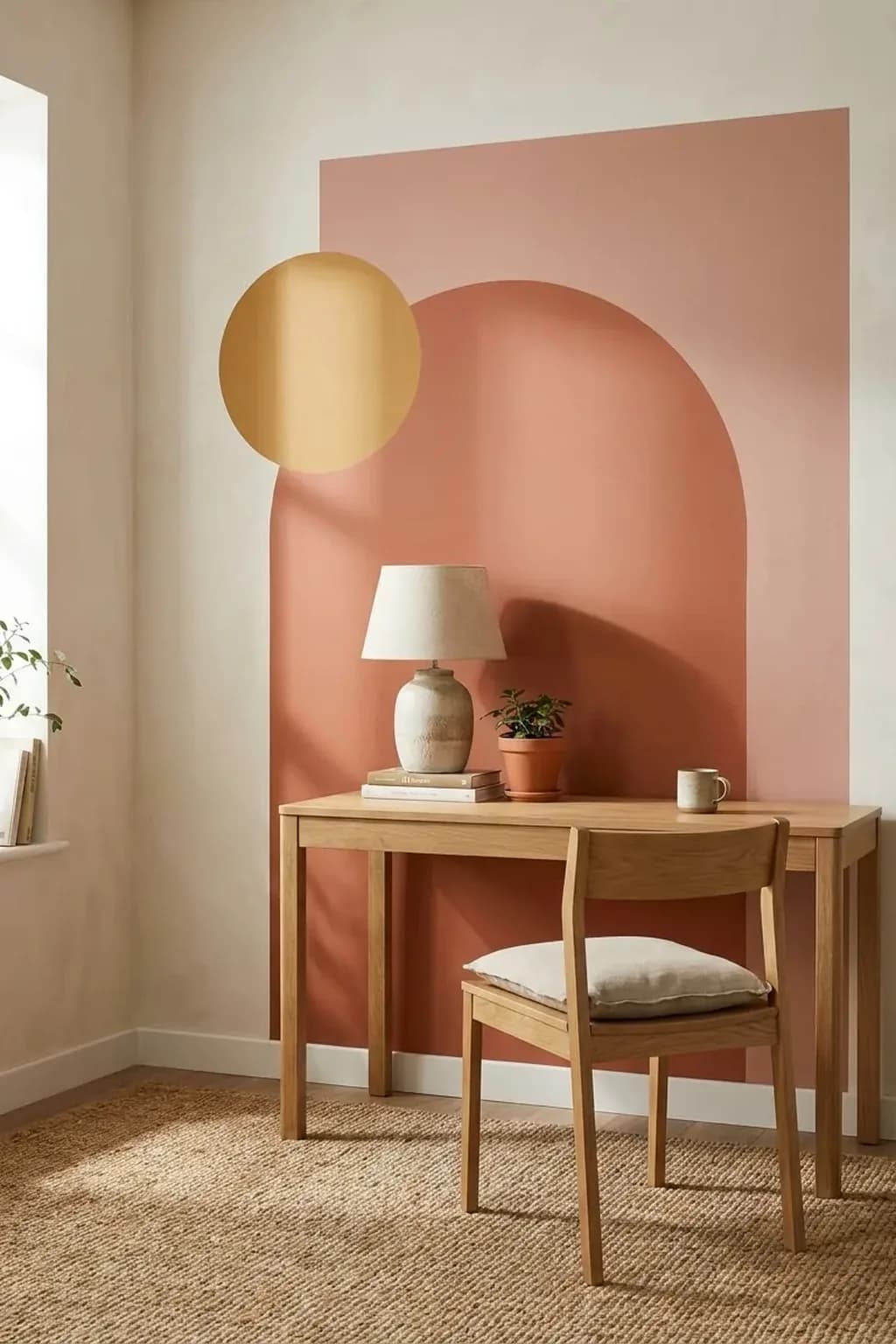
A painted rectangle slightly larger than a desk, a console or a floating shelf turns that piece of furniture into a defined zone. It is a good way to mark a work corner in a living room or bedroom. Extend the block up onto the ceiling by a foot for a canopy effect.
5A painted door frame or window surround
Paint a band 3 to 4 inches wide around a doorway or window, straight onto the wall, in a contrasting color. It reads as bold architectural trim and uses a few spoonfuls of paint. This suits rooms that have no trim of their own.
Medium: Shapes and Lines
6An arch
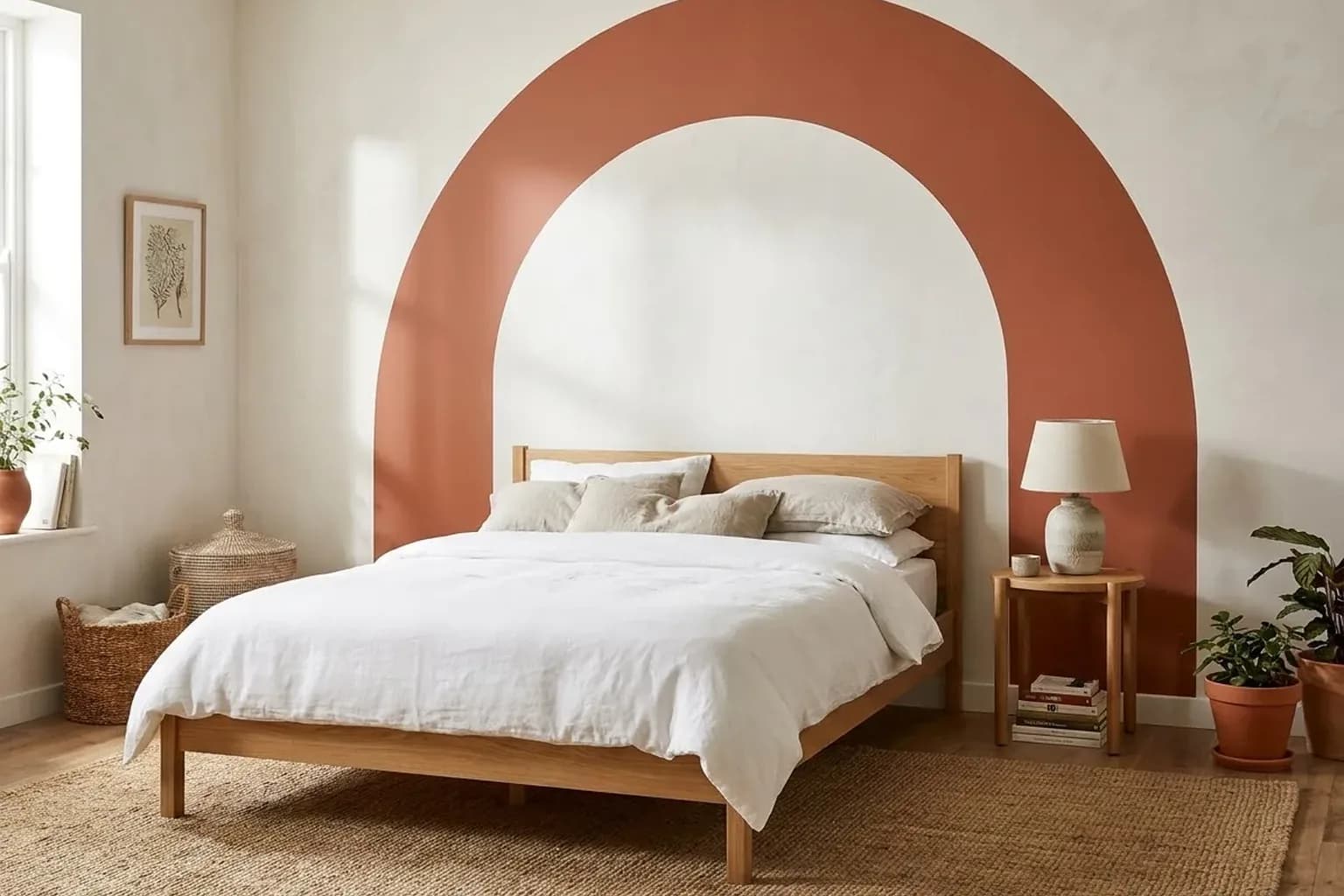
The most popular painted shape. Mark the width, draw the two vertical sides with a level, then tie a pencil to a string pinned at the center of the top line and swing it to draw the curve. Paint the curved edge by hand with a small angled brush and fill the rest with a roller. An arch behind a bedside table, a bench or a plant makes a strong feature from a sample pot.
7Wide vertical stripes
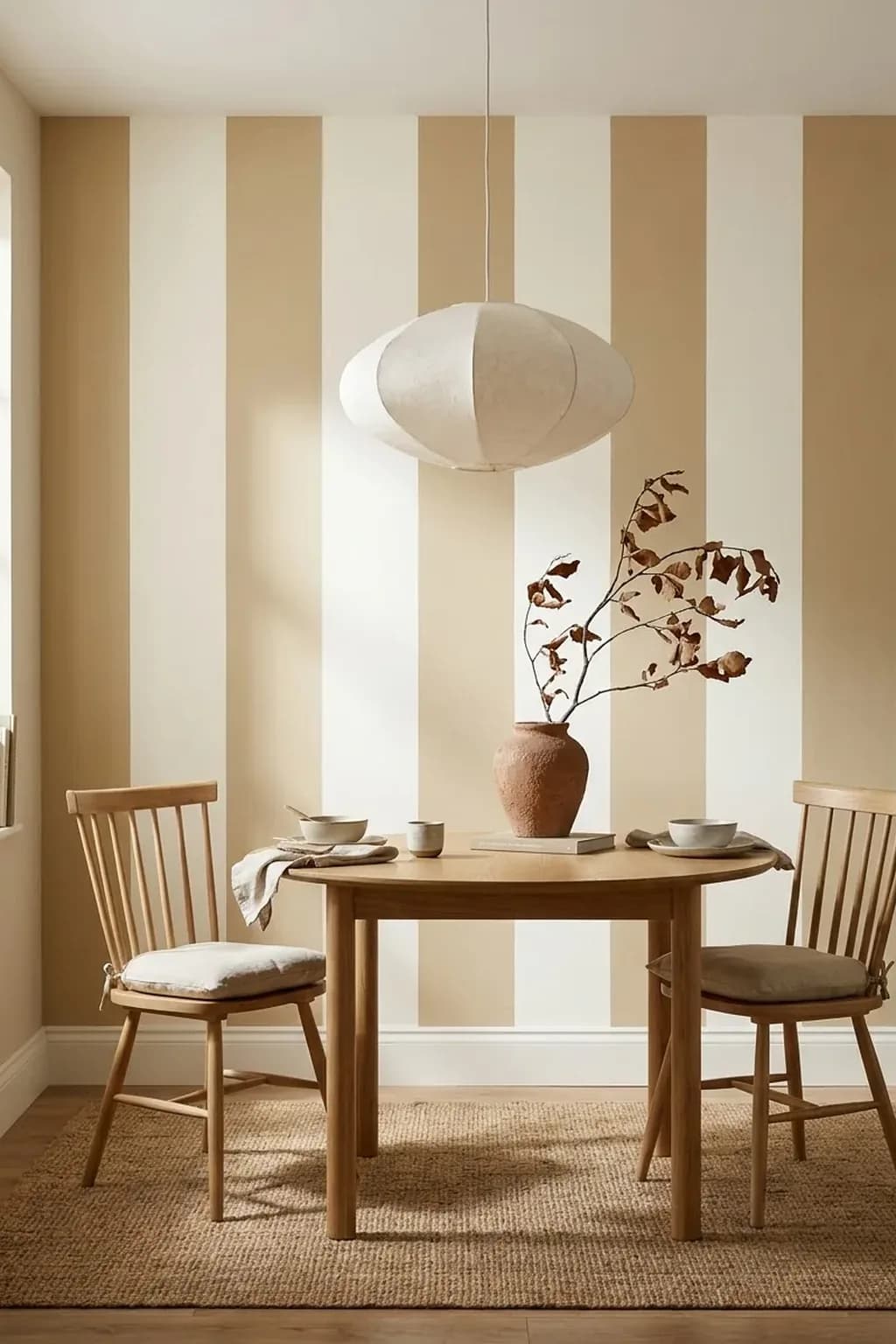
Stripes 6 to 12 inches wide in two close tones, such as cream and sand, give texture without shouting, and vertical stripes make a ceiling look higher. Paint the whole wall in the lighter color first, tape the stripes, then paint the darker ones. Measure across the wall first and adjust the width so you do not end with a sliver.
8A band that wraps the room
Run one horizontal band of color, 12 to 24 inches deep, around all the walls at a consistent height, or along the top of the walls and onto the ceiling. A band at the top lowers a tall, echoing room; a band at chair height ties together walls broken up by doors.
9A circle or half sun
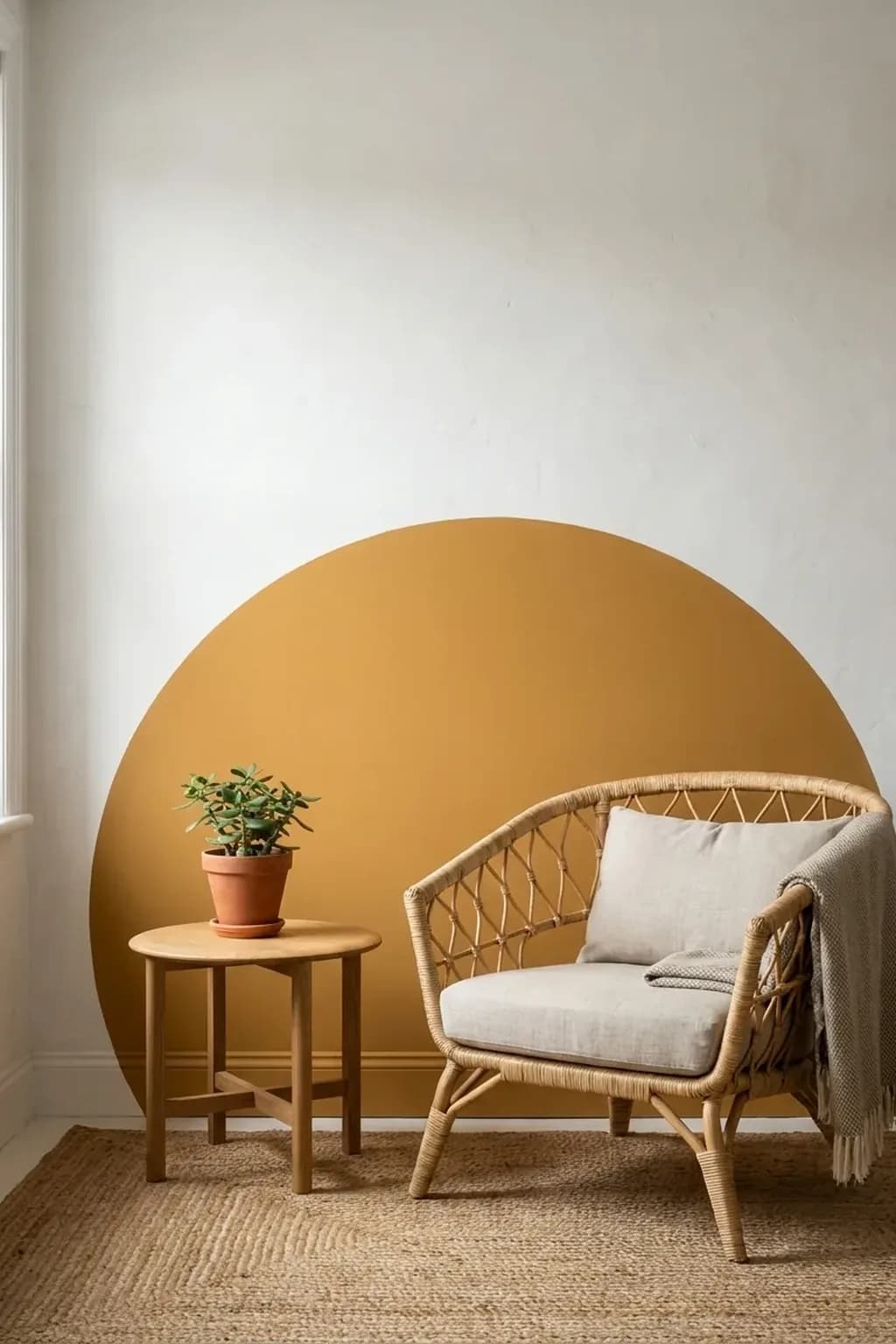
A large circle behind a bed or a sofa, or a half circle rising from the floor behind a chair, is drawn with the same string-and-pencil method as an arch. Terracotta, ochre or dusty pink on a white wall is the classic version. Keep it big: a small circle looks like a target.
10A diagonal split
Divide the wall corner to corner, or from one-third of the way along the floor to the opposite top corner, and paint one side. It suits stairways and rooms with sloped ceilings, where a diagonal already exists. Snap a chalk line or run tape along a long straightedge.
11Painted panel lines
Imitate wall molding with paint. Use narrow tape and a level to mark rectangles, then paint thin lines, about half an inch wide, in a slightly darker or lighter shade than the wall. From across the room it suggests paneling with no timber involved.
Harder: Worth a Weekend
12Overlapping color blocks
Two or three shapes, a rectangle, an arch and a circle, in related colors that overlap at the edges. Plan it on paper first, paint the largest shape, let it dry fully, then tape and paint the next. Limit the palette to tones from one family plus one contrast.
13An ombre fade
Paint the darker color on the lower third and the lighter on the upper third, then blend the two in the middle while both are wet, using a wide dry brush in crisscross strokes and a light mist of water. It is forgiving of imperfection, and looks like a soft horizon. Work in sections about 3 feet wide.
14A stencil or hand-painted repeat
Small repeated marks, dashes, dots, simple leaves or brush strokes, give the look of wallpaper for the cost of a sample pot. A stencil keeps spacing even. For hand-painted marks, mark a light pencil grid and accept that slight variation is part of the look.
15A limewash-effect wall
A cloudy, brushed finish in one color gives an accent wall with texture instead of contrast. It can be done with limewash or with ordinary paint thinned with glaze and applied in crossed strokes. Our comparison of limewash vs paint explains which is right for your wall.
How to Get Crisp Lines
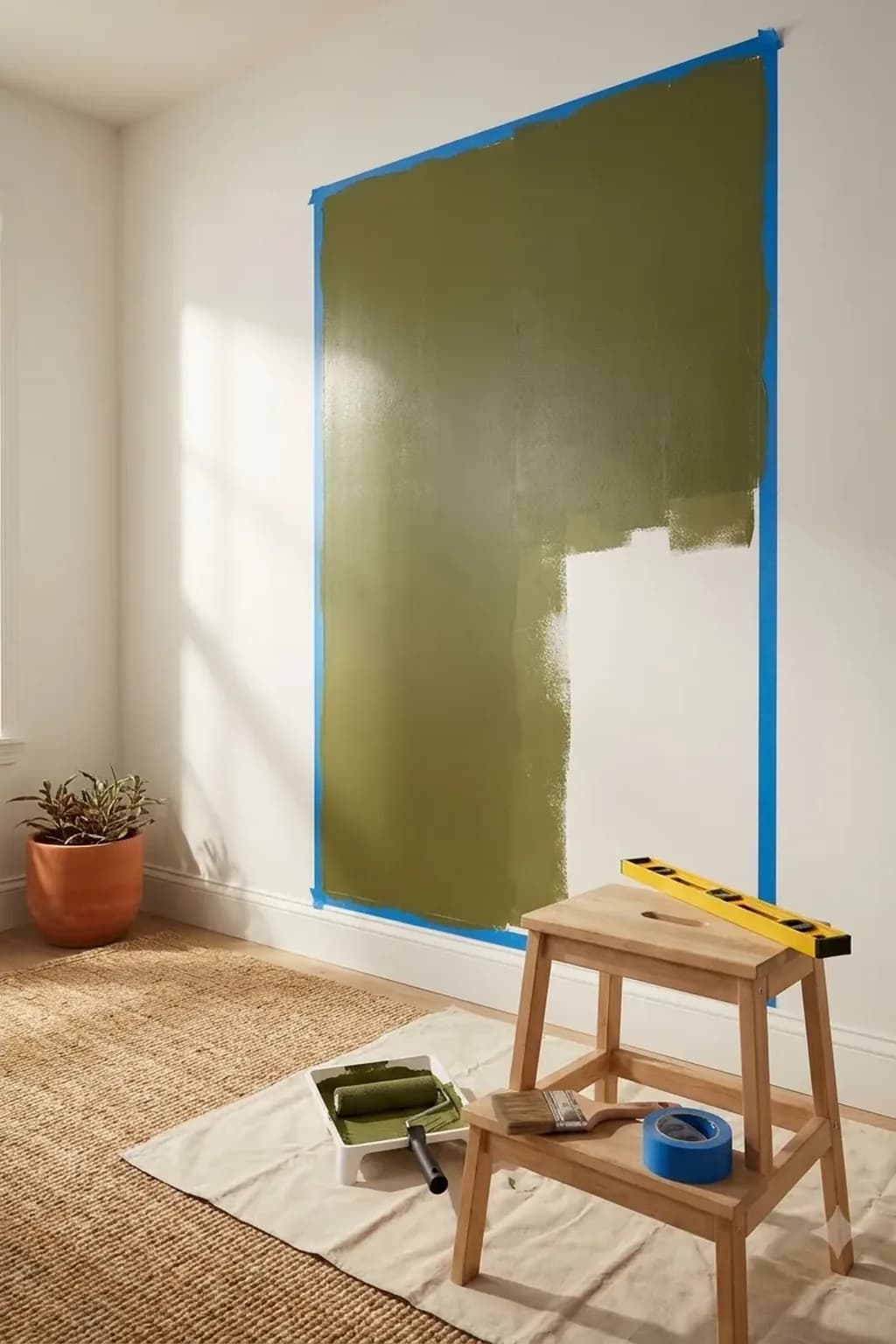
Never trust the ceiling or the floor to be straight; use the level. Step three is the one most people skip. Sealing the tape with the existing wall color means any paint that creeps under the tape is the same color as the wall, so the accent color meets a clean edge. On textured walls it is close to essential.
Choosing the Wall and the Color
The wall. Pick a wall you look at, not one you look from. Avoid walls with several doors or windows unless the design is built around them. In an open-plan room, an accent can mark a zone; our studio apartment ideas for zones use paint this way.
The color. Take it from something already in the room: a cushion, a rug, a print. Earthy mid-tones, such as terracotta, olive, ochre, dusty blue and clay pink, are forgiving and look good in both daylight and lamplight. For a tested set of combinations, see our Moroccan color palette.
The finish. Matt or eggshell. Shiny paint shows every flaw in a line and in the wall.
In a rental. Ask first. Many landlords agree to paint if you return the wall to its original color, and a shape painted with a sample pot takes one coat of primer and one of wall color to hide. If paint is not allowed at all, the same shapes can be made with a large textile or removable decals. If you want the whole room in one color instead, see color drenching a living room.
FAQ
What is the easiest painted accent wall?
A solid wall in one deeper color, followed by a half wall or a painted rectangle behind the bed. Each needs only tape, a level and a roller.
Are painted accent walls still in style?
A single wall in a random bright color has dated. Shapes, half walls, color blocks tied to furniture and tonal finishes are current, because they relate to the room instead of just contrasting with it.
Which wall should be the accent wall?
The one you face when you enter, usually behind the bed or the sofa, with as few doors and windows as possible.
How do you paint an arch on a wall?
Draw the two straight sides with a level, pin a string at the center point between their tops, tie a pencil at half the arch's width and swing the curve. Cut in the curved edge by hand with a small angled brush and roll the inside.
How much paint do I need for an accent wall?
A quart covers most single walls in two coats. Shapes such as an arch, a circle or a headboard block usually need only a sample pot. Check the coverage figure on the can.
Can I paint an accent wall in a rental?
Often yes, with the landlord's permission and a promise to repaint. Keep a record of the original wall color so you can match it when you leave.