Limewash vs Paint: Cost, Look and Which to Choose
Limewash vs paint compared: how each looks, what surfaces they suit, cost, durability and cleaning, with a section on brick and fireplaces and a short guide to choosing between real limewash, regular paint and a limewash effect.

In this guide · 11 sections
The short version of limewash vs paint: limewash is a thin mineral coating that soaks into the wall and dries to a matte, cloudy finish with visible brush movement, while paint forms an even film that sits on the surface and can be wiped clean. Choose limewash for the look and for bare plaster, brick and stone. Choose paint for uniform color, for rooms that get scrubbed, and for anyone who wants a result that is easy to predict and easy to touch up.
Neither is better in general. They are different materials with different strengths, and the choice usually comes down to the surface you have and how much variation you want to see.
Limewash vs Paint at a Glance
| Limewash | Regular wall paint | |
|---|---|---|
| What it is | Slaked lime, water and mineral pigments | Pigment in an acrylic or similar binder |
| How it bonds | Soaks into porous surfaces and hardens there | Forms a film on top of the surface |
| Look | Matte, chalky, soft tonal variation, visible brush strokes | Even, flat color; sheen from matte to gloss |
| Best surfaces | Bare plaster, brick, stone, masonry | Almost anything, with the right primer |
| On drywall or painted walls | Needs a special mineral primer first | Standard primer or none |
| Breathability | Lets moisture vapor pass | Most paints are less permeable |
| Cleaning | Cannot be scrubbed; marks are dabbed or recoated | Washable, especially eggshell and satin |
| Touch-ups | Tend to show; often the whole wall is recoated | Usually blend in |
| Color range | Earthy and muted; limited by lime-safe pigments | Practically unlimited |
| Predictability | Dries much lighter than it goes on; varies by hand | What you test is what you get |
| Cost | Ready-mixed products usually cost more per can and need a primer and several coats | Lower per square foot for a standard job |
| Skill | Easy to brush, harder to get the result you pictured | Familiar to most people |
What Limewash Is
Limewash is one of the oldest wall finishes: limestone that has been burned and slaked with water, thinned to the consistency of milk and tinted with natural pigments. As it dries it reacts with carbon dioxide in the air and turns back into a thin layer of stone-like calcium carbonate. On a porous wall it becomes part of the surface instead of a skin over it.
That chemistry explains nearly everything about how it behaves. It is flat and chalky because it is mineral. It is cloudy because it is thin and each brush stroke lays down a slightly different amount. It lets a wall breathe because there is no plastic film. And it will not grip a sealed, glossy or previously painted surface unless a primer made for the purpose gives it something to hold.
Modern acrylic paint works the opposite way. A binder dries into a continuous film that carries the pigment, which is why the color is even, why it can be wiped, and why it sticks to almost anything that has been primed.
The Look
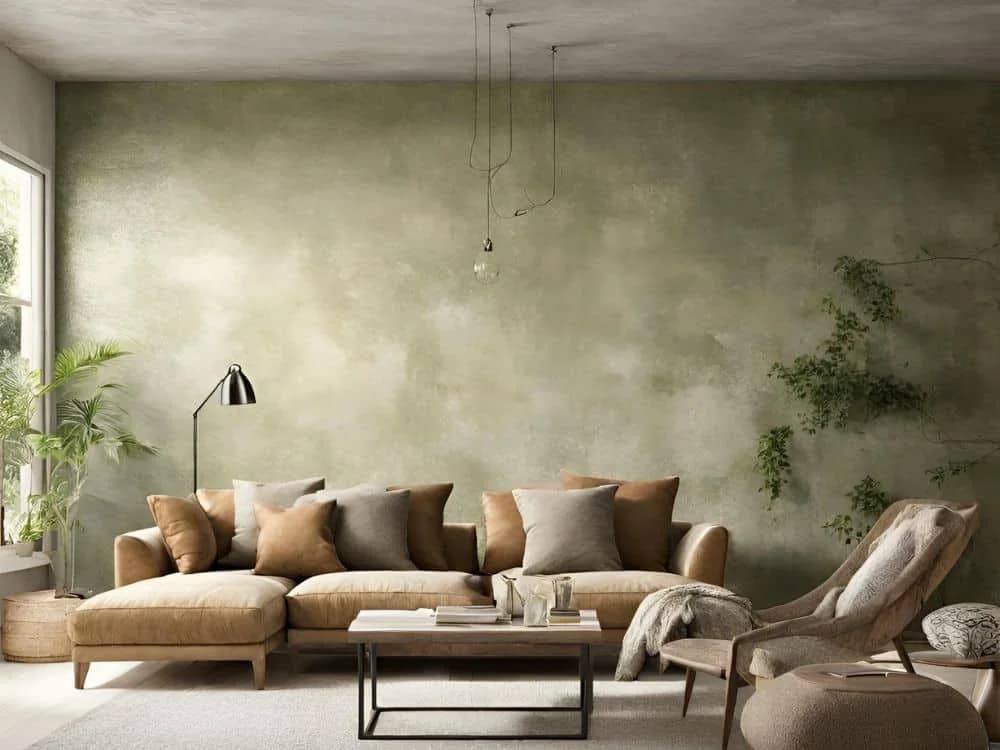
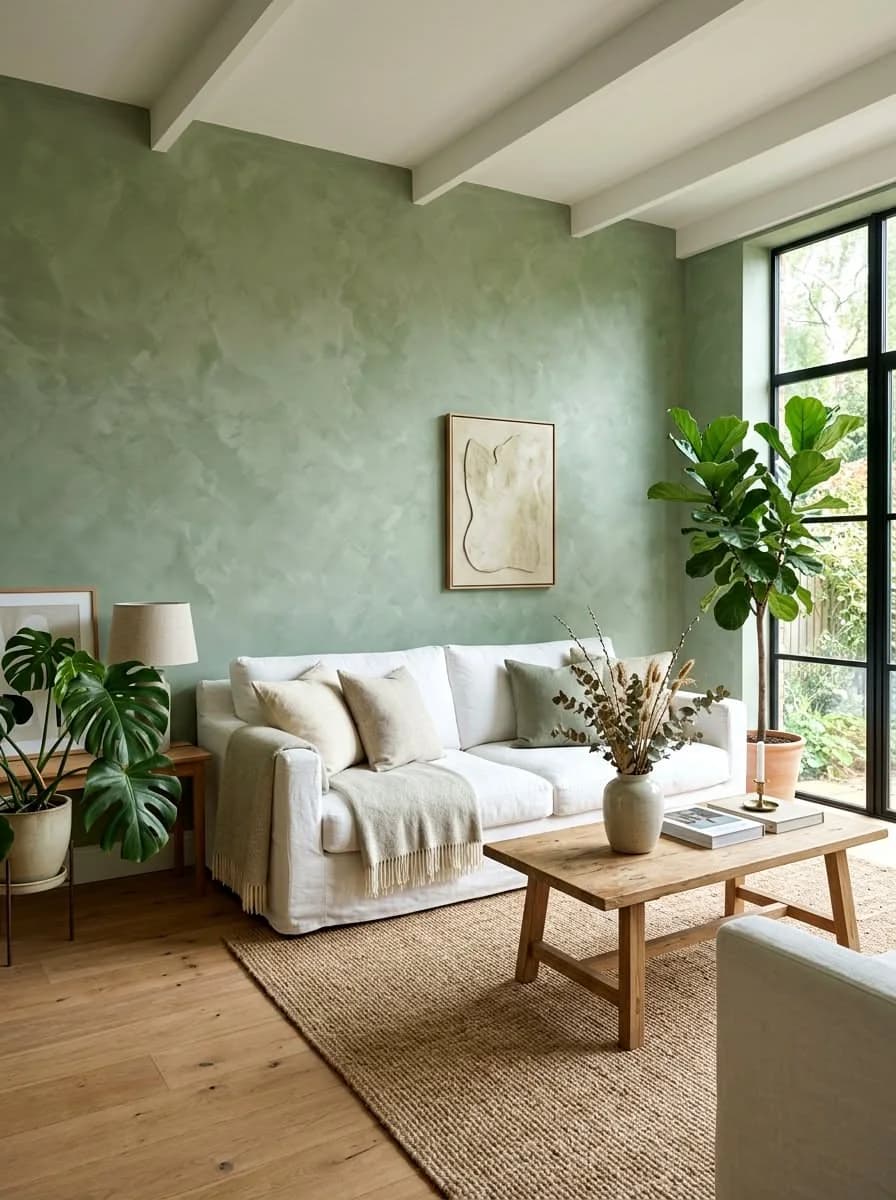
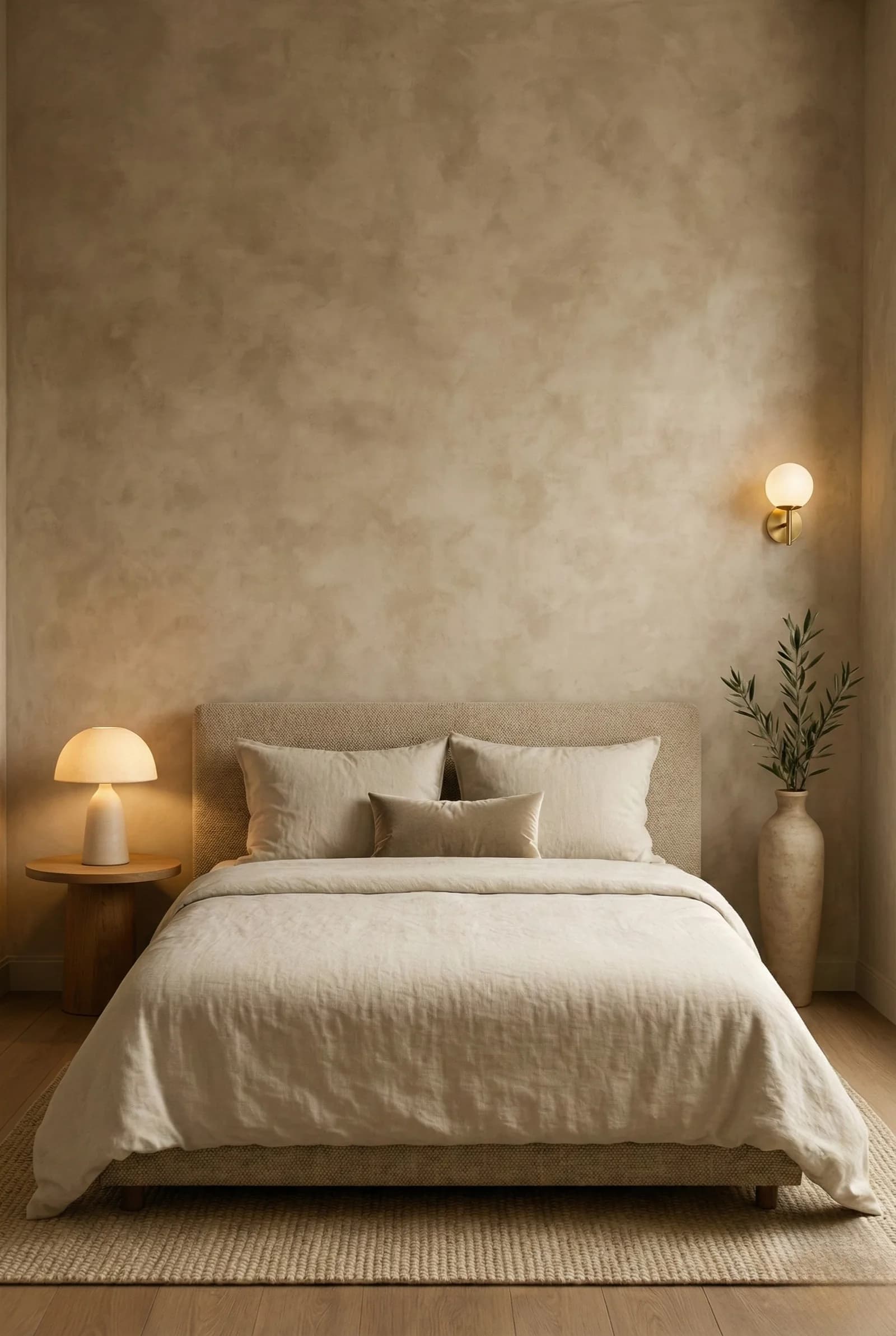
Limewash is chosen for its movement. Light and dark patches drift across the wall, brush marks cross each other, and the color shifts through the day as light rakes over it. It suits rooms with natural materials, plaster shapes and little else on the walls.
Three things surprise first-time users:
- It goes on almost transparent and much darker than it dries. The real color appears as it cures. Always judge a dry test patch.
- The effect depends on the hand. Crossed, feathered strokes with a wide block brush give a soft cloud; long straight strokes give streaks. Two people get two walls.
- Deep colors show more variation. Pale neutrals look calm; dark greens, terracottas and charcoals look dramatic and can read as patchy if you wanted even.
Paint gives the reverse: the same color from corner to corner, and a choice of sheen. If uneven color would bother you every time you looked at it, that is your answer.

Which Surfaces Suit Which
| Surface | Limewash | Paint |
|---|---|---|
| Bare lime or gypsum plaster | Ideal | Fine after a mist coat or primer |
| Brick and stone, unpainted | Ideal; traditional | Works, but hard to undo |
| New drywall | Possible with a mineral primer | Standard |
| Walls already painted with emulsion | Possible with a mineral primer; test first | Standard |
| Gloss or oil-painted surfaces | Not suitable | With sanding and primer |
| Wood trim, doors, cabinets | Not suitable | Standard |
| Kitchens, splash zones, children's rooms | Marks easily unless sealed | Washable finishes cope |
| Damp-prone masonry | Breathable, so often recommended | A film can trap moisture and peel |
For bathrooms and other wet rooms, limewash on its own is a risky choice near water. The waterproof lime finish with a similar look is tadelakt, which we cover in tadelakt bathroom ideas.
Cost
Costs vary by country and brand, so the useful comparison is relative.
- Materials. Ready-mixed limewash sold for interiors usually costs more per can than a good standard wall paint. On drywall or painted walls you also need the manufacturer's mineral primer, and most colors take two or three coats. Per square foot, a branded limewash wall costs more in materials than a painted one.
- Traditional lime. Limewash mixed from lime putty or hydrated lime and pigment is among the cheapest finishes there is, and it is the normal choice for exterior masonry. It asks for more knowledge and care in mixing and handling.
- Labor. If you pay a decorator, limewash generally costs more: more coats, more time on technique, and fewer people who offer it. If you do it yourself, the labor is your own and limewash goes on fast.
- Upkeep. Paint is cheap to touch up. A marked limewash wall often needs a full extra coat to look even again.
A sensible way to keep the cost down is to limewash one wall or one small room, such as a bedroom wall behind the bed, and paint the rest.
Durability and Cleaning
Limewash is durable in the sense that it does not peel: on a porous surface there is no film to lift. It wears by slowly thinning and can be renewed with another coat without stripping. Its high alkalinity also makes the surface a poor home for mold.
It is not durable in the sense of standing up to hands and sponges. It can rub off on clothes when fresh, it marks with water splashes and grease, and it cannot be scrubbed. Makers sell sealers for busy areas, but a sealer changes the look slightly and reduces breathability, so test it.
Paint is the practical finish. Modern matt paints wipe gently, and eggshell or satin can be washed. In hallways, kitchens and children's rooms, that usually decides it.

Limewash vs Paint on Brick and Fireplaces
Brick is where the difference matters most, because it is where the decision is hardest to reverse.
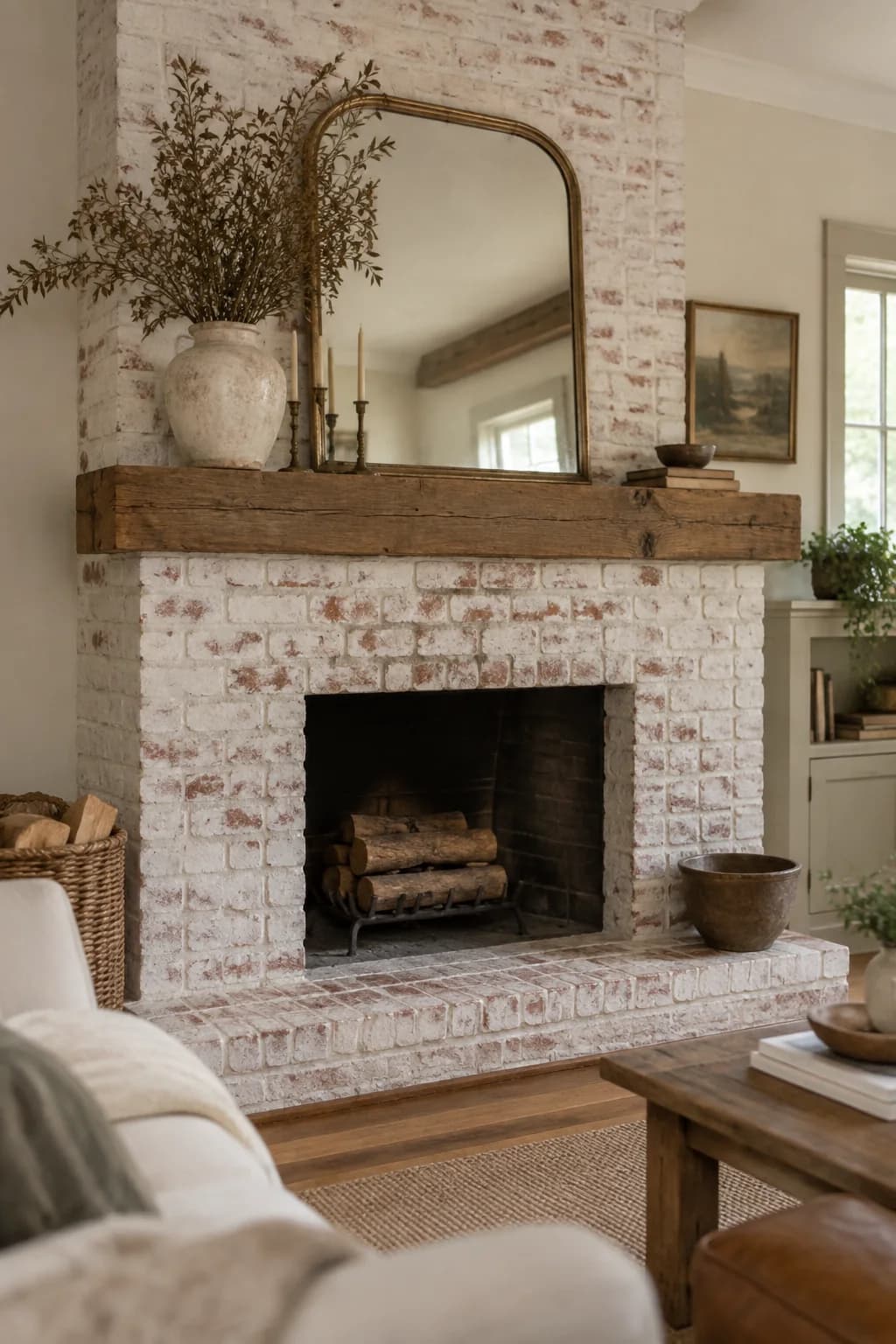
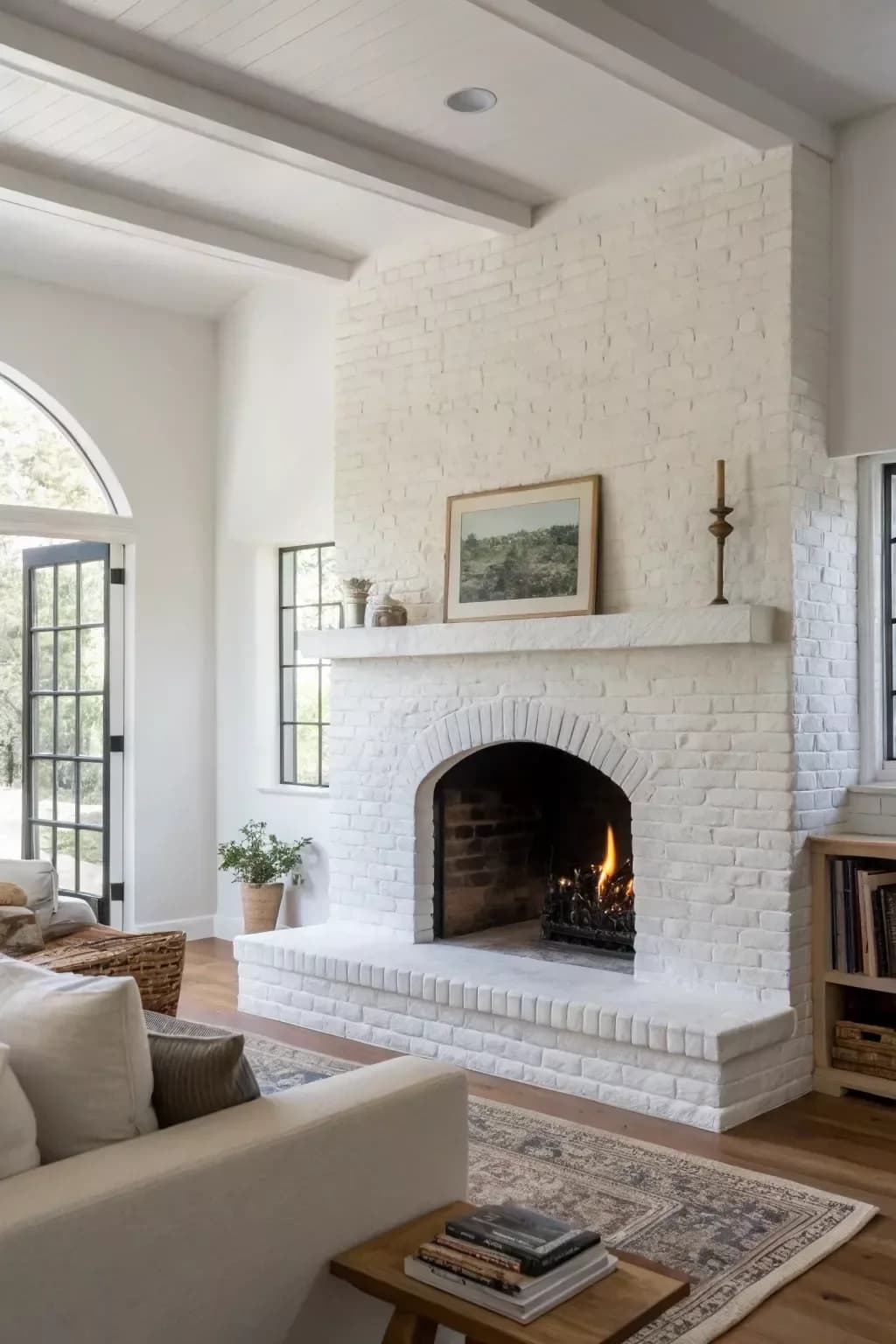
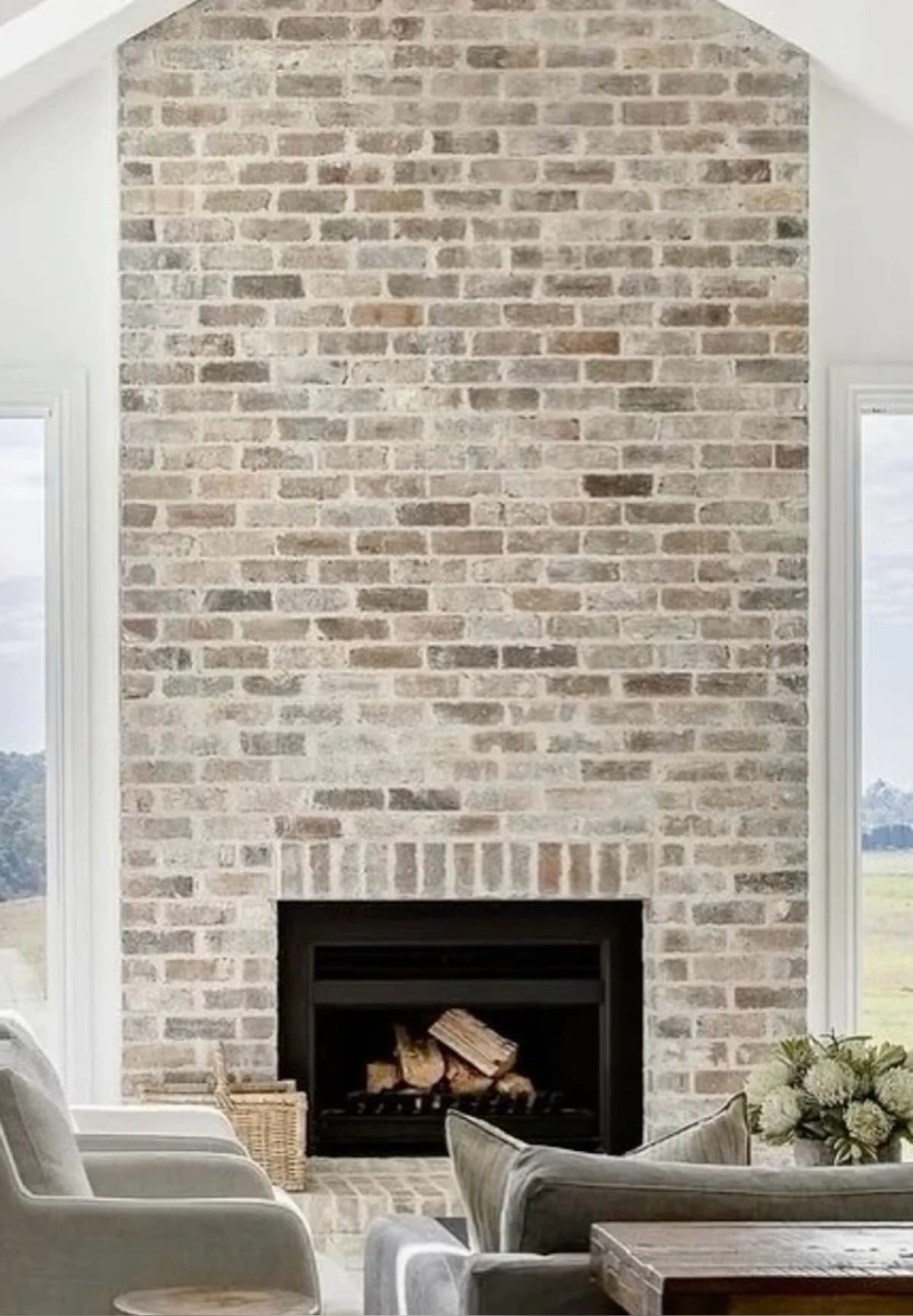
Limewash on brick soaks in and lets the brick breathe. It can be applied thinly so that the color and shape of the bricks show through, and while it is fresh it can be washed back with water to expose more brick for a worn look. Outdoors it weathers gradually and is topped up when it has thinned.
Paint on brick gives solid, even color and hides everything, including mismatched repairs. But it sits on the surface, and on exterior or damp brick a film can trap moisture, blister and peel. Removing paint from brick later is slow, messy work.
Whitewash in the everyday sense, paint thinned with water, gives a translucent look similar to limewash on a fireplace, with the bond of paint. It is a reasonable indoor shortcut and does not have limewash's breathability.
Whatever you use near a working fire, check that the product is suitable for the temperature of the surface. The brick around the opening is not the same as the inside of the firebox, which should not be coated with either.
How Applying Them Differs
This is a comparison, not a full tutorial, but the working methods are part of the choice.
- Limewash is brushed, not rolled, with a wide block brush, in thin coats and crossed strokes, keeping a wet edge. The wall is often dampened first on plaster and masonry. Coats are left to cure between applications. You stop at natural breaks such as corners, because a stop in the middle of a wall shows.
- Paint is cut in with a brush and rolled. Two coats over a suitable primer is normal. You can stop and start within reason, and fix a miss the next day.
Can You Get the Limewash Look With Paint?
Partly. Two routes exist:
- Limewash-effect products: acrylic-based paints or glazes designed to be brushed on in the same crossed pattern over ordinary painted walls. They are easier on drywall, more wipeable, and somewhat flatter in depth.
- A homemade color wash: ordinary matt paint diluted with water or mixed with glaze, brushed loosely over a base coat in a close color. Cheap and forgiving, though it reads as a paint effect when you look closely.
What neither reproduces fully is the mineral, slightly luminous flatness of real lime and its breathability. For a rented flat or a first experiment, an effect is a fair compromise. For colors that suit either route, see the quiet neutrals in our Japandi living room ideas and the earthy tones in our Moroccan color palette.
Which Should You Choose?
Choose limewash if:
- the wall is bare plaster, brick or stone, or you are willing to use the right primer;
- you want visible movement and accept that the result is partly out of your control;
- the room is low-traffic: a bedroom, a living room wall, a dining room;
- breathability matters, as on old solid masonry walls.
Choose paint if:
- you want one even color, or a specific color matched exactly;
- the room is a hallway, kitchen, playroom or rental;
- the surface is wood, glossy, or in mixed condition;
- you want to touch up scuffs without redoing the wall.
Choose both when you like the look and need practicality: limewash on the walls of one room, with woodwork, doors and ceilings in paint matched to it. One color carried across different materials is the idea behind color drenching a living room and color drenching a bedroom, and a limewashed wall with painted trim in the same tone is one of its softest versions.
Reader Poll
What are you thinking of coating?
FAQ
Is limewash better than paint?
Not in general. Limewash gives a matte, varied, breathable finish and suits plaster and masonry. Paint gives even, washable color on almost any surface. The better one depends on the wall and on how the room is used.
Is limewash cheaper than paint?
Ready-mixed interior limewash usually costs more per can than standard paint and needs a special primer on drywall or painted walls, so it tends to cost more per square foot. Traditional lime mixed from putty or hydrated lime is cheap, mainly for masonry.
Can you limewash over painted walls?
Yes, with a mineral primer made for the purpose, on walls painted in a matt finish and in sound condition. Without it, limewash has nothing porous to bond to. Test a patch first.
Does limewash rub off?
It can transfer slightly when new, and it marks more easily than paint. It does not peel. Makers offer sealers for high-traffic areas, which change the look a little.
Limewash or paint for a brick fireplace?
Limewash if you want a breathable finish that can be thinned to let the brick show and that ages gradually. Paint if you want solid, even color and accept that it is hard to remove.
What is the difference between limewash and plaster finishes?
Limewash is a thin liquid brushed on. Venetian plaster, Roman clay and tadelakt are thicker materials applied with a trowel and built up in layers, with more depth and a higher cost.