Renter-Friendly Peel and Stick Wallpaper: What Works and What Peels
Is peel and stick wallpaper renter friendly? Usually, on smooth, cured, satin-painted walls. Which walls and paints cause trouble, how to test a patch, how to hang it and how to remove it without losing your deposit.


In this guide · 11 sections
Peel and stick wallpaper is renter friendly when the wall underneath is right for it: smooth, clean, and painted with a fully cured satin, eggshell or semi-gloss paint over primer. On that kind of wall it goes up without paste and comes down in whole strips. On the wrong wall, which means textured, freshly painted, flat-painted, damp, or finished with cheap unprimed paint, it either falls off within weeks or takes the paint with it when you leave.
So the product is only half of the question. The other half is your wall, and you can find out which kind you have with a small test before you spend anything on rolls. This guide covers what works, what peels, how to test, and how to take it down cleanly.
What Works and What Peels
| Wall or condition | Result | What to do |
|---|---|---|
| Smooth wall, satin, eggshell or semi-gloss paint, cured | Works | Clean, dry, hang |
| Smooth wall with primer only | Works | Makers generally accept a primed surface |
| Fresh paint, under about four weeks old | Peels, or bonds into soft paint | Wait. Manufacturers commonly ask for four weeks of curing |
| Flat or matt paint, or chalky builder-grade paint | Risky | Test a patch; adhesion is weaker and removal can lift paint |
| Washable, stain-resistant or low-VOC paints | Risky | Additives can stop adhesive gripping; test first |
| Textured walls: orange peel, knockdown, popcorn | Peels, and texture shows through | See the options for textured walls below |
| Bathrooms and behind the stove | Seams lift, bubbles form | Use only in well-ventilated rooms, away from direct water and heat |
| Bare drywall, wallpaper over wallpaper, damaged paint | Fails or damages the surface | Do not apply |
| Tile, glass, laminate, painted furniture | Usually works | Clean off grease first |
The waiting time and surface rules come from manufacturers' own instructions. Brewster's installation guide, for example, states that newly painted surfaces need a minimum of four weeks before application and that the product will not adhere to unclean or textured surfaces, and it warns that humid rooms are more prone to bubbling and seam separation. Always read the sheet for the specific paper you buy, because the details differ between brands.
Why It Sometimes Takes the Paint Off
Peel and stick paper holds on with a pressure-sensitive adhesive, like a very large sticker. When you pull it away, the weakest layer gives. On a well-prepared wall, the weakest layer is the adhesive, so the paper releases. If the paint was applied without primer, is still soft, or is a thin flat coat that never bonded well to the wall, the paint is the weakest layer, and it comes off with the paper.
Rental walls are often repainted quickly between tenants, sometimes with one coat of inexpensive flat paint over the last tenant's marks. That is the wall that gives peel and stick its mixed reputation. You cannot tell by looking, which is why the test matters.
Test Before You Buy the Rolls
Two more quick checks help. Press a strip of painter's tape onto the wall, rub it down and pull it off sharply: if paint lifts with painter's tape, wallpaper will lift more. And rub the wall with a damp finger: if color comes off chalky on your skin, the paint is too weak to hold an adhesive.
Is It Allowed? Check the Lease
"Removable" does not automatically mean "permitted". Read the section of your lease on alterations, then ask the landlord or agent in writing, mentioning that the product is removable and that you will take it down before you move out. Keep the reply. Photograph the wall before you start and after you remove the paper.
Choosing a Paper That Removes Cleanly
- Thicker is easier. A heavier vinyl or woven material hides small wall flaws, resists stretching and comes off in one piece. Very thin films tear during removal.
- Repositionable adhesive. Look for wording that says the panels can be lifted and reapplied during installation. It makes alignment far less stressful.
- Matt finish. Shine highlights every bump in the wall and every seam.
- Pattern scale. A small, forgiving pattern hides slight misalignment at seams. Large geometric repeats and stripes show every error, and crooked rental walls make errors likely.
- Order it all at once. Colors vary between print batches; buy enough for the whole wall plus about ten percent, and check that the batch numbers match.
How to Hang It
- Clean and dry the wall. Wipe with a barely damp cloth and mild soap, then leave it for a day. Dust and grease are the most common causes of lifting.
- Remove switch plates and turn off the power at the breaker before working around outlets.
- Draw a plumb line. Do not start flush in a corner; corners are rarely straight. Measure one panel width out from the corner, less an inch, and draw a vertical line with the level. Hang the first panel against that line.
- Peel a little at a time. Pull back about a foot of backing, stick the top with an inch or two overlapping the ceiling line, and smooth downward from the center out as you peel the rest.
- Do not stretch it. Stretched vinyl shrinks back over the following days and opens gaps at the seams. If a panel goes wrong, lift it and lay it again.
- Match and overlap as the maker directs. Some papers butt edge to edge; others are designed to overlap slightly.
- Trim last. Cut along the ceiling and baseboard with a fresh blade against the ruler. Change blades often; a dull one drags and tears.
- Press the seams once more the next day.
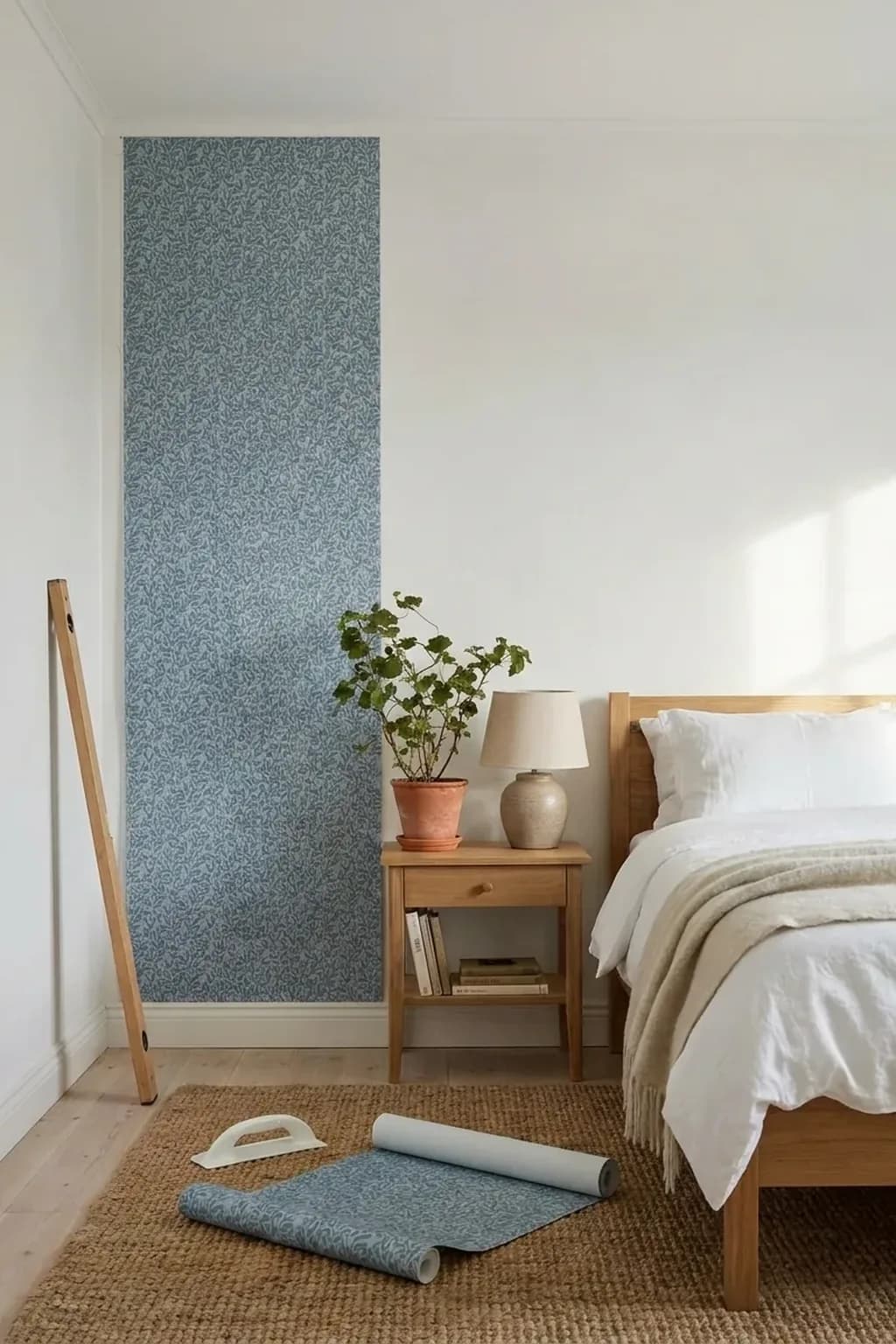
Where It Works Best in a Rental
- One wall behind the bed or sofa. The most effect per roll, and the furniture hides the bottom edge.
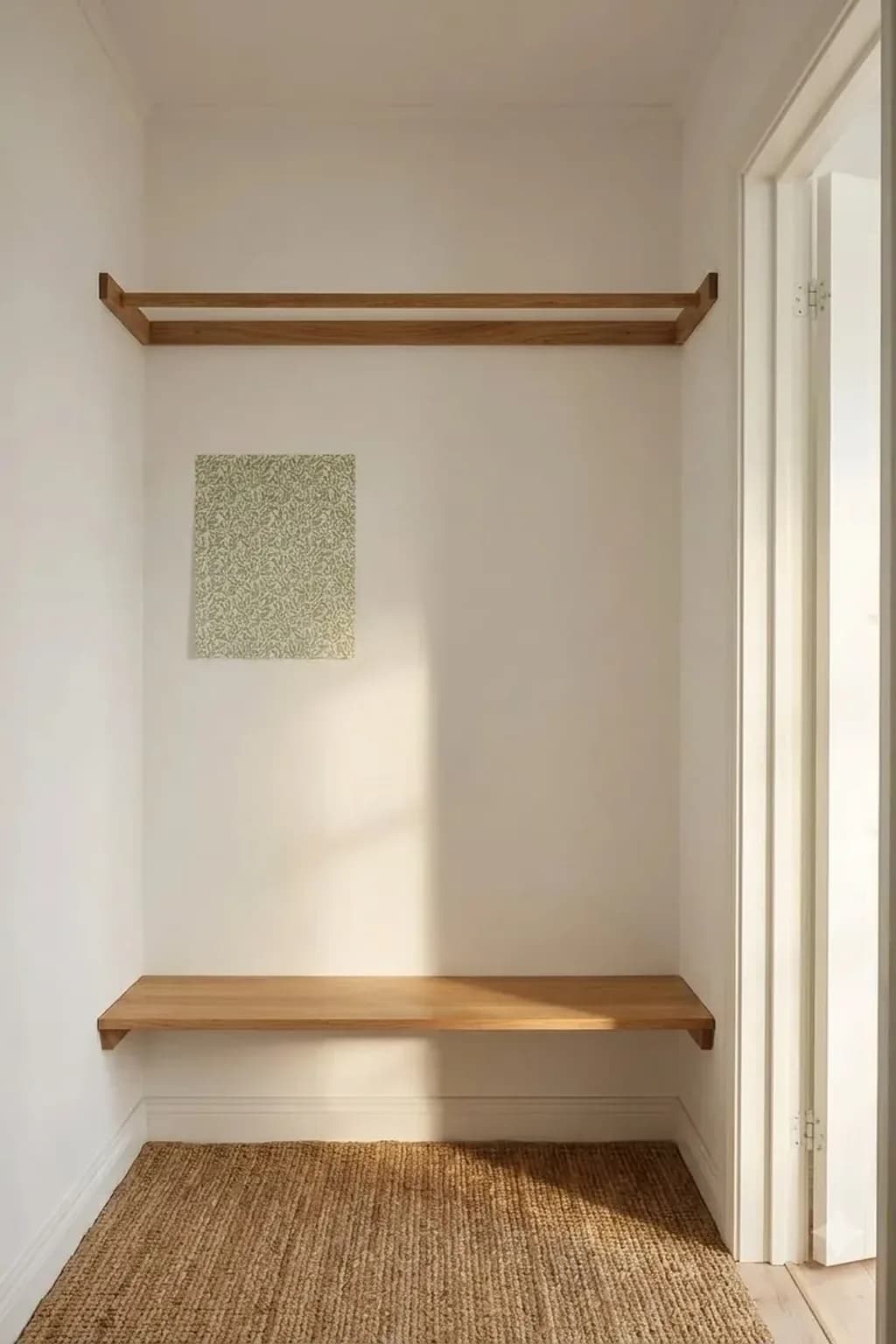
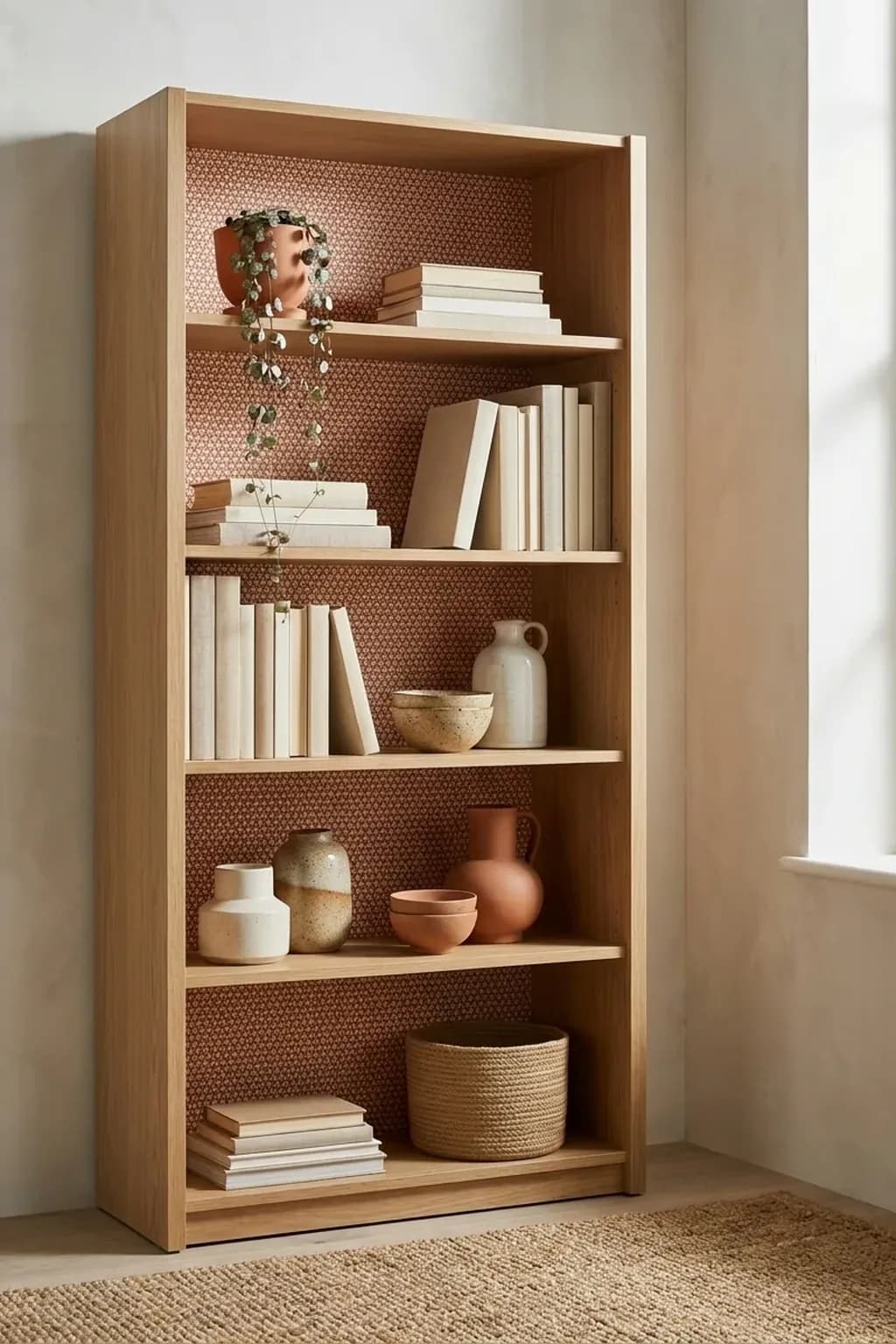
- Inside a closet, alcove or bookcase back. Small, forgiving, and out of direct sunlight.
- A hallway or entry wall. A short wall you pass often; avoid areas where bags and shoulders rub the seams.
- Flat doors, cabinet sides and the fronts of plain drawers. Smooth surfaces where adhesion is reliable.
- A kitchen wall away from the stove and sink. Keep it clear of steam and splashes.
If you want a dark, dramatic wall without paint, wallpaper is one route; our dark boho bedroom ideas show how such a wall is styled. For pattern-free alternatives, shapes made with a sample pot, where your landlord allows paint, are covered in our painted accent wall ideas.
What to Do About Textured Walls
Most rentals with textured walls are poor candidates. The adhesive touches only the peaks of the texture, so the bond is weak, and the texture shows through as shadows. Your options:
- Choose a thick, textured or heavily patterned paper on light orange-peel texture, and test it for two weeks. Some hold; many do not.
- Paper a smooth surface instead: a flat door, the back of a bookcase, a headboard panel.
- Mount the paper on thin boards such as hardboard or foam board, and lean or hang the boards as a removable panel. It gives the effect behind a bed with nothing stuck to the wall.
- Use fabric or a large textile on the wall in place of paper.
Skim-coating the wall smooth is a real fix, but it is a permanent alteration and not one to make in a rental without permission.
How to Remove It Without Damage
- Start at a top corner and lift the edge with a fingernail, not a blade.
- Pull slowly, downward, keeping the paper close to the wall, almost folded back on itself. Pulling straight outward puts the most stress on the paint.
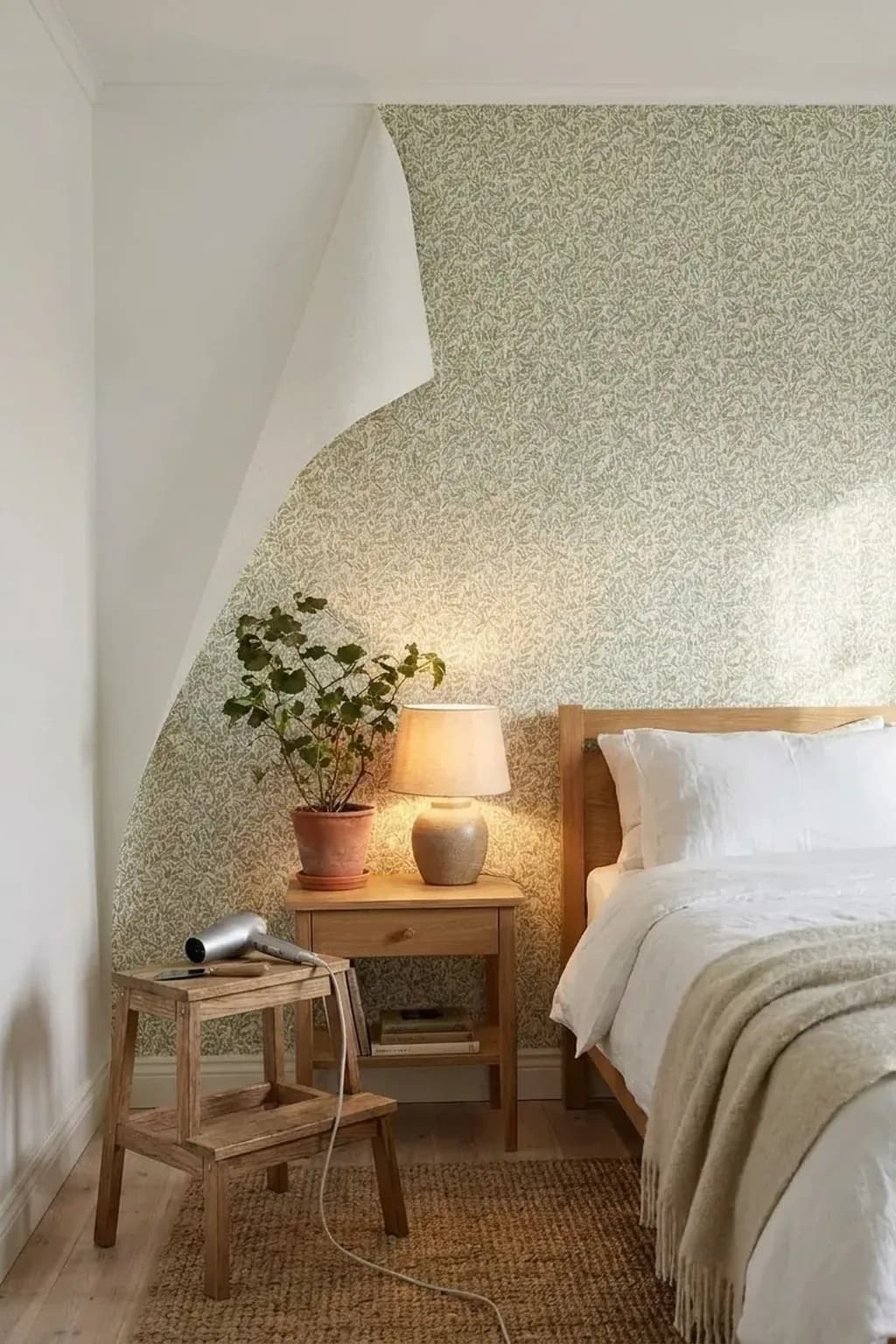
- If it resists, warm the area with a hair dryer on a low setting for half a minute to soften the adhesive, then continue.
- If paint begins to lift, stop, warm that section and pull from a different direction.
- Wipe any residue with warm water and a drop of dish soap on a soft cloth.
Paper that has been up for several years, or in strong sun, generally grips harder than paper removed after a year. Take your time.
Pros and Cons for Renters
Pros
- No paste, no water, and no special skills.
- Comes down in strips from a suitable wall.
- One wall can change a whole room for the cost of a few rolls.
- Mistakes during hanging can be lifted and corrected.
Cons
- Depends entirely on the paint underneath, which a tenant did not choose.
- Poor on textured walls and in steamy rooms.
- Seams can open if the vinyl was stretched or the room swings between hot and cold.
- Costs more per square foot than paint, and good papers are not cheap.
Wallpaper is one of many reversible changes. Our small apartment decorating guide lists others, and for dividing a room without touching the walls, see renter-friendly room dividers. For bathrooms, where wallpaper is a risk, renter-friendly bathroom storage covers upgrades that cope with steam.
FAQ
Does peel and stick wallpaper damage walls?
On smooth walls with cured, primed, satin or semi-gloss paint, it usually removes cleanly. It can pull off flat, unprimed, fresh or poor-quality paint. A two-week test patch tells you which you have.
Can I use peel and stick wallpaper in an apartment?
Yes, if your lease allows it and the wall passes a patch test. Ask the landlord in writing first.
How long does peel and stick wallpaper last?
On a suitable wall in a dry room it can stay up for years. Humidity, heat, direct sun and textured surfaces shorten its life.
Does peel and stick wallpaper work on textured walls?
Poorly on most. Manufacturers generally state that it will not adhere properly to textured surfaces. Light orange-peel texture sometimes holds a thick paper; test before committing.
How soon after painting can I apply it?
Manufacturers commonly specify a minimum of four weeks, and some ask for 30 days, so that the paint cures fully. Check the instructions for your paper.
Can I use it in a bathroom?
Only in a well-ventilated bathroom and away from direct water. Steam makes seams lift and bubbles form. A powder room with no shower is a safer choice.
Is peel and stick wallpaper reusable?
Sometimes. Thick papers removed carefully and stored on their backing can be rehung, but the adhesive weakens each time and panels cut to one wall rarely fit another.