What Color Rug Goes With Dark Wood Floors? Light, Patterned and Colored Options
What color rug goes with dark wood floors: lighter rugs in cream, ivory and warm beige give the contrast a dark floor needs. When to choose a patterned, blue or red rug instead, and which rug colors disappear on dark wood.

In this guide · 8 sections
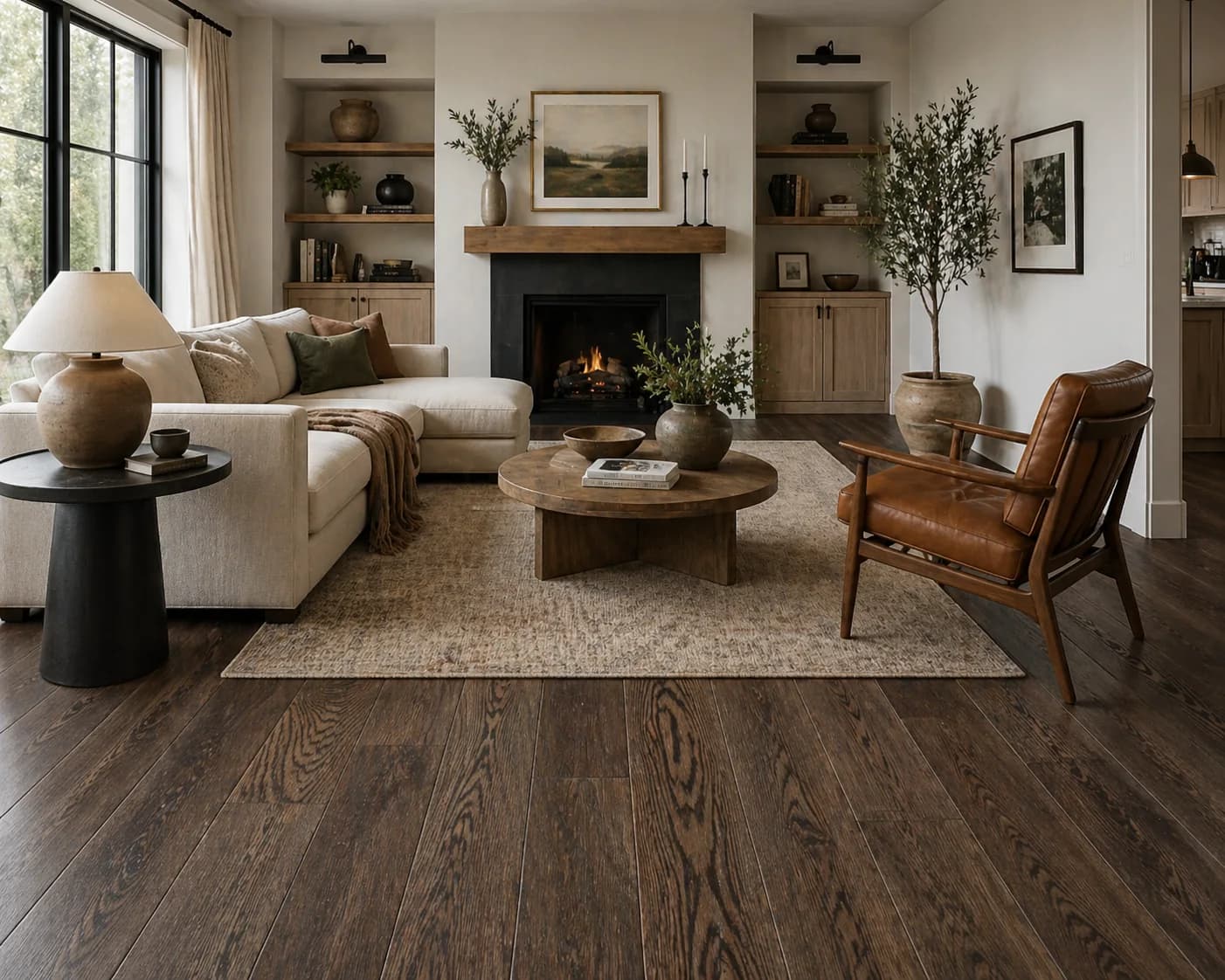
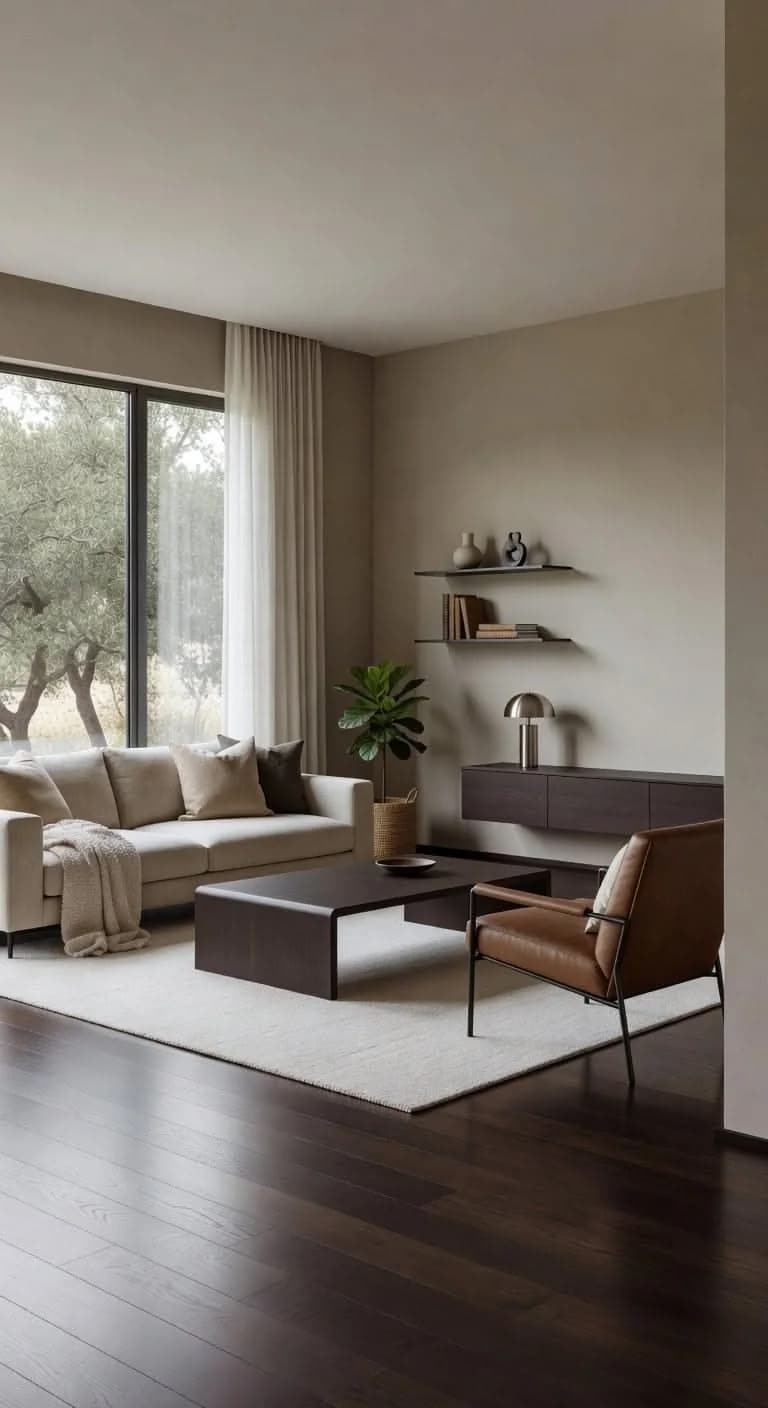
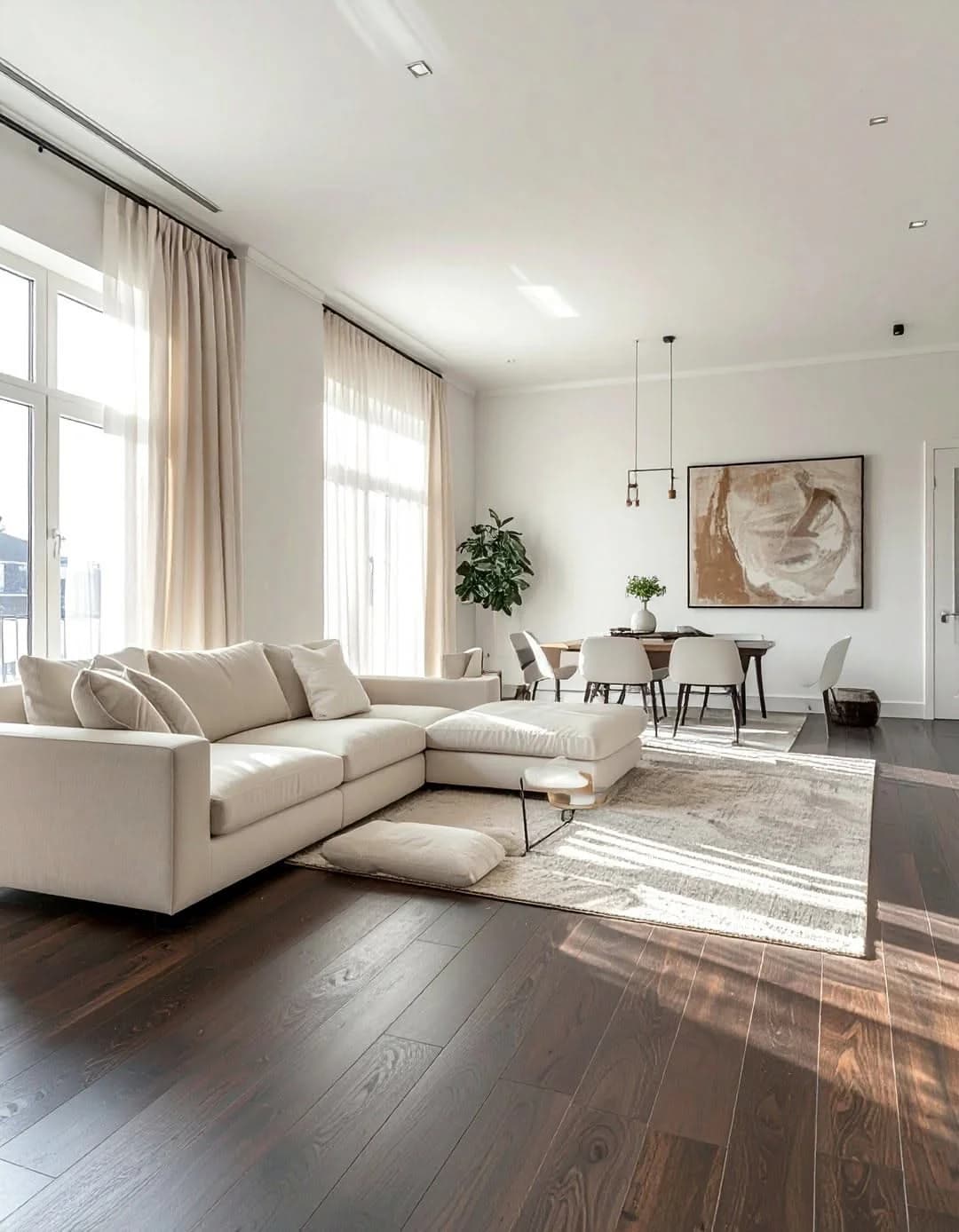
What color rug goes with dark wood floors? A rug clearly lighter than the floor: cream, ivory, warm beige or a pale pattern on a light ground. Dark wood, whether espresso, walnut or dark-stained oak, absorbs light, and a pale rug gives it back, outlines the seating area and lets the floor show as a dark frame around it.
That is the general answer. A lighter rug is not the only good one: a patterned rug hides far more daily dirt, and deep blue or red can look rich on dark boards if the rug carries some light color too. The one choice that rarely works is a rug as dark as the floor.
What Color Rug Goes With Dark Wood Floors: Options Compared
| Rug color | Contrast with the floor | Shows dirt and crumbs? | Mood | Suits |
|---|---|---|---|---|
| Cream, ivory, off-white | Highest | Yes, light rugs show dark marks | Bright, calm | Dim rooms, modern and minimal rooms |
| Warm beige, oatmeal, sand | High | Moderately | Soft, relaxed | Most living rooms; the safest all-rounder |
| Natural jute or sisal | Medium to high | Hides crumbs well | Casual, textured | Family rooms, layered under a smaller rug |
| Light pattern on an ivory ground | High, broken up by pattern | Hides most things | Traditional or relaxed | Homes with children or pets |
| Pale grey | Medium | Moderately | Cool, tidy | Cool-toned dark floors; add warm textiles |
| Navy or deep blue with cream | Low to medium | Hides dark marks, shows lint | Rich, tailored | Bright rooms, pale sofas |
| Red, rust or terracotta | Medium | Hides most things | Warm, classic | Dark floors with red-brown tones; large rooms |
| Sage or muted green | Medium | Moderately | Fresh, natural | Rooms with plants, linen and wood |
| Dark brown, charcoal, black | Almost none | Shows dust, lint and pet hair | Heavy | Rarely; only with pale furniture and strong daylight |
Why Lighter Usually Wins
A floor is the largest dark surface in the room. If the rug is dark as well, the lower third of the room becomes one mass and furniture legs vanish into it. A pale rug does three useful things:
- It reflects light upward, which matters in rooms with dark floors because they already take more lighting to feel bright.
- It marks out the seating area. With a visible border of dark wood around it, the rug reads as a deliberate island.
- It shows off the floor. Contrast at the edge of the rug is what makes people notice the boards.
How light to go depends on how you live. Pure white is striking and unforgiving. Warm beige and oatmeal give most of the contrast with much less visible dirt.
Check the Undertone of Your Floor
Dark floors are not all the same brown. Look at a board in daylight next to a sheet of white paper.
- Red-brown (cherry, mahogany, some walnut stains): the floor is warm and strong. Cream and beige calm it; greens and blues, which sit opposite red, balance it. Rugs with a lot of orange can be too much.
- Neutral or yellow-brown (dark oak, most walnut): the easiest. Warm neutrals, reds, blues and greens all work.
- Cool or near-black (espresso, ebony, grey-brown): suits ivory, pale grey and cool blues, but can feel cold. Add warmth with a wool texture, a beige rug with some variation, or a red or rust pattern.
The Options, With Reasons
Cream and ivory
Choose these when the room is short of light or the furniture is dark too. A plain cream rug suits modern rooms; a textured one, looped wool or a subtle raised pattern, hides more and looks warmer. Under a dining table or in a home with pets, expect to clean it often, or pick a washable construction.
Warm beige, oatmeal and natural fiber
The all-round answer. Beige sits between the dark floor and pale walls and connects them. Jute and sisal bring the same color with a rough texture that suits dark wood especially well, because smooth dark boards and coarse pale fiber are opposites. Jute is also one of the cheaper ways to cover a large area; a smaller, softer rug can go on top.
A light pattern on an ivory ground
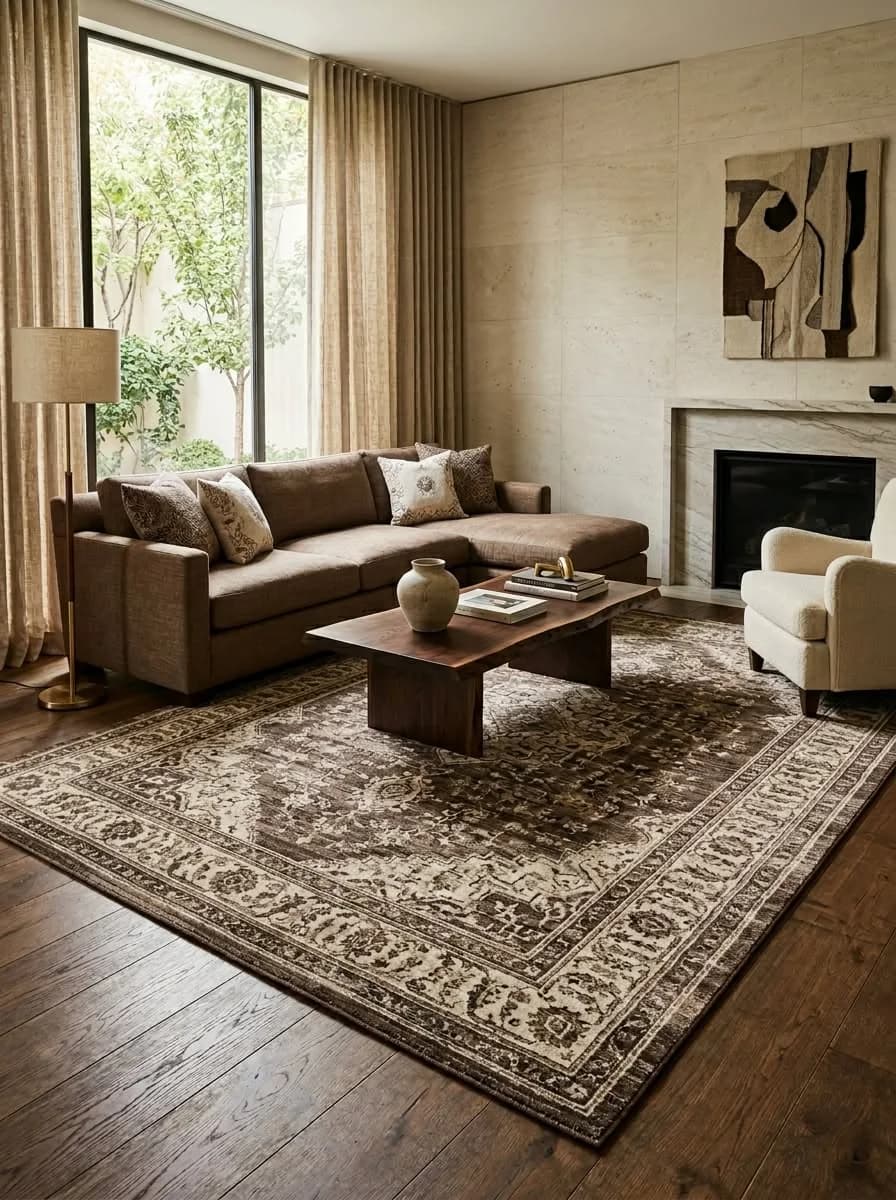
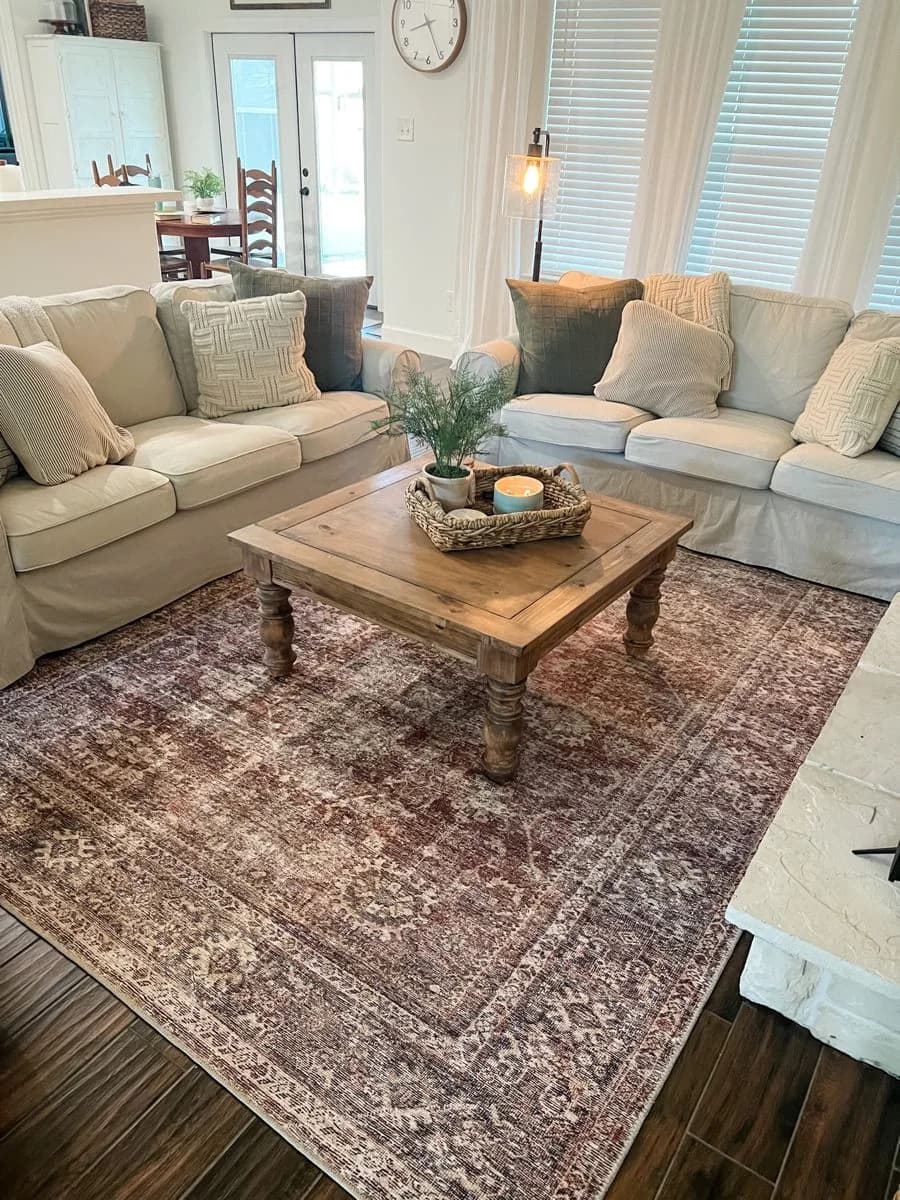
A traditional or distressed pattern in browns, greys or soft colors on a pale ground gives the lightness of a cream rug and the forgiveness of a patterned one. If the pattern includes a brown close to the floor, the rug and the boards look related. This is the practical choice for family living rooms.
Navy and deep blue
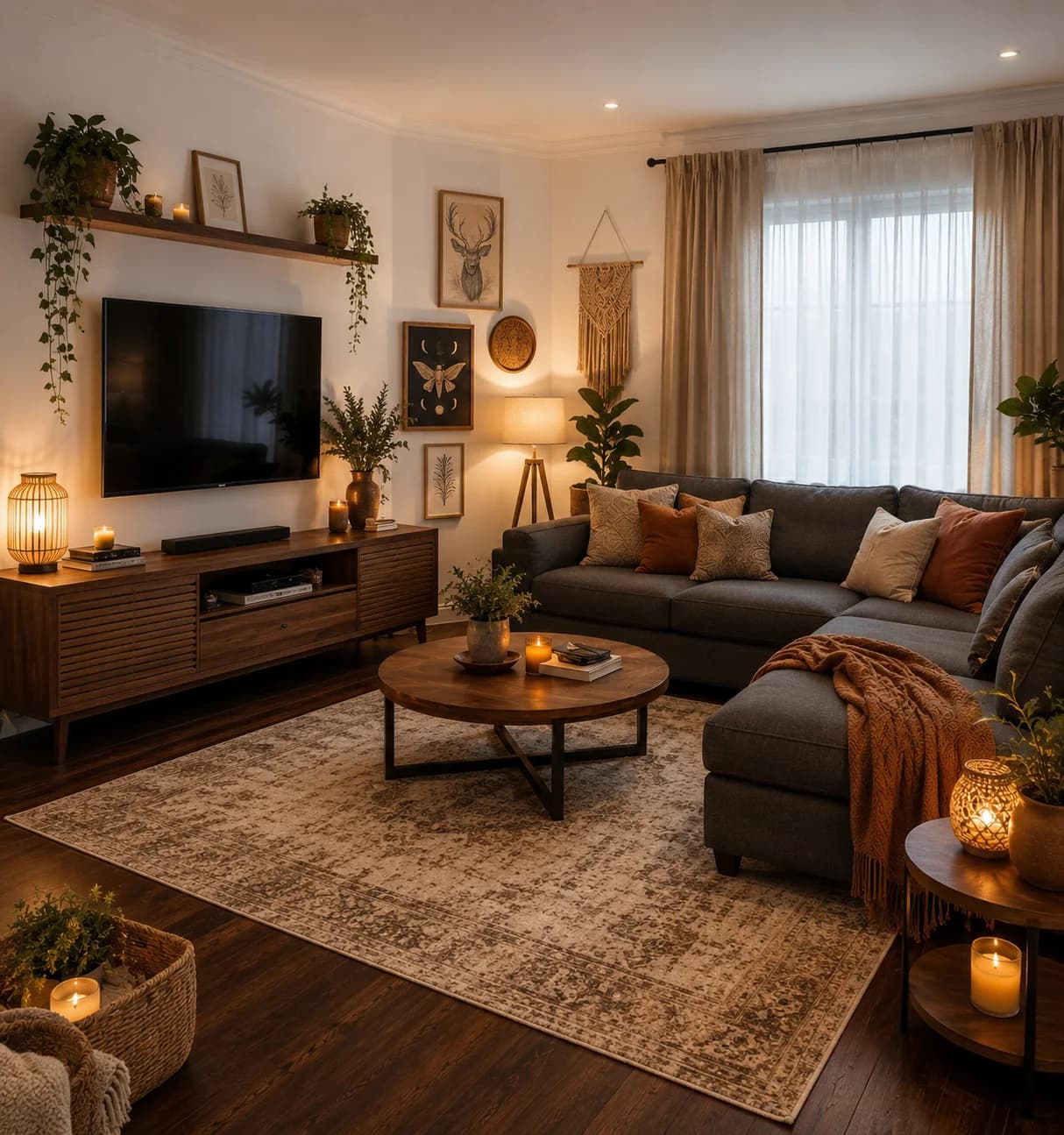
Blue is the cool partner to brown wood, and navy on dark boards looks deep and tailored. It needs help to avoid a dark-on-dark floor: choose a rug with cream or tan in the pattern or border, and keep the sofa pale so the rug has something light above it. Best in a room with good daylight.
Red, rust and terracotta
The classic pairing of a red patterned rug on dark boards works because traditional red rugs carry ivory, navy and tan as well, so there is contrast inside the rug itself. Faded and washed-out reds are easier to live with than saturated ones. On a red-brown floor, pick a red that is clearly different from the wood, pinker or more rust, or it will blur into it.
Sage and muted green
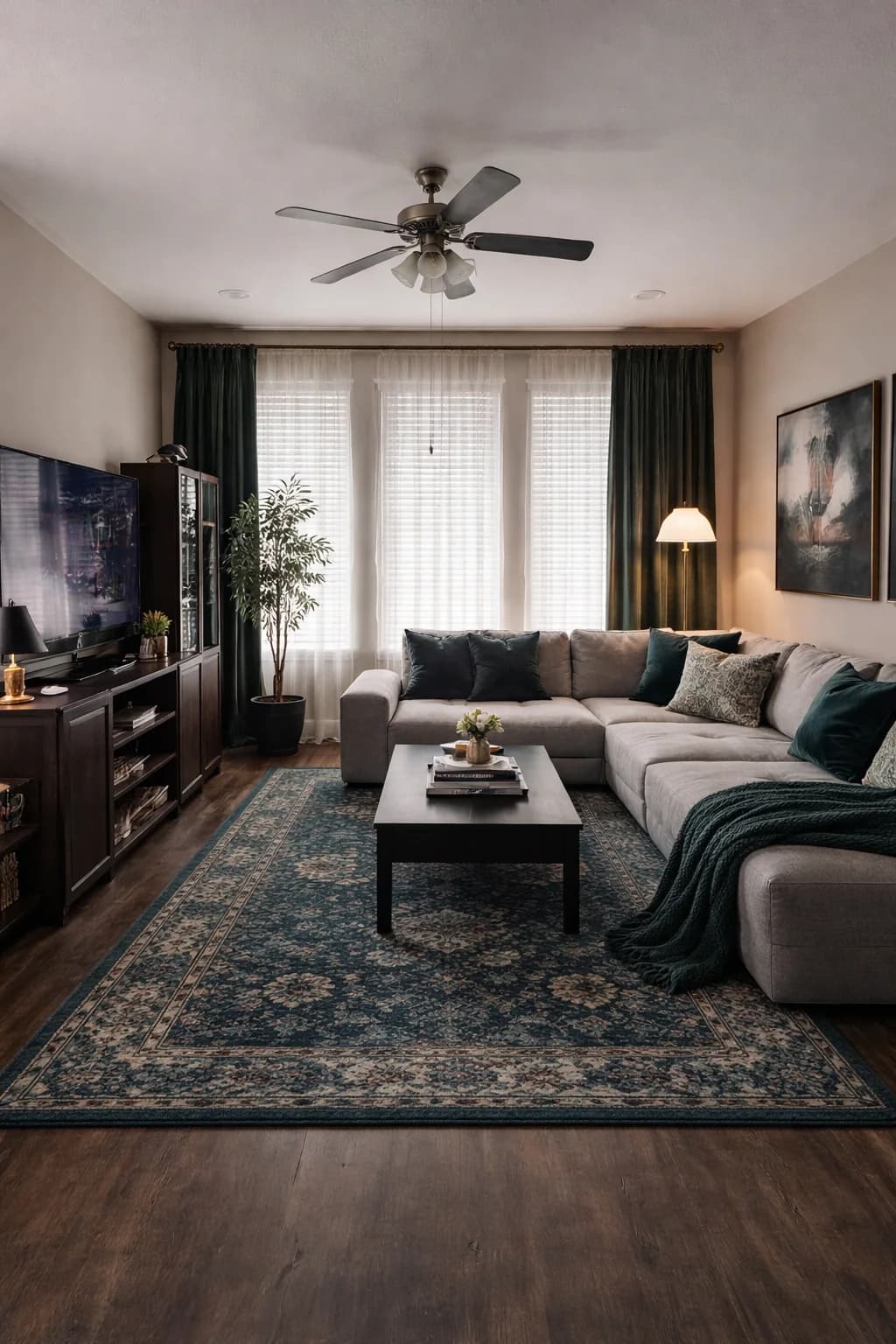
Green and brown is the color scheme of a tree. A greyed green rug, plain or in a vintage pattern, is a good middle route when cream feels too stark and red too traditional.
Rug Colors That Struggle on Dark Wood
- Dark brown close to the floor color. It looks like a patch of carpet stuck to the boards.
- Solid black or charcoal. Shows every bit of lint and dust, as dark floors already do, and removes all contrast. A charcoal pattern on a light ground is fine.
- Flat mid-grey on a warm red-brown floor. The two fight; go warmer or much lighter.
- Very busy multicolor rugs in a small room with dark floors. The floor is already a strong presence.
Size, Border and Pad
Color only works if the rug is big enough to be seen. As common guidance, a living room rug should be large enough for at least the front legs of the sofa and chairs to sit on it, with a border of bare floor around the edge of the room. On dark floors that border is part of the look, so a rug that stops well short of the walls is fine; a rug so small that it floats under the coffee table is not.
Use a rug pad suitable for hardwood under any rug. It stops slipping and protects the finish. Check the pad's label for your floor finish, since some rubber and plastic backings can mark certain finishes over time.
Match the Rug to the Furniture Too
The rug sits between the floor and the sofa and has to work with both.
- Pale sofa on dark floor: almost any rug works. Use the rug to add the color or pattern the room lacks.
- Dark sofa on dark floor: the rug must be light, or the whole lower half of the room goes dark.
- Mid-tone or colored sofa: pick a rug lighter than both, with a little of the sofa color in it.
If your sofa is green, the next step is our guide to what color rug goes with an olive green couch. For where the rug and seating should sit in the room, see small living room layouts and our guide to floating furniture placement.
Dark floors also change what the walls need. Pale warm walls are the easy partner; a single deep color on walls and woodwork can work when the rug and sofa are light, as we explain in color drenching a living room. And in a room where the dark floor is part of a restrained, natural scheme, the pale wool and jute rugs in our Japandi living room ideas are the model.
FAQ
Should a rug be lighter or darker than a dark wood floor?
Lighter, in most rooms. A pale rug gives contrast, reflects light and defines the seating area. A darker or equally dark rug disappears into the floor.
What color rug makes dark wood floors pop?
Cream, ivory and warm beige. The edge where a pale rug meets dark boards is what draws attention to the wood.
Does a grey rug go with dark wood floors?
Pale grey works on cool, espresso-toned floors, ideally with warm textiles nearby. On warm red-brown floors, beige or cream sits better than mid-grey.
What rug hides dirt on dark wood floors?
A light patterned rug: a traditional or distressed design on an ivory or beige ground, or natural jute. Both keep the contrast and disguise crumbs and marks.
Can I put a dark rug on dark hardwood floors?
Only if it has clear light areas in the pattern and the furniture on it is pale. A solid dark rug on a dark floor looks heavy and shows dust.
What color rug goes with dark wood floors and a grey couch?
Cream or ivory to lift both, or a pale pattern that includes a little grey. Add one warm color, such as rust or tan, in cushions or a throw.