Small Entryway Shoe Storage: 12 Ideas for Apartments (By Depth)
Small entryway shoe storage ideas sorted by how much depth you have: slim tip-out cabinets, narrow racks, benches, over-door pockets and under-sofa bins for apartments.

Some links below are affiliate links. If you buy through them we may earn a commission, at no extra cost to you. It never decides what we recommend.
In this guide · 17 sections
The best small entryway shoe storage is decided by one number: how deep a piece can be before it blocks the door or the walkway. With almost no depth, go vertical (over-door pockets, wall-mounted cabinets); with around 20–30 cm, a slim tip-out cabinet or narrow rack; with more, a bench with shoes underneath.
Below are 12 ideas sorted by depth, the "current rotation" rule that keeps any of them from overflowing, and three picks. For the rest of the entry (hooks, mirrors, a drop zone), see our guide to small apartment entryways with no foyer.
Measure First: Depth Decides
Measure from the wall to where the door swings or the walkway starts. Then pick from the matching group below:
- Almost none: walls and doors only.
- Under 20 cm: the slimmest cabinets and racks.
- 20–35 cm: tip-out cabinets, narrow shelves and small benches.
- 35 cm or more: full benches and cubbies.
Small Entryway Shoe Storage by Depth
Almost No Depth
1Over-the-door shoe pockets
A pocket organizer on the back of the front door or a closet door holds a lot of pairs in zero floor space. Clear pockets let you see everything; fabric ones look softer. Check the door still closes.
2A wall-mounted shallow cabinet
Wall-mounted shoe cabinets sit off the floor, so you can clean underneath and the entry looks bigger. They need screws, so ask your landlord first.
3Wall hooks or a peg rail for boots and sneakers
Pegs at low height hold sneakers by the heel and boots by a loop. It sounds odd, but it looks tidy and keeps wet shoes off the floor.
Under 20 cm
4Stackable slim shoe cabinets
Small plastic or metal cabinets around 18 cm deep hold a few pairs each and stack or sit side by side. The top doubles as a key and mail shelf.
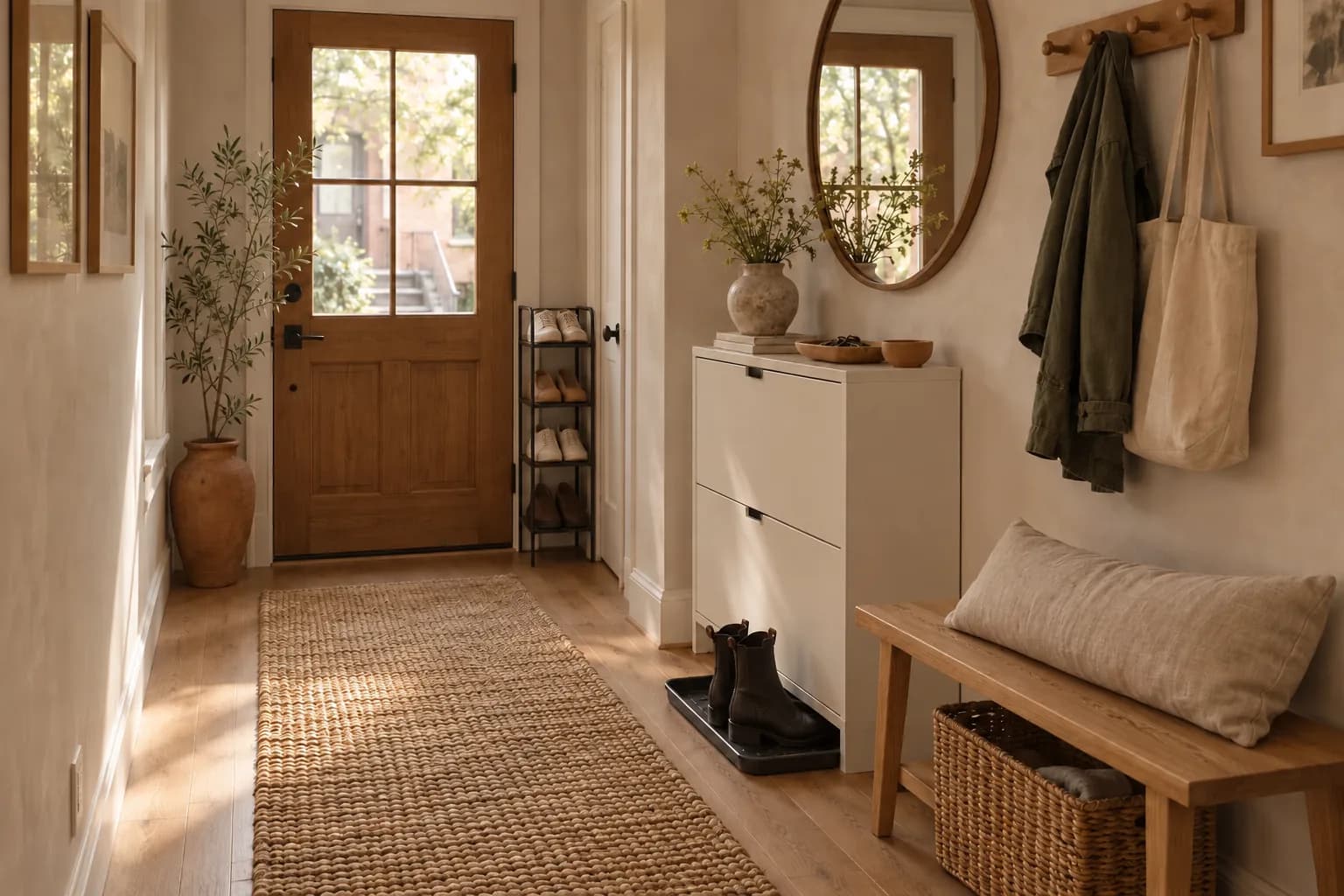
5A slim vertical rack
A narrow tiered rack fits the gap beside the door or between a wall and a coat stand. It's the easiest option to take with you when you move.
20–35 cm
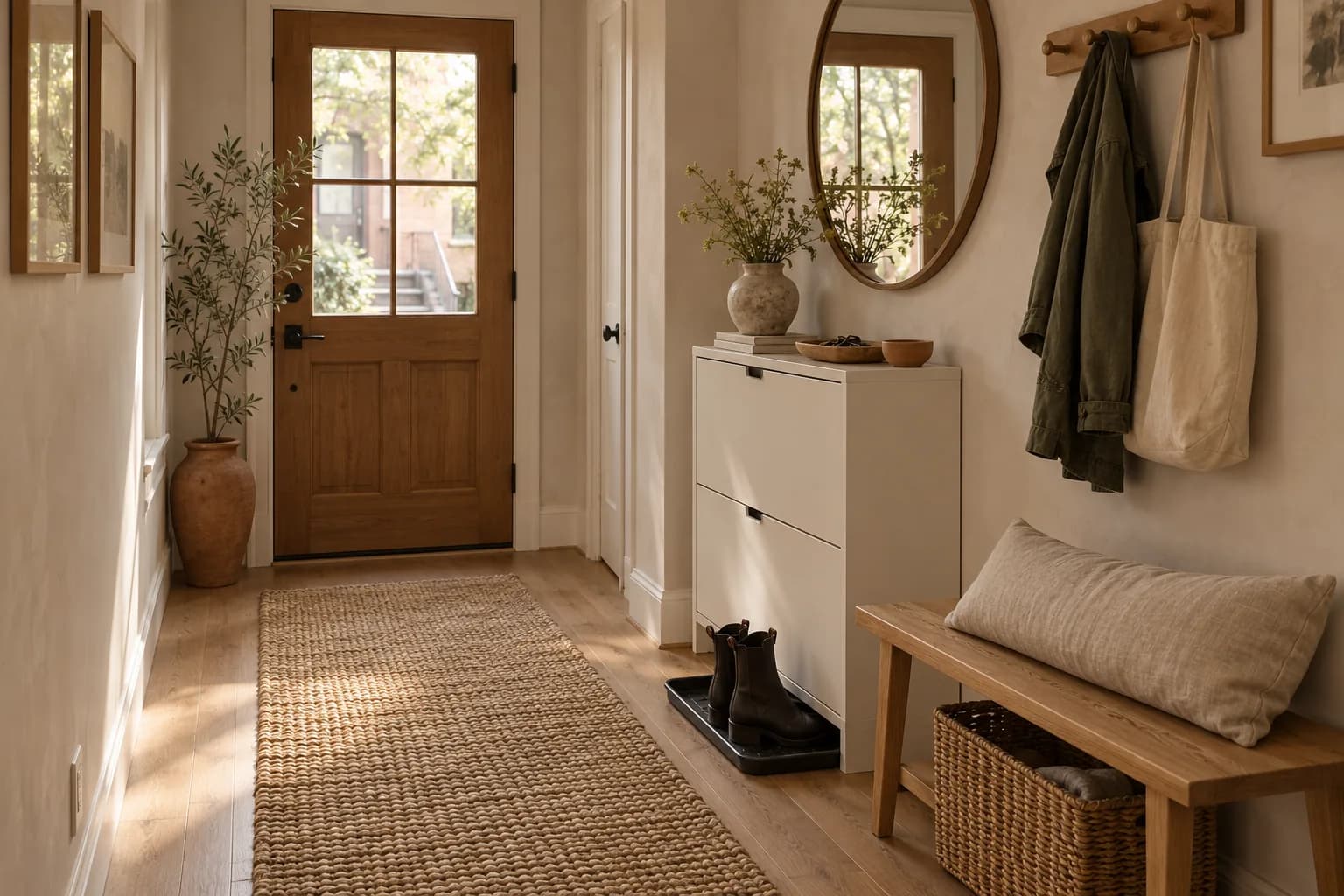
6A tip-out shoe cabinet
Tip-out drawers hold shoes at an angle, which is why they're so shallow for how many pairs they store. Anchor them; see the note below.
7A narrow bench with a shoe shelf
A slim bench gives you a place to sit and a shelf below for the pairs you wear every day.
8A boot tray on a narrow shelf
A rubber or metal tray on the floor catches water and grit from winter boots, and a narrow shelf above holds dry shoes.
35 cm or More
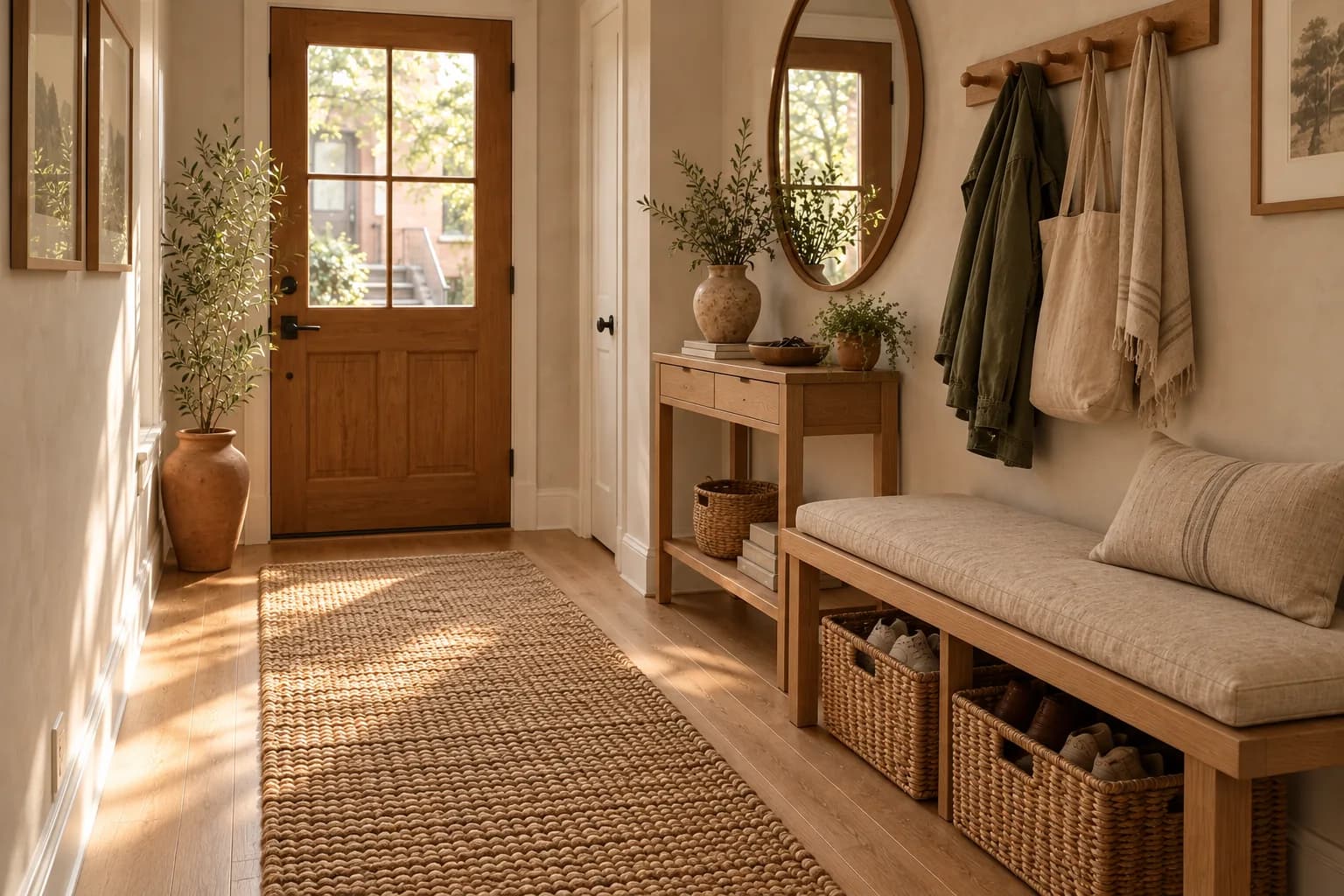
9A storage bench with baskets
A full-depth bench with a basket per person makes everyone responsible for their own pairs. It's one of the most useful double-duty pieces for small apartments.
10A cubby unit
Open cubbies give each pair its own spot. Put everyday shoes at the bottom and dressier pairs up top.
No Entryway at All
11Under-sofa or under-bench bins
If the door opens straight into the living room, a flat rolling bin under the sofa holds a few pairs out of sight.
12The closet floor or a bedroom rack
Keep only today's pairs by the door and store the rest where you dress. Our bedroom with no closet guide covers racks and under-bed storage for that.
Keep Only the Current Rotation by the Door
No shoe storage survives every pair you own. Keep one or two pairs per person by the door, and move off-season boots, sandals and dressy shoes to a closet, under the bed or into a storage box. Swap them when the season changes. In a studio, treat the door as its own small zone; see creating zones in a studio apartment.
Our Picks for Small Entryway Shoe Storage
We compared depth, capacity and price to pick one option for each depth group. Check current prices and sizes on the retailer's page.
A shallow cabinet around 52 x 18 x 39 cm that holds about four pairs, sold in packs of two to stack or place side by side.
- Slimness
- Capacity
- Flexibility
- About 18 cm deep
- Stack them or line them up
- Recess on top for keys
- About four pairs per cabinet
- Plastic finish
A tip-out shoe cabinet about 49 x 28 x 93 cm with adjustable dividers and two compartments, in several finishes.
- Slimness
- Capacity
- Flexibility
- About 28 cm deep
- Holds about eight pairs
- Cut-out for the baseboard
- Must be fastened to the wall
- Tip-out doors need clearance to open
A narrow powder-coated steel rack; the small version is around 22 cm wide and 18 cm deep and holds about six pairs.
- Slimness
- Capacity
- Flexibility
- Very narrow steel frame
- No wall fixing needed
- Moves easily
- Shoes stay visible
- Pricier than basic racks
Practical Takeaway
Measure the depth you can spare, pick from that group, and keep only the pairs you're wearing this week by the door. Anchor anything tall and shallow, and store the rest of your shoes where you get dressed.
FAQ
How do I store shoes in a small entryway?
Use storage that matches your depth: over-door pockets or wall hooks with no depth, slim cabinets or racks with under 20 cm, tip-out cabinets or a narrow bench with more. Keep only the current pairs by the door.
What is the slimmest shoe storage?
Over-door pockets and wall hooks take no floor depth. For cabinets, shallow stackable units around 18 cm deep and tip-out cabinets under 30 cm deep are among the slimmest.
Where do you put shoes if you have no entryway?
Under a bench or sofa in a flat bin, in an over-door organizer, or in the bedroom or closet, with just one pair by the door.
How many pairs of shoes should you keep by the door?
One or two per person is a practical limit for a small entry. Store the rest elsewhere and rotate by season.
Do shoe cabinets need to be anchored to the wall?
Tall and tip-out cabinets usually do, and many makers say so in their instructions. Follow them, and ask your landlord before drilling in a rental.