Floating Shelves in the Kitchen: Decor and Layout Ideas That Stay Practical
Kitchen floating shelves decor and layout ideas: shelves instead of upper cabinets, above the sink, in a corner or as a coffee station, what to put on them, how to keep them clean, and the depth and spacing to plan with.

In this guide · 14 sections
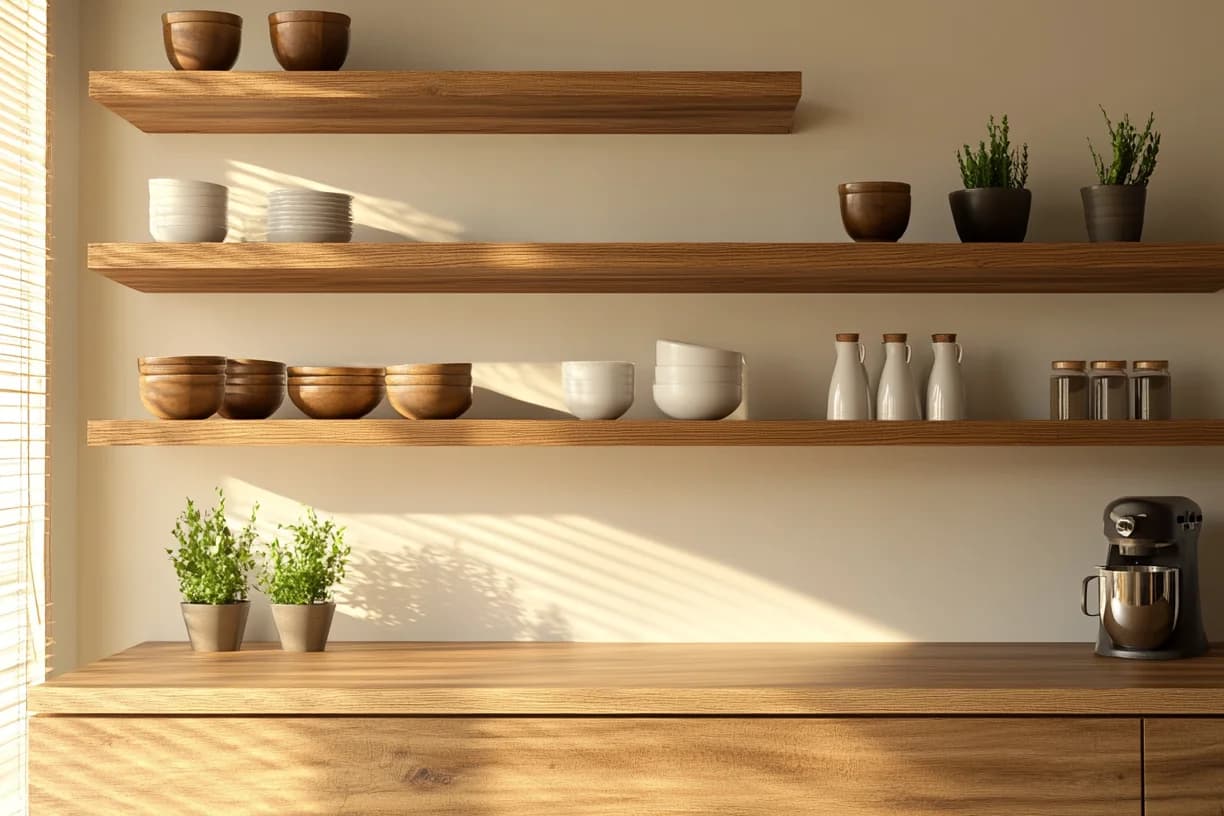
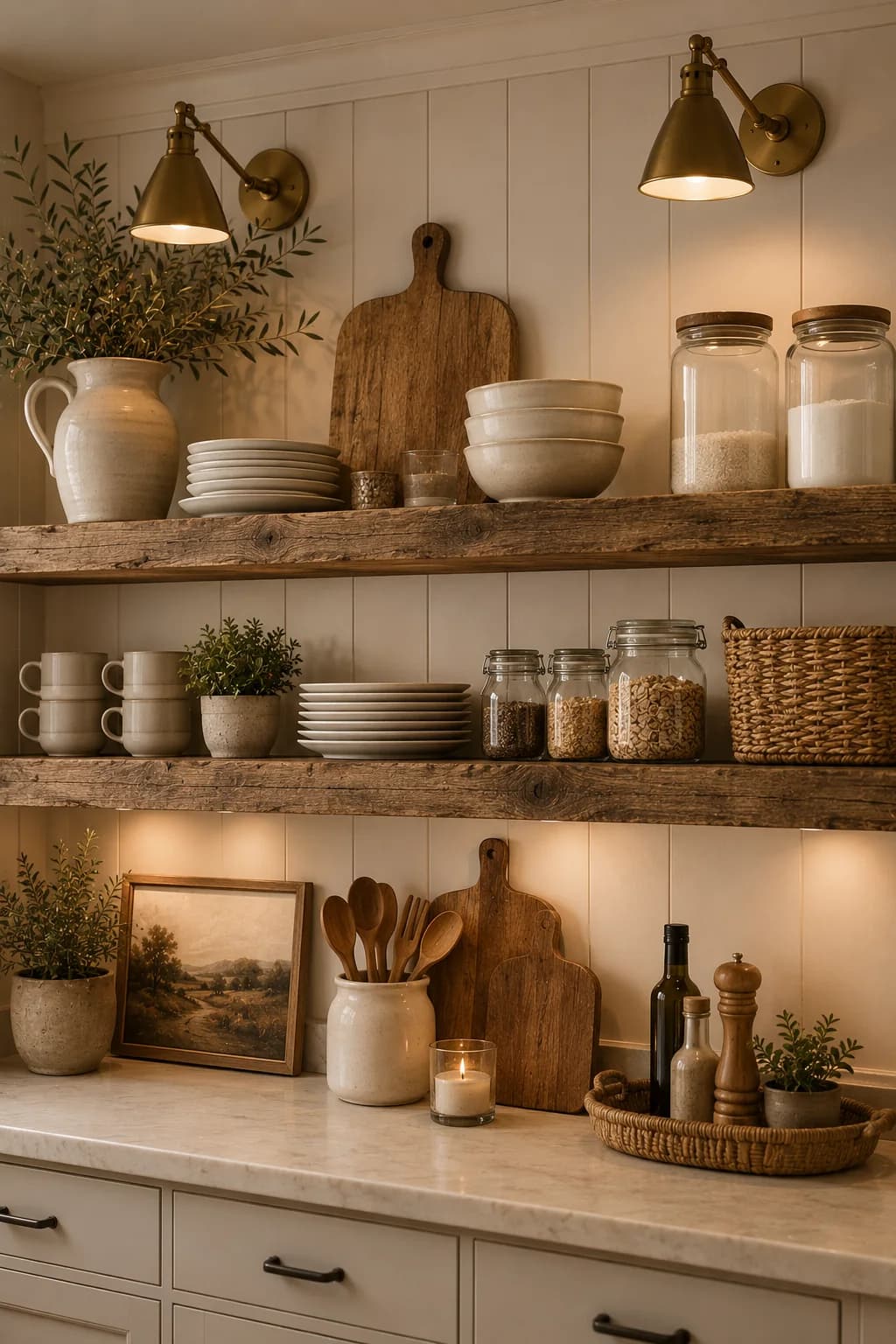
Floating shelves in the kitchen look best when they hold what you use every week: everyday plates and bowls, glasses, jars of dry goods, a few cookbooks, and one or two plants. Good kitchen floating shelves decor is mostly stacks and repetition (plates in piles, matching jars, mugs in a row) with a small number of objects for warmth: a wooden board, a ceramic jug, a framed print. Things that sit there only for show gather grease; things you use are washed regularly anyway.
Below: where floating shelves work in a kitchen, what to put on them and in what order, how to keep them clean, and the measurements to plan with. For shelves in the living room, see our guide to floating shelves around a TV.
Plan the Shelves Before Styling Them
| Decision | Common guidance |
|---|---|
| Depth | 10 to 12 inches for dinner plates and bowls; 8 inches for glasses, jars and spices |
| Height of the lowest shelf | Roughly 18 to 24 inches above the counter, like upper cabinets, so appliances fit below |
| Spacing between shelves | 12 to 16 inches, enough for a stack of plates or a tall jar |
| Thickness | Thicker boards (around 2 inches) look solid and carry dishes better |
| Fixing | Into studs, with brackets rated for the load; dishes are heavier than they look |
| Near the stove | Keep shelves out of the direct path of heat and steam; follow your range's clearance guidance |
Kitchen Floating Shelves Decor: Where They Work
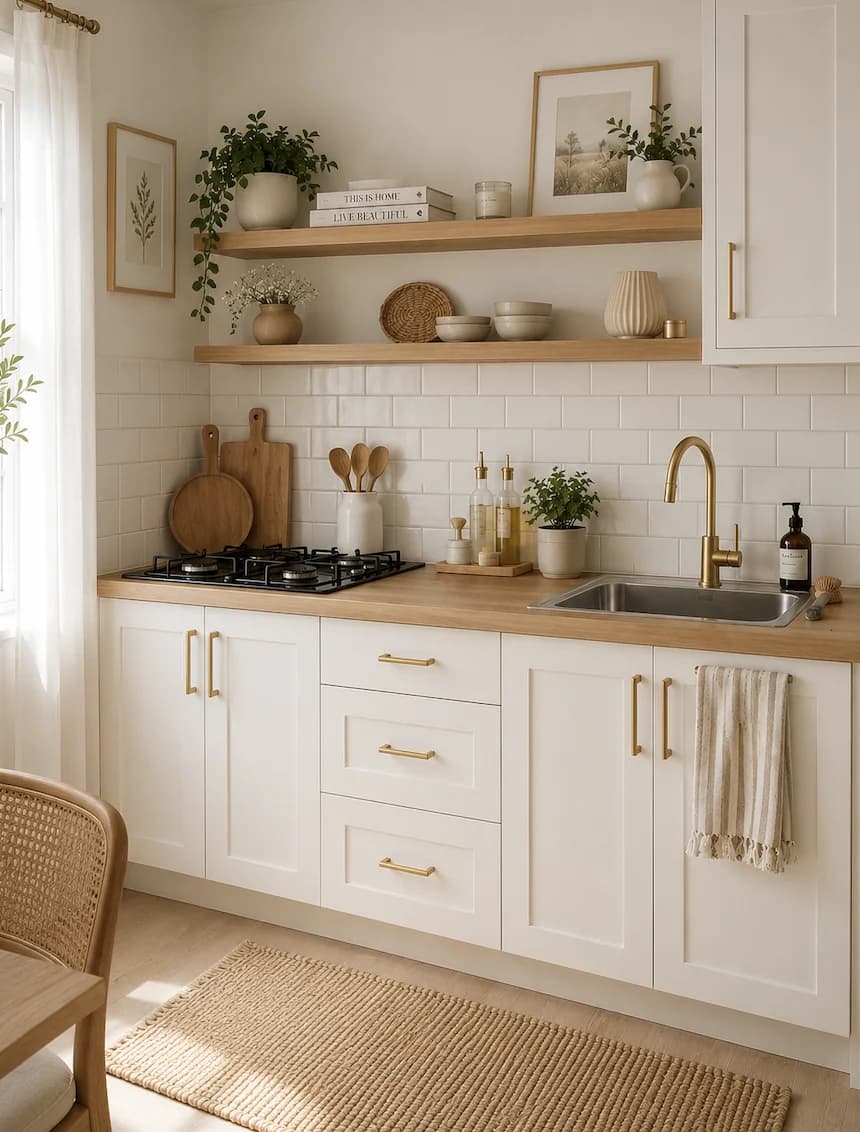
1Shelves instead of upper cabinets
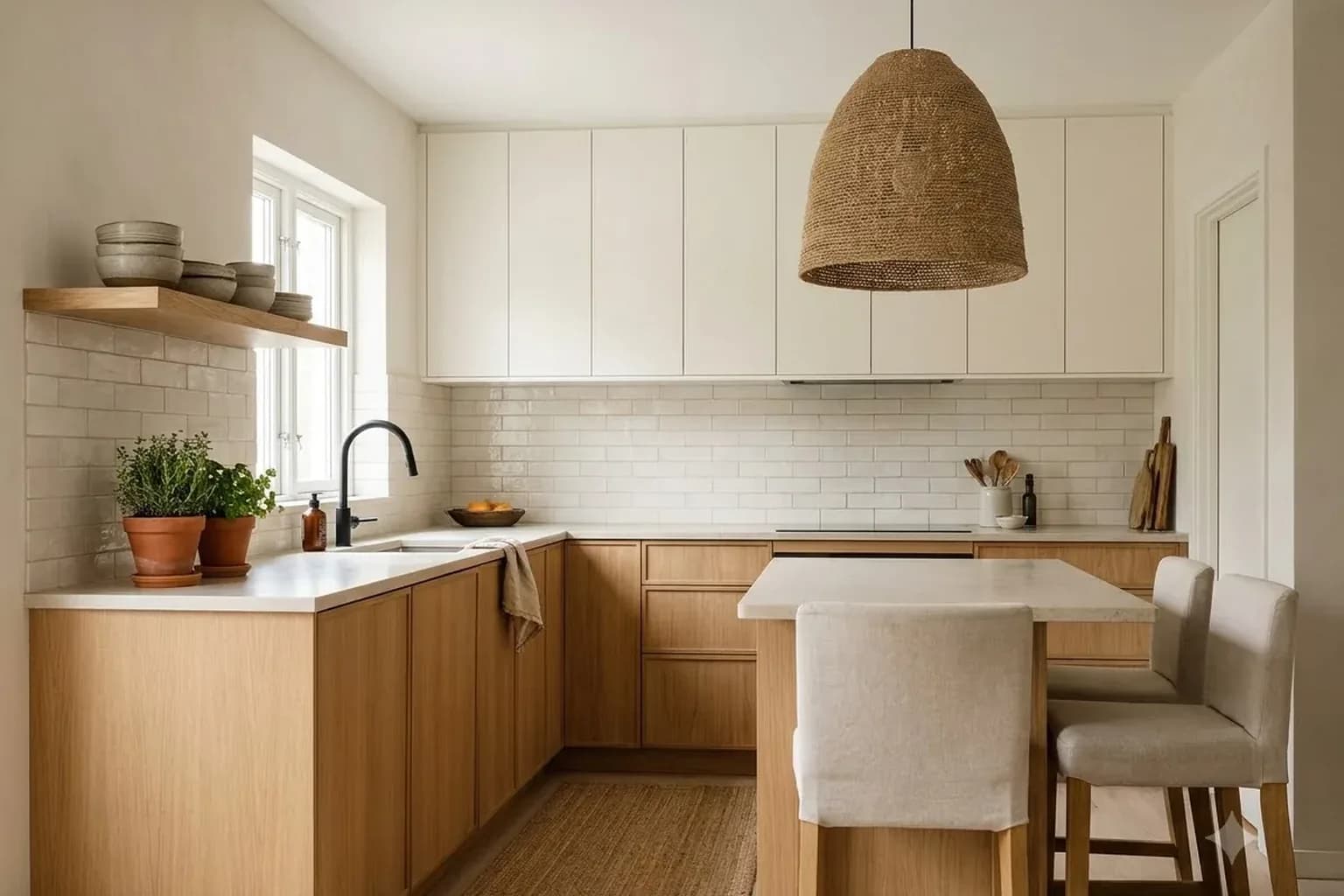
Replacing a run of upper cabinets with two or three long shelves makes a small kitchen look wider and brighter, and it forces you to keep only what you use. It suits people who cook every day and wash up as they go. Keep closed storage for the rest: a tall pantry cabinet, or uppers on the other wall.
2Long shelves wall to wall
On a wall with no window, shelves that run from corner to corner look built-in, while short shelves floating in the middle can look like an afterthought. Three long shelves hold a whole set of everyday dishes, so the cupboards below can take pans and appliances.
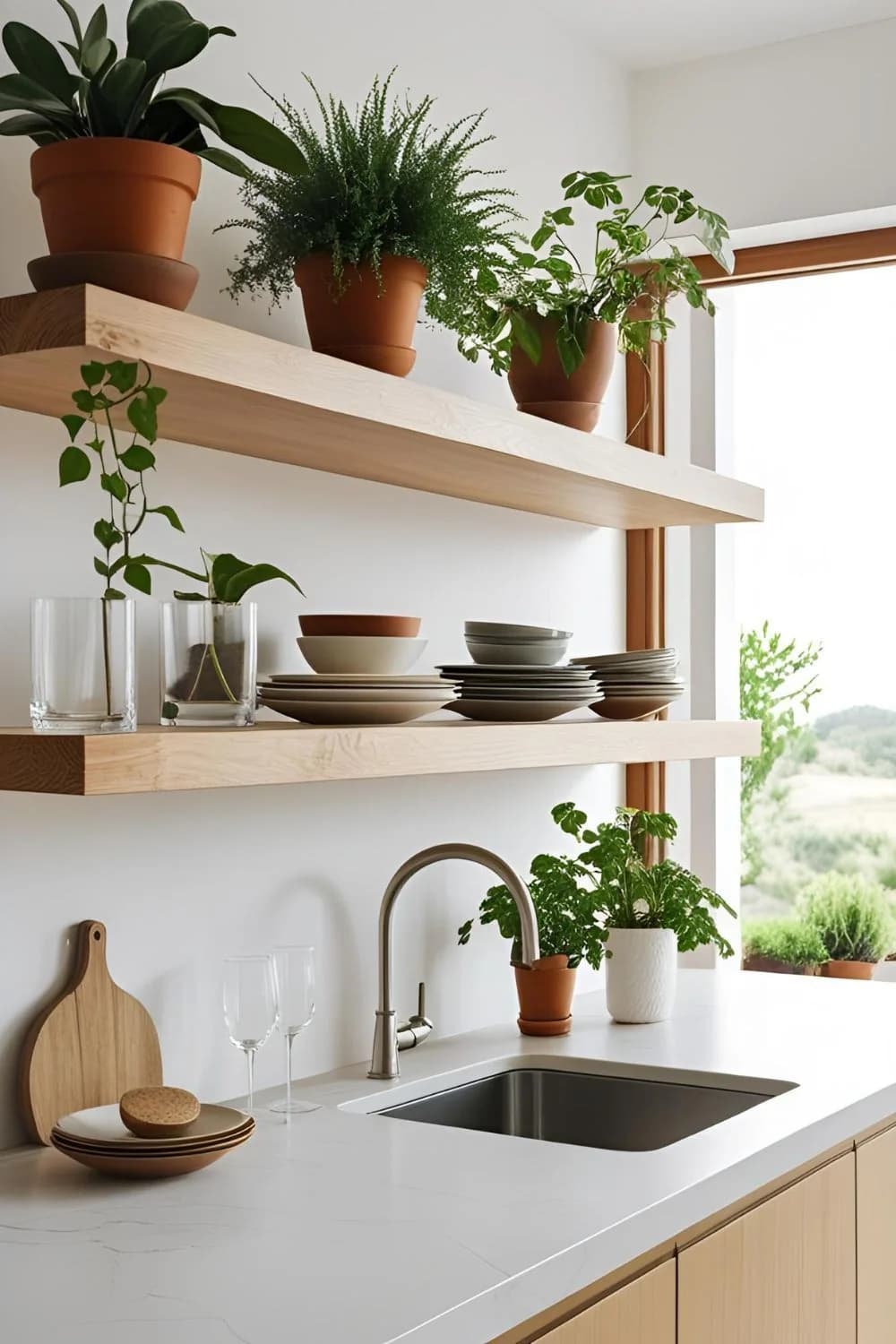
3Above the sink, with plants
The wall above a sink often has a window or nothing at all. One or two shallow shelves above the faucet are the best place in the kitchen for herbs and plants that need light and water, and for glasses that go straight from the drying rack to the shelf. Keep the lowest shelf high enough that you do not hit your head when you lean in.
4Corner shelves that wrap around
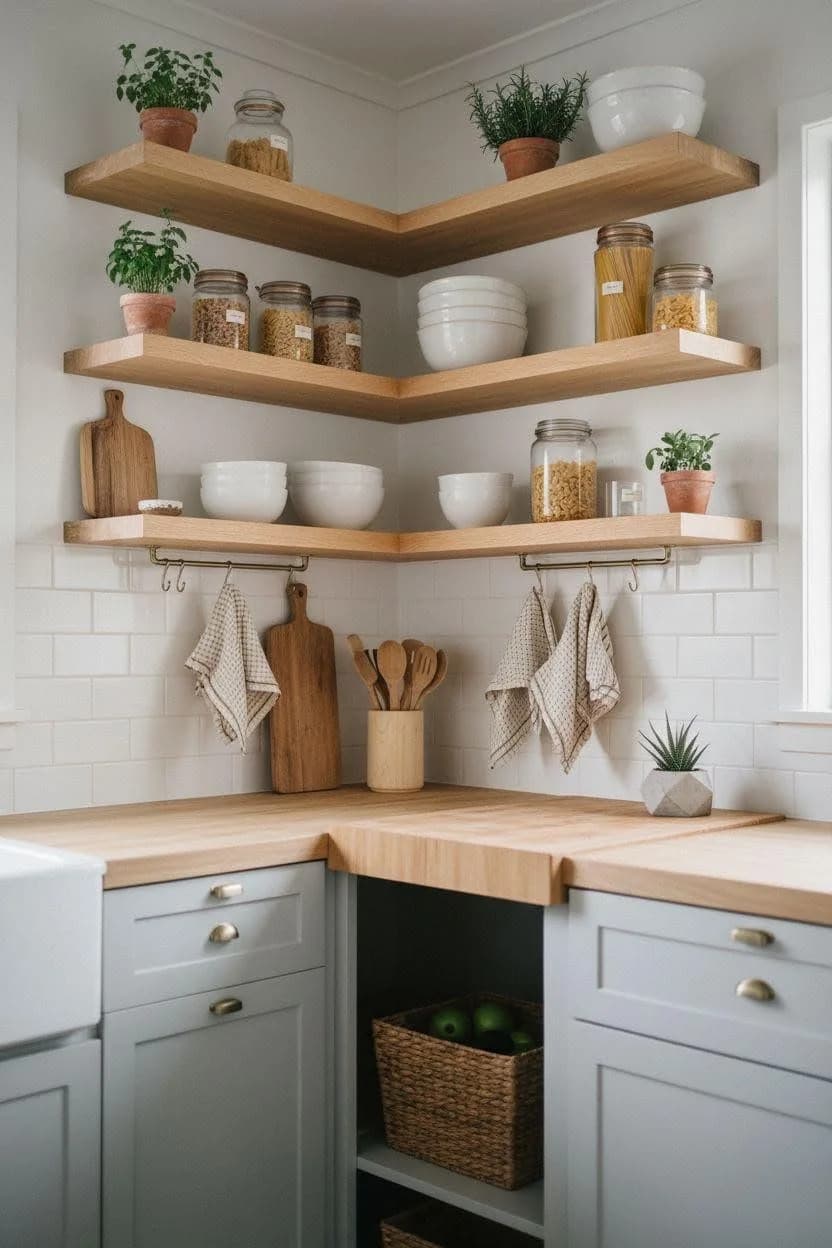
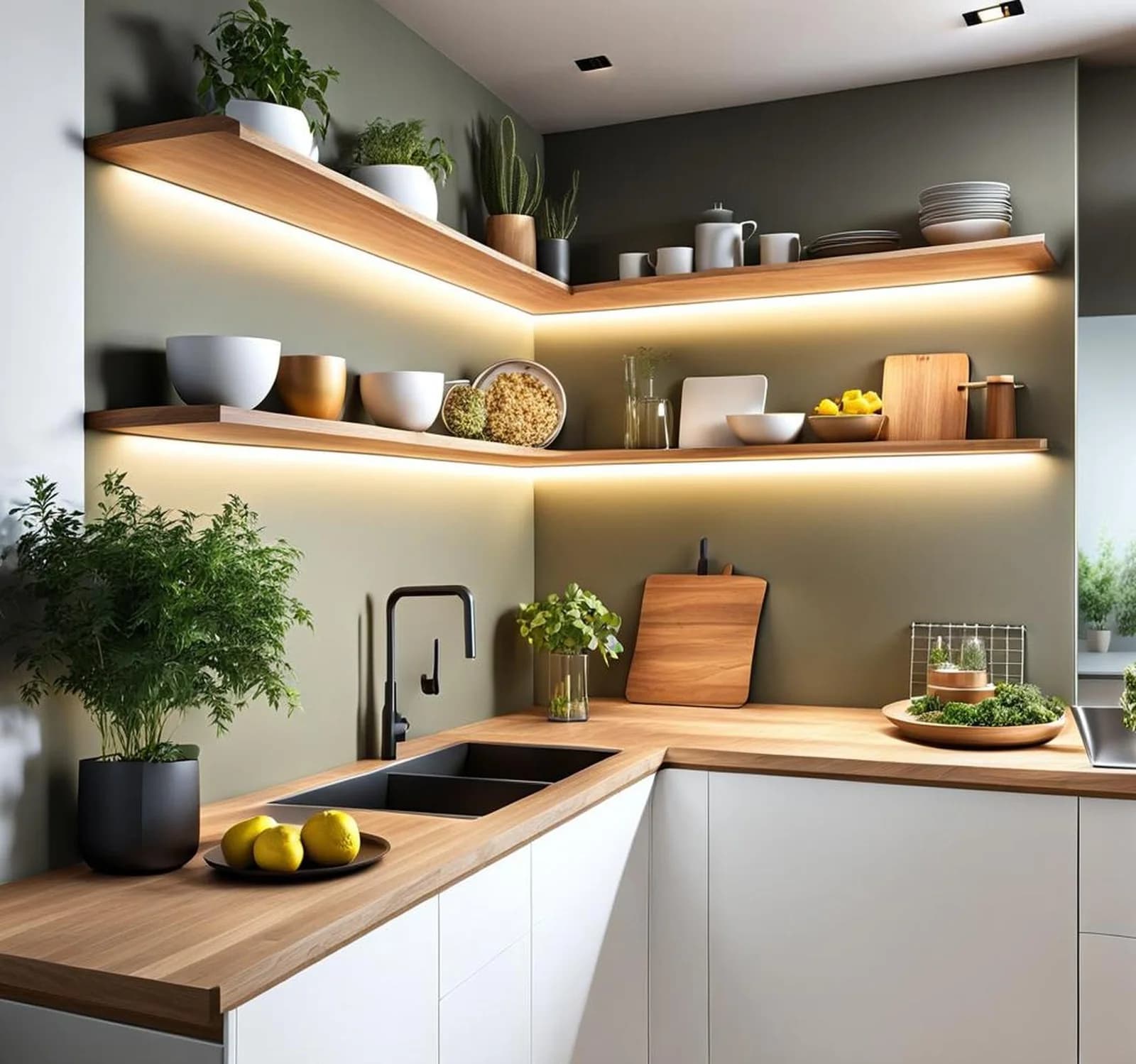
Corners are the hardest part of a kitchen to reach in a cabinet. L-shaped corner shelves that wrap around both walls turn a dead corner into easy-access storage for bowls, jars and cutting boards, and a rail with hooks under the lowest shelf holds towels and utensils.
5A coffee station on two shelves
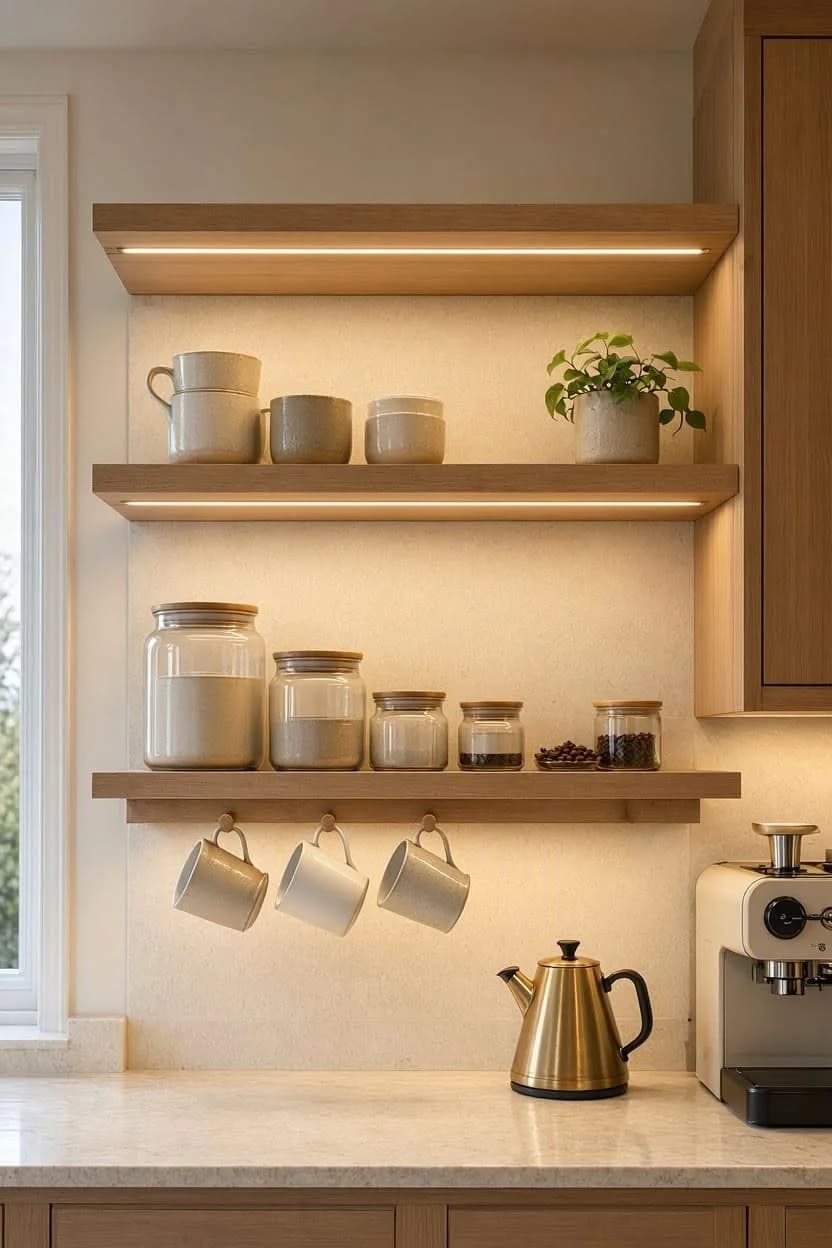
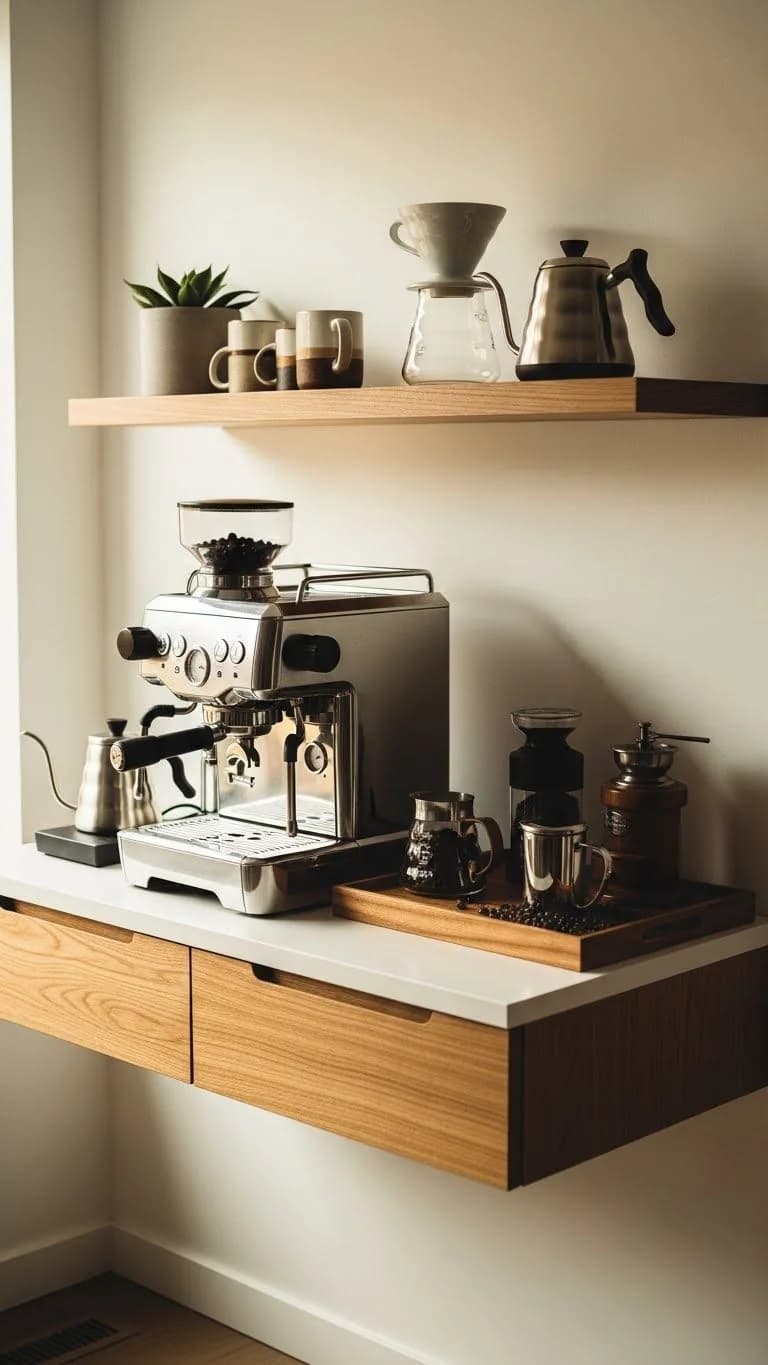
Two short shelves above a stretch of counter make a coffee bar: mugs on hooks under the lower shelf, beans and filters in jars on the middle one, a plant on top. It keeps everything for the morning in one place and frees the cupboards. If the counter is too small, a floating shelf with a drawer can hold the machine itself.
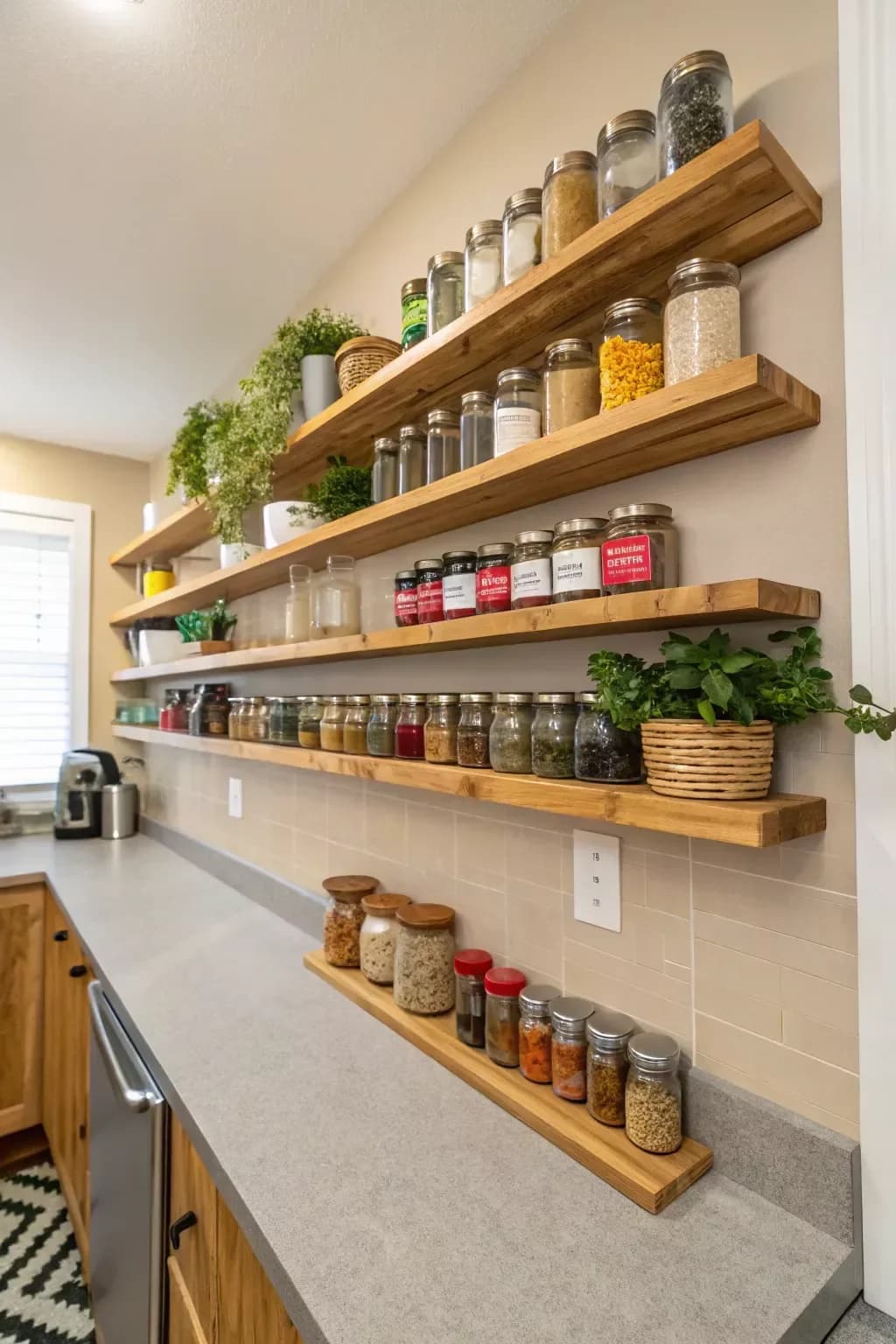
6Jars and spices on long narrow shelves
Narrow shelves (around 6 to 8 inches deep) along a backsplash wall hold spice jars and dry goods in a single row, where every label is visible. Decant into matching jars for a calm look, and use the top shelf for plants or extra stock.
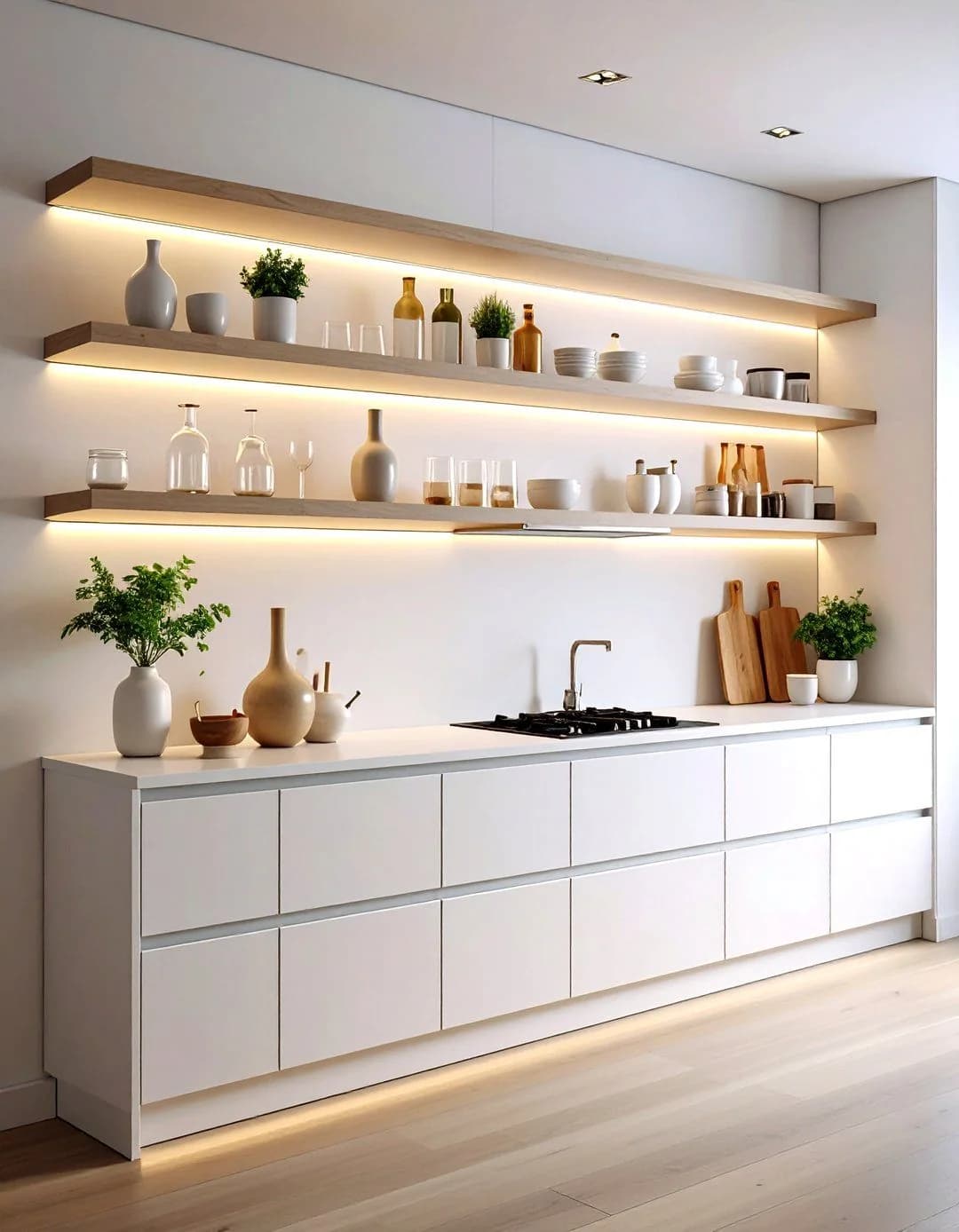
7Shelves with lighting underneath
LED strips fixed under each shelf light the counter below and make the shelves glow in the evening. Use a warm white strip and a plug-in or hardwired driver; for hardwiring, use an electrician. Lit shelves in a white kitchen add warmth that white cabinets cannot.
What to Put on Kitchen Floating Shelves
Fill the shelves in this order, from most useful to most decorative:
- Everyday dishes: plates in stacks, bowls nested, one color or two.
- Glasses and mugs: in rows, handles facing the same way, or on hooks under a shelf.
- Jars: dry goods, coffee, tea, in matching glass jars.
- Cookbooks: a few, standing or stacked, at one end.
- Wood and ceramic: a cutting board leaning at the back, a jug, a bowl of lemons.
- Something green: herbs, pothos or a trailing plant on the top shelf.
- One piece of art: a small framed print leaning against the wall.
Stop when about a third of each shelf is still empty. Kitchen shelves look busier than living room shelves because of the stacks, so they need the space more.
Keeping Open Shelves Clean
The common objection to open kitchen shelves is grease and dust. A few habits keep it manageable:
- Put what you use most on the shelves. Dishes in daily rotation never sit long enough to get dusty.
- Keep shelves away from the stove, where grease settles fastest, and use a range hood.
- Use a sealed or oiled wood finish that you can wipe with a damp cloth.
- Store glasses upside down, or on the lower shelves where they are used and washed most.
- Wipe the shelves monthly, which takes a few minutes if each shelf holds only a few stacks.
Pros and Cons
Pros
- Makes a small kitchen look larger and brighter than upper cabinets.
- Everything is in reach and visible.
- Cheaper than cabinetry, and easier to install.
- A way to show good dishes, wood and plants.
Cons
- Needs regular dusting, more so near the stove.
- Holds less than cabinets of the same width.
- Shows mess: only works with dishes that look good together.
- Heavy loads need solid fixing into studs.
In a Small or Rented Kitchen
In a small kitchen, floating shelves add storage where there is no room for another cabinet: above a window, beside the fridge, at the end of a run of cupboards. Renters can ask to fix shelves and fill the holes at move-out, or use rail-and-bracket systems that need fewer holes. For more ways to find space, see kitchen storage for a small apartment with no pantry.
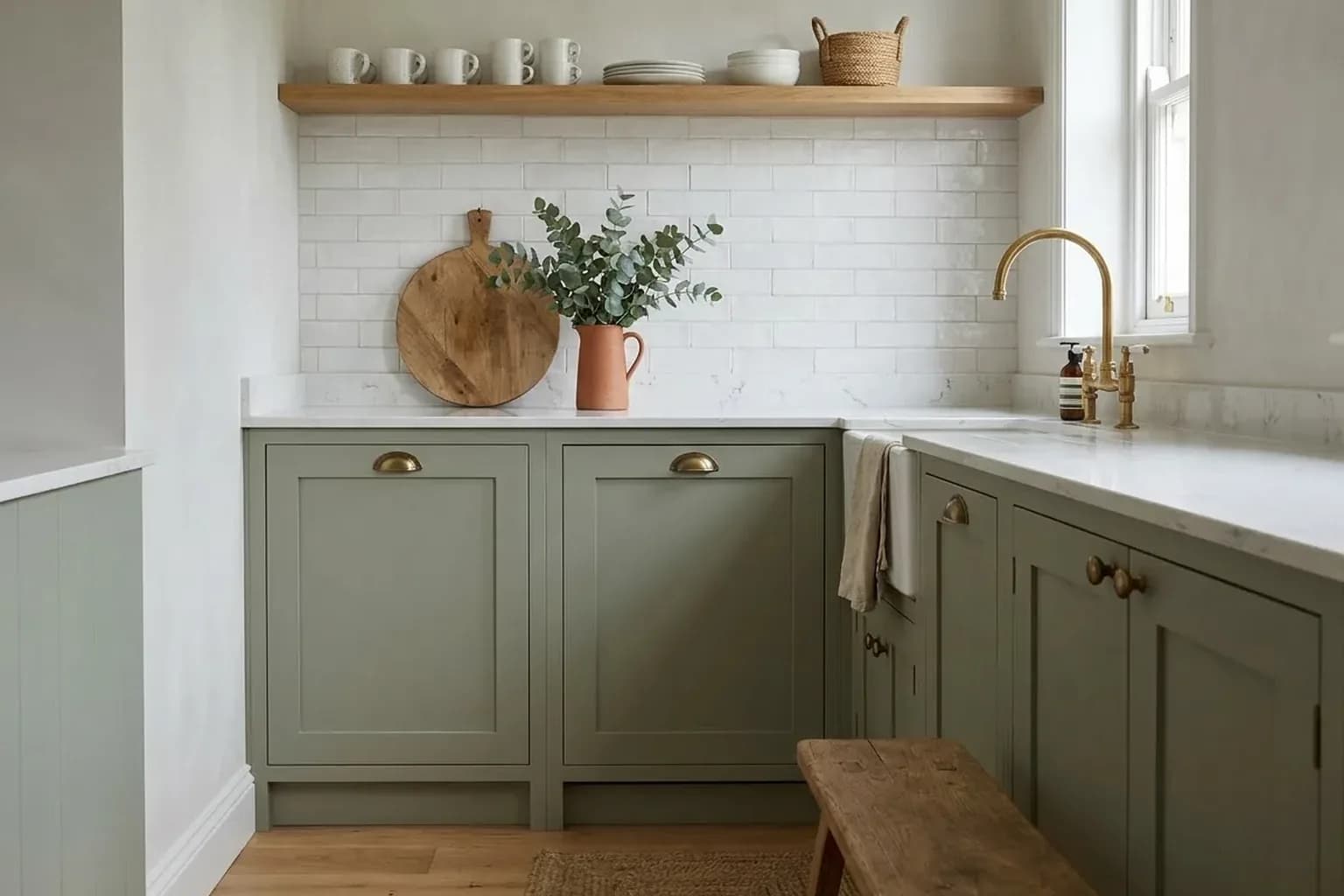
Wood shelves suit most kitchen colors. They look especially good against sage green kitchen cabinets and in an organic modern kitchen, where oak shelves, plaster walls and stone counters share the same warm palette. In December, the shelves are an easy place for greenery; see our Christmas kitchen decor ideas.
FAQ
What do you put on floating shelves in a kitchen?
Everyday plates, bowls, glasses and mugs, jars of dry goods, a few cookbooks, a cutting board, and a plant or herbs. Leave about a third of each shelf empty.
How do you decorate kitchen floating shelves?
Start with stacks of dishes in one or two colors, add jars in a row, then a few warm objects (wood, ceramics, one print) and something green.
How deep should kitchen floating shelves be?
As common guidance, 10 to 12 inches for plates and bowls, and around 8 inches for glasses, jars and spices. Measure your largest plate before buying.
How high should floating shelves be above a kitchen counter?
Roughly 18 to 24 inches for the lowest shelf, like upper cabinets, so a coffee maker or mixer fits underneath.
Do floating shelves in the kitchen get dusty?
Things that sit unused do. Shelves holding daily dishes stay cleaner because the items are washed often; keep shelves away from the stove and wipe them monthly.
Are kitchen floating shelves still in style?
Yes. Wood shelves, often lit from below and mixed with some closed cabinets, remain a popular choice. The current look keeps fewer objects on each shelf.