If you have been lusting after the relaxed, textured look of Belgian linen curtains but cringe at the $300-per-panel price tag, you are not alone. The “linen look” is the undisputed champion of high-end interior design right now, offering that perfect blend of casual elegance and architectural structure. However, achieving this aesthetic on a budget requires knowing exactly how to mimic the material science of expensive linen using humble hardware store supplies.
DIY drop cloth curtains are the ultimate high-end dupe. When executed correctly, these heavy-duty canvas imposters provide the weight, drape, and light-filtering softness of luxury linen for a fraction of the cost. The secret doesn’t lie in the cloth itself, but in the preparation. While most tutorials skip straight to hanging, the true magic happens in the wash cycle, where you transform stiff, industrial canvas into soft, faux linen drapery.
In this comprehensive guide, we will cover how to select the correct material grade to mimic real linen, the critical pre-washing process to remove chemical sizing and control shrinkage, and how to style these panels for a million-dollar look. If you are looking to upgrade your space without breaking the bank, you might also want to explore our list of 10 Budget Window Treatments That Look Expensive for more inspiration.
Table of Contents
Why Drop Cloths Make Perfect Faux Linen Curtains
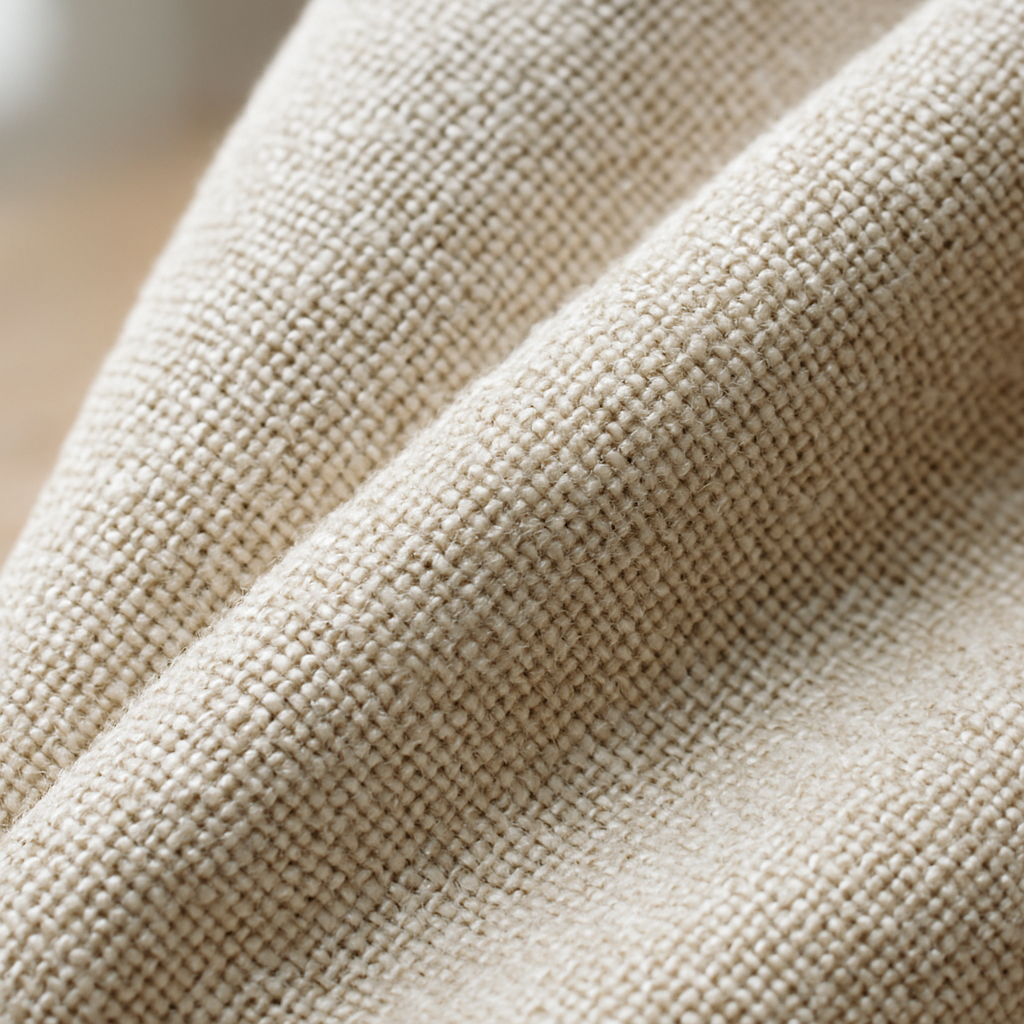
Before we dive into the tutorial, it is important to understand why this hack works so well. Authentic linen is made from flax fibers and is prized for its visible texture, “slubs” (small bumps in the weave), and heavy drape. Canvas drop cloths—specifically the cotton variety—are woven with a similarly tight, textured weave that mimics these properties perfectly once softened.
Unlike sheer polyester panels or cheap synthetics that look shiny and plastic, canvas drop cloth curtains offer a matte, natural finish that diffuses light beautifully. They provide privacy without making your room feel like a cave. Furthermore, because they are made of 100% cotton, they are washable drop cloth curtains, meaning you can actually clean them—a feature rarely found in expensive custom linen treatments.
From a design perspective, this material fits perfectly into the “industrial farmhouse curtain ideas” trend. The neutral oatmeal color acts as a blank canvas (pun intended) that anchors a room, allowing your furniture and decor to pop. Because the material is heavyweight, it hangs straight and doesn’t billow awkwardly when the HVAC turns on, giving your windows a custom, architectural feel.
The Material Science: Selecting the Right Canvas Grade
One of the biggest mistakes beginners make is buying the wrong type of drop cloth. If you grab the cheapest rectangular tarp off the shelf, you might end up with a plastic-backed poly sheet that will never look like fabric. To achieve the faux linen look, you need to understand drop cloth curtain fabric weight and composition.
Best Drop Cloths for Curtains: Canvas vs. Cotton
When shopping at your local hardware store, you will generally see three main types of drop cloths. Here is how to choose the right one for your window treatments:
| Drop Cloth Type | Material | Texture | Best For |
|---|---|---|---|
| Canvas Duck | 100% Cotton | Heavy, tight weave, slight wrinkles | The Best Choice for linen dupes |
| Synthetic/Poly | Plastic/Plastic blend | Shiny, slick, waterproof | Avoid for curtains (looks cheap) |
| Butler/Smooth | Cotton/Poly blend | Very smooth, paper-like | Good for painting, bad for draping |
Our recommendation: Look for “Heavy Duty Canvas Duck” drop cloths that are 100% cotton and untreated. You want the fabric weight to be at least 8 oz to 10 oz per square yard. This weight is crucial because it ensures the curtains have enough “body” to hang vertically, mimicking the expensive drape of European linen. Lightweight, thin cottons will look flimsy and feel like bed sheets.
Sizing and Calculations
Standard drop cloths typically come in sizes like 4×15 feet, 6×9 feet, or 9×12 feet.
- Width: For a standard window (36–48 inches wide), you generally need two panels to cover the window when open. A 6-foot wide drop cloth cut in half vertically provides two 36-inch wide panels. For a wider window, use the full 9-foot or 12-foot width.
- Length: The 9-foot height is perfect for standard 8-foot ceilings, while 12-foot cloths are ideal for two-story great rooms. Always buy longer than you think you need; you can always hem the excess, but you cannot add length later.
The Critical Prep Phase: How to Wash Drop Cloths for Curtains
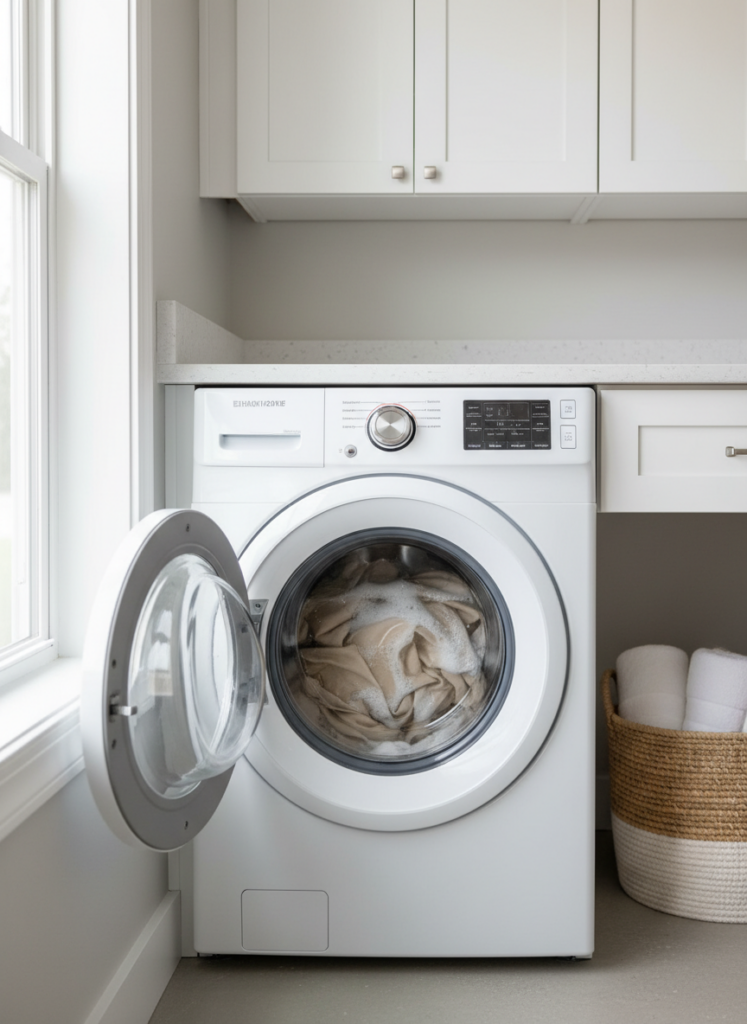
This is the step that separates a “looking cheap” DIY from a “luxury” upgrade. Brand new drop cloths are treated with chemical sizing (starches) to make them stiff and water-repellent. They also often have a distinct “factory” smell. If you hang them without washing, they will smell bad, feel like cardboard, and likely shrink unevenly the first time you clean them, ruining your hemline.
Should you wash drop cloths before making curtains? Absolutely. Here is the professional protocol:
- Wash Separately: Wash your drop cloths alone in your washing machine. Do not add fabric softener, as it can leave a residue that attracts dust and interferes with dye absorption if you ever decide to paint or dye them.
- Hot Water: Use hot water and a heavy-duty detergent. We want to aggressively strip away the chemical sizing to soften the fibers.
- Dry High: Tumble dry on high heat. This serves two purposes: it dries the cotton fully, and it aggressively shrinks the fabric. You want all the shrinkage to happen before you cut and hem.
- Expect Lint: Your lint trap will likely be full. Cotton canvas sheds a lot of excess fiber in the first wash. Clean the trap midway through the drying cycle to prevent fire hazards and ensure the fabric dries evenly.
Note: After this first wash, the fabric will look wrinkly and “crinkly.” Do not panic! This texture is exactly what you want. It mimics the crushed texture of washed linen.
Step-by-Step: Hemming and Finishing
Once your drop cloths are washed, dried, and softened, it is time to turn them into panels.
1. Cutting the Panels
Lay your drop cloth out on a large, clean floor area. If you are using a 6×9 foot cloth for a standard window, measure the exact width of the window frame, divide by two, and add 4 inches for “stack back” (the width of the curtain when pushed to the side). Cut the cloth in half vertically using sharp fabric scissors or a rotary cutter.
2. Creating the Hem
Now that the fabric is pre-shrunk, you can hem it to your exact required length.
- Side Hems: The factory edges of the drop cloth (the salvage edges) usually look finished enough. If not, fold the side edge over 1 inch, press, and fold over again 1 inch. Pin in place.
- Bottom Hem: Measure from the top of the curtain rod pocket (or where the clip will sit) to the floor.
* Standard grazing: The hem should just barely kiss the floor.
* Break/Puddling: Add 1-3 inches of extra length depending on how much “puddle” you want.
3. No Sew vs. Sewing
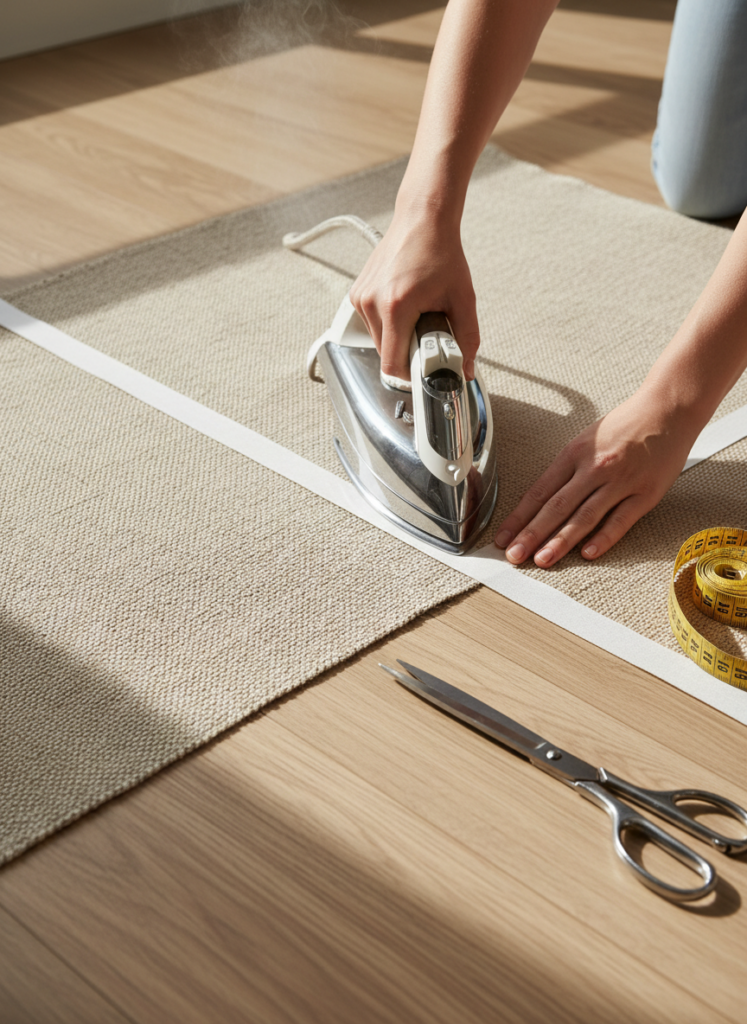
If you have a sewing machine, a straight stitch will provide the most durable finish. However, no sew curtains are entirely possible with this heavy fabric. Because of the weight, a high-quality hemming tape holds exceptionally well.
- Pro Tip: For the cleanest no sew curtain hem, use HeatnBond Iron-On Hem Tape. Use a press cloth (a thin towel between the iron and the curtain) to protect the canvas from scorching. The stiffness of the fabric actually helps the tape adhere flatter than it would on slippery synthetics. For a detailed visual on this technique, check out our guide on The 5-Minute No-Sew Curtain Hem Hack.
Styling for Luxury: Creating the “French Pleat” Look
This is the unique angle that will take your project from “crafty” to “custom.” Ready-made store curtains usually have cheap grommets (metal eyelets) at the top. While functional, grommets can look industrial or cheap.
Instead, we are going to use curtains ring clips with prongs.
The Technique
- Don’t make a rod pocket: Leave the top edge of the drop cloth raw (or hem it simply like the sides). Do not fold it over to thread the rod through.
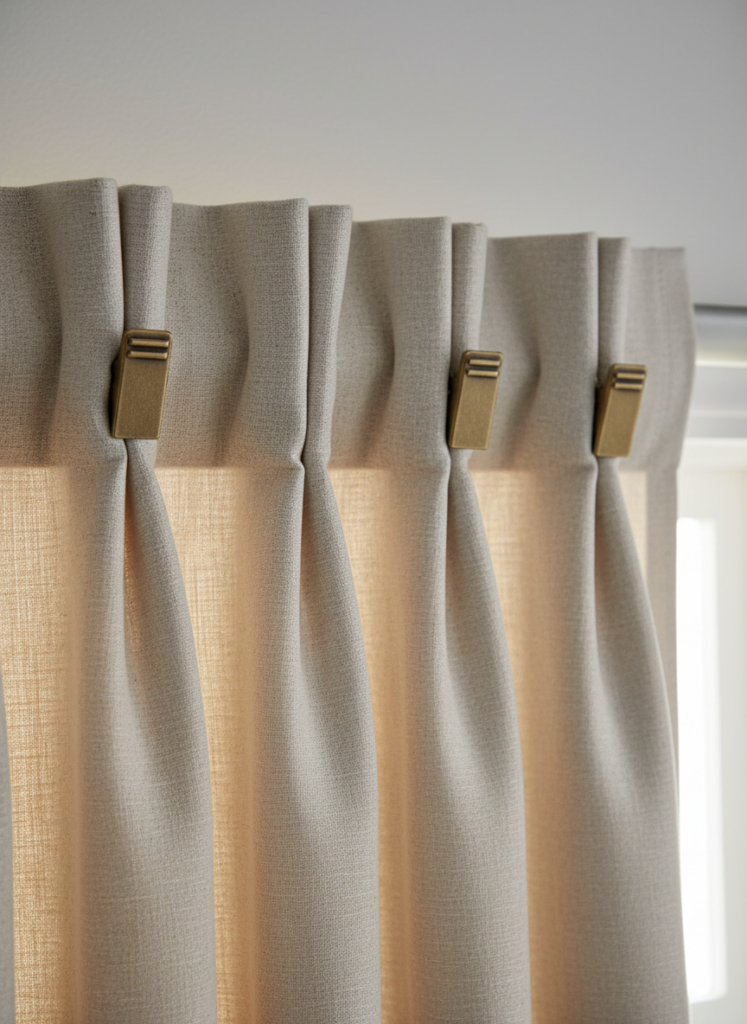
- Use Rings: Purchase nickel or oil-rubbed bronze curtain ring clips. These clip onto the top edge of the fabric.
- The Pinch: Before you clip the ring to the fabric, pinch the fabric back about 2 inches from the top edge. Clip the ring over this pinch. This creates a gather, or “pleat,” at the clip.
Why This Matters
By clipping the ring, you force the fabric to fold in between the rings. This breaks up the flat expanse of canvas and creates a wave-like pattern known in the industry as the “French Pleat” look (or at least a convincing imitation). This adds volume, shadow, and dimension to the curtains, making them look like they were custom-made for a estate home rather than cut from a drop cloth.
Installation Guide: Height and Pooling
How you hang the curtains is just as important as how you make them. The wrong rod placement can make your ceilings look lower and your room look smaller.
The “High and Wide” Rule
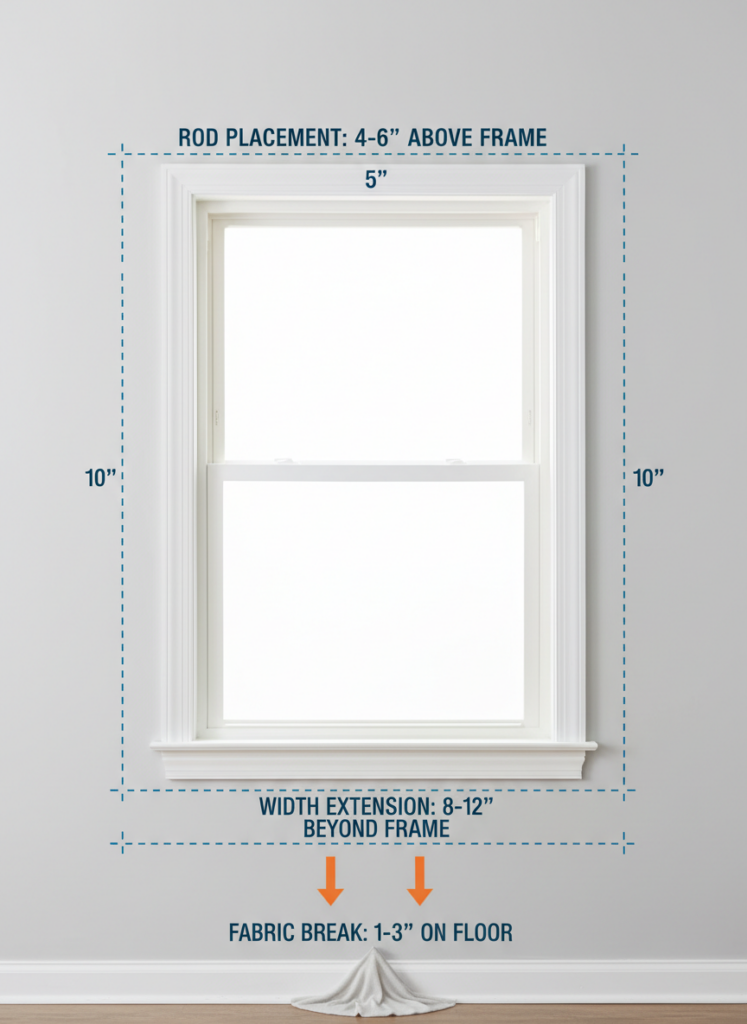
To make your room feel larger and more luxurious, you should mount your curtain rod higher and wider than the window frame.
- Height: Mount the rod 4–6 inches above the window trim, or even halfway between the trim and the ceiling. This draws the eye upward.
- Width: Extend the rod 8–12 inches beyond the window frame on each side. This allows you to push the curtains back completely off the glass, maximizing your natural light.
Puddling for Glamour
If you are going for the ultimate faux linen curtains vibe, consider “pooling” your curtains. This means the bottom 1–3 inches of fabric rests on the floor.
- The Break: Similar to pant legs, a “break” of 1 inch is casual and neat.
- The Puddle: A 2–3 inch puddle is romantic and luxurious.
- Warning: Puddling is not practical in high-dust environments or if you have pets that love to drag fabric around. If you need a clean look, have the curtains “kiss” the floor (flush against it).
For a complete breakdown on measuring and mounting, read our guide on How to Hang Curtains Like a Professional Designer.
DIY Drop Cloth Curtains Before and After: What to Expect
Let’s manage expectations. Before you start, you have a stiff, cream-colored canvas with reinforced seams and stitching corners. After the process, you will have soft, crinkled, draping panels that have the texture of vintage linen.
Visual Transformation:
- Texture: The factory tightness relaxes into a subtle, organic weave.
- Color: The harsh bright white/cream softens to a warmer, oatmeal shade (especially if you wash with a color-safe bleach alternative to tone down any yellowing).
- Drapability: The fabric moves with the breeze rather than standing stiff like cardboard.
The total cost for a standard window (using two 6×9 drop cloths, a rod, and rings) usually comes in between $40 and $60. Compared to designer linen panels which can run over $400 for the same coverage, this project offers an ROI that is hard to beat.
Maintenance and Longevity
One of the biggest benefits of this project is that washable drop cloth curtains aren’t just a theoretical feature—they are a reality.
Cleaning Instructions:
- Remove the rings.
- Wash in cold or warm water (hot is only needed for the initial shrinkage).
- Use a gentle cycle.
- tumble dry on low or medium, or hang to dry.
- Do not panic if they look wrinkly: This is the aesthetic. If you must iron them, use a high steam setting while the fabric is slightly damp.
Over time, the fabric will soften even more, developing a patina that real linen also acquires. The heavy weight ensures they won’t fade or thin as quickly as cheap sheers.
FAQ: Common Questions About Drop Cloth Curtains
Do drop cloth curtains look cheap?
They can if you skip the preparation steps. Hanging stiff, unwashed canvas with a cheap rod will indeed look industrial and unfinished. However, if you pre-wash the fabric to soften the fibers, use ring clips to create pleats, and hang them high and wide, they look nearly identical to high-end Belgian linen. The “cheap” look comes from the installation hardware and lack of hemming, not the fabric itself.
Can you use canvas drop cloths as curtains?
Yes, you absolutely can. In fact, unbleached 100% cotton canvas is the best material for this project because of its weight and texture. Ensure you are buying “Canvas Duck” or ” Cotton Duck” and avoid synthetic blends which have a plastic sheen and do not breathe or drape well.
Should you wash drop cloths before making curtains?
Yes, this is non-negotiable. Drop cloths are treated with stiffeners and water-repellent chemicals that make them smell and feel rough. More importantly, they shrink significantly (often 3–5%) when washed. If you hem them first and then wash them, your “floor-length” curtains will suddenly become high-water ankle-length culottes. Always wash and dry on high heat at least twice before cutting or hemming.
How do you get wrinkles out of drop cloth curtains?
Ideally, you embrace the wrinkles! The “crinkled” texture is part of the linen aesthetic. However, if they are excessively creased from the package, you can use a garment steamer while they are hanging on the rod. If you must use an iron, use the highest steam setting and iron the back side of the fabric to prevent shiny iron marks. Pressing them perfectly flat will remove the linen-like character, so a relaxed press is better.
What kind of drop cloth is best for curtains?
Look for 100% cotton Duck Canvas in the “Heavy Duty” or “Contractor Grade” weight (usually 8oz–10oz). Avoid the “Butler” style, which is too thin and smooth, and absolutely avoid any poly/cotton blends which will look shiny and synthetic. The 6×9 or 9×12 sizes are the most versatile for standard residential windows.
Ready to transform your windows for the price of a dinner out? This project is the perfect entry point into high-style interior design on a budget. You have the steps, the material knowledge, and the styling secrets—now all you need is a free afternoon. Grab some drop cloths (our favorite brand is linked below) and start customizing your space today!